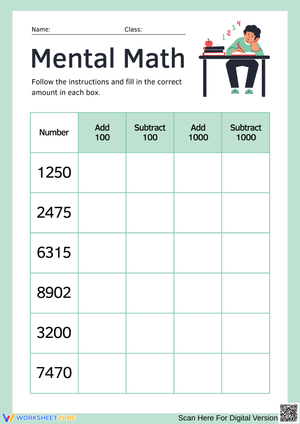
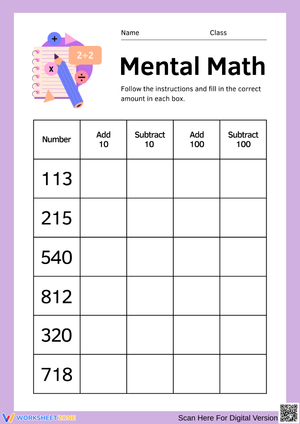
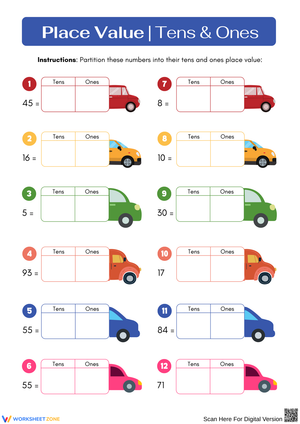
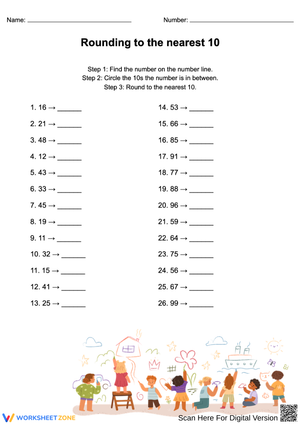
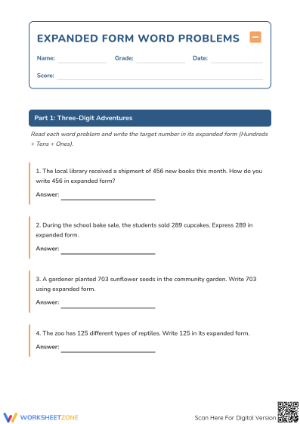
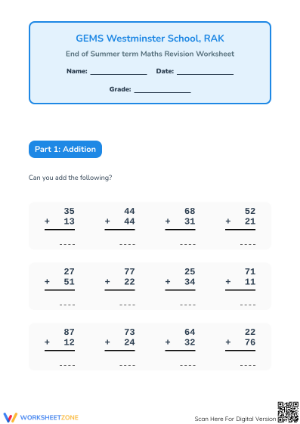
2nd grade place value printable worksheets in this set move students from counting tens-rods and ones-cubes to identifying digit value, writing expanded form, and comparing 3-digit numbers — all within a consistent format that Grade 2 students can navigate without extensive direction. Each worksheet targets one subskill, so teachers can pull exactly what a lesson calls for rather than assigning mixed practice when something targeted is what the moment needs. The skills covered connect directly to the regrouping work students encounter in 3rd grade, which makes early fluency with place value worth building carefully.
What Each Worksheet Targets
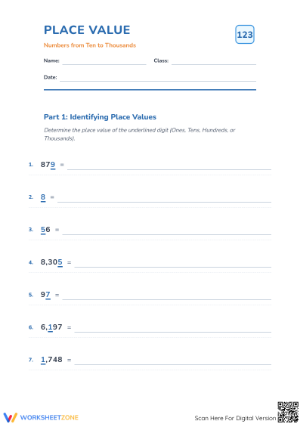
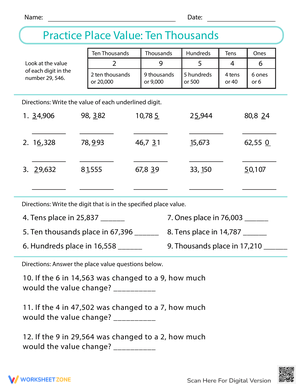
Place value at the Grade 2 level is not one skill — it is a cluster of related ideas that students absorb at different rates. The 2nd grade place value printable worksheets in this set address that range by separating the subskills students need to build before moving on to addition and subtraction with regrouping.
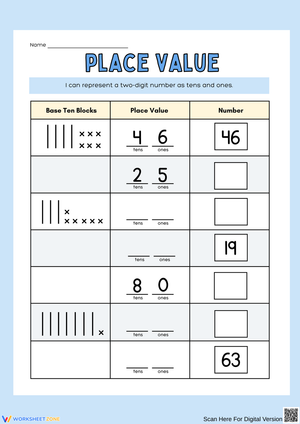
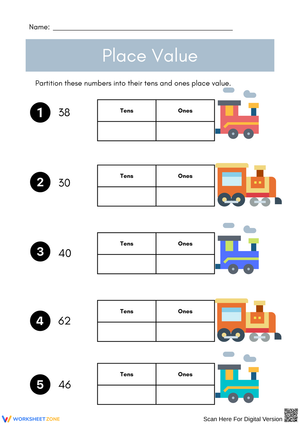
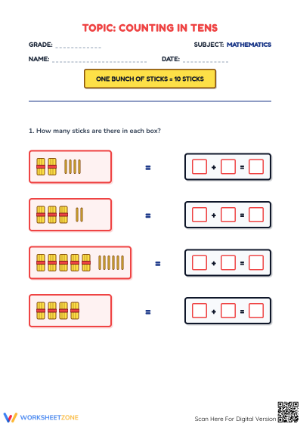
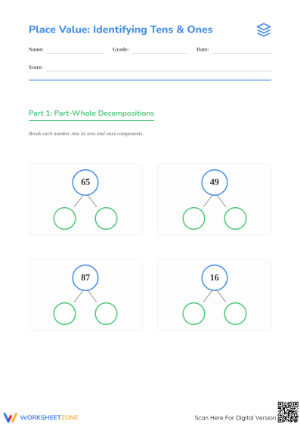
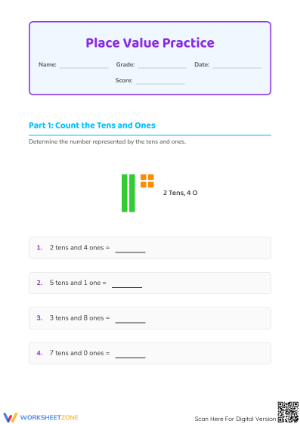
- Tens and ones: Students identify how many tens and ones appear in 2-digit numbers, connecting each numeral to its grouped meaning before 3-digit work begins.
- Hundreds, tens, and ones: Students name, model, and write 3-digit numbers using base-ten language and visual representations.
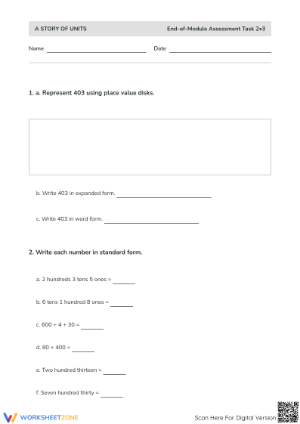
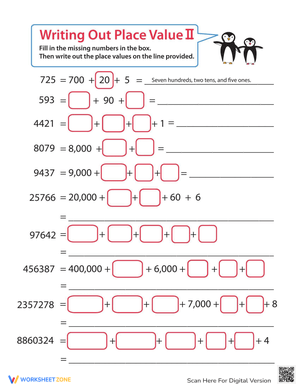
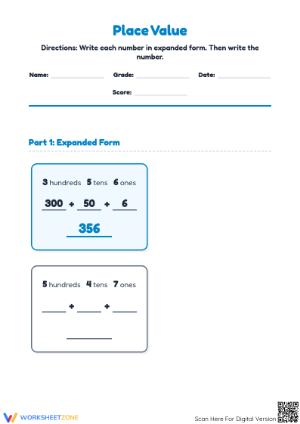
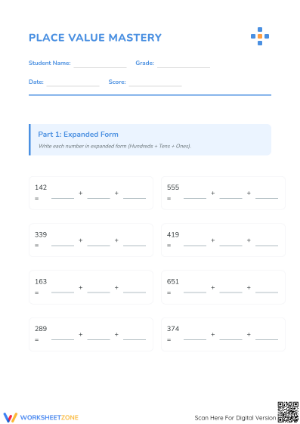
- Expanded form: Students rewrite numbers to show the value of each digit — for example, writing 347 as 300 plus 40 plus 7.
- Standard form: Students convert from expanded or word form back to a numeral, which requires working the skill in both directions.
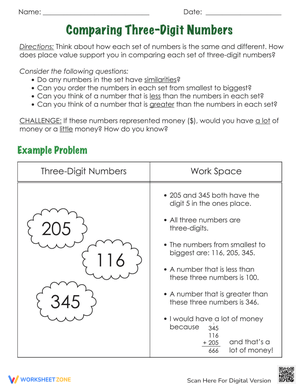
- Comparing numbers: Students decide which of two numbers is greater or less than the other, reasoning digit-by-digit from the hundreds place down.
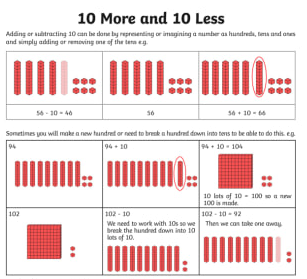
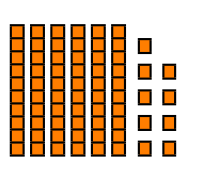
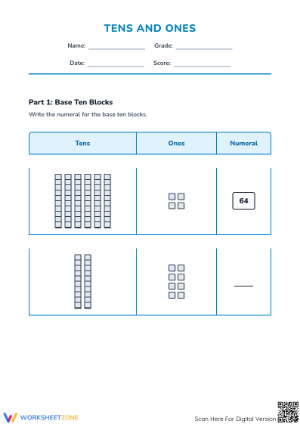
- Base-ten block models: These worksheets ask students to draw or interpret block diagrams, connecting visual groups to written numbers.
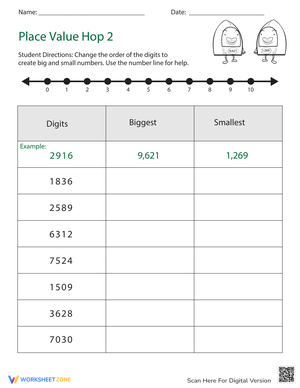
- Missing-number and skip-counting tasks: These build pattern sense and help students see how place value structures numbers along a number line or hundreds chart.
A student who can count to 100 by ones may still lack a clear sense of why 234 has a 2 in the hundreds place. These worksheets treat those as separate competencies, not one continuous skill, and they sequence accordingly.
Student Errors Worth Watching For in This Unit
The most frequent error with expanded form is place reversal under pressure. A student will correctly write 300 plus 40 plus 7 for 347, then hit 405 and write 400 plus 50 — leaving the zero tens place out entirely. The student understands additive logic but has not internalized that every place must be represented, including places with a value of zero. Worksheets that require students to read both standard form and expanded form in the same session expose this gap faster than single-direction practice does.
Comparison errors follow a recognizable pattern too. Students who learn to compare by looking at the leading digit will correctly identify 400 as greater than 300, then stall on 389 versus 401 because the hundreds digits (3 versus 4) already tell them the answer — until a problem pairs two numbers where the hundreds digit of the larger number is actually smaller. The error shows a half-remembered rule rather than genuine place-value reasoning. A worksheet that asks students to underline the place they used to decide — rather than just circle the larger number — surfaces this confusion quickly and gives teachers something specific to address during reteach.
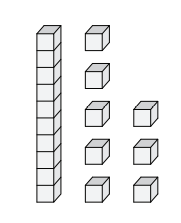
A third error pattern appears in base-ten block work. Students count the individual segments of a tens-rod instead of reading the rod as a group of ten. When you watch a student tap each unit of the rod, that is a sign they have not yet moved from counting-on to grouped-quantity thinking, which is the conceptual shift that place value depends on.
Fitting These Worksheets Into Your Instructional Week
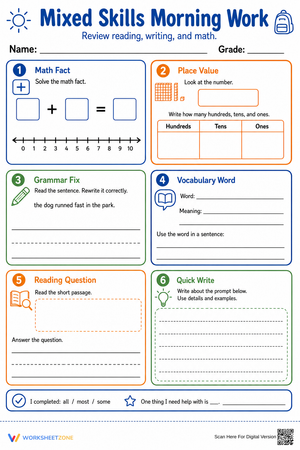
Morning work is the most reliable entry point. A focused place value worksheet at the start of the day gives students 8–10 minutes of purposeful practice and gives the teacher time to take attendance and circulate before the lesson block begins. Worksheets focused on one skill — reading and writing 3-digit numbers, for example — work better here than mixed review because students can settle into the task without needing redirection.
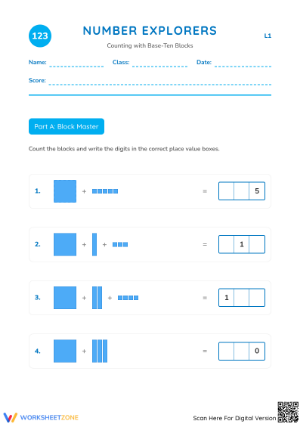
For math centers, assign each worksheet to a specific rotation and pair it with a matching manipulative when possible. A base-ten block worksheet works especially well when physical rods and cubes sit at the center: students build the number, then record their model on the worksheet. When manipulatives are not available, worksheets with printed block diagrams carry enough visual support to keep students working independently through the rotation.
In small groups, each worksheet functions as a bridge between teacher-led instruction and independent application. Begin with a quick whiteboard sketch, then have students solve two or three problems on the worksheet together before completing the rest on their own. This gradual release catches students who are tracking the teacher's thinking rather than building transferable understanding. The worksheet makes that gap visible faster than a verbal check alone.
For fast formative checks, choose a worksheet with 6–8 problems that mixes digit identification, expanded form, and one comparison task. Five minutes at the end of a lesson block tells you who can move forward and who needs another approach before the next session.
Adjusting the Worksheets for a Range of Learners
Students who are still consolidating 2-digit understanding need worksheets where the visual model carries most of the cognitive weight. Start them on tens-and-ones worksheets with printed base-ten block images — they count the rods and cubes and write the matching number. Once they handle that reliably, move them to worksheets where they draw the model rather than interpret one someone else drew.
On-level students handle mixed worksheets well — digit identification, expanded form, and a comparison problem within the same session. These students benefit from being asked to explain one answer in writing per worksheet, even a short phrase like I looked at the hundreds place first. That small addition builds the habit of reasoning about digit position rather than completing a procedure by feel.
For students working above grade level, the comparison worksheets offer the most room to extend. Instead of circling the greater number, ask them to arrange four 3-digit numbers from least to greatest and write a sentence explaining their reasoning. You can also use the 2nd grade place value printable worksheets as a reteach resource for 3rd graders who show gaps during the first weeks of the year — the subskill coverage overlaps enough to make the practice directly useful without feeling remedial in presentation.
Standard Alignment
These 2nd grade place value printable worksheets address the Common Core State Standards cluster 2.NBT.A — Understand place value. The specific standards covered are:
- 2.NBT.A.1 — Understanding that the three digits of a three-digit number represent hundreds, tens, and ones. Base-ten block and hundreds/tens/ones worksheets target this directly, treating it as a distinct concept before students move into computation.
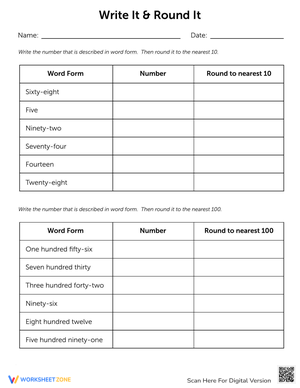
- 2.NBT.A.3 — Reading and writing numbers to 1000 in base-ten numerals, number names, and expanded form. The expanded-form and standard-form worksheets work in both directions: numeral to expanded notation and expanded notation back to standard.
- 2.NBT.A.4 — Comparing two three-digit numbers using greater than, equal to, and less than. Comparison worksheets ask students to apply digit-by-digit reasoning before recording an answer, reinforcing the conceptual basis of the standard rather than just symbol use.
In most classroom sequences, teachers introduce 2.NBT.A.1 in early fall alongside review of 1st grade two-digit work, then move to expanded form (2.NBT.A.3) before addressing comparison (2.NBT.A.4) in mid-year. The worksheets in this set follow that progression, so teachers can select by standard cluster as the unit advances rather than sorting through unrelated content.
Frequently Asked Questions
How are the worksheets in the set organized?
The worksheets are organized by subskill — tens and ones, hundreds place, expanded form, standard form, comparing numbers, and base-ten block models. Teachers can pull individual worksheets by skill rather than working through the full set in order, which makes it easy to match the practice to whatever the class is working on that day.
Can these worksheets serve as both practice and quick assessment?
Yes. Worksheets with 6–8 focused problems work well as quick formative checks at the end of a lesson. Worksheets covering two or three formats within one subskill work better for guided or independent practice. The set includes both types, so teachers can use the same resource across a practice day and a check day without switching materials.
Are the worksheets appropriate for students who have not yet moved into 3-digit numbers?
The tens-and-ones worksheets stay at the 2-digit level and are accessible to students still building that foundation. They establish confidence before students encounter the hundreds place in later worksheets in the set.
Do the worksheets include answer keys?
Answer keys are included. They allow teachers to review independently completed work quickly and to identify specific error patterns — a student who consistently miscounts tens-rods is showing a different gap than a student who writes expanded form out of sequence, and the key helps teachers make that distinction efficiently.













 Interactive Worksheet Maker
 Quiz Maker
 Word Search Maker
 Crossword Puzzle Maker
 Word Scramble Generator
 Sentence Scramble Generator
 Handwriting Worksheet Generator
 Name Tracing Generator
 Fill In The Blank Generator