


























Views
Downloads

Printable Tens and Ones Place Value Worksheet | Grade 2
Paste this activity's link or code into your existing LMS (Google Classroom, Canvas, Teams, Schoology, Moodle, etc.).
Students can open and work on the activity right away, with no student login required.
You'll still be able to track student progress and results from your teacher account.
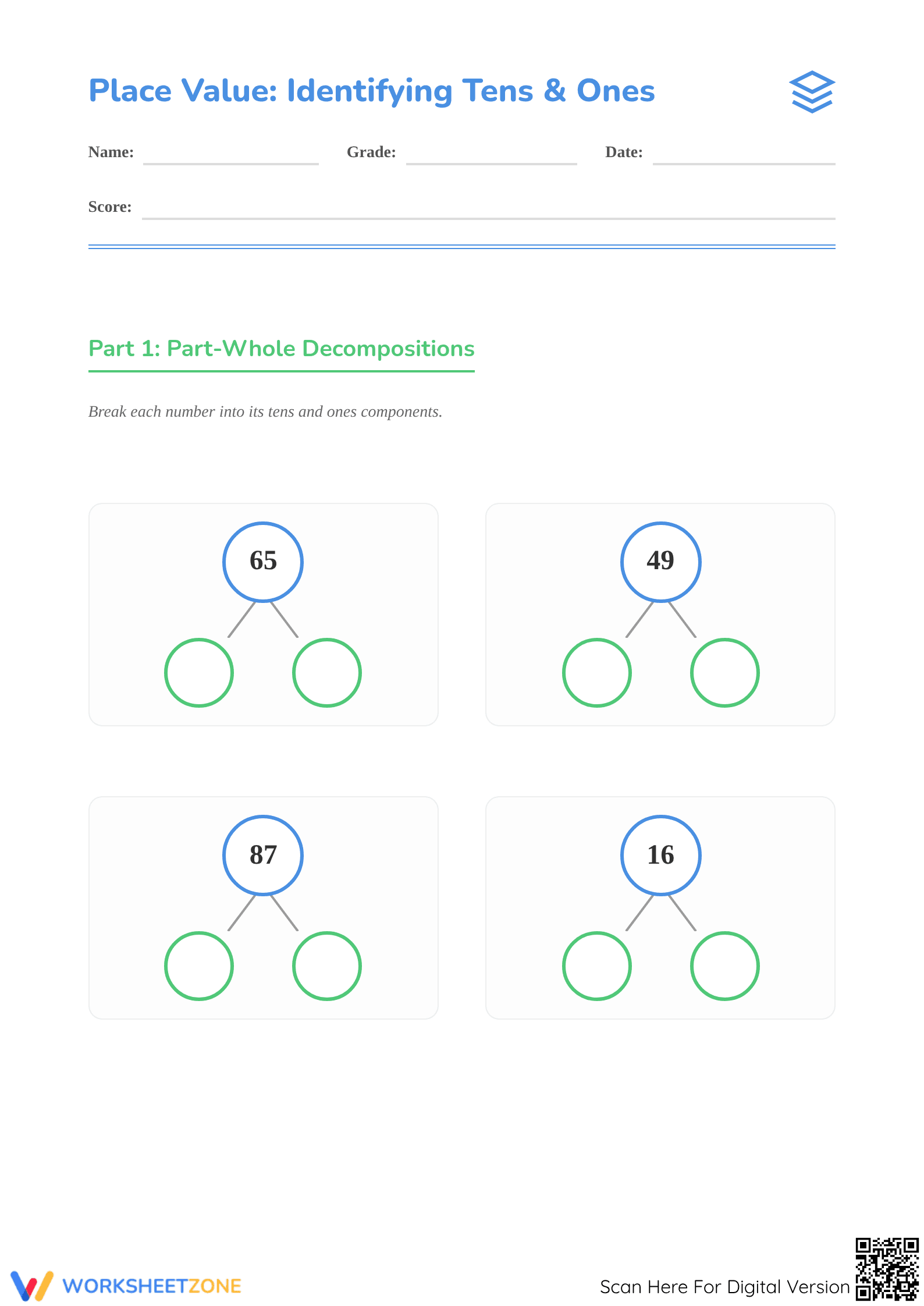
This comprehensive tens and ones worksheet helps Grade 2 students master place value through part-whole decomposition, expanded notation, and logic riddles. By breaking numbers into their constituent units, learners build a conceptual foundation for mental math and multi-digit operations. This resource ensures students can visualize and express numbers accurately within the base-ten system.
At a Glance
- Grade: 2 · Subject: Math
- Standard:
CCSS.MATH.CONTENT.2.NBT.A.3— Read and write numbers to 1000 using numerals and expanded form- Skill Focus: Tens and Ones Place Value
- Format: 3 pages · 13 problems · Answer key included · PDF
- Best For: Independent practice or math center rotations
- Time: 15–20 minutes
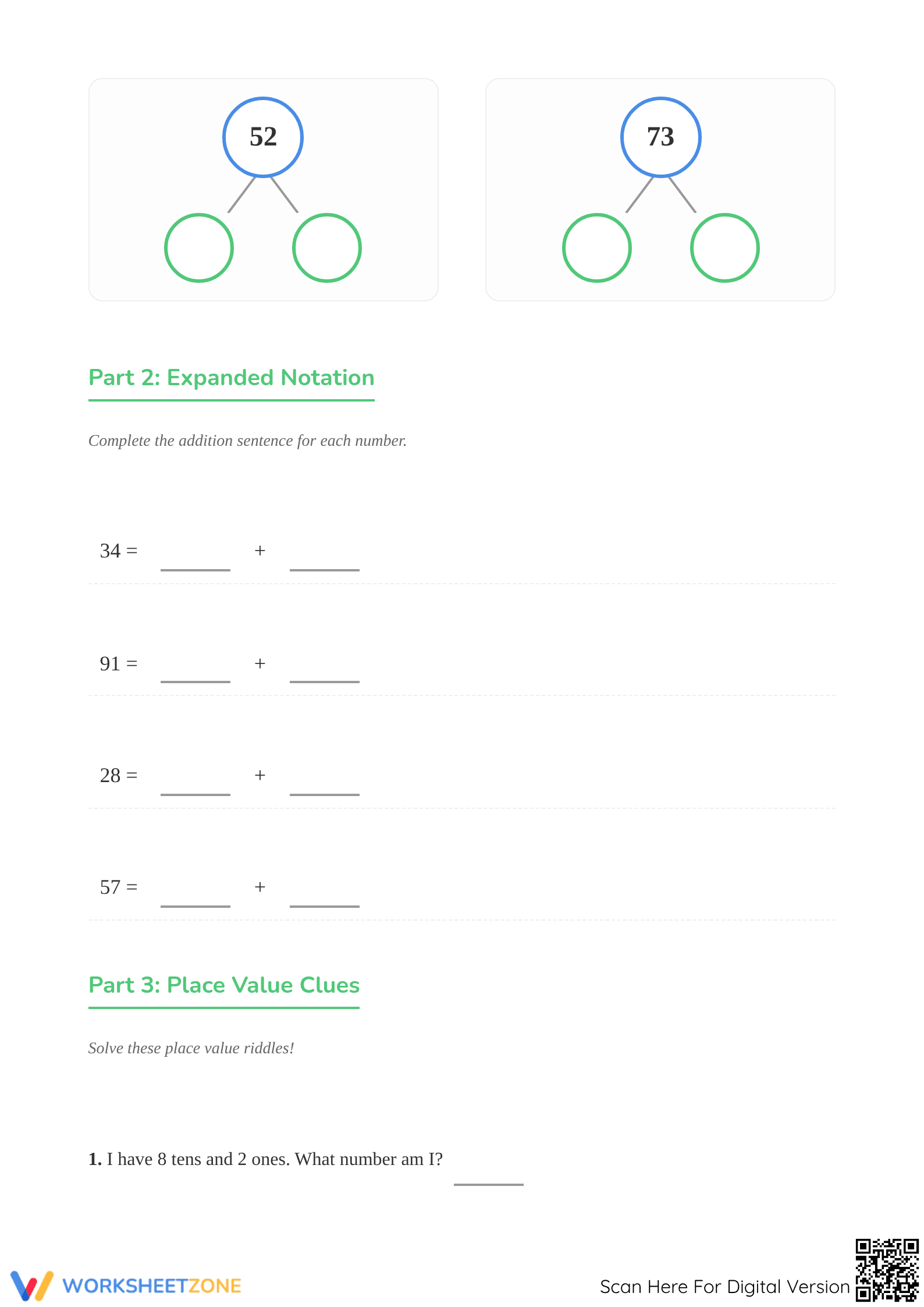
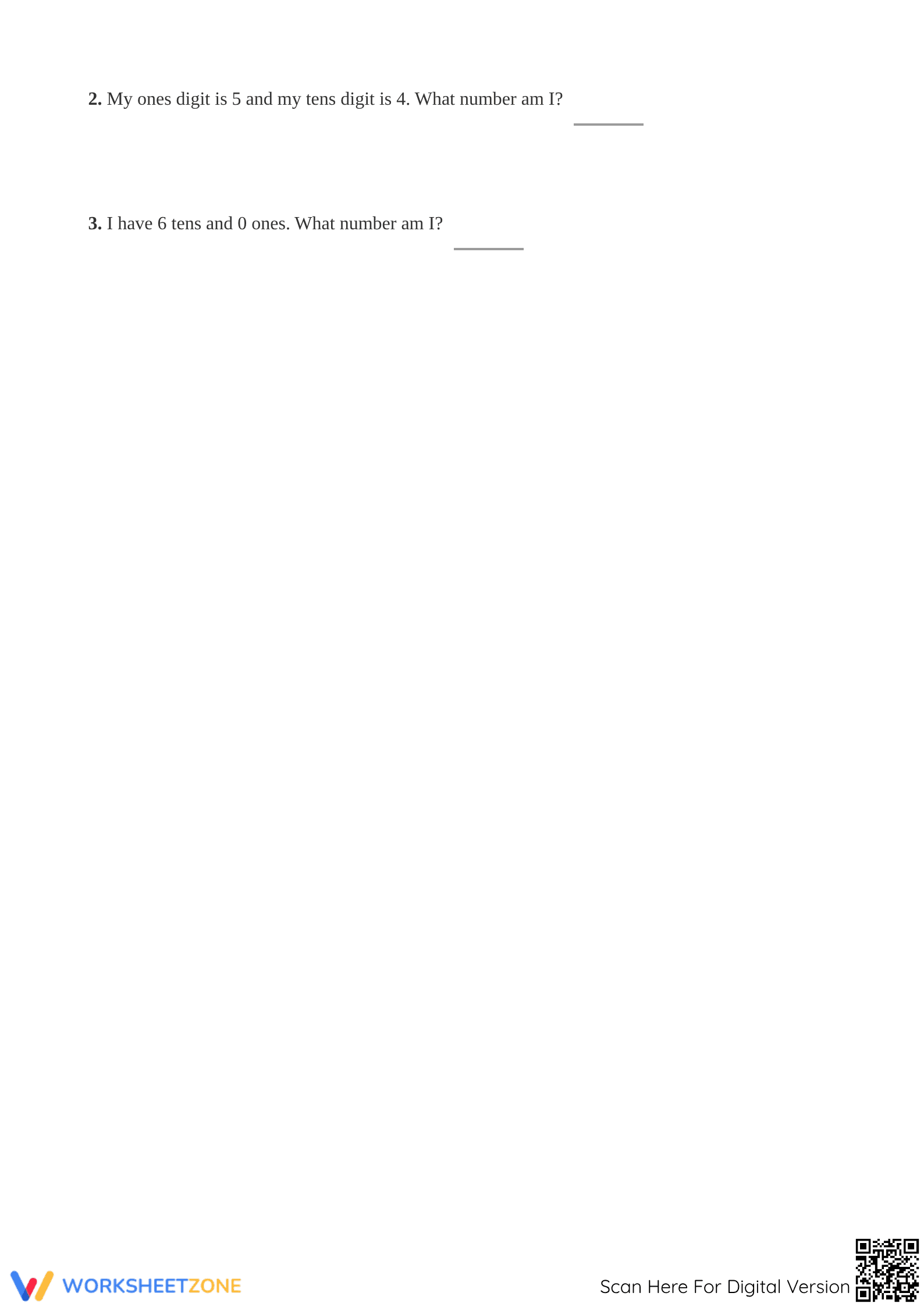
This three-page PDF packet features a structured progression of tasks designed to solidify number sense. Students begin with visual part-whole circles to decompose two-digit numbers, move to writing addition sentences using expanded notation, and conclude with place value "clues" that challenge them to synthesize their knowledge. A full answer key is provided for immediate feedback and grading efficiency.
The zero-prep workflow for this resource is designed for busy educators. First, print the three-page PDF set (approx. 30 seconds). Second, distribute the materials to students during a transition or math block (1 minute). Third, review the completed riddles as a whole class or using the included answer key (5 minutes). Total teacher preparation time is less than two minutes, making it an ideal emergency sub plan.
This worksheet is directly aligned with `CCSS.MATH.CONTENT.2.NBT.A.3`, which requires students to read and write numbers using base-ten numerals, number names, and expanded form. By focusing on the relationship between tens and ones, it also supports `CCSS.MATH.CONTENT.2.NBT.A.1`. Both standard codes can be copied directly into lesson plans, IEP goals, or district curriculum mapping tools to ensure instructional compliance and tracking.
Use this worksheet during the "You Do" phase of a gradual release lesson on number decomposition. For a formative assessment tip, observe students as they complete the place value clues; if a student confuses the position of the tens and ones digits in the riddles, provide a quick intervention with base-ten blocks. Expected completion time ranges from 15 to 25 minutes depending on student mastery levels.
This resource is tailored for second and third-grade students who are refining their understanding of place value within 100. It is especially effective for learners who require visual scaffolds like the part-whole model. For optimal results, pair this worksheet with a place value mat or an anchor chart that defines "digit" and "value" in a base-ten context during initial instruction.
According to the RAND AIRS 2024 report, the systematic use of multiple representations—such as the part-whole models and expanded notation found in this worksheet—significantly improves student retention of base-ten concepts. The `CCSS.MATH.CONTENT.2.NBT.A.3` standard emphasizes the transition from concrete understanding to symbolic representation, a shift that this resource facilitates through its three-part structure. By engaging with tens and ones through varying formats, students move beyond rote memorization toward authentic mathematical fluency. Research from ScienceDirect TpT Analysis suggests that "riddle-based" prompts, like those in Part 3, increase student engagement and cognitive demand during independent practice sessions. This worksheet provides the essential scaffolding required to bridge the gap between simple counting and advanced arithmetic. It serves as a reliable tool for teachers looking to provide high-quality, standards-aligned math practice that requires zero additional setup or classroom resources while maintaining high academic rigor.


