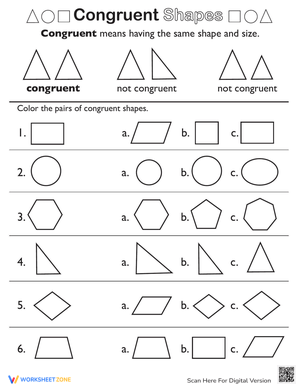
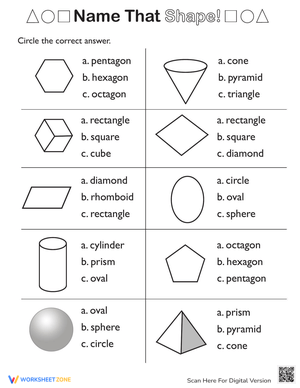
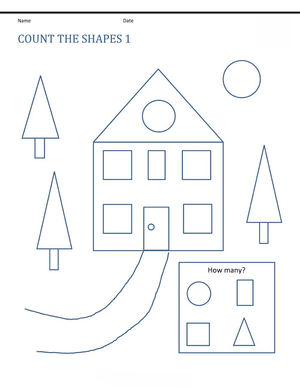
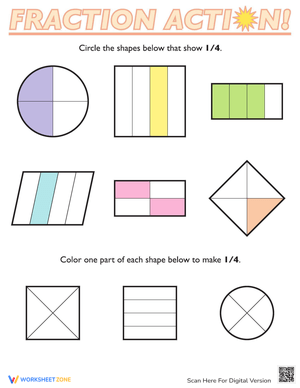
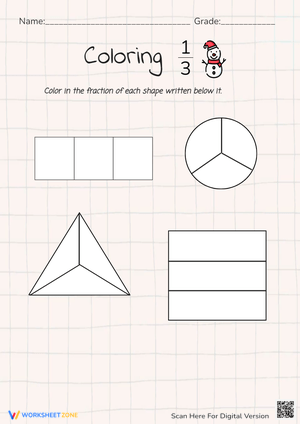
These 2nd grade 2d shapes worksheets build the attribute-based thinking that defines second-grade geometry — the shift from "that looks like a square" to "that shape has four straight sides and four angles, so it's a quadrilateral." That cognitive leap doesn't happen through a single lesson. Students need repeated exposure to shapes in unfamiliar orientations, irregular forms, and varied sizes before they stop relying on visual pattern-matching and start relying on systematic counting and precise vocabulary.
The Specific Skills Each Worksheet Targets
The set covers five distinct exercise formats, each placing different demands on students.
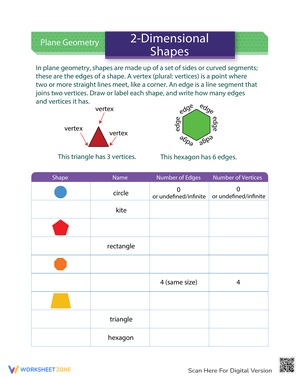
- Drawing from description: Students read an attribute prompt — "draw a closed figure with exactly five sides and five angles" — and produce the shape. This format reveals whether a student genuinely understands what makes a pentagon a pentagon, or is simply drawing something that feels about right.
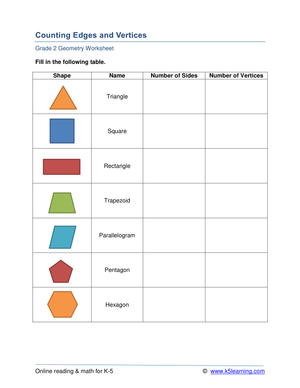
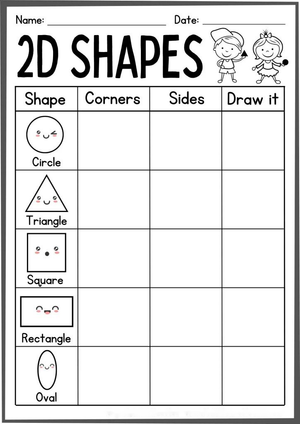
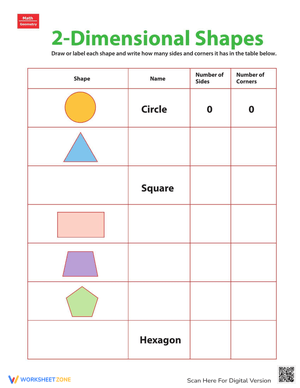
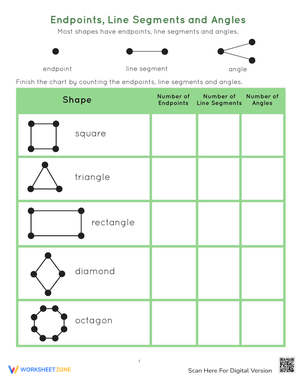
- Attribute counting charts: Given a set of illustrated polygons, students fill in the number of sides, vertices, and angles for each. The chart format slows students down in a useful way — they can't guess-and-move-on when they have three separate columns to complete per shape.
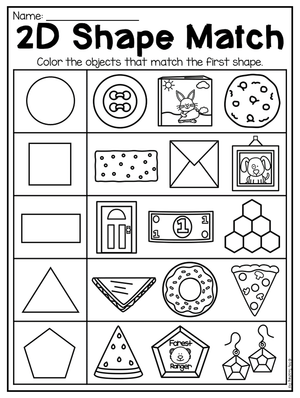
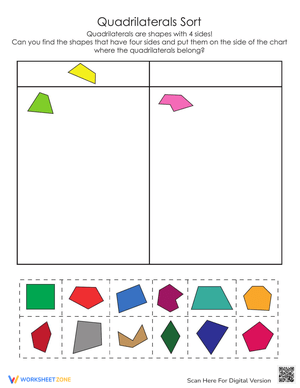
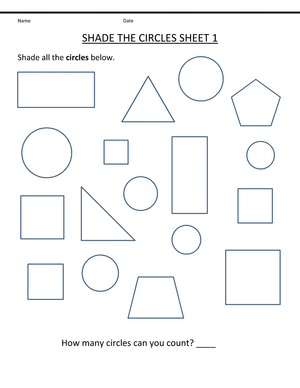
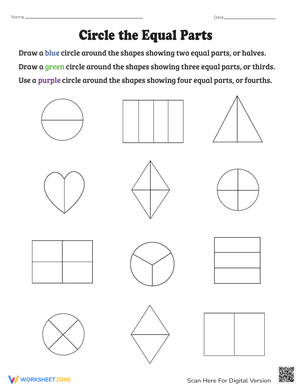
- Sorting tasks: Students classify a mixed array of polygons — quadrilaterals versus non-quadrilaterals, shapes with fewer than five sides versus shapes with five or more — using a stated rule. This builds the flexible category thinking that standard 2.G.A.1 actually requires.
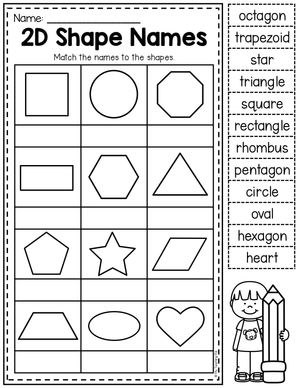
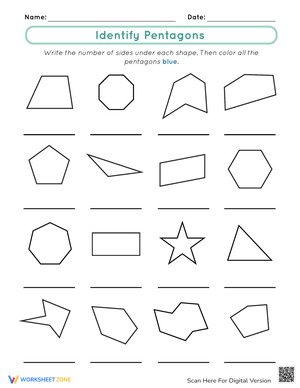
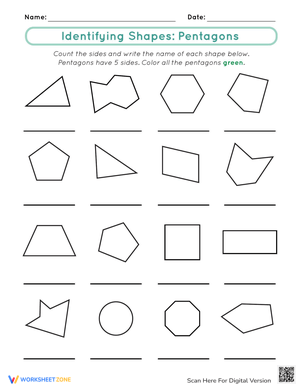
- Irregular polygon identification: Non-standard pentagons and hexagons that look nothing like the shapes on classroom anchor charts. Students must count sides to classify them, which is the point — appearance is not a reliable guide when a hexagon is elongated or lopsided.
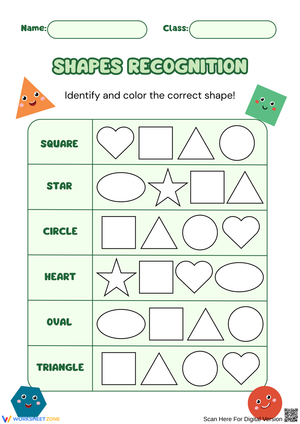
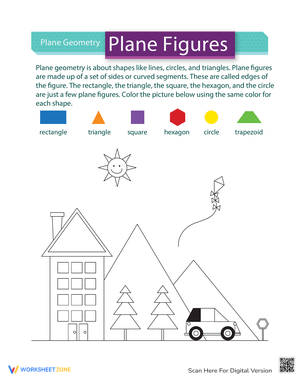
- Real-world shape spotting: Students identify 2D shapes in images of familiar objects — stop signs, yield signs, window panes, clock faces — connecting abstract attribute work to objects they encounter outside the classroom.
Academic vocabulary runs through every exercise. Words like vertex, vertices, polygon, and quadrilateral appear in instructions, labels, and prompts so students read and use them repeatedly — not just on a vocabulary quiz at the end of the unit.
Standard Alignment
Standard 2.G.A.1 requires students to recognize and draw shapes having specified attributes — a given number of angles or a given number of equal faces — and to identify triangles, quadrilaterals, pentagons, hexagons, and cubes. The classroom implication is that recognition alone doesn't satisfy the standard. Students must explain why a shape belongs to a category. A worksheet that places an irregular four-sided figure alongside a square and asks students to name them both as quadrilaterals puts 2.G.A.1 to work in a way a simple matching activity does not. The drawing tasks in particular address the "draw shapes having specified attributes" clause directly, which is easy to skip in whole-class instruction but shows up on district assessments.
Errors That Show Up in Real Student Work
Three error patterns appear reliably enough that it's worth knowing them before students sit down with the 2nd grade 2d shapes worksheets in this set.
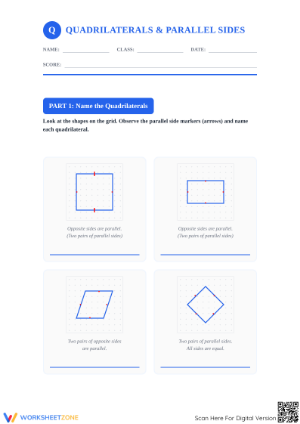
The first is orientation dependence. Students who correctly name a square will confidently call a rotated square a "diamond" and resist being told otherwise. They've built their category knowledge around how a shape looks in a standard position, not around its defining attributes. Worksheets that display the same quadrilateral in four or five different rotations — and ask students to name each one — disrupt this habit more efficiently than a classroom discussion alone.
The second is pentagon-hexagon word confusion. Most seven-year-olds count the sides accurately but then write the wrong name because both words are unfamiliar and sound somewhat similar. The error is in the word-to-number pairing, not in the counting. Side-by-side comparison exercises where students count, record, and label both shapes within the same activity correct this more reliably than teaching the two shapes in separate lessons a week apart.
The third is the unclosed figure in drawing tasks. When asked to draw a shape with a given number of sides, students frequently sketch something that almost closes — a small gap left where two sides should meet. Technically that's not a polygon, but students are focused on the side count and miss the gap entirely. Teaching students to trace the full perimeter of their drawn figure with a fingertip before writing the shape name catches this before it becomes a pattern.
Fitting These Worksheets Into Your Geometry Unit
Attribute counting charts make strong Monday warm-ups — they're quiet, independent, and take about eight minutes, which is enough time to settle a class after morning meeting without losing instructional time to setup. Drawing tasks work better mid-unit, once students have had whole-group exposure to the vocabulary and attribute language they'll need to interpret the prompts accurately.
Sorting exercises are worth pairing with manipulatives when you first introduce them. Have students physically sort a set of pattern blocks or cut-out polygons first, then use the 2nd grade 2d shapes worksheets to record their categories in writing. The physical sorting step reduces the cognitive load of simultaneously reading the attribute rule and marking the page — especially for students who need to handle materials before they can reason abstractly about them.
Irregular polygon worksheets fit naturally at the end of the unit, once students feel confident with standard shapes. They function as a useful challenge that reveals whether a student has genuinely internalized attribute-based thinking or is still relying on visual recognition. Use one as an exit ticket the day before your summative assessment, and you'll have a clear picture of who needs a small-group session the next morning.
Adjusting the Set for Different Student Levels
For students who are still building confidence with basic shape names, start with the attribute counting charts using only regular, standard polygons — equilateral triangle, square, regular pentagon, regular hexagon. Add a reference strip at the top showing each shape name next to a small illustration. This removes the vocabulary retrieval demand so students can focus entirely on counting sides and vertices accurately, without splitting attention between two unfamiliar tasks at once.
Students who move through the standard exercises quickly need problems that require them to generate examples rather than identify them. Ask these students to produce three entirely different quadrilaterals — a square, a non-rectangular parallelogram, and an irregular four-sided figure — and then write one sentence explaining what all three have in common. That task sits at a noticeably higher level than circling shapes in an array. One honest tradeoff: the most irregular polygon exercises sometimes frustrate students who are strong visual processors but haven't yet internalized the counting strategy. For those students, a brief anchor chart review before they work independently helps more than simplifying the task does.
Frequently Asked Questions
What 2D shapes are second graders required to know?
Under standard 2.G.A.1, second graders identify and draw triangles, quadrilaterals, pentagons, hexagons, and cubes. The critical shift from earlier grades is that identification must be based on attributes — number of sides and angles — not on overall appearance. A wide, flat triangle and a tall, narrow triangle are both triangles, and students at this level are expected to say why.
How should I teach students to count sides and vertices accurately?
Have students mark each side with a small pencil tick as they count it and circle each vertex when they find it. This physical marking strategy prevents double-counting and keeps students from losing their place on irregular polygons. It's a simple move, but it makes a real difference when students are working independently on an exercise with six or seven shapes to analyze — particularly when those shapes are non-standard forms they haven't seen before.
Can these worksheets serve as formative assessment tools?
Using the 2nd grade 2d shapes worksheets in this set as exit tickets gives you specific, actionable data — not just who got it, but what exactly went wrong. A drawing task tells you immediately whether a student understands closed figures. An attribute chart tells you whether they're confusing sides with vertices or writing "pentagon" when they counted six sides. That level of specificity makes the next day's small-group planning much faster than a general thumbs-up-thumbs-down check.
How do I handle the irregular polygon exercises for students who are struggling?
Don't remove them entirely — the irregular shapes are where the real attribute-based thinking gets tested. Instead, sit with struggling students and count aloud together through one example before they work independently. The goal is to make counting systematic and deliberate, not to make the shapes easier. Once a student sees that a strange-looking six-sided figure is still a hexagon because it has six sides and six angles, the conceptual breakthrough tends to hold.













 Interactive Worksheet Maker
 Quiz Maker
 Word Search Maker
 Crossword Puzzle Maker
 Word Scramble Generator
 Sentence Scramble Generator
 Handwriting Worksheet Generator
 Name Tracing Generator
 Fill In The Blank Generator