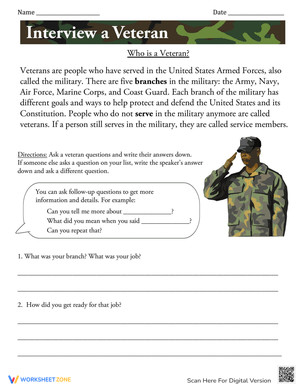
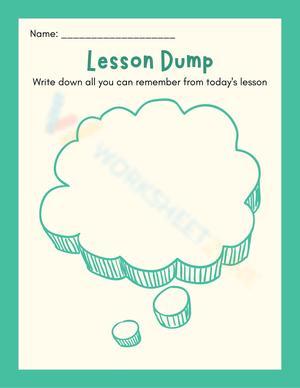
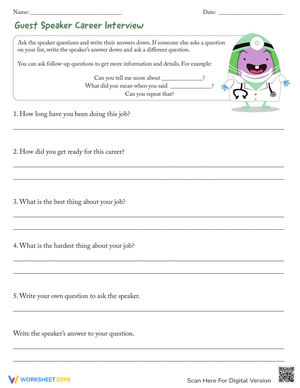
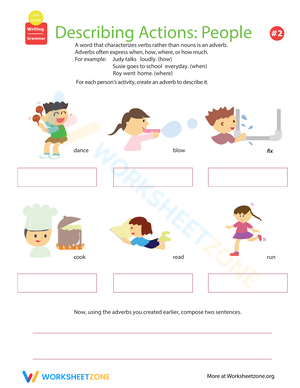
These brainstorming pdf worksheets for 2nd grade give teachers a matched set of pre-writing organizers built around the four main writing modes second graders work in all year — opinion, informational, narrative, and descriptive. Each worksheet targets a specific planning move, so teachers can reach for the right tool rather than adapting one generic template for every assignment type.
Skills Built Across the Set
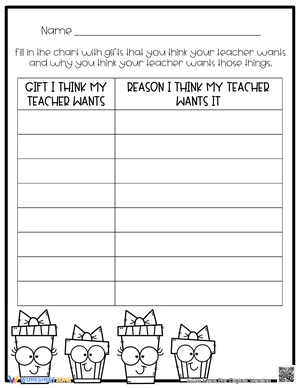
The set covers five organizer formats, each matched to a different writing task. For opinion writing, students use a two-column planner: claim on one side, two supporting reasons on the other. For narrative writing, a story map asks students to name the main character, the setting, the problem, and one solution — a four-part structure that directly mirrors the simple stories second graders read in the same ELA unit. For descriptive writing, a sensory detail frame prompts students to brainstorm what their subject looks, sounds, smells, and feels like. That structure pushes past the "it was fun" language that appears constantly in unplanned second-grade drafts, because students have to name something specific before they can move on.
The list-based templates deserve a separate note. The numbered list organizer is among the more underused formats in early-grade writing instruction, and brainstorming pdf worksheets for 2nd grade that include this format make a measurable difference for procedural writing. Students who complete a numbered list before drafting produce correctly sequenced how-to paragraphs far more consistently than students who skip the planning stage — inverting or omitting steps is the most common structural error in second-grade how-to writing, and it almost always traces back to a missing pre-writing plan.
What Student Work Actually Reveals About the Planning Stage
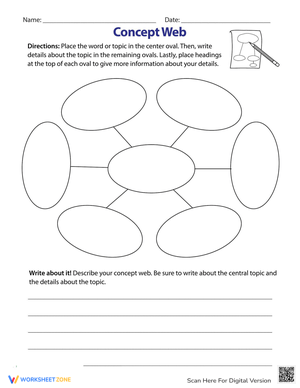
The most persistent brainstorming error at this grade level is not a blank organizer — it is one full of vague category labels. A student writing about dogs will write "fur," "tail," "legs," and "ears" in the four web circles, and each word is technically accurate. But none of it helps them draft a sentence. Before releasing students to work independently, spend three minutes modeling the difference between writing "eyes" (a category) and "brown eyes that look droopy when he's tired" (a detail worth writing about). That distinction is the hinge on which the whole assignment turns, and most students have never been shown it explicitly.
A second pattern appears with strong verbal communicators: they treat the brainstorm as a draft. They write complete sentences in the organizer boxes, run out of space mid-thought, and announce they are done. Placing a blank sheet of paper next to the organizer before they begin — and saying "that blank paper is where your story goes; this is just your thinking map" — usually re-orients them immediately. The two-item setup makes the distinction concrete rather than abstract.
Where These Worksheets Fit in a Second-Grade Writing Block
A typical second-grade writing block runs 40 to 50 minutes. Brainstorming should occupy the first 10 to 12 minutes — enough time for a brief whole-class model, independent organizer work, and a quick partner share before drafting begins. If the brainstorm stretches to 20 minutes or more, students lose energy before a single sentence of the actual draft is written.
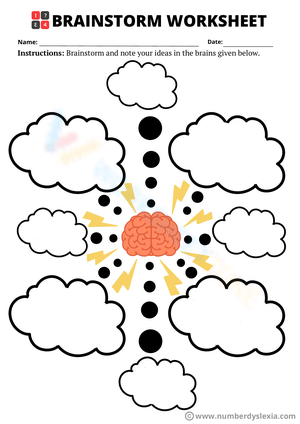
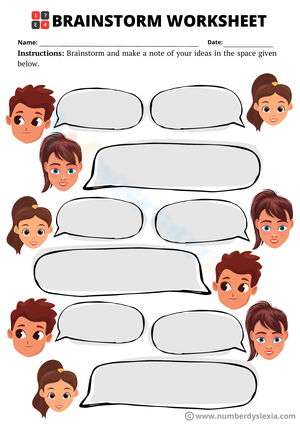
The idea web worksheet works well as a Monday launch routine at the start of a new writing unit. Project the blank organizer, pick a shared class topic, fill in two branches together, then release students to apply the same moves to their individual topics. Seeing one branch filled in is often enough to get a reluctant writer started — the blank-circle problem disappears once students understand that the expectation is a phrase, not a perfect sentence.
These brainstorming pdf worksheets for 2nd grade also work effectively as homework sent home the night before an in-class drafting day. Students who arrive with a completed organizer need far less frontloading at the start of class, which frees up additional conferencing time during the drafting block — particularly valuable for the handful of students who need a one-on-one conversation before they can move forward.
Standard Alignment
The set most directly supports CCSS.ELA-LITERACY.W.2.5, which asks students to focus on a topic and strengthen their writing through planning, revision, and editing with teacher guidance. In practical terms, a completed brainstorming worksheet is the artifact that shows a student can "focus on a topic" before drafting — it belongs in a writing portfolio alongside the final draft as evidence of the planning process. The individual organizer types also align to W.2.1 (opinion), W.2.2 (informational/explanatory), and W.2.3 (narrative), each matching the structural expectations those standards place on second-grade writers.
How to Adjust the Set for Different Writers in Your Room
For students who struggle to generate vocabulary independently — emergent writers, English language learners, students with language processing challenges — offer the idea web with three or four starter words already printed in the outer circles. Students choose the ones that fit their topic, cross out what does not apply, and add their own details alongside. This removes the vocabulary retrieval bottleneck while preserving the organizational work the worksheet is meant to build. The structure stays the same; the entry point shifts.
Students who move quickly through the brainstorm benefit from an added step rather than a different worksheet. After completing the standard organizer, ask them to circle their three strongest details and write one sentence for each in a fast-draft box at the bottom. That step previews the move from planning to drafting without requiring a separate handout or a different activity entirely.
Brainstorming pdf worksheets for 2nd grade that pair illustrated prompt boxes — small images alongside written cues — with each organizer section work particularly well for students who are still building reading fluency. Students should not have to decode the worksheet before they can use it. When the directions are immediately visual, independent work starts faster and stays more focused, especially in the final stretch before the writing block ends.
Frequently Asked Questions
Which organizer format should I use for which writing task?
Match the organizer to the writing mode. Use the idea web for descriptive or personal narrative topics where students need to gather details about a subject. Use the story map when students are writing fiction and need to plan character, setting, and plot. Use the numbered list template for procedural writing, and the two-column planner for opinion pieces. When in doubt, the idea web is the most flexible format and works as a starting point for most topics at this grade level.
Should students complete a brainstorming worksheet for every writing assignment?
Not for every task. Quick journal entries or morning message responses rarely need a full organizer — students can generate ideas mentally or verbally for short, low-stakes writing. For any assigned piece that will go through revision, the 10-minute investment in an organizer is worth it. The long-term goal is for students to internalize this habit, so consistent use across the year makes independent planning more automatic by the time they reach third grade.
Can a completed brainstorming worksheet serve as formative assessment?
Yes, and it is one of the more practical formative tools at this grade level. A quick look at a student's idea web before drafting tells a teacher whether the student understands the topic, can distinguish a main idea from a supporting detail, and has enough material to sustain a paragraph. Students with only one or two items on the organizer — or who have filled it entirely with vague category labels — need a short conference before they draft, not after. Catching that gap early takes two minutes; fixing a draft built on thin planning takes considerably longer.
What should I do when a student completes the organizer but ignores it while drafting?
This is common with confident verbal storytellers. Have the student place the worksheet directly above their draft paper as they write, and after each sentence, ask them to point to the detail on the organizer they just used. That physical connection between plan and draft takes about 30 seconds to establish. Most students maintain it once prompted, and it makes the value of the pre-writing work immediately visible to them rather than abstract.












 Interactive Worksheet Maker
 Quiz Maker
 Word Search Maker
 Crossword Puzzle Maker
 Word Scramble Generator
 Sentence Scramble Generator
 Handwriting Worksheet Generator
 Name Tracing Generator
 Fill In The Blank Generator