


























Views
Downloads

Grade 2-3 Back to School Card — Printable No-Prep Worksheet
Paste this activity's link or code into your existing LMS (Google Classroom, Canvas, Teams, Schoology, Moodle, etc.).
Students can open and work on the activity right away, with no student login required.
You'll still be able to track student progress and results from your teacher account.
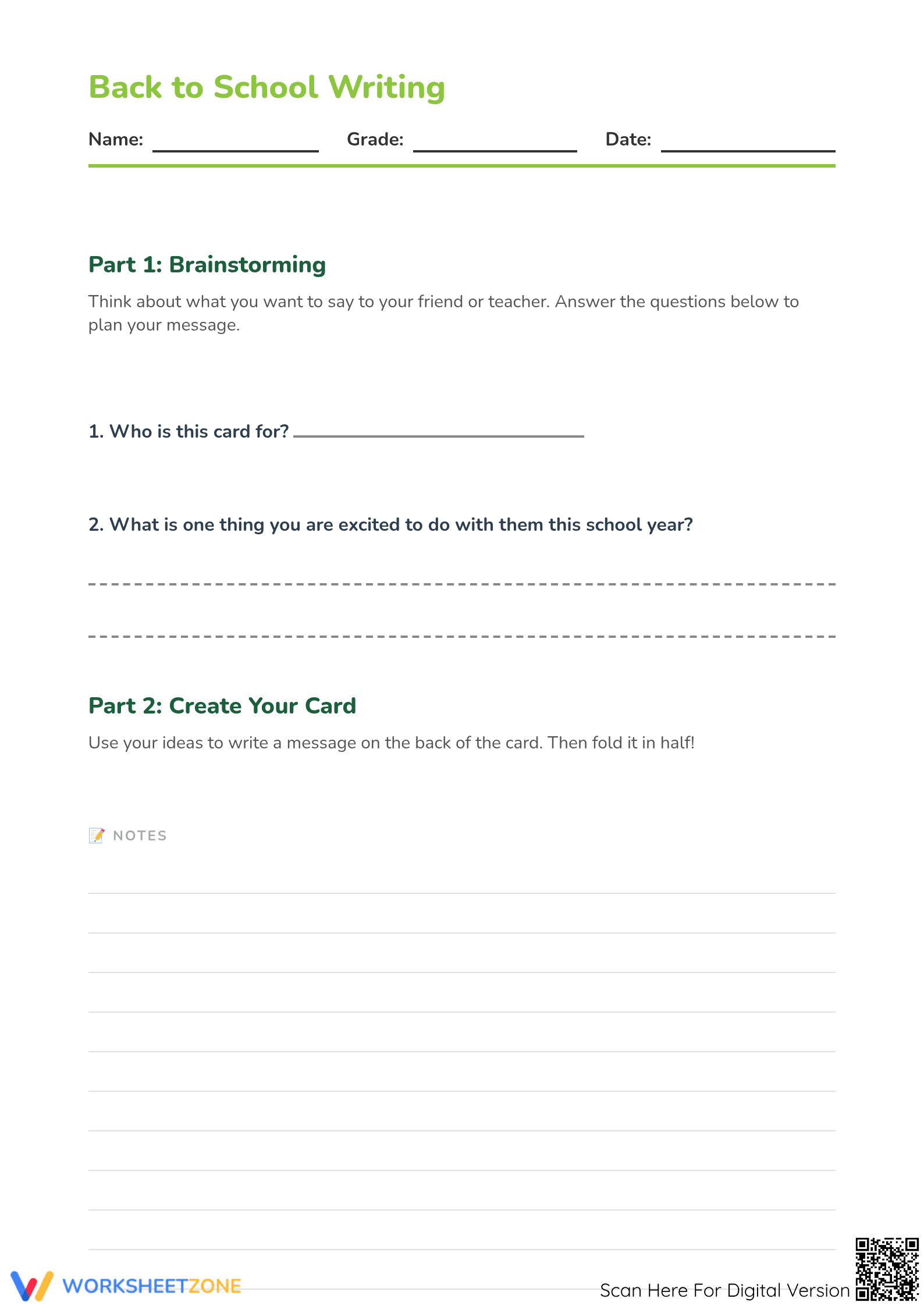
This printable back-to-school card worksheet helps second and third-grade students practice purpose-driven writing while celebrating the start of a new academic year. By guiding learners through a structured brainstorming process before they draft their final message, this resource ensures students produce thoughtful, well-organized greetings for their peers or teachers.
At a Glance
- Grade: 2-3 · Subject: ELA
- Standard:
CCSS.ELA-LITERACY.W.3.4— Produce writing appropriate to task and purpose- Skill Focus: Purpose-driven writing and brainstorming
- Format: 2 pages · 3 tasks · No answer key required · PDF
- Best For: First week of school activities
- Time: 20–30 minutes
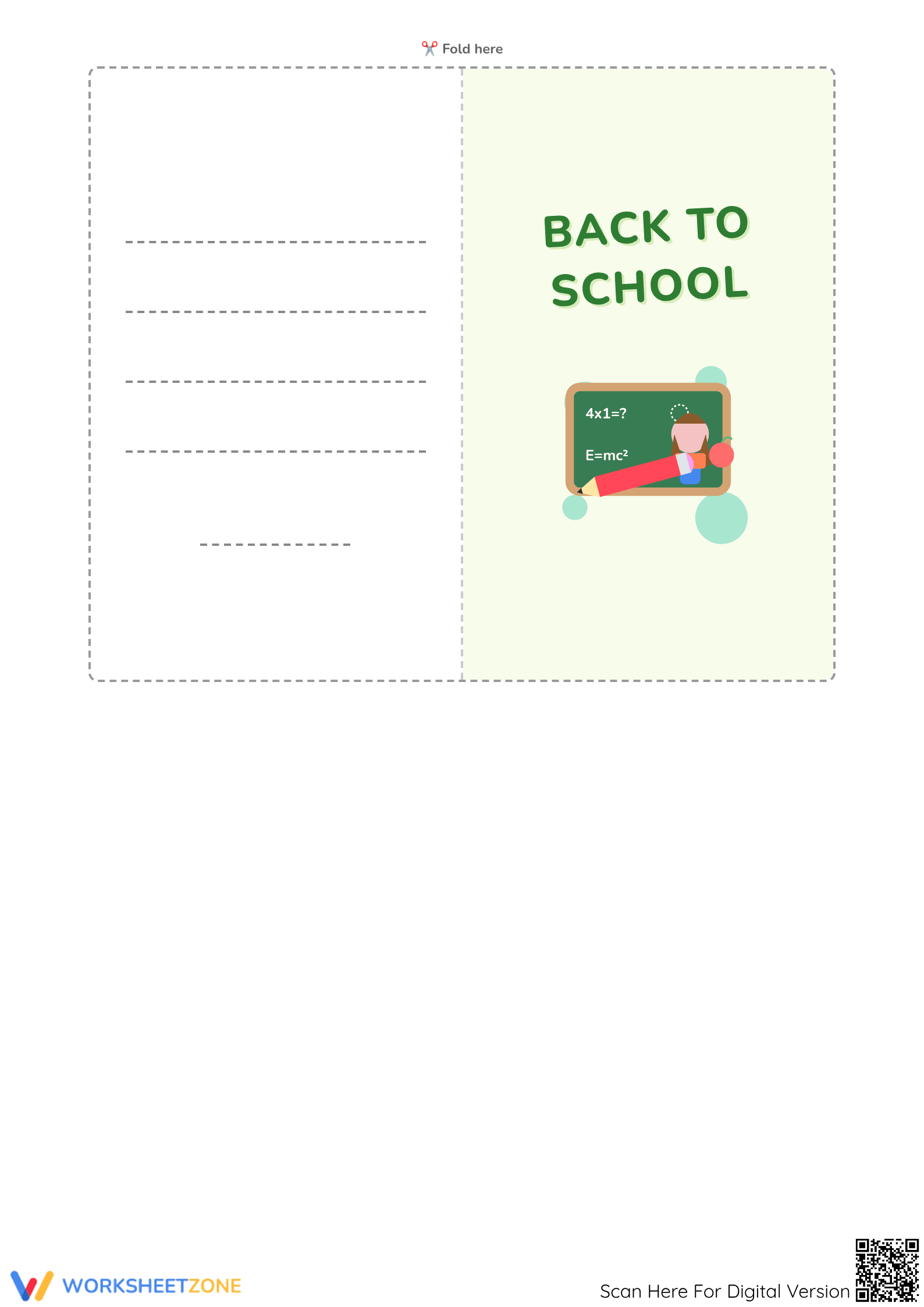
This two-page resource features a clear, step-by-step progression to support young writers. The first page includes a dedicated brainstorming section with two guided prompts to help students identify their audience and articulate their excitement for the upcoming year. The second page provides a foldable card template complete with a festive cover design and lined interior space for students to write their final, polished messages.
Designed for immediate classroom implementation, this activity requires virtually no teacher setup:
- Print (1 minute): Simply print the two-page PDF double-sided or as separate sheets for each student.
- Distribute (1 minute): Hand out the worksheets along with pencils, scissors, and coloring materials.
- Review (2 minutes): Briefly read the brainstorming prompts aloud and demonstrate how to fold the final card.
With under five minutes of total prep time, this is an ideal resource for busy back-to-school mornings or as a reliable, self-explanatory activity for a substitute teacher's emergency sub plan.
This activity aligns with CCSS.ELA-LITERACY.W.3.4: "With guidance and support from adults, produce writing in which the development and organization are appropriate to task and purpose." It also supports foundational language skills as students practice capitalization and punctuation in a real-world context. Both standard codes can be copied directly into lesson plans, IEP goals, or district curriculum mapping tools.
Teachers can utilize this resource during the first week of school as a morning work assignment to help students settle into their new routines. It also serves as an excellent icebreaker activity; after completing their cards, students can exchange them with classmates to foster early peer connections. As a formative assessment tip, observe students during the brainstorming phase to gauge their ability to generate ideas independently before they begin drafting their final sentences.
This worksheet is designed for second and third-grade students who are developing their independent writing skills. The structured brainstorming section provides built-in scaffolding, making it accessible for learners who typically struggle with a blank page. For a comprehensive back-to-school literacy block, pair this card-making activity with a read-aloud of a popular first-day-of-school picture book or a collaborative anchor chart about classroom expectations.
Engaging students in authentic writing tasks early in the academic year establishes a positive classroom culture and reinforces essential literacy skills. According to Fisher & Frey (2014), providing structured scaffolds like brainstorming prompts significantly improves student output and confidence in independent writing tasks. By aligning with CCSS.ELA-LITERACY.W.3.4 to produce writing appropriate to task and purpose, this resource ensures that seasonal activities maintain rigorous academic value. Integrating creative expression with structured planning helps young learners understand the connection between organizing their thoughts and communicating effectively with an audience.


