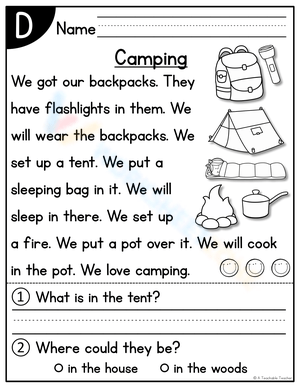
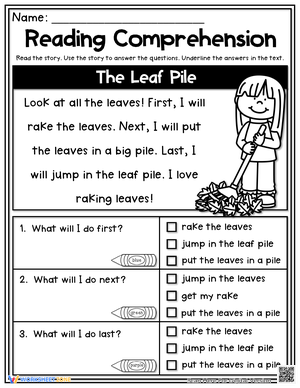
These leveled reading worksheets for 2nd grade give teachers a ready-made system for differentiated small-group instruction without building every resource from scratch. Second grade is the year reading abilities diverge most sharply — it is entirely typical to have a student reading comfortably at a late first-grade level sitting three seats from a student tackling early chapter books. The set addresses that reality with multiple complexity levels spanning phonics, fluency, and comprehension, so every student is working with text that is genuinely appropriate for where they are right now.
Skills at the Core of Each Worksheet
Second grade marks the transition from decoding as the primary cognitive task to reading for meaning — what literacy researchers call the shift from learning to read to reading to learn. Each worksheet targets the skills central to that transition.
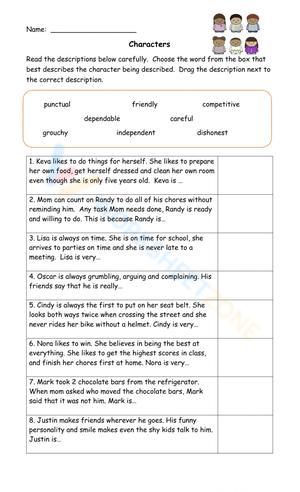
- R-controlled vowels and vowel teams: Students encounter ar, or, er, ir, ur, and vowel team patterns (ai, ay, oa, oe) inside connected passages, not isolated word lists. That context is where transfer to real reading happens.
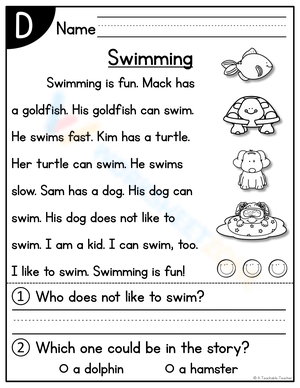
- Fluency: Short passages built for repeated readings. Students mark phrase boundaries, circle end punctuation, and practice reading expressively rather than decoding word by word.
- Comprehension — literal and inferential: Questions move from recall to inference. Students underline text evidence before writing their answers, building the habit of returning to the passage before responding.
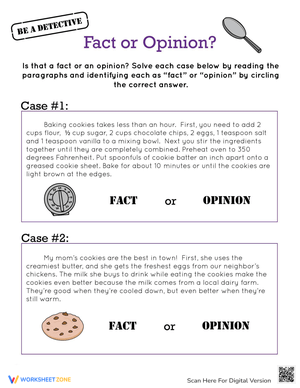
- Informational text structure: Upper-level worksheets introduce main idea, supporting details, and the distinction between fact and opinion — skills that become core expectations in third grade.
The progression across levels is deliberate. Lower-level worksheets use simple, predictable text structures; higher-level worksheets introduce denser sentence constructions and more complex information, which is where genuine reading growth happens for students working at or above grade level.
Error Patterns That Surface in Student Work
The most persistent pattern at this grade level is not decoding failure — it is accurate decoding without meaning monitoring. A student reads a passage fluently, then answers a literal question by pulling the wrong sentence, often one that contains a key word from the question but does not actually address it. These worksheets surface that problem quickly because the comprehension tasks require students to underline supporting text before writing an answer. When the underlined sentence does not answer the question, the gap is right there on the worksheet — there is no guessing about what went wrong.
R-controlled vowels generate a specific substitution error worth anticipating. Students who read "her" correctly during oral reading will frequently write "here" in a written response, because the vowel sound is unstable enough that visual memory overrides phonological checking once students shift from reading to writing mode. That error shows up more clearly in the open-response sections of these worksheets than it would on multiple-choice items, which is an advantage for diagnosis.
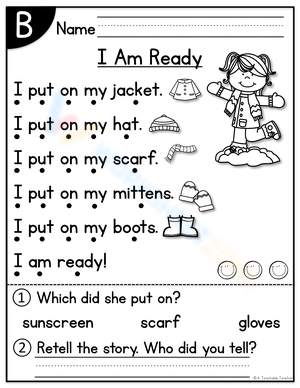
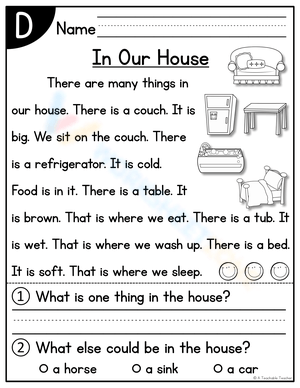
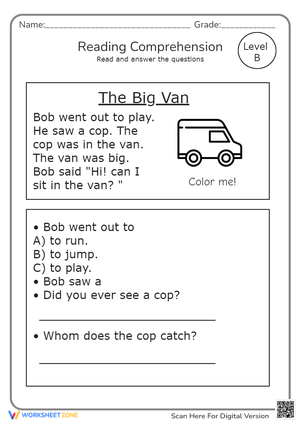
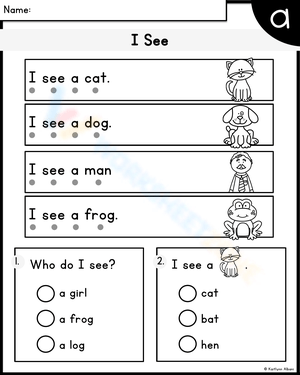
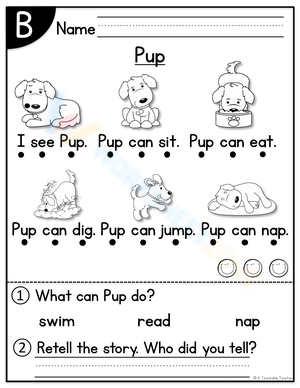
Inferencing is where the sharpest level differences appear in student work. Lower-level worksheets pair inference questions with visual support — an illustration that contains information the text implies but does not state. Higher-level worksheets remove that support entirely. Students who consistently quote text verbatim when asked how a character feels, rather than synthesizing actions into an interpretation, have not yet distinguished between locating information and inferring it. That distinction is rarely made explicit in instruction; the worksheets make it visible in student responses.
Where These Worksheets Fit in a Real Instructional Week
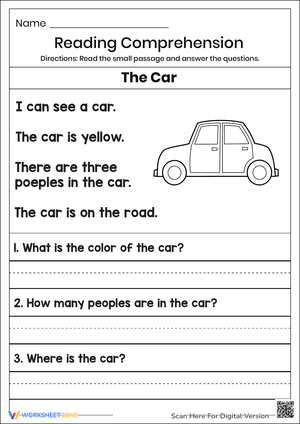
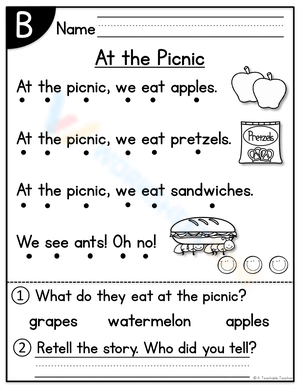
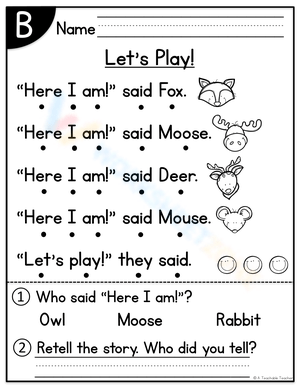
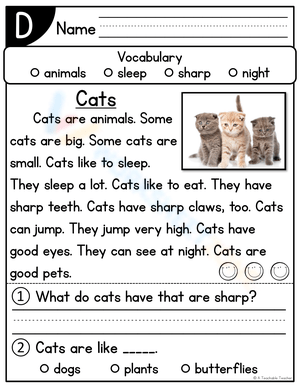
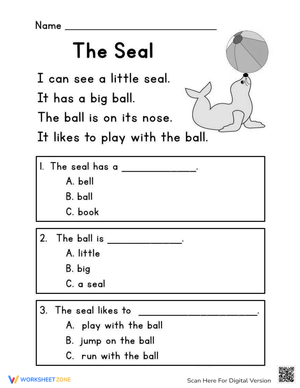
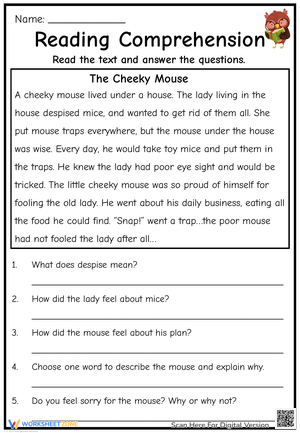
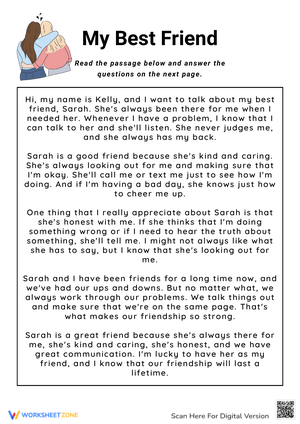
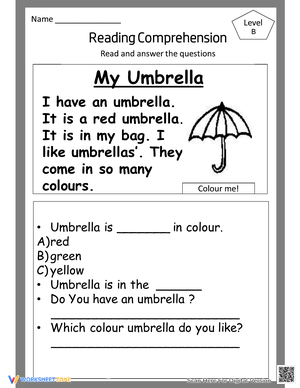
The most common use is small-group rotations: teacher-led instruction with one group while others work at independent stations. Leveled reading worksheets for 2nd grade fit that station slot well because the structure is clear enough that students work through them without needing teacher support mid-task. A short passage plus four to six follow-up items keeps most second graders on task for 12 to 15 minutes, which maps cleanly to a standard rotation block.
A few less obvious placements are worth building into the week. Monday warm-ups after the weekend reading gap work well with an independent-level passage — it gets decoding running again before new instruction begins and takes under ten minutes. End-of-week comprehension checks, where the teacher assigns the level-appropriate worksheet and circulates while students work, produce useful formative data without the overhead of a formal assessment. For students who finish guided reading work early, a higher-level worksheet makes a strong anchor task because it extends the same skill set without introducing new concepts that might spark questions mid-lesson.
Standard Alignment
The worksheets address CCSS.ELA-LITERACY.RF.2.3 (phonics and word recognition, including r-controlled vowels, vowel teams, and diphthongs), RF.2.4 (reading with sufficient accuracy and fluency to support comprehension), RL.2.1 and RI.2.1 (asking and answering questions using key details from the text), and RI.2.6 (identifying the main purpose of an informational text). In classroom terms, RF.2.3 and RF.2.4 dominate first-semester instruction when phonics patterns are still consolidating. By second semester, RL.2.1 and RI.2.1 become the primary focus as decoding becomes more automatic and comprehension is the main instructional bottleneck. The set reflects that progression — phonics-heavy worksheets suit the first half of the year, and the inference and main-idea worksheets align with the instructional work of spring.
Reaching Students at Every Level in Your Classroom
The multiple complexity levels in the set handle the core differentiation work, but two specific adjustments extend the resources at the margins. For students reading well below grade level — late first-grade range — the lower-level worksheets pair well with a brief word bank added to the written-response section. The passage itself stays unchanged; the word bank removes the retrieval burden from the answer task and lets teachers assess comprehension separately from vocabulary recall. That distinction matters: a student can understand a passage fully and still be unable to produce a written response if they cannot spell or retrieve the target word.
At the upper end, students who move through the highest-level worksheet quickly benefit from a second pass with a specific annotation task: mark every inference the author expects the reader to make — information that is implied but never directly stated. Most capable second graders have not had that distinction made explicit, and it extends each worksheet significantly without requiring additional materials. These leveled reading worksheets for 2nd grade also serve English language learners well when paired with sentence frames for the written-response sections, giving students a structure for expressing comprehension without the added burden of generating academic syntax from scratch. Pre-teaching the three or four target vocabulary words before the reading session — rather than leaving them as a post-reading task — makes an additional difference for ELL students and takes about 90 seconds of setup.
Frequently Asked Questions
How do I decide which level to assign each student?
A running record or a brief informal oral reading check is the most reliable starting point. The target is a text where the student reads with 90 to 95 percent accuracy and can answer literal comprehension questions without rereading the passage multiple times. If a student finishes quickly and scores consistently well, try the next level up. If they stop to decode more than two or three words per paragraph, the level is appropriate for guided group instruction but too high for independent station work.
Can I send these worksheets home for practice?
Yes, but the assignment should match the student's independent level — not their instructional level. Sending home a worksheet at the instructional level tends to come back incomplete or finished with heavy adult help, which tells you nothing useful about what the student can do on their own. Leveled reading worksheets for 2nd grade assigned at the right level give families a clear, low-pressure view of what their child is practicing and where they are making real progress.
What should I do when a student reads accurately but misses most comprehension questions?
That pattern points to a decoding-comprehension disconnect — adequate word recognition without active meaning monitoring. The short-passage format on these worksheets is useful for working through this directly: have the student reread and stop after each paragraph to state one thing they just learned or noticed. Most students in this situation have simply never been asked to pause and check meaning during reading; the monitoring habit is not yet built. That brief rereading task, done right on the completed worksheet, usually clarifies whether the issue is text level, comprehension skill, or the monitoring habit itself.
How often should I move students to a new level?
Formal reassessment every six to eight weeks is a reasonable rhythm, but completed worksheets can flag readiness to move earlier. When comprehension scores are consistently strong and decoding errors have disappeared from written responses, it is time to try the next level up. Second graders can accelerate quickly mid-year — a student who was firmly at one level in October may be genuinely ready for two levels up by January. Waiting for a formal testing window risks keeping capable readers working at a level that is no longer challenging them.












 Interactive Worksheet Maker
 Quiz Maker
 Word Search Maker
 Crossword Puzzle Maker
 Word Scramble Generator
 Sentence Scramble Generator
 Handwriting Worksheet Generator
 Name Tracing Generator
 Fill In The Blank Generator