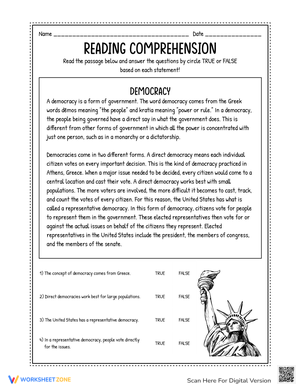
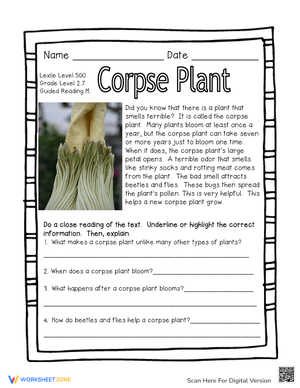
These 2nd grade level m printable worksheets address the specific shift that happens at Fountas & Pinnell Level M — the point where picture support drops away, sentence structures lengthen, and students must do far more interpretive work than the surface of the text demands. Teachers who work at this level often see the gap clearly: a student reads aloud with growing fluency, then stares at the comprehension questions without knowing where to start. These resources give second graders structured, repeated practice with exactly the skills Level M texts require.
Skills These Worksheets Build
Level M makes specific demands that earlier levels don't, and the set covers both fiction and informational passages because reading skills transfer differently across genres. A student who tracks character motivation well may still struggle to navigate a biographical or procedural text where the organizational logic is fundamentally different. Each worksheet targets one or more of these areas:
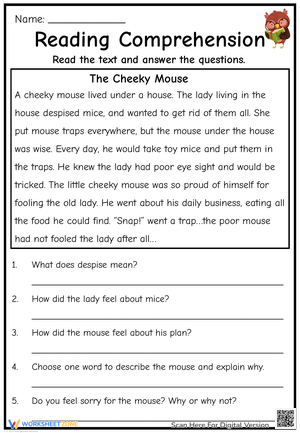
- Making inferences from character behavior and dialogue rather than from direct statements
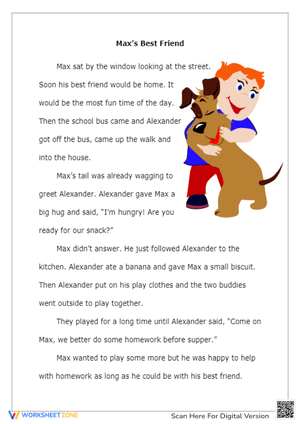
- Tracking characters and events across chapter-length passages without illustration support
- Decoding multi-syllabic words by combining prefix and suffix knowledge with context clues
- Distinguishing main idea from supporting detail in informational passages
- Interpreting figurative language — similes and idioms that begin appearing consistently at this level
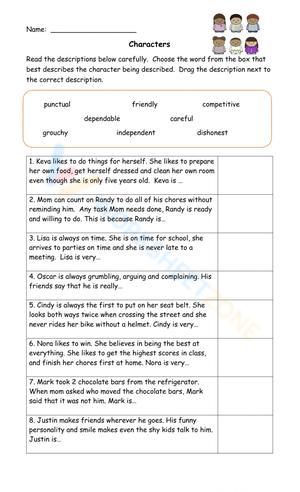
- Comparing how two characters respond differently to the same event or challenge
The fiction worksheets draw on realistic and folk tale structures that second graders recognize, which keeps the content accessible while the comprehension tasks push. The informational worksheets include passages on natural science, biography, and community topics — enough variety to expose students to the different text structures they will encounter in third grade.
Frequent Student Errors Worth Watching For
The most common pattern at Level M isn't decoding failure — it's surface-level comprehension. A student who reads fluently will still mark the answer that appears in the sentence immediately above the question prompt, because that's the habit built at lower levels. At Level M, many questions require synthesizing details from two or three paragraphs and drawing a conclusion the author never states. Students who answer by proximity rather than by reasoning reveal this pattern quickly, and a completed worksheet surfaces it in a way a running record score alone won't.
Vocabulary is a second predictable trouble spot. When a student encounters uncomfortable in a passage, many guess from the surrounding sentences without considering the prefix un- and suffix -able. The approximation gets them close enough to keep moving, but missing the morphological signal becomes a habit that compounds as texts grow harder. The word study exercises here train students to check word structure and surrounding context together rather than leaning on one strategy in isolation.
How to Build These Worksheets Into Your Lesson Plans
In small-group guided reading, use each worksheet before releasing students to work independently. The passage becomes your shared text — you read aloud, think aloud, annotate for character clues, and pause where the author implies rather than states. Students see the internal process before they're asked to reproduce it. These 2nd grade level m printable worksheets fit that sequence cleanly: they're pitched at the right complexity to model on and then hand off within a single session.
For independent reading centers, these work best when students have had at least two guided sessions with Level M texts first. Sending a student to a center with a worksheet at an unfamiliar level and no prior exposure creates the frustration the worksheet is meant to prevent. A reliable sequence: whole-group strategy introduction, small-group practice with teacher support, then center work using a worksheet that matches that week's comprehension focus.
The eight to ten minutes before lunch or the closing block on Friday are often lost at this grade level. A single-passage worksheet with three or four targeted questions fills that time productively — no transitions, no new materials, just a pencil and a clear task students can complete without teacher facilitation.
Standard Alignment
The inferencing and character analysis questions connect directly to CCSS.ELA-LITERACY.RL.2.3, which expects students to describe how characters respond to major events, and RL.2.6, which addresses differences in character perspective. Vocabulary exercises align with L.2.4 — specifically the second-grade expectation that students use context clues and known word parts to determine meaning. The informational passages address RI.2.1 and RI.2.4, covering both close-reading comprehension and domain-specific vocabulary work.
For teachers using the Fountas & Pinnell Benchmark Assessment System, Level M sits at the expected end-of-year instructional benchmark for second grade. The comprehension responses students produce on these worksheets give you formative data that runs alongside running record scores — inferencing gaps in particular show up in written responses in ways that fluency rates alone don't capture.
Adjusting the Set for Mixed-Ability Classrooms
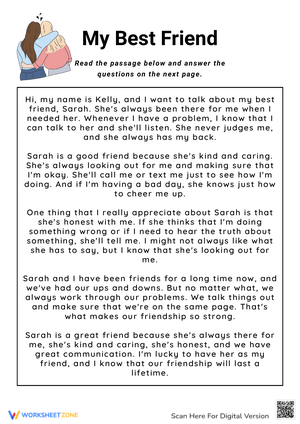
Students approaching Level M from Level K or L benefit most from the graphic organizer worksheets first — the ones that ask them to map character traits or sequence events in a visual format before writing full sentences. Holding the structure visually reduces cognitive load so students can focus on the thinking rather than manage writing demands at the same time. Once the comprehension habit is consistent, extended response formats become more accessible.
These 2nd grade level m printable worksheets also hold value for students reading above Level M when paired with a more complex companion text. The task — writing a supported inference, comparing two characters' perspectives — remains a genuine stretch even when the passage itself feels comfortable. Depth of response becomes the differentiation, not the text level.
English learners at Level M often have specific vocabulary gaps rather than comprehension gaps. Identifying three to five words from each worksheet before the session — not every unfamiliar term, just the ones that carry the most meaning weight — prevents vocabulary from derailing the inferencing work the student is otherwise capable of doing.
Frequently Asked Questions
What separates Level M from Level L in practical terms?
At Level L, illustrations still reinforce meaning enough that a student who misses a vocabulary word can often recover by studying the picture. At Level M, that support is mostly gone. Students also begin working with chapter-length structure, holding information across a longer arc and returning to earlier details to answer later questions. The gap is real enough that students who read Level L texts comfortably often need deliberate practice with the strategies Level M requires before they can handle it independently.
How do I know if a student is ready for Level M?
A running record at Level L showing accuracy at or above 96% with solid retelling is the clearest data point. Beyond the numbers, watch whether the student self-corrects when meaning breaks down. That monitoring behavior matters more than accuracy alone — a student who reads through a confusing sentence without pausing may score well on decoding while struggling with the inferential demands that appear at this level. If the self-correction rate is low, work on meaning-monitoring before pushing to Level M materials.
Can these worksheets serve as formative assessment?
These 2nd grade level m printable worksheets are more revealing as formative tools than a simple fluency check. A student's written response to an inferencing question shows exactly where the thinking breaks down. Watch specifically whether students cite the text when explaining a character's motivation or whether they reason from personal experience alone. The shift from "I think he was sad because I would feel that way" to "He probably felt sad because the author says he walked away without speaking" is the critical move at Level M, and the written response makes it visible in a way a reading checklist doesn't.
Are these appropriate for homework?
They work well as homework once students have practiced the specific skill in class first. Sending home an inferencing worksheet before any guided instruction on inferencing puts students in the position of teaching themselves a strategy — unfair and usually unproductive. After a guided session where the strategy has been introduced and practiced with teacher support, the same worksheet type makes strong homework: the task is clear, the skill is familiar, and the questions guide parents through the reading without requiring background knowledge in leveled literacy programs.












 Interactive Worksheet Maker
 Quiz Maker
 Word Search Maker
 Crossword Puzzle Maker
 Word Scramble Generator
 Sentence Scramble Generator
 Handwriting Worksheet Generator
 Name Tracing Generator
 Fill In The Blank Generator