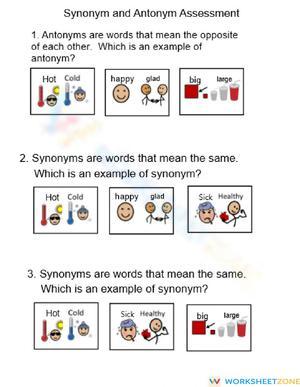
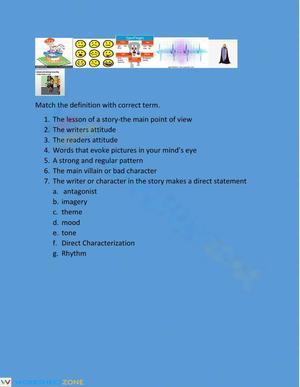
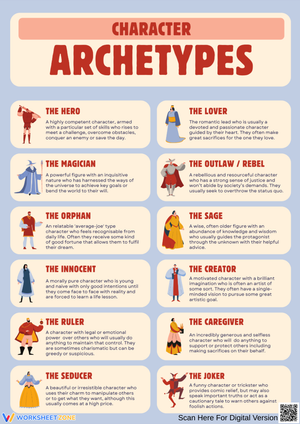
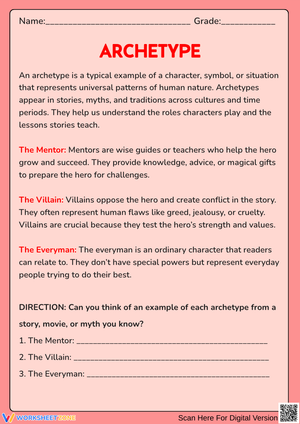
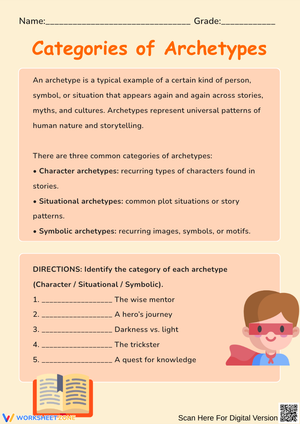
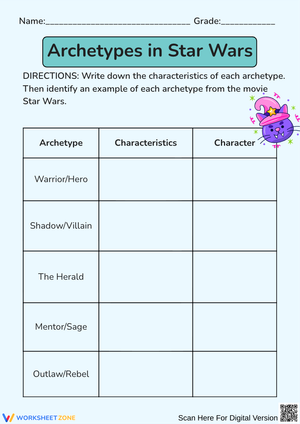
These language printable worksheets for 11th grade target the specific conventions and vocabulary demands that separate surface-level writing from college-ready prose — parallel structure, hyphenation, connotation, figurative language, and etymology work that helps students decode Tier 2 and Tier 3 vocabulary across disciplines. Each worksheet addresses one skill with enough depth to work as a standalone mini-lesson, a pre-draft review, or a targeted bell-ringer.
The Specific Skills Targeted Across the Set
Grammar work at this level moves well past surface error correction. Students are working with sophisticated syntax — subordinate clauses nested inside compound sentences, appositives used for stylistic effect, relative clauses where who and whom become genuinely confusing because the pronoun's grammatical role is buried by intervening words. Each worksheet asks students to identify, label, rewrite, and produce: they underline the faulty element, annotate the error type, revise the structure, and then write a parallel example of their own.
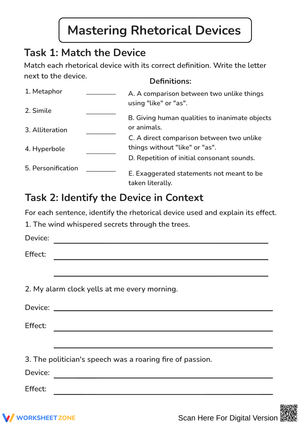
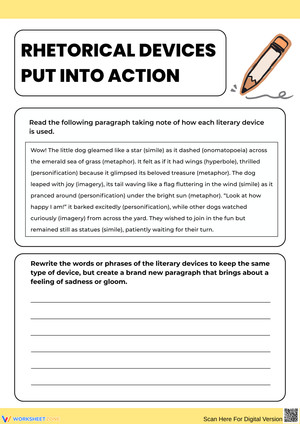
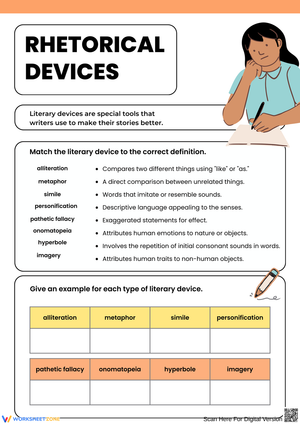
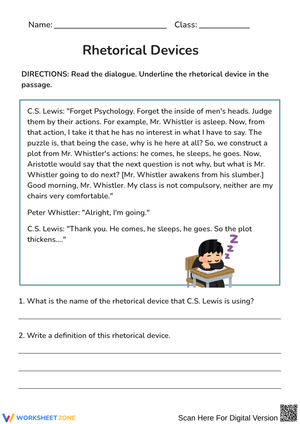
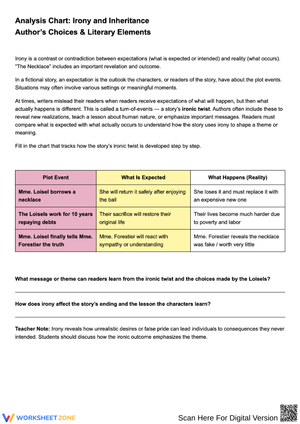
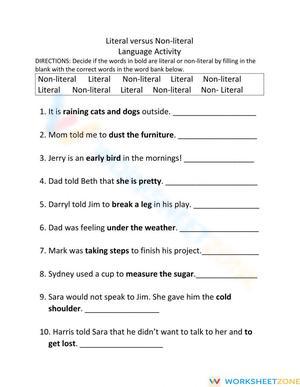
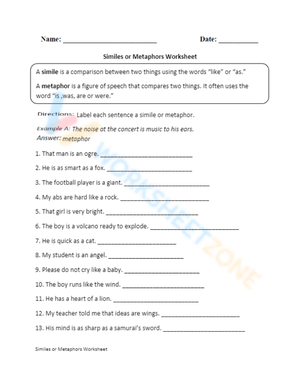
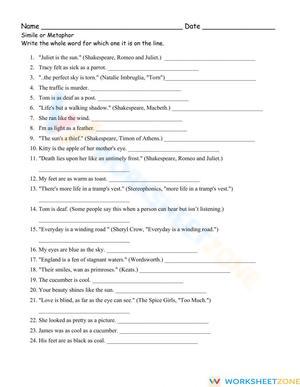
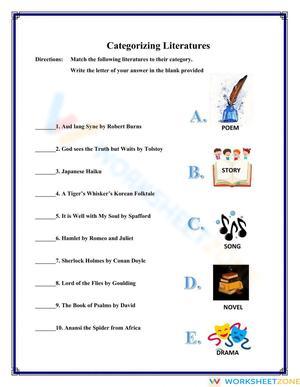
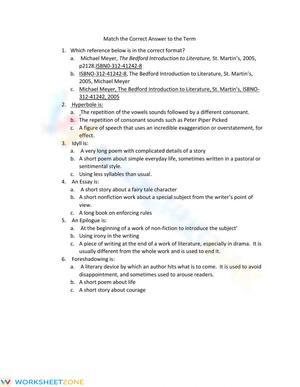
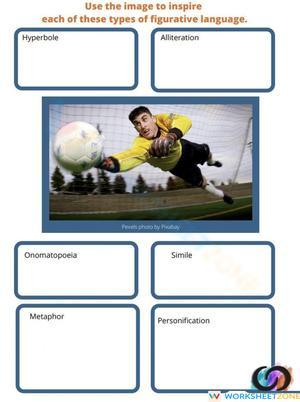
Vocabulary work covers three distinct areas. Etymology comes first — students examine Greek and Latin roots to build decoding strategies for unfamiliar academic terms rather than guessing from context alone. Second, connotation and denotation: students sort near-synonyms by tone and explain in writing why the word choice matters. Third, figurative language in context: students read short passages, identify euphemism, paradox, or hyperbole, and write a sentence explaining how the device serves the author's purpose. Most exercises require a written justification, which is where the actual thinking happens and where the gap between students who understand the rule and students who can apply it becomes visible.
The Errors That Show Up Most in 11th-Grade Work
Faulty parallelism is the most persistent grammar problem at this level, and it persists because it's invisible until students learn to hear rhythm. The typical version looks something like: She liked running, to read, and any chance to sketch. Students mark that sentence correct because all three activities are present and the meaning is clear — they don't yet hear that the list breaks its own grammatical contract. Worksheets that ask students to read lists aloud, name the form of each item, and normalize the structure build that rhythmic awareness in a way grammar explanation alone rarely does.
The who/whom distinction creates a second pattern worth watching. Students who can correctly identify subject and object in isolation still write "who did you call?" in formal essays because they trust conversational instinct over grammatical logic. Hyphenation trips up strong writers for a similar reason — they know "well-known actor" requires the hyphen before the noun but will write "the actor was well known" without registering that the predicate position changes the rule entirely. Both errors need repeated pattern recognition across varied contexts, not just rule memorization followed by one practice round.
Connotation errors are subtler than grammar errors but just as consequential. A student asked to revise a character analysis will swap determined for stubborn and feel confident the words are equivalent because both describe persistence. What they miss is the evaluative shift: determined signals admiration; stubborn signals resistance. The vocabulary worksheets address this directly by presenting word pairs and asking students to write two sentences — one where each word fits and one where it doesn't — so they have to feel the difference rather than recognize it in a multiple-choice frame.
How to Build These Worksheets Into Your Lesson Plans
The most consistently effective approach is pairing each worksheet with a mentor text the class is already reading. If students are analyzing a political speech or a long-form magazine piece, pull the parallel structure worksheet and spend eight minutes before the reading block having students identify parallelism in three passages. When they encounter the same construction in the reading, they recognize it — and that recognition is the moment the rule stops feeling like an arbitrary test item and starts functioning as a reading and writing tool.
For retention, two or three short sessions per week outperform a single thirty-minute grammar block. A Monday bell-ringer on pronoun-antecedent agreement, followed by students flagging the same issue in their own drafts during Tuesday's writing block, uses spaced retrieval in a way that makes the skill stick past the quiz. The etymology worksheets also work well as pre-reading preparation: assigning a root-study worksheet the day before students encounter a dense informational text gives them an active strategy instead of a passive vocabulary list.
Standard Alignment
The worksheets address CCSS L.11-12.1 (command of standard English grammar, including parallel structure), L.11-12.2 (conventions including hyphenation), L.11-12.3 (applying knowledge of language to understand how word choice affects meaning and tone), L.11-12.4 (vocabulary acquisition through context clues and etymology), and L.11-12.5 (figurative language, nuance, and connotation). In practical classroom terms, L.11-12.3 and L.11-12.5 are frequently undertaught because they require qualitative judgment rather than rule application — most existing grammar materials skip directly from mechanics to essay prompts without giving students structured practice in the space between. The language printable worksheets for 11th grade in this set address that gap explicitly, with exercises that ask students to explain their reasoning rather than just mark an answer.
Differentiating the Set Across Student Levels
Students who are still consolidating sentence-level mechanics — managing comma splices, getting subject-verb agreement right in complex constructions, producing complete sentences under timed conditions — need the grammar-focused worksheets before the stylistic and rhetorical work becomes accessible. Start them with parallel structure and hyphenation, where there's a clear correct answer and the revision task is concrete. Once they're producing consistently clean sentences, the vocabulary and figurative language worksheets become genuinely useful rather than frustrating.
Students who have already internalized standard conventions are ready for the harder judgment calls in the set — identifying how an author's diction shifts the reader's emotional response, analyzing the rhetorical function of a euphemism versus a direct term, or explaining why a short declarative sentence lands harder than a longer one would have. For these students, each worksheet works best when followed by an original writing task: identify the device in the passage, then deploy it deliberately in a paragraph of your own. That extension is where language printable worksheets for 11th grade push students beyond comprehension practice toward the kind of authorial control that shows up in AP writing and college composition.
Frequently Asked Questions
Do these worksheets support SAT and ACT preparation?
Yes. The SAT Writing and Language section and the ACT English section both test parallel structure, pronoun-antecedent agreement, hyphenation rules, and connotation — all of which appear across the set. Several worksheets use a format that mirrors standardized test items directly: students read a passage, identify the problem in an underlined portion, and select the correct revision. Practicing that format consistently reduces the cognitive overhead students face when they encounter the same structure under timed test conditions.
How often should these be used in a weekly ELA schedule?
Short and frequent outperforms long and occasional. Ten minutes three times a week produces better long-term retention than a single thirty-minute session. The set is built to support that kind of distribution — each worksheet is self-contained, so there's no requirement to complete one before using another. Teachers can sequence them to match what's happening in the writing unit or pull whichever skill needs attention based on what they see in student drafts.
Are these appropriate for AP Language and Composition students?
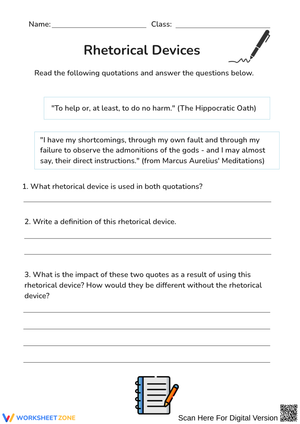
The rhetorical device and word-choice worksheets translate directly into AP Language work, particularly the exercises on diction, connotation, and the function of figurative language in persuasive writing. AP students who can already write fluently sometimes lack precise vocabulary for labeling the choices they make intuitively — these exercises give them that vocabulary, which matters for rhetorical analysis scoring. Language printable worksheets for 11th grade that focus on authorial intent and stylistic effect are a strong warm-up before students move into full-length rhetorical analysis essays.
Can I use these alongside a research writing unit?
That's where they do their most direct work. Assigning a parallel structure worksheet the day before students submit a draft catches the error class-wide before individual writing conferences. A vocabulary nuance worksheet placed mid-unit gives students explicit permission to treat word choice as a craft decision rather than a spell-check task — and for many 11th graders, that reframe is genuinely new.