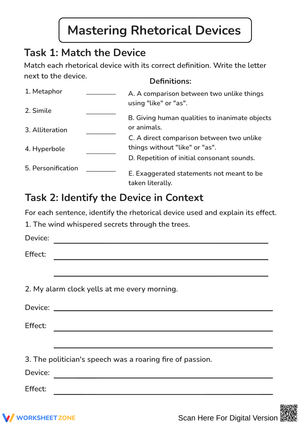
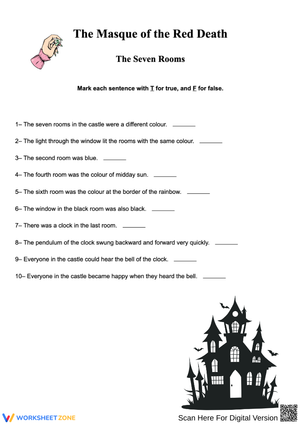
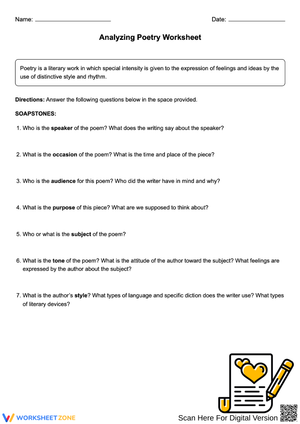
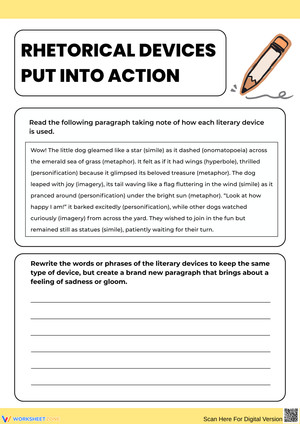
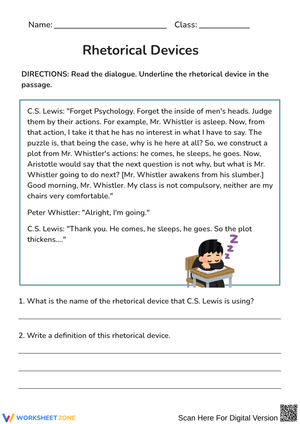
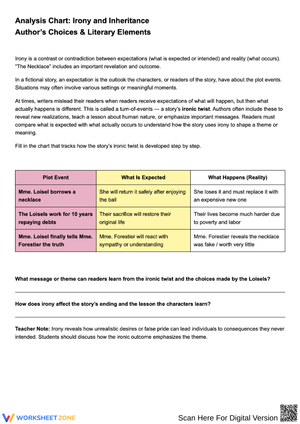
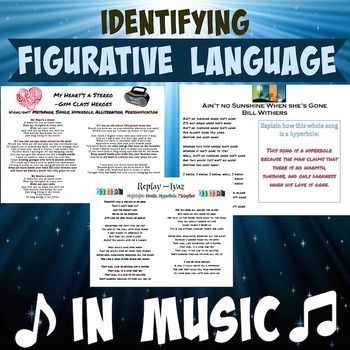
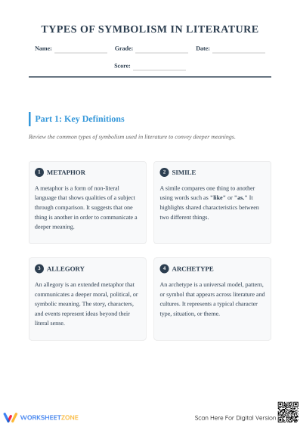
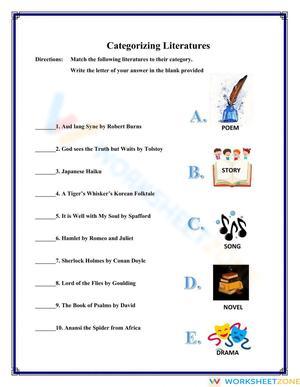
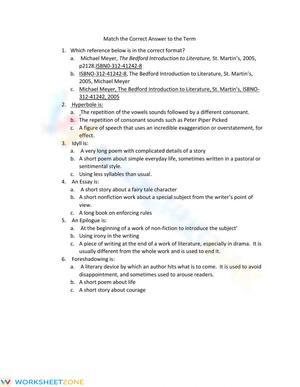
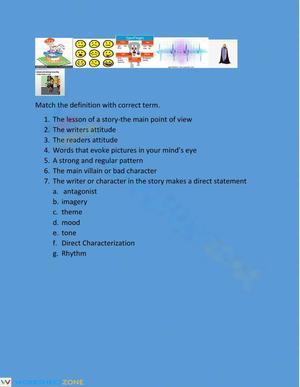
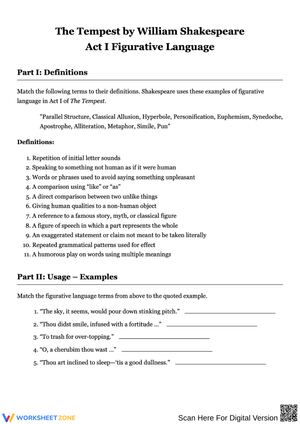
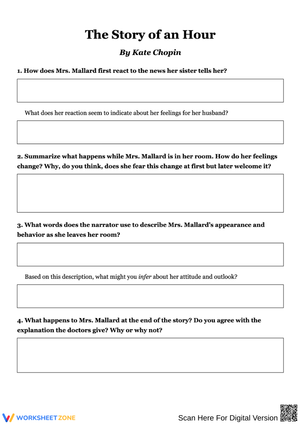
These 11th grade literary devices worksheets move students out of the identification phase — where the work was to spot the simile and move on — and into sustained analysis of how a device functions in context and what an author gained by choosing it. Each worksheet draws on authentic excerpts from American literature and rhetoric, so students encounter these devices where they actually live: in Fitzgerald's prose, Lincoln's speeches, Poe's narration, Hughes's imagery. The set targets the specific vocabulary and analytical habits that college-level literary criticism and AP English both require.
The Analytical Leap Grade 11 Demands
By tenth grade, most students can name a metaphor. The harder question — and the one eleventh-grade standards require them to answer — is what that metaphor accomplishes in the context of the larger text. That's a qualitatively different cognitive task, and it doesn't happen automatically. It requires deliberate practice with passages where the right answer to "what device is this?" is the beginning of the work, not the end of it.
Rhetorical analysis makes its formal appearance in most Grade 11 ELA curricula, and literary devices are its foundation. Anaphora in a political speech and anaphora in a poem operate through the same structural logic. Students who understand that connection read both kinds of texts more precisely. These worksheets build that bridge explicitly, connecting device recognition in literary texts to purpose-driven language in nonfiction and rhetoric.
Devices Covered Across the Set
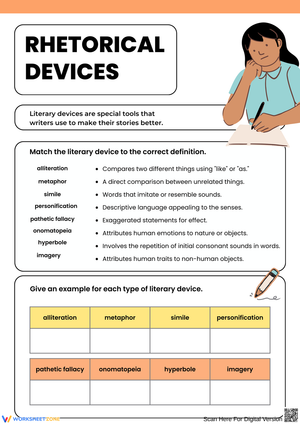
The worksheets focus on the devices that carry the most analytical weight in eleventh-grade texts — not an exhaustive glossary of sixty terms, but the ones teachers actually need students to handle with precision:
- Paradox and oxymoron — treated as related but distinct, with exercises that force students to explain why one is a compressed two-word phrase and the other is a fully developed idea that appears to contradict itself
- Juxtaposition and antithesis — students analyze how the placement of contrasting images or ideas affects tone, and why antithesis carries particular rhetorical force in formal address
- Synecdoche and metonymy — perhaps the most commonly conflated pair on this list; each worksheet asks students to articulate the specific substitution happening and what it implies about the subject
- Satire — including how irony, exaggeration, and incongruity combine to produce social criticism in texts like Swift's essays and Twain's fiction
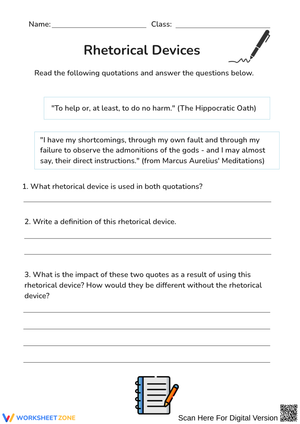
- Anaphora — studied in both poetic and oratorical contexts, with attention to the cumulative emotional effect of deliberate repetition
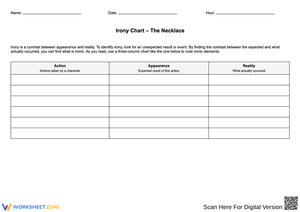
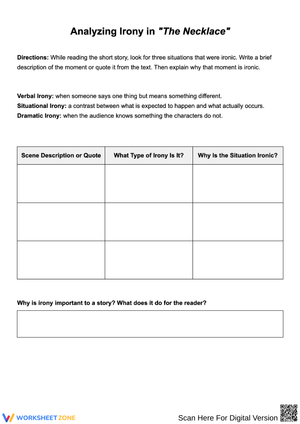
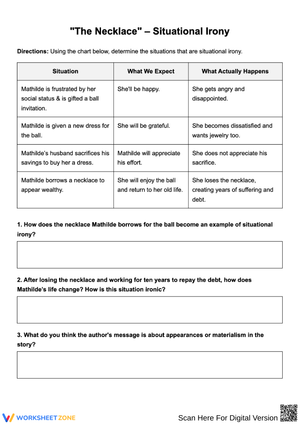
- The three registers of irony — verbal, dramatic, and situational — analyzed as distinct mechanisms rather than collapsed into one vague definition
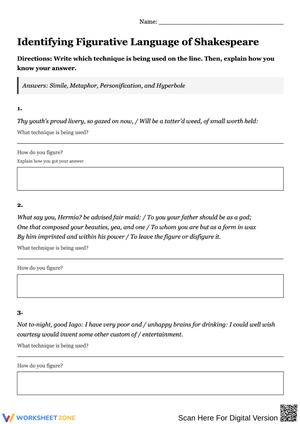
Every worksheet asks students to do two things with each device: locate it in the excerpt and explain its specific effect on meaning or tone. The explanation step is where the real analytical work happens.
Fitting These Into Your Weekly ELA Instruction
Bell-ringers are the most natural fit. A short passage with one or two embedded devices takes about eight minutes at the start of class — enough time for students to write a brief explanation, which becomes the launchpad for whole-class discussion before moving into the day's main text. This works especially well on days when students are continuing a longer work, because the warm-up connects device vocabulary directly to what they're about to read.
The more powerful use — and the one that actually changes what students write in literary essays — is the reverse-engineering move: assign a worksheet that asks students to write a short descriptive paragraph using only two specified devices before they analyze a professional text employing those same devices. When an eleventh grader has to construct a setting using nothing but synecdoche and juxtaposition, they understand immediately why an author made that choice. The analysis that follows is sharper because it comes from experience rather than definition. These 11th grade literary devices worksheets work particularly well in this sequence because the excerpts come from texts students recognize, which makes the comparison between their own writing and a professional's both instructive and a little humbling.
For formative assessment, assign each worksheet after a reading rather than before. Students approach the passage with context, which produces more specific — and more honest — explanations of effect than cold analysis tends to generate.
Errors Students Make That These Worksheets Help You Catch
Paradox and oxymoron confusion is persistent. Students see both as involving contradiction and treat them as interchangeable. A student might label "deafening silence" a paradox when it's an oxymoron, or describe a fully developed contradictory statement in a Poe story as an oxymoron because they missed the scale of the idea. More re-teaching of definitions rarely fixes this; side-by-side comparison of examples does, which is what the paired worksheets on these devices provide.
The larger pattern, though, is the identification-only response. A student writes "this is juxtaposition" and stops, having satisfied themselves that they answered the question — but saying nothing about what the juxtaposition actually does. Building in a sentence-level requirement ("this creates…" or "this shifts the tone by…") pushes students out of the label-and-leave habit. Teachers should also watch for students who collapse all forms of irony into "saying the opposite of what you mean." Verbal, dramatic, and situational irony operate through completely different mechanisms, and a student who can't distinguish them will misread entire scenes in fiction and drama.
Standard Alignment
The primary standard for this set is CCSS.ELA-LITERACY.RL.11-12.4, which requires students to determine the meaning of words and phrases as they are used in a text — including figurative and connotative meanings — and analyze the impact of specific word choices on meaning and tone. The analysis requirement built into every prompt directly addresses the second clause of that standard; identification alone doesn't satisfy it. Several worksheets involving speeches and essays also address CCSS.ELA-LITERACY.RI.11-12.6, which asks students to analyze how rhetorical choices contribute to a text's persuasiveness and effect. These 11th grade literary devices worksheets sit at the intersection of both standards — literary and informational — which makes them useful across multiple units rather than only during a poetry or fiction block.
Adapting the Demand Level for Different Learners in the Room
Students who struggle with these devices usually struggle with the explanation step rather than the identification step. For those students, narrowing the passage to three or four sentences keeps the cognitive load manageable and gives them a cleaner shot at writing a meaningful analysis. A sentence frame — "This device creates a sense of ___ because ___" — gives enough structure to attempt the explanation without simply restating the definition.
For advanced students or those in AP English tracks, remove the device labels from the prompt entirely and ask them to identify which devices are present before explaining them. A further extension: ask them to compare how the same device functions differently across two excerpts — how does Fitzgerald's use of juxtaposition in The Great Gatsby differ from its use in a Hughes poem from the same era? These 11th grade literary devices worksheets support that kind of cross-text comparison because the excerpts span a range of American literary periods, giving students the material they need without additional preparation on the teacher's part.
Frequently Asked Questions
Are these worksheets appropriate for AP English Language or AP English Literature preparation?
Yes. The analytical format — locate the device, explain its specific effect on meaning or tone — mirrors the close-reading demand of AP exam prompts. The excerpts are drawn from the kinds of canonical and rhetorically rich texts that appear in both AP courses. Teachers working toward AP preparation should prioritize worksheets that ask students to analyze multiple devices within a single passage, since that reflects how device recognition actually functions on free-response questions.
How do I use these as bell-ringers without rushing the analysis?
Keep the passage short — three to five sentences is usually enough — and require a written explanation rather than a whole-class share-out. Students write, you circulate and scan, then raise one or two specific student responses to anchor the discussion that follows. The goal is a written record of what students understood before instruction, not a polished essay. Eight minutes is enough for that purpose.
My students can locate the device but can't explain its effect. What actually helps?
This is probably the most common issue at this grade level. The explanation step requires students to hold two things in mind simultaneously: what the text says and what the text does. One strategy that works well is asking students to rewrite the sentence without the device and then describe what changed. When a student rewrites "the pen is mightier than the sword" as a literal statement and articulates what was lost, they generate the effect-explanation almost by accident. The worksheets prompt for effect, but adding that literal-rewrite step in class discussion accelerates the skill considerably.
Can I assign individual worksheets out of sequence, or is there a recommended order?
Each worksheet stands alone — no particular sequence is required. Most teachers find it useful to introduce synecdoche and metonymy together because the distinction is clearer through direct comparison than through separate instruction. Beyond that pairing, the worksheets fit wherever your current unit calls for them. If you're mid-unit on a Harlem Renaissance text, pull the juxtaposition or anaphora worksheet and connect it directly to what students are already reading.












 Interactive Worksheet Maker
 Quiz Maker
 Word Search Maker
 Crossword Puzzle Maker
 Word Scramble Generator
 Sentence Scramble Generator
 Handwriting Worksheet Generator
 Name Tracing Generator
 Fill In The Blank Generator