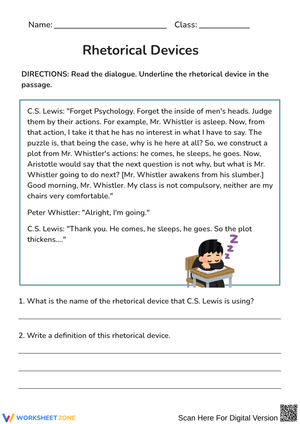
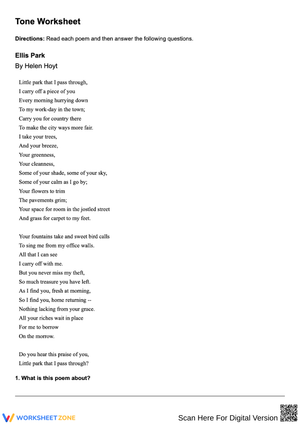
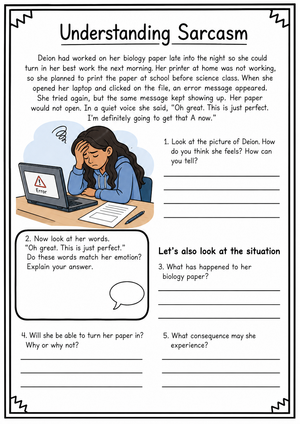
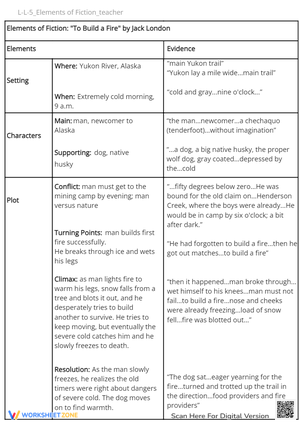
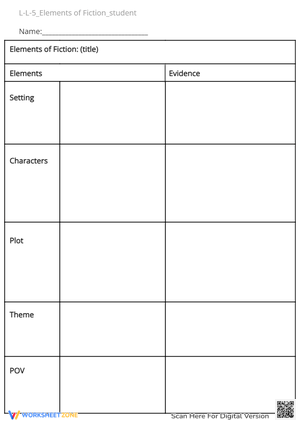
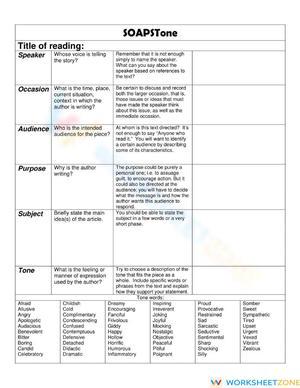
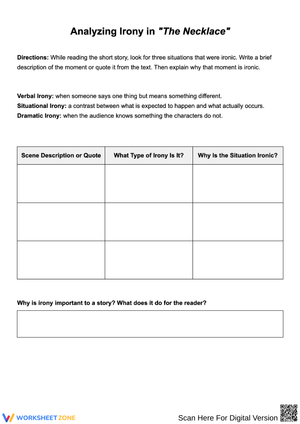
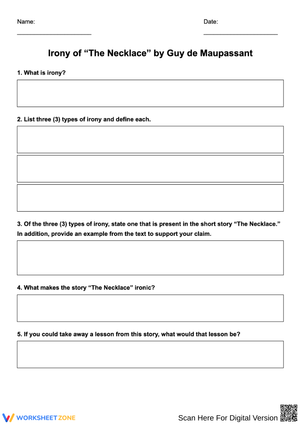
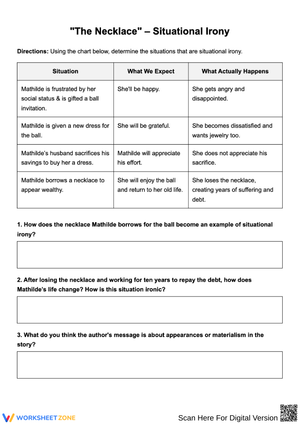
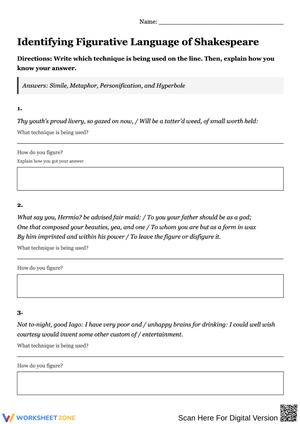
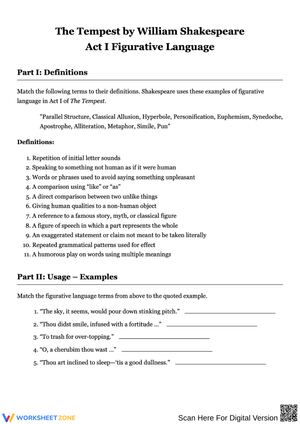
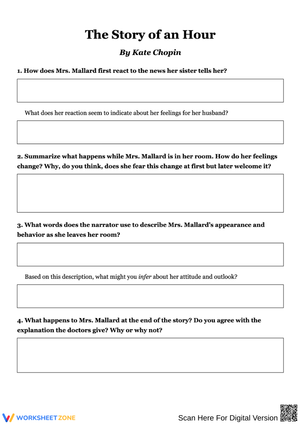
Literary devices printable worksheets for 10th grade close the gap between knowing what a metaphor is and explaining what it does to a passage — which is exactly where Grade 10 ELA instruction needs to push. This set gives teachers passage-based exercises built around a four-step sequence: students underline the device in the text, name it, write a sentence about its effect on tone or mood, and anchor that explanation with a direct quotation. That movement is the core of literary analysis at the secondary level, and each worksheet practices it end to end.
The Skills Each Worksheet Builds
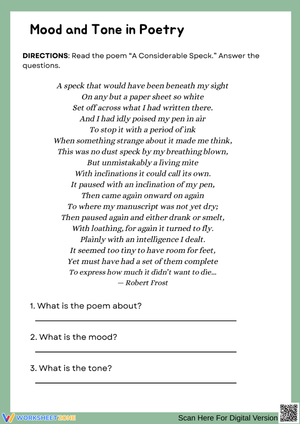
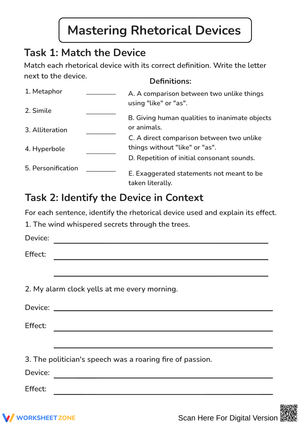
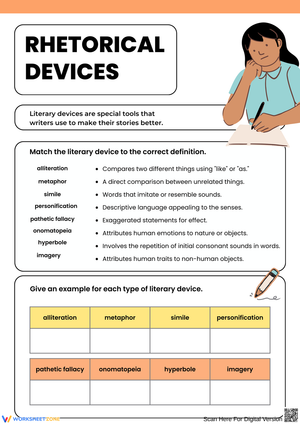
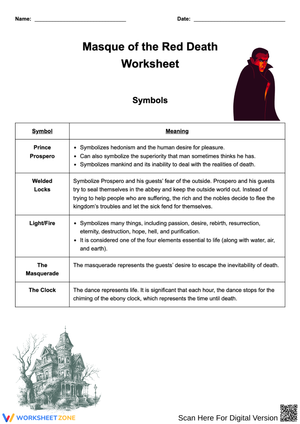
The devices covered are the ones tenth graders encounter most often and are expected to discuss in writing: metaphor, simile, symbolism, imagery, allusion, situational and dramatic irony, foreshadowing, personification, hyperbole, and sound devices — assonance, consonance, and anaphora among them. Each worksheet centers on a short excerpt from poetry, fiction, or dramatic dialogue rather than a roster of stripped-down example sentences. Students work with the device where it actually lives, inside a piece of writing that surrounds it with context.
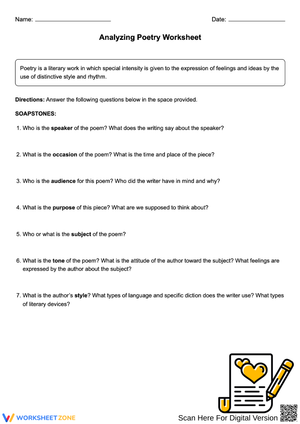
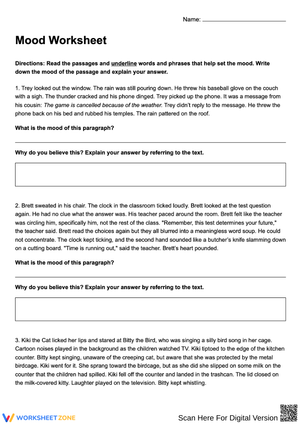
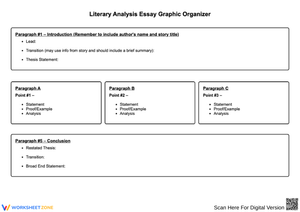
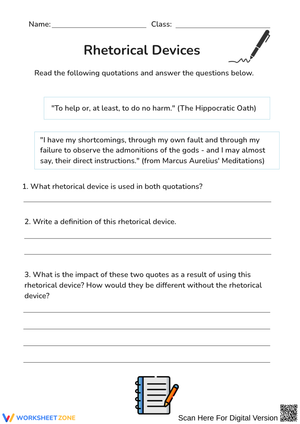
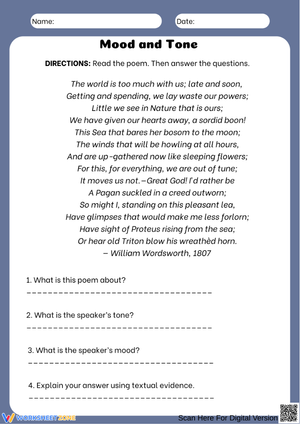
The question sequence matters as much as the device list. Worksheets open with a concrete identification task — underline or label the device in the text — move to a short written explanation of its effect on the reader, and close with an evidence prompt that asks students to justify their reading with a specific word or phrase. Several worksheets include a final extension asking students to connect the device to a theme or to the author's larger purpose. That last step is where Grade 10 analysis separates itself from middle school identification exercises.
Common Student Errors Worth Anticipating Before the Lesson
The most persistent pattern in student work at this level is not misidentifying the device but stopping at the name. A student writes "the author uses imagery" and considers that a complete answer. They have named the tool without saying what it builds. The worksheets counter this directly by treating effect-explanation as a separate, required step with its own response line — students cannot skip from identification to evidence without writing something about what the device does to the reader's experience.
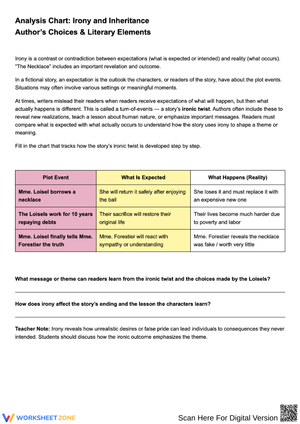
Two other errors appear often enough to plan for. First, students over-apply "irony." Nearly any outcome that surprises them gets labeled ironic, regardless of whether the author established a specific expectation the outcome then violated. Worksheets that include passages of dramatic irony — where the reader holds information a character lacks — force students to articulate that specific knowledge gap, which is harder to fake with vague surprise language. Second, extended metaphor escapes students trained to scan for "like" or "as." A passage that sustains a comparison across five or six sentences without explicit markers will not trigger the simile-detection habit. Worksheets that include such passages, with questions asking students to trace how the comparison develops across the excerpt, address this directly and durably.
Where These Worksheets Fit in the Lesson Plan
The most productive slot for a single worksheet is the first eight to ten minutes of class — not as filler, but as a deliberate preview of the reading ahead. If students are about to encounter apostrophe and personification in a Romantic poem, a short warm-up passage using those same devices primes their attention before the full text arrives. They reach the poem already holding a working definition tested against real language.
For stations, place excerpts from different genres at each table: poetry at one, fiction at another, dramatic dialogue at a third. Students then compare how foreshadowing or symbolism operates across forms — a comparison that reframes literary devices as intentional craft choices rather than features confined to a single genre. For sub days, the self-contained format works with no introduction; the passage and the directions share the same worksheet and need no external context. For assessment review before a unit test, select worksheets that mix two or three devices in a single passage and require students to defend each label with quoted evidence.
A useful organizational move is to group worksheets by cognitive demand rather than device alone. Literary devices printable worksheets for 10th grade break naturally into three working tiers: pages that ask only for identification, pages that require effect analysis alongside the label, and pages that add an evidence-and-extension step. That grouping makes it straightforward to pull the right worksheet for reteaching after a poor quiz result versus extending students who have already cleared the identification bar.
Standard Alignment
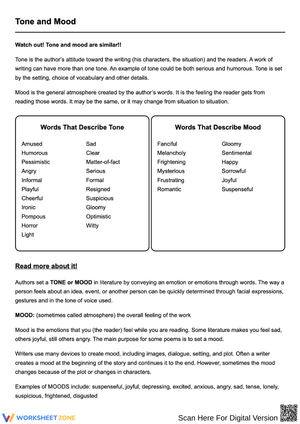
These worksheets align to CCSS RL.9-10.4, which requires students to determine figurative and connotative meanings of words and phrases and to analyze the cumulative impact of specific word choices on meaning and tone. The phrase "cumulative impact" is the instructional key. The standard does not ask students to spot one metaphor in isolation; it asks them to track how repeated device use builds something — a mood, a tone, an attitude — across a passage. The worksheets address that expectation through sequential questions that return to the same text and ask what the next device adds to what the previous one established.
CCSS RL.9-10.6 also enters the picture when exercises ask how a device serves the author's point of view or purpose. An allusion prompt might ask not just what the reference is but what the author assumes the reader already knows — and why that assumption matters to the effect the author is building. That framing connects device recognition to the analytical work the standard actually requires rather than leaving it at the level of name-the-term.
Tailoring the Worksheets for a Range of Student Readiness
Literary devices printable worksheets for 10th grade serve a wide readiness range without needing to become different assignments at different tables. The passage and the analytical task stay the same; what changes is the level of structural support available. For students who freeze when asked to write a sentence about a device's effect, attach two or three sentence frames to the back of the worksheet — "The author's use of [device] creates a sense of..." or "This example of irony suggests that..." — rather than printing them on the face of the task. That placement keeps the frames available without making them the automatic path for every student in the room.
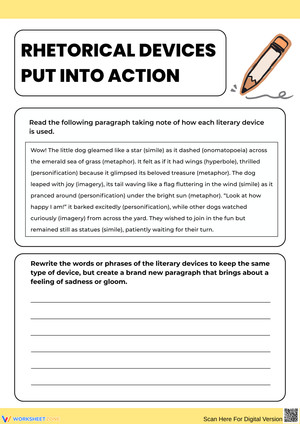
For students ready to move past the core exercise, the most productive extension is a short revision task: supply a plain declarative sentence and ask students to rewrite it using a specific device for a stated effect. Asking a student to "add personification to increase the sense of threat in this sentence" requires both knowledge of the device and genuine control over language. A comparison question — which of these two imagery examples creates a more urgent tone, and why — raises the analytical demand without requiring a longer written response, which keeps the worksheet practical for a single class period.
Varying the text type while holding the skill target constant also extends the range. Poetry handles imagery and sound devices particularly well. Fiction excerpts open up foreshadowing, symbolism, and irony. Dramatic dialogue reveals repetition, tone shifts, and allusion to historical or cultural context. Students who work across all three text types begin to see that literary devices are active choices writers make in every genre, not isolated terms for a quiz list.
Frequently Asked Questions
How do these worksheets fit alongside a novel or full unit?
Use individual worksheets as targeted practice before students encounter a device in the full text. If a unit involves The Great Gatsby and color symbolism is central to the next chapter, a symbolism worksheet on a short fiction excerpt prepares students to read for symbolic meaning before they reach the primary text. After the unit, the same worksheets work as review material students can annotate with their own novel examples alongside the original passage.
What text types appear in the passages?
The set draws on poetry, short fiction, and dramatic dialogue. Including all three matters because students associate certain devices — imagery, sound devices — almost exclusively with poetry. Encountering foreshadowing in dramatic dialogue, or anaphora in a short story, resets the assumption that devices belong to one genre and trains students to read for them across any text they pick up.
Are the passages accessible for students reading below grade level?
Each passage runs eight to fifteen lines, which limits the decoding load while keeping the analytical demand at grade level. For students whose reading fluency falls below the tenth-grade band but whose reasoning is solid, reading the passage aloud before releasing the worksheet removes the access barrier without simplifying the thinking. The analysis questions are built for depth of understanding, not reading speed.
How do these differ from the literary device exercises in most grammar workbooks?
Standard workbook exercises present a list of isolated example sentences and ask students to label each one — a low-demand identification task with no surrounding text and no effect analysis required. Literary devices printable worksheets for 10th grade present a sustained passage and require students to explain why a device appears, what it contributes to the piece as a whole, and which specific words in the text support that explanation. That three-part demand is what CCSS RL.9-10.4 actually calls for, and it is what most workbook formats skip entirely.












 Interactive Worksheet Maker
 Quiz Maker
 Word Search Maker
 Crossword Puzzle Maker
 Word Scramble Generator
 Sentence Scramble Generator
 Handwriting Worksheet Generator
 Name Tracing Generator
 Fill In The Blank Generator