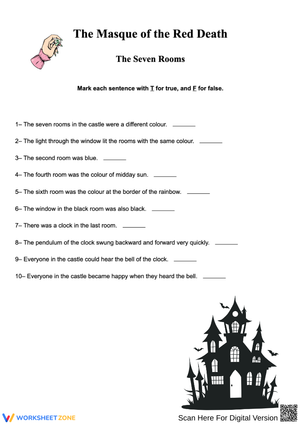
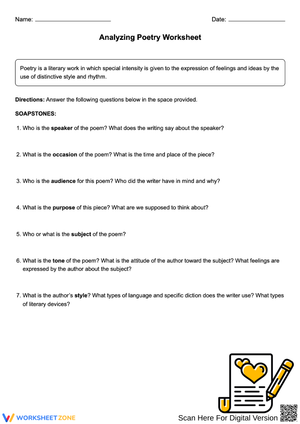
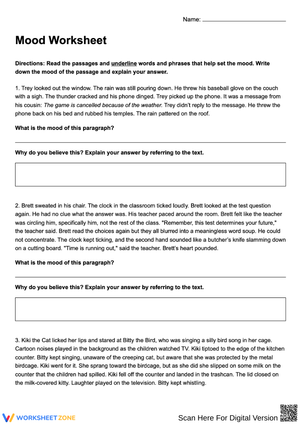
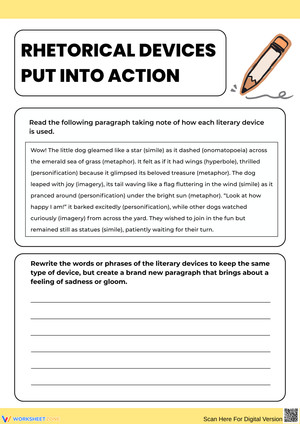
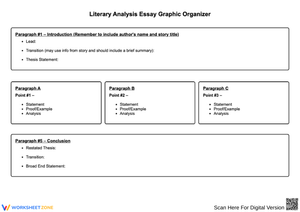
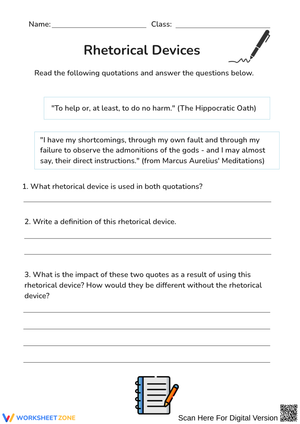
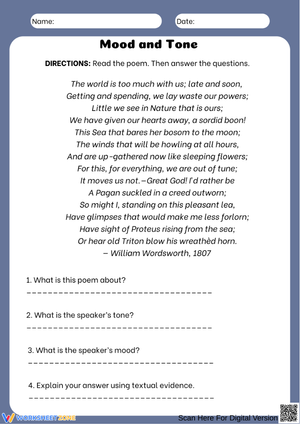
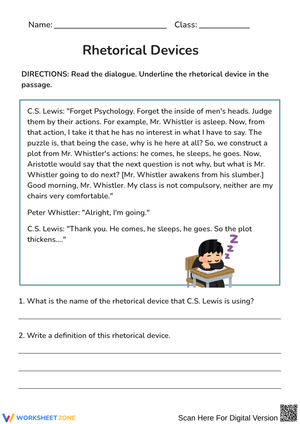
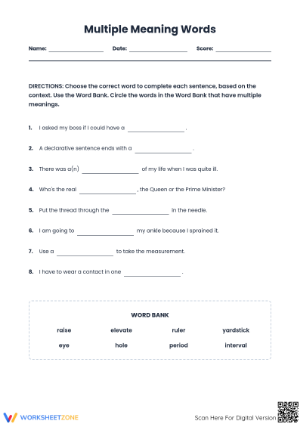
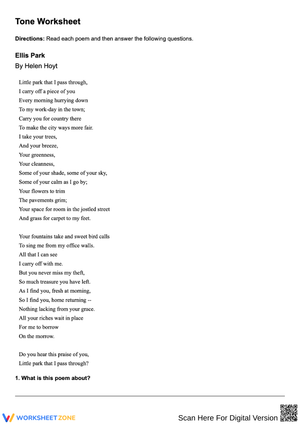
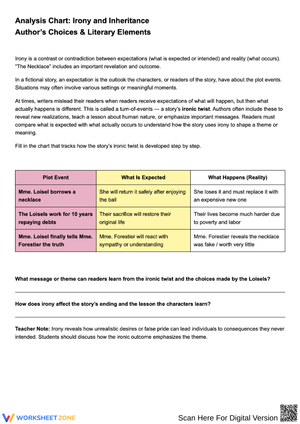
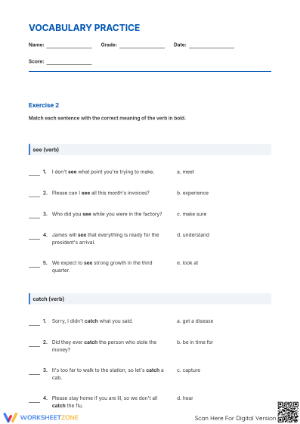
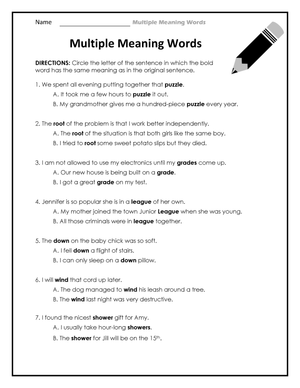
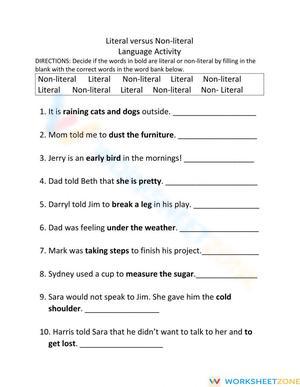
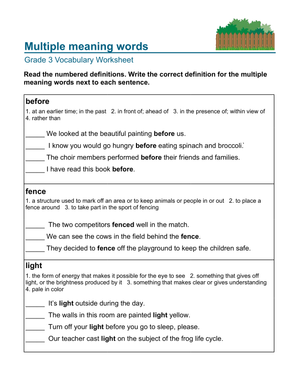
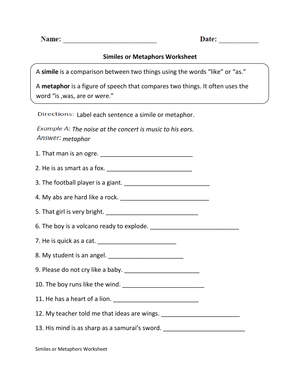
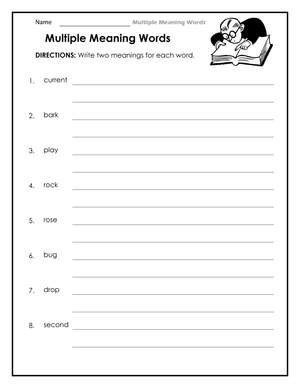
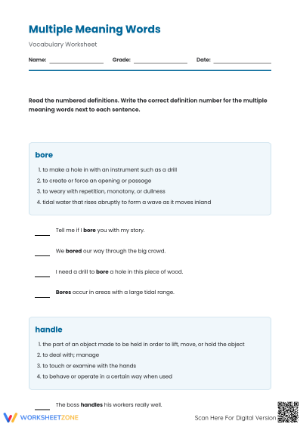
These language and vocabulary worksheets for 10th grade give teachers ready-to-print practice that matches what sophomore ELA actually requires — not vocabulary lists with fill-in-the-blank definitions, but exercises that ask students to analyze how words carry meaning, shift in context, and signal authorial intent. Each worksheet targets a specific skill: context clue inference, morphological analysis, figurative language recognition, or word relationship reasoning. The set reflects what Tier 2 academic vocabulary instruction looks like at the secondary level.
The Skills Each Worksheet Addresses
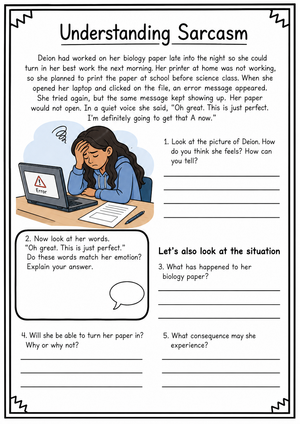
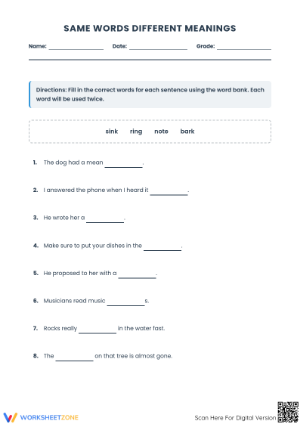
Context clues work at this level moves past simple synonym substitution. Students read grade-appropriate passages drawn from academic nonfiction and canonical literature, and they must identify not just the meaning of an unfamiliar word but the type of clue that tipped them off — contrast, restatement, example, or tonal inference. That distinction matters because it builds metacognitive reading habits rather than just a one-time answer.
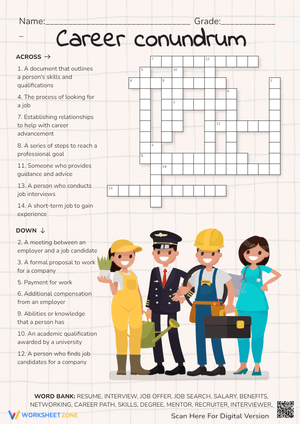
Morphology worksheets center on Greek and Latin roots, prefixes, and suffixes that recur across academic disciplines. A student who internalizes that circum- means around will recognize circumspect, circumnavigate, and circumscribe without having encountered them before. These worksheets ask students to break words apart, assign meanings to each component, and then verify their constructed definition against a sentence — a step that prevents the confident-but-wrong answers that pure memorization tends to produce.
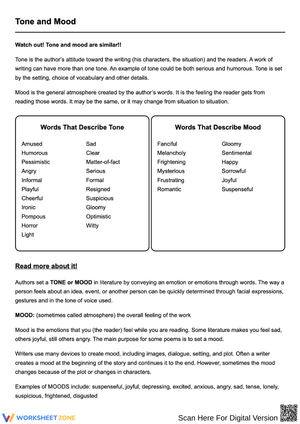
Connotation and denotation exercises present clusters of near-synonyms — assertive, pushy, confident, aggressive — and ask students to arrange them on a spectrum from negative to positive emotional charge, then justify their placement in a sentence or two. This format builds the kind of precision that literary analysis essays demand, where the argument often lives in a word-choice observation.
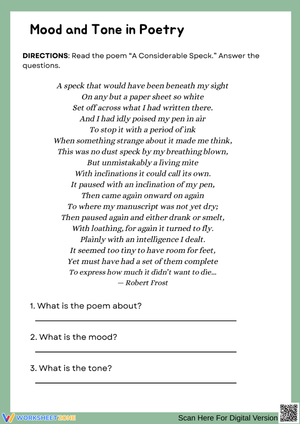
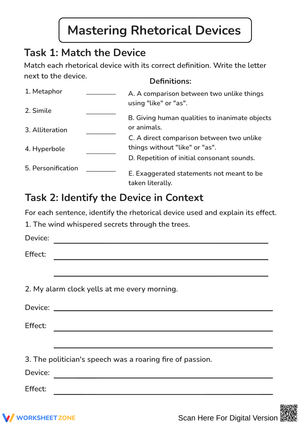
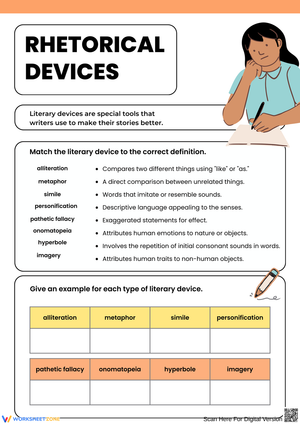
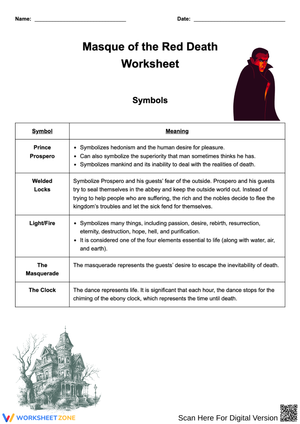
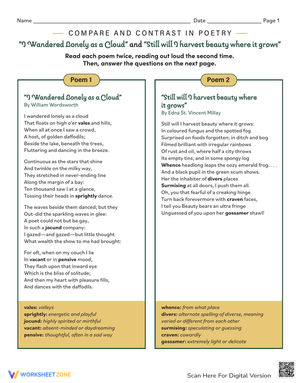
Figurative language worksheets use passages from poetry, speeches, and fiction to ask students to identify and interpret metaphors, allusions, irony, and extended analogies. The task isn't just naming the device — it's explaining what the language choice accomplishes in context. Word analogy worksheets round out the set, targeting the logical relationship reasoning that standardized reading assessments consistently measure.
Mistakes Students Make That These Worksheets Help You Catch
The most persistent context clues error is proximity bias. When a student encounters an unfamiliar word, they scan the sentence for the nearest familiar word and assign it as the definition — not because they analyzed the syntax, but because it's close. A sentence like "His mercurial temperament left his staff perpetually on edge, never certain what version of him would arrive at the morning briefing" produces student answers like "mercurial = temperament" or even "mercurial = morning." These worksheets require students to underline the specific words or phrases that support their inferred definition, which pushes them out of proximity guessing and into actual inference.
With root analysis, students apply meanings too literally once they believe they've found a pattern. Knowing that bene- means good, a student who correctly defines benefactor and benevolent will sometimes write that benediction means "a good dictionary" — retrieving dict as "dictionary" rather than "speak." The built-in verification step on these worksheets catches that error before it hardens: students construct a definition from parts, then test it against a sentence and revise if the meaning doesn't hold.
Connotation errors are subtler and easier to miss in student writing. Students who correctly identify that thrifty and cheap share a denotation will still place them at identical points on a connotation spectrum, missing that the emotional charge differs by degree and cultural context. The spectrum-sorting format surfaces that flat placement immediately — you see the error in the arrangement before you even read their explanation.
Building These Worksheets Into Your Weekly ELA Routine
The strongest instructional use is as a pre-reading vocabulary primer. Assign a morphology or context clues worksheet tied to the roots or Tier 2 words that appear in an upcoming text — a Baldwin essay, a scene from The Great Gatsby, a Supreme Court opinion — before students open the reading. This front-loads the language work so that during the discussion, comprehension doesn't stall on individual word failures. Using language and vocabulary worksheets for 10th grade this way turns isolated skill practice into a genuine reading-readiness move rather than a disconnected add-on.
For bell-ringers, the connotation spectrum worksheets run cleanly in about eight minutes — enough time to take attendance and circulate once. The analogy worksheets work well on Friday when the goal is retrieval practice rather than new instruction; they pull from words students encountered earlier in the week and ask students to reason about relationships rather than recall cold definitions. That spaced retrieval across the week consistently outperforms massing all vocabulary work into a single day.
One honest tradeoff: figurative language worksheets that use unfamiliar literary passages can stall students who process text slowly under timed conditions. For those classes, projecting the passage on the board two minutes before distributing the worksheet gives students enough orientation time that the formal task doesn't turn into a reading-load problem before it becomes a vocabulary problem.
Standard Alignment
These worksheets address CCSS.ELA-LITERACY.L.9-10.4, which requires students to determine the meaning of words and phrases as used in a text, including figurative and connotative meanings — the standard most directly responsible for context clues and connotation instruction at this level. CCSS.ELA-LITERACY.L.9-10.5 covers word relationships and nuances in word meaning, which maps to the analogy and synonym-spectrum exercises. CCSS.ELA-LITERACY.L.9-10.6 targets acquisition of general academic and domain-specific vocabulary, which the root analysis worksheets serve explicitly. In many districts, the L.9-10 language standards are assessed primarily through teacher-designed formative tasks rather than on the summative benchmark, which makes language and vocabulary worksheets for 10th grade a natural fit for the ongoing, low-stakes practice those standards require throughout the year.
Differentiating the Worksheets Across Ability Levels
For students who are still developing confidence with academic vocabulary, the root analysis worksheets function as a reference tool first. Give those students a printed morpheme bank — a list of the 30 most common Greek and Latin roots with their meanings — to keep alongside each worksheet rather than requiring cold retrieval. The task stays the same; the memory load decreases. Students already comfortable with roots work without the reference, and they can be asked to generate a second word family member for each target root as an extension.
The context clues worksheets support two natural difficulty levels depending on how the task is framed. Asking "What does this word mean?" is cognitively lighter than asking "What type of clue did the author provide, and how does it work?" The second framing uses the same passage and the same passage-level reading skill but pushes toward the analytical register that higher-performing students need to reach. No additional materials required — the differentiation lives in the question.
English language learners benefit most from the connotation worksheets when the exercises include example sentences showing each word in social context rather than abstract ranking alone. The emotional charge of frugal versus stingy is culturally encoded in ways that a dictionary definition does not convey, and sentence examples anchor that difference in something observable.
Frequently Asked Questions
What vocabulary topics should each worksheet in this set cover for 10th grade?
Each worksheet addresses one of the following: context clue inference using grade-level passages, Greek and Latin root analysis with a sentence-verification step, connotation and denotation sorting, figurative language identification and interpretation, or word analogy reasoning. The coverage maps to the L.9-10 language strand of the Common Core standards and reflects the vocabulary demands of sophomore-year reading across both literary and informational texts.
What's the difference between Tier 2 and Tier 3 vocabulary, and how does the set address both?
Tier 2 words — analyze, synthesize, infer, assess — appear across academic disciplines and are the terms most likely to appear on standardized reading assessments. Tier 3 words are domain-specific: iambic pentameter in ELA, mitosis in biology. These worksheets emphasize Tier 2 vocabulary because that's where the broadest reading comprehension gains occur, but several figurative language worksheets address Tier 3 literary terminology within their ELA context.
How do context clues worksheets connect to what students encounter on standardized tests?
The SAT, ACT, and most state ELA assessments include questions that ask students to determine the meaning of a word as it is used in a specific passage — not in isolation, but in context. The context clues worksheets here practice exactly that reasoning: reading surrounding syntax for contrast, restatement, or explanatory language, then constructing a definition that fits the sentence. Students who have practiced that process dozens of times before the test move through those questions faster and with more confidence.
Are these worksheets useful for building test readiness over the year?
Using language and vocabulary worksheets for 10th grade as a consistent practice routine across the full school year does more for test readiness than a concentrated test-prep push in the weeks before the exam. Vocabulary acquired through spaced retrieval — met in October, revisited in January, tested in April — is retrieved more reliably under pressure than vocabulary crammed in a review unit. The analogy and figurative language worksheets specifically target the logical and interpretive reasoning that verbal sections measure, and that reasoning develops through repeated low-stakes practice, not last-minute exposure.












 Interactive Worksheet Maker
 Quiz Maker
 Word Search Maker
 Crossword Puzzle Maker
 Word Scramble Generator
 Sentence Scramble Generator
 Handwriting Worksheet Generator
 Name Tracing Generator
 Fill In The Blank Generator