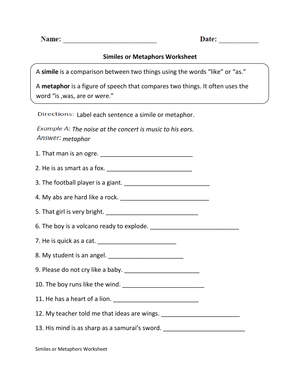
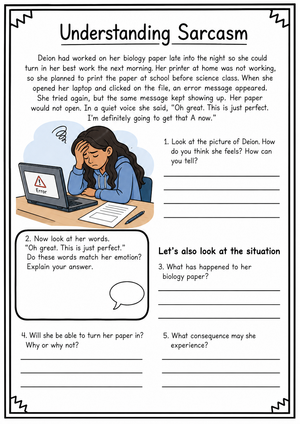
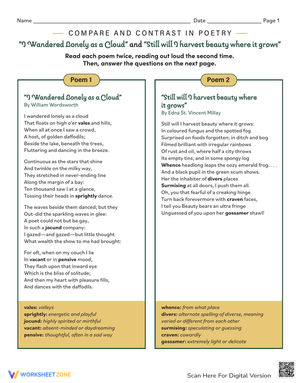
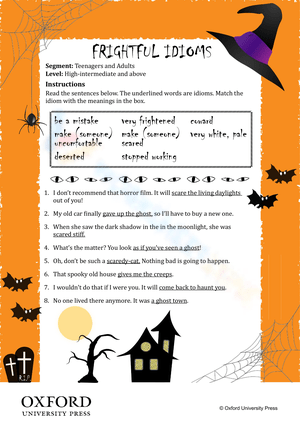
These 10th grade language worksheets give ELA teachers print-ready practice spanning the full language strand — parallel structure, complex punctuation, register analysis, Greek and Latin roots, and figurative language — without requiring teachers to build materials from scratch. Grade 10 is where language instruction shifts character: students are no longer just checking whether sentences are correct but asked to evaluate whether syntax and word choice do what a writer intended.
What the Worksheets Cover
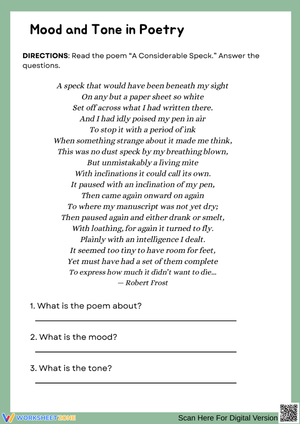
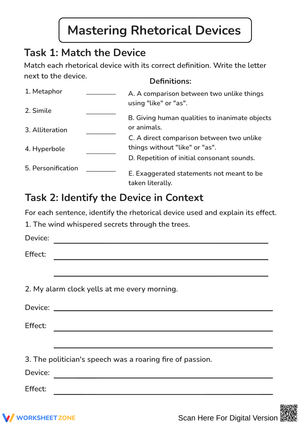
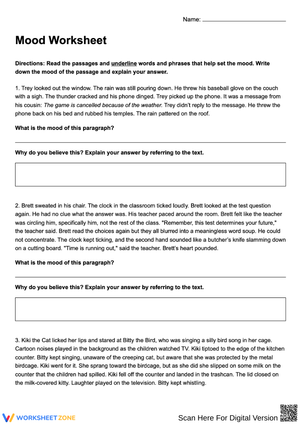
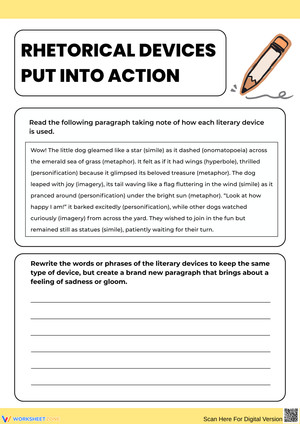
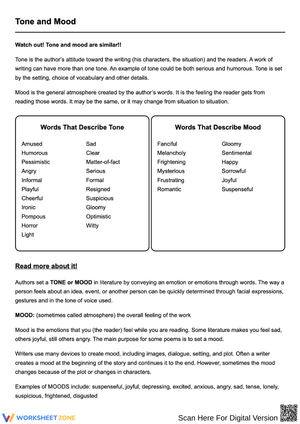
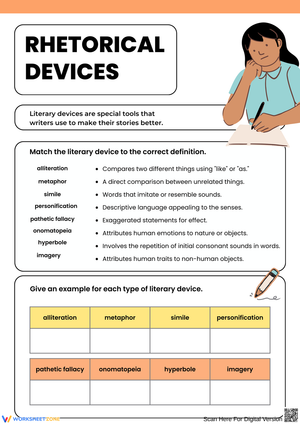
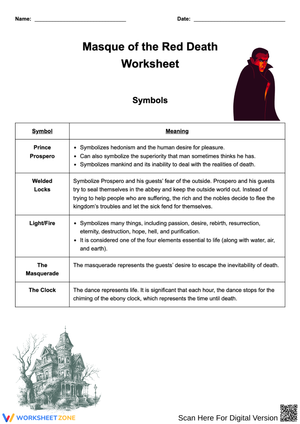
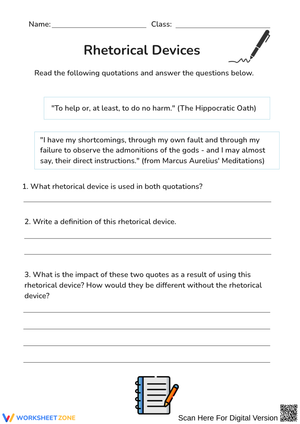
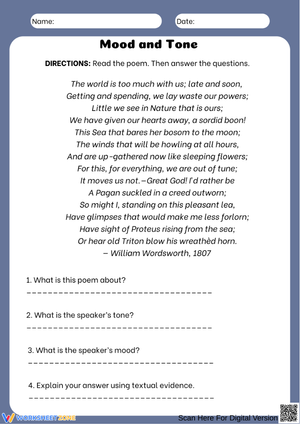
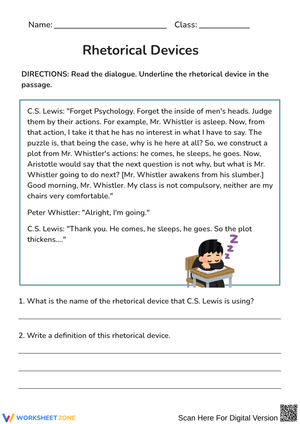
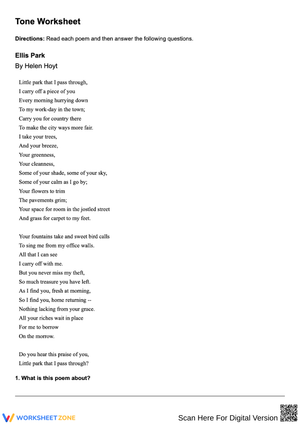
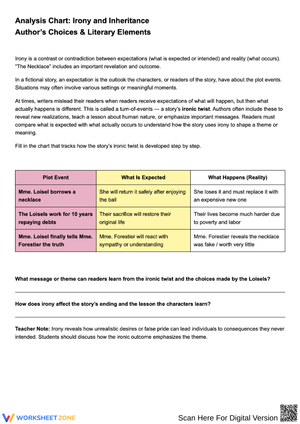
The set addresses all three CCSS language strands for grades 9–10. In Conventions of Standard English, students work with complex phrase structures — absolute phrases, participial phrases, and appositives — alongside parallel structure identification and correction, and punctuation with semicolons, colons, and dashes. In Knowledge of Language, each worksheet asks students to analyze how register, syntax, and tone shift meaning across contexts: comparing two versions of the same passage, revising sentences for clarity or emphasis, or marking the stylistic effect of a specific word choice. In Vocabulary Acquisition and Use, students use context clues embedded in text, apply Greek and Latin root knowledge, and interpret figurative language including euphemism, oxymoron, and the distinction between connotation and denotation. These 10th grade language worksheets target each strand with dedicated exercises rather than mixing skills within a single task, so teachers can assign individual worksheets to address the specific gaps their formative data identifies.
Patterns in Student Work That These Exercises Target
Parallel structure errors are the most persistent pattern in 10th-grade writing. Students understand the concept when it is isolated — asked to spot the error in "She enjoys hiking, swimming, and to run," most can identify it immediately. The problem surfaces when they write their own sentences: thesis statements like "The novel explores loneliness, how society rejects outsiders, and to find redemption" appear regularly in student drafts, even from students who completed a parallel structure exercise that same week. These worksheets build recognition across varied contexts — sentences, multi-item lists, and paired independent clauses — which more closely matches where the error actually appears in student writing.
Semicolons create a second, underappreciated problem. After learning that semicolons join independent clauses, many students overcorrect by using them between any two long sentences, regardless of whether the ideas share a logical relationship. A student who writes "We read the novel last month; the cafeteria serves pizza on Fridays" is technically joining two independent clauses but missing the semantic requirement entirely. The punctuation exercises include deliberate distractors that isolate this misunderstanding directly.
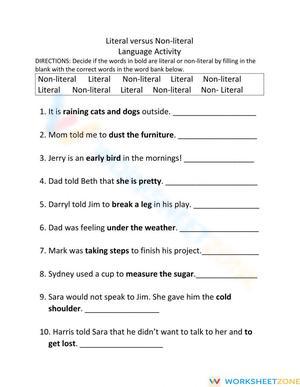
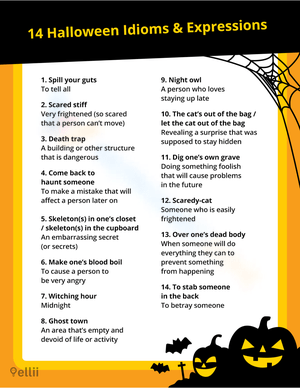
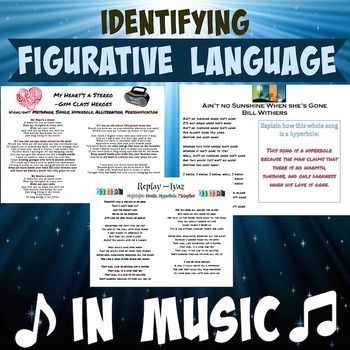
In vocabulary work, the difficulty is not that students fail to memorize roots — most can recite that bene- means good — but that they apply root knowledge mechanically. When "benevolent" appears in a passage where contextual evidence complicates a character's motives, students who relied solely on the root often miss the connotative dimension. The figurative language exercises address this by embedding vocabulary in short passages where literal and connotative meanings diverge in ways that matter to interpretation.
Placing These Worksheets in the Instructional Week
For conventions work, the most efficient placement is the first eight minutes of class — before any anchor text discussion begins. One parallel structure exercise or one punctuation worksheet as a bell-ringer generates immediate formative data on where students still have gaps. A quick visual scan of collected work reveals the most common errors, which become the basis for a five-minute whole-group debrief. Used this way, each worksheet functions as a diagnostic instrument, not merely a practice drill.
Vocabulary worksheets work best when sequenced alongside whatever text the class is currently reading. If students encounter the root bene- in a worksheet on Monday and then read a passage containing "benevolence" on Wednesday, spaced retrieval strengthens retention in a way that a stand-alone vocabulary unit never does. Mapping your vocabulary worksheet sequence against your reading calendar at the start of each unit takes about 20 minutes of planning and produces noticeably stronger vocabulary performance on writing tasks by the unit's end.
For register and style analysis, consider pairing a Knowledge of Language worksheet with a revision task drawn from student writing samples. When students use the worksheet to analyze tone shifts in a mentor text and then apply the same analytical frame to a paragraph from their own draft, the connection between grammar instruction and actual writing becomes concrete rather than theoretical.
Tiering the Work Across Ability Levels
For students still solidifying foundational grammar knowledge, add a brief reference sheet alongside the worksheet — a one-column list of the phrase types or punctuation rules being practiced, written in plain terms. This gives students a working reference during the task rather than requiring them to hold a full rule set in working memory while simultaneously applying it. Reducing that cognitive load keeps the focus on the target skill rather than on recall of terminology.
For students working beyond grade level, the most productive extension is moving from sentence-level exercises to passage-level analysis. Ask these students to take a short excerpt from the class novel, mark every instance of a specific construction — all participial phrases, or every semicolon — and write a sentence explaining the effect each one creates. The worksheet anchors the skill; the extension raises the analytical demand without requiring a separate resource.
Standard Alignment
These 10th grade language worksheets align to the Common Core State Standards Language strand for grades 9–10: L.9-10.1 (conventions of standard English grammar and usage), L.9-10.2 (conventions of standard English capitalization, punctuation, and spelling), L.9-10.3 (knowledge of language and its conventions in context), L.9-10.4 (determining word meaning through context clues and word parts), L.9-10.5 (figurative language, word relationships, and nuances in word meanings), and L.9-10.6 (acquiring academic and domain-specific vocabulary). In instructional terms, L.9-10.1 and L.9-10.2 map most naturally to writing and revision cycles; L.9-10.4 and L.9-10.5 connect most directly to close-reading work on anchor texts. Teachers in states with ELA standards derived from Common Core will find the skill coverage translates cleanly to their state frameworks.
Frequently Asked Questions
Which grammar topics from Grade 10 appear most often on the SAT?
The SAT Writing and Language section tests parallel structure, pronoun-antecedent agreement, punctuation (especially comma splices, semicolons, and colons), subject-verb agreement in complex sentences, and concision. Parallel structure and punctuation errors are the most frequently tested among these. Editing exercises that present short passages with embedded errors — rather than isolated sentences — give students the closest approximation of the actual test format, since every SAT grammar question appears in passage context.
Can these be assigned digitally as well as printed?
Because the files are PDFs, they upload cleanly to Google Classroom, Canvas, Schoology, or any comparable platform. Students can annotate directly in tools like Adobe Acrobat or Google Drive's built-in PDF viewer. For multiple-choice and short-answer exercises, the digital workflow is smooth. For tasks where students rewrite sentences or underline specific constructions, printing still produces the more efficient workflow for most classrooms.
How do I decide which worksheet to assign first?
Let your current unit determine the starting point. If students are drafting argumentative essays, parallel structure and semicolon/colon punctuation are the immediate priorities — errors in those areas show up in essay writing more than in any other task. If the class is in a reading-intensive unit, vocabulary-in-context and figurative language exercises connect directly to comprehension work. Assign based on your instructional calendar rather than working through these 10th grade language worksheets in sequence from one standard to the next.
Do these worksheets work for students who are reading below grade level?
Most exercises use short reading contexts — two to four sentences or a brief passage — which keeps the reading demand manageable for students whose fluency is below grade level. The language skills being assessed do not require students to read at a 10th-grade Lexile level; they require applying a specific grammar or vocabulary rule to accessible text. The figurative language worksheets are the one exception: they assume familiarity with terms like "euphemism" and "oxymoron," so a brief whole-class introduction to those terms before distributing the worksheet prevents confusion that has nothing to do with the language skill itself.












 Interactive Worksheet Maker
 Quiz Maker
 Word Search Maker
 Crossword Puzzle Maker
 Word Scramble Generator
 Sentence Scramble Generator
 Handwriting Worksheet Generator
 Name Tracing Generator
 Fill In The Blank Generator