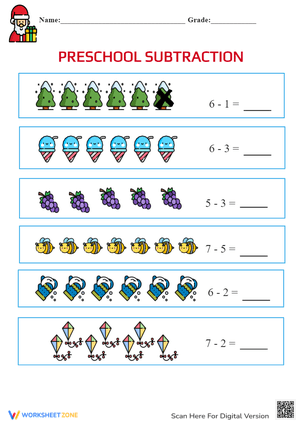
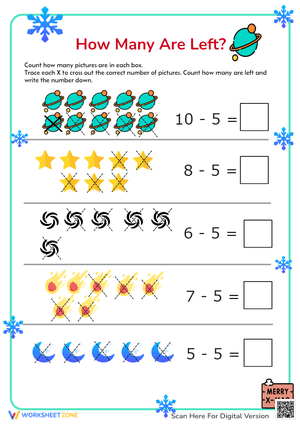
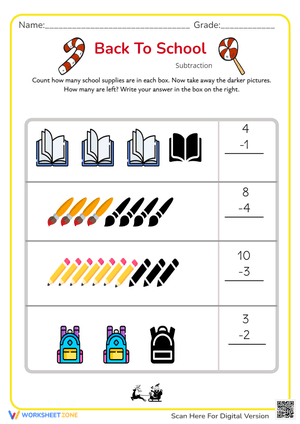
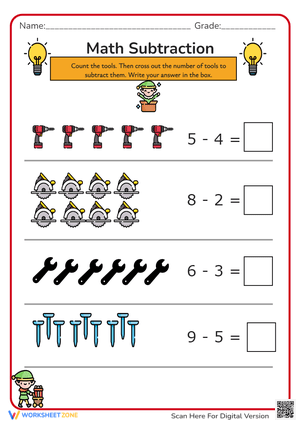
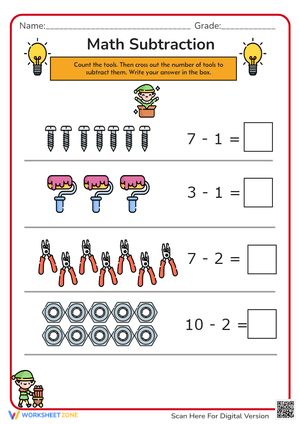
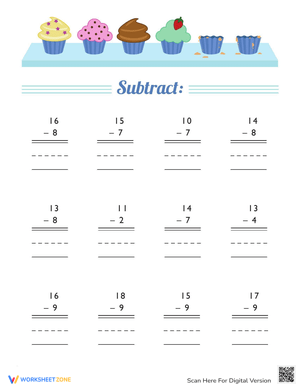
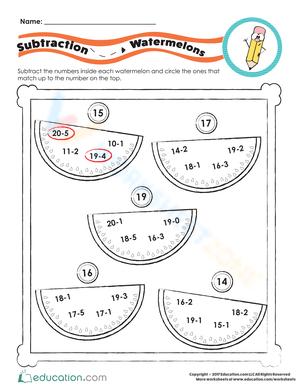
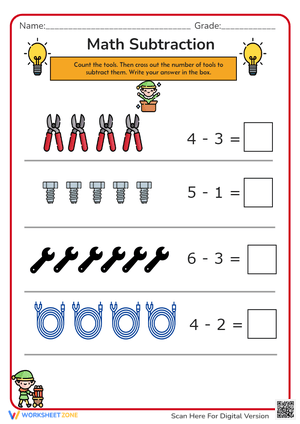
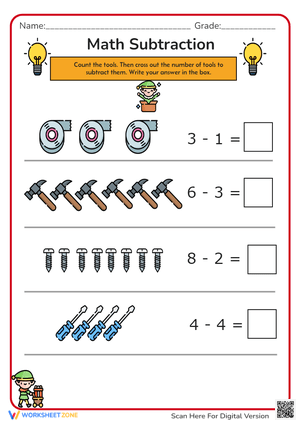
These subtraction and counting back printable worksheets for 1st grade give teachers a targeted set of practice tools built around one of the most reliable early mental math strategies — focused specifically on subtracting one, two, and three from numbers within twenty, which is exactly the range where counting back is efficient and appropriate.
The Specific Skills Each Worksheet Builds
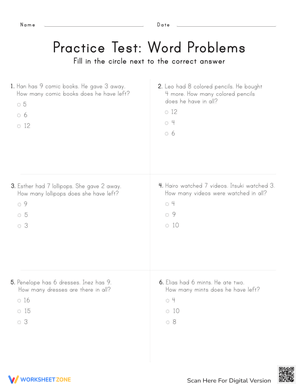
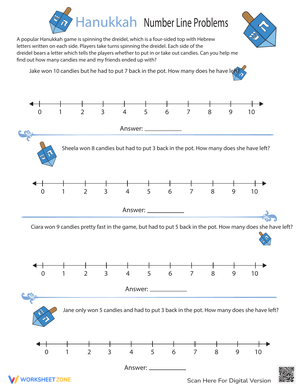
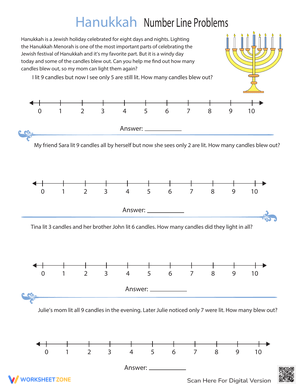
The set moves through several interconnected skills that together support the counting back strategy. Early worksheets ask students to fill in missing numbers in backward sequences — exercises like 16, 15, ___, 13 — establishing reverse fluency before subtraction equations appear. Once that foundation is in place, subsequent worksheets embed number lines directly on the page: students mark the starting number, draw backward hops, and land on the difference. A third group removes the number line entirely and asks students to apply the strategy mentally, writing only the final answer. The closing worksheets use simple word problems — crayons taken from a box, children leaving a lunch table — so students practice identifying what to subtract before they count.
Why Counting Back Belongs in First Grade
First graders arrive with solid forward counting fluency but without memorized subtraction facts. Counting back gives them a procedure they can execute independently while fact memorization develops over the course of the year. The strategy is efficient when the subtrahend is small — counting back two or three takes seconds — and breaks down when it's large. Ask a student to count back seven from thirteen and working memory collapses before they reach the answer. This is exactly why subtraction and counting back printable worksheets for 1st grade cap subtrahends at three; that constraint isn't a simplification, it's the correct instructional scope of the strategy.
Mistakes Students Make That These Worksheets Help You Catch
The most consistent error isn't miscounting — it's counting the starting number itself. A student solving 9 − 2 says "nine, eight" and records 8, landing one short because they treated the minuend as their first backward step rather than holding it as a fixed starting point. On number line worksheets, this shows up as two marks landing on 9 and 8 instead of 8 and 7. The pattern is systematic, not random, and once you see it on a student's paper you know exactly what to address: label the minuend as START before counting begins, and the off-by-one error usually disappears.
A second issue appears with backward sequence fluency. Students who count forward smoothly from any number sometimes freeze when asked to count backward from a midpoint like 14. They instinctively want to recite from 20 down before they can continue. The missing-number sequence exercises surface this gap before it becomes a recurring obstacle inside subtraction equations.
Building These Worksheets Into Your Lesson Plans
Two or three problems from one of these worksheets work well as a math warm-up in the first ten minutes of the block. Used that way, the exercises function as spaced retrieval — students recall and apply a strategy they've already encountered, which strengthens retention more than a second direct instruction session would. Save the no-number-line worksheets for later in the week, once students have had multiple exposures with the printed visual support available.
For students still working at the concrete level, run a short floor activity before distributing the paper: tape a number line across the carpet, call out equations, and have students physically step backward before they sit down. The movement lowers the cognitive demand of the written work that follows. Then release the class to their seats with subtraction and counting back printable worksheets for 1st grade while you pull a small group — the clear structure of the number-line exercises makes them workable without direct teacher support for most of the room.
Standard Alignment
CCSS.MATH.CONTENT.1.OA.C.5 — "Relate counting to addition and subtraction" — is the direct standard these worksheets address. This standard explicitly names counting back as an instructional target, placing it in core first-grade instruction rather than enrichment or extension work. The worksheet progression — backward number sequences first, then number-line subtraction, then mental calculation — reflects what the standard expects: students should understand that subtracting two is the same as counting back two and should be able to act on that understanding without physical manipulatives once the strategy is established.
Adjusting the Worksheets for a Range of Learners
Students who are not yet fluent in the backward number sequence need the fill-in exercises before they touch any equation practice. Pushing them to count back inside a subtraction problem when 12, 11, 10 doesn't come automatically produces frustration rather than learning. Treat reverse sequence fluency as a prerequisite and use those worksheets to build it before moving forward.
Students who move through the number-line worksheets quickly can work with a small sticky note covering the right half of the printed line after they've identified their starting number. That single adjustment removes the visual support without requiring a different worksheet. For the whole class, rotating between the structured number-line format and the bare-equation format within the same week gives you a clear window into which students have internalized the strategy and which are still dependent on the printed guide.
Frequently Asked Questions
When should a student use counting back versus a different subtraction approach?
Counting back is the right choice when the number being subtracted is small — one, two, or three. When the subtrahend is large relative to the minuend, such as 12 − 9, counting up from the smaller number is faster and less prone to error. Part of first-grade number sense instruction is helping students recognize which approach fits a given problem rather than defaulting to a single method every time.
Do students need physical manipulatives alongside the worksheets?
At the very beginning of instruction, physical number lines or counting beads let students enact the backward movement before working with a printed version of the same tool. Once a student can use the number line on the worksheet reliably, physical objects are no longer necessary. The transition tends to happen faster than most teachers expect — usually within a few practice sessions.
How do I know when a student is ready to move off the number-line format?
Watch whether students are drawing deliberate backward arcs or simply scanning the number line to locate the answer without counting. Students who draw each hop are still using the strategy correctly. Students who look up answers directly are ready to try the no-number-line exercises. Subtraction and counting back printable worksheets for 1st grade include both formats so you can move individual students forward without pulling them from a separate resource entirely.













 Interactive Worksheet Maker
 Quiz Maker
 Word Search Maker
 Crossword Puzzle Maker
 Word Scramble Generator
 Sentence Scramble Generator
 Handwriting Worksheet Generator
 Name Tracing Generator
 Fill In The Blank Generator