CCSS.MATH.CONTENT.1.OA.C.6 names four strategies that first graders should apply when subtracting within 20: counting on, making ten, decomposing a number leading to a ten, and using the relationship between addition and subtraction. Worksheets built around this standard should give each strategy its own practice set rather than blending them into generic fact sheets.
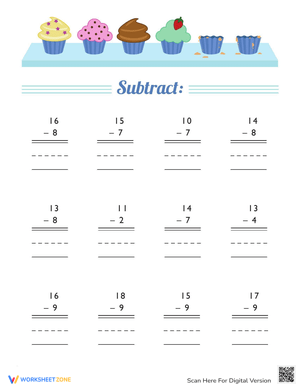
Decomposing worksheets typically model the strategy with a worked example such as 13-4=13-3-1=10-1=9, breaking the subtrahend into two parts so the first jump lands on a ten. Students who can explain that middle step out loud are demonstrating the exact reasoning CCSS.1.OA.C.6 asks for, which makes it a strong item for a quick oral check alongside the written worksheet.
Sequencing 1st Grade Subtraction Worksheets From Concrete to Abstract
The standard progression for 1st grade subtraction moves from concrete models, like cubes, counters, and ten-frames, to visual models, like number lines and number bonds, and finally to abstract equations. Worksheets should follow that same order rather than jumping straight to bare number sentences.
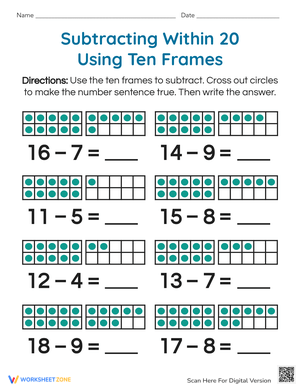
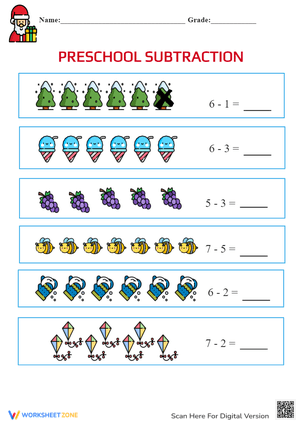
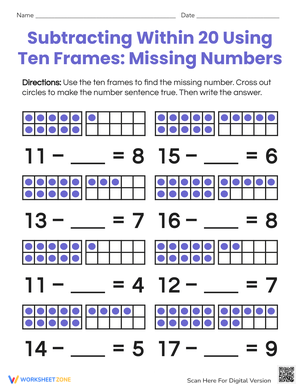
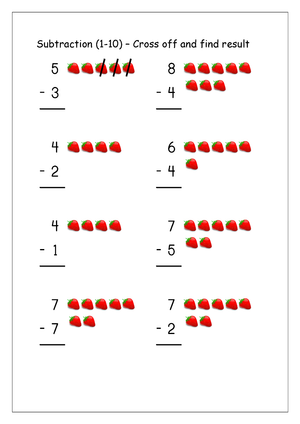
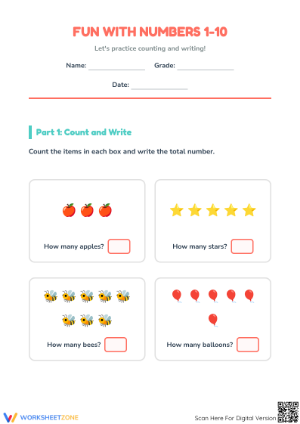
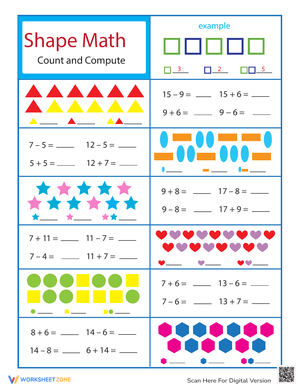
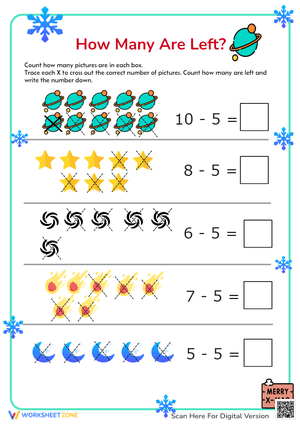
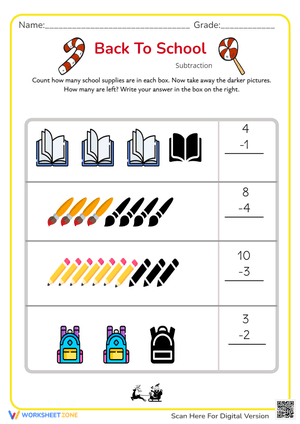
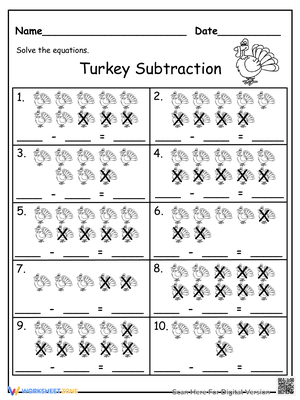
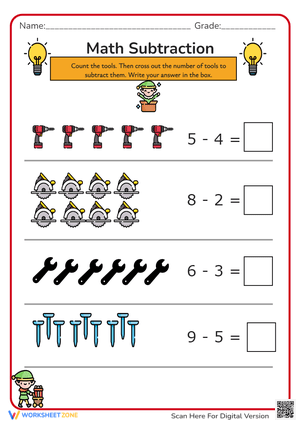
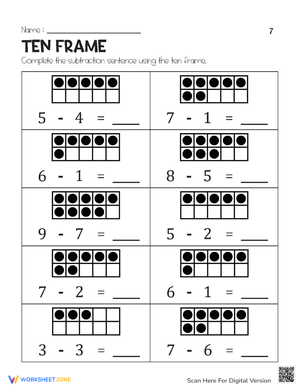
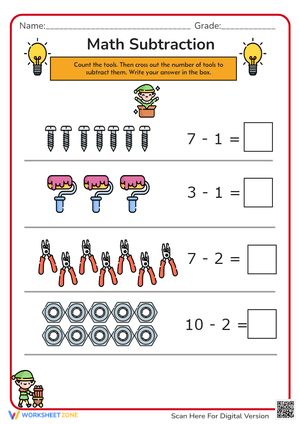
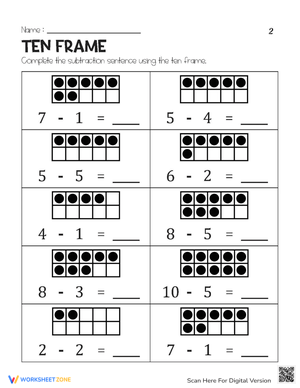
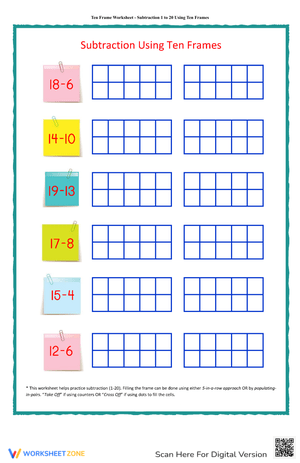
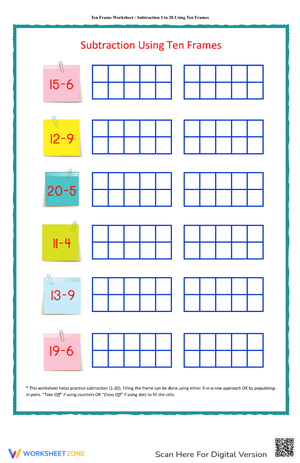
- Concrete stage: worksheets with ten-frame images or counter drawings for students to cross out or circle
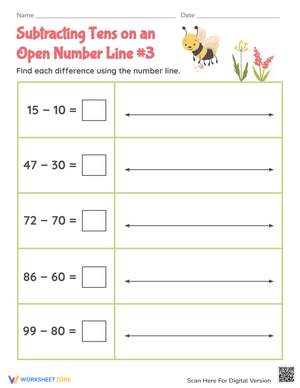
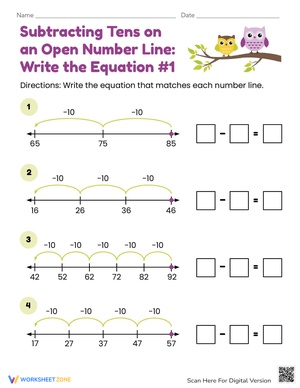
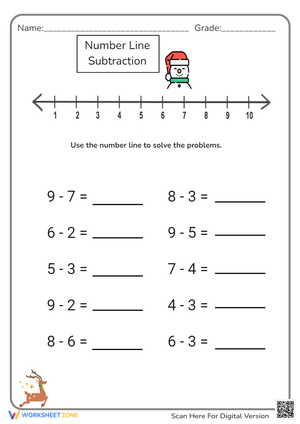
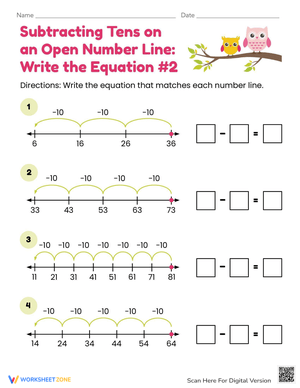
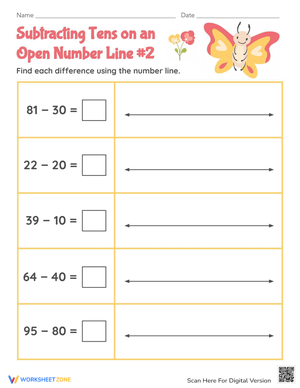
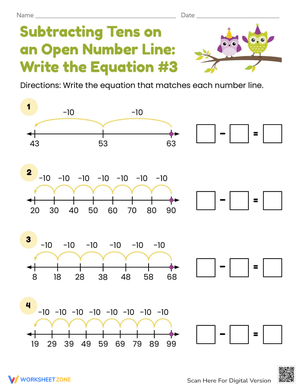
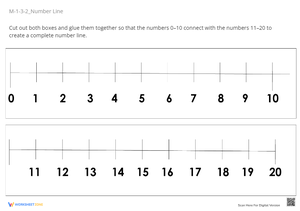
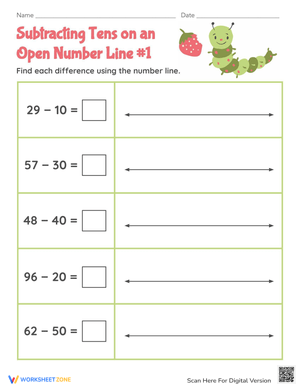
- Visual stage: open number lines where students mark jumps of ten and jumps of ones
- Abstract stage: equations only, with space for students to show their strategy in writing
Skipping the visual stage is a common shortcut that backfires with students who still need to see the distance between the minuend and subtrahend represented physically before they can hold it in their head.
Using Strategy-Specific Worksheets for Small-Group Intervention
In a small-group setting, the fastest way to identify a student stuck on counting all instead of counting back is to hand them a worksheet built around a single strategy and watch how they solve the first two problems. A student who touches every object one at a time, rather than starting from the larger number and counting down, needs more time on counting-back worksheets before moving forward.
According to the Common Core State Standards Initiative's Grade 1 Operations and Algebraic Thinking domain, students are expected to demonstrate fluency in addition and subtraction within 10 by the end of the year, with counting on, making ten, and decomposing named as the strategies that get them there. That expectation gives interventionists a concrete target to plan toward rather than a vague fluency goal.
For a four-student intervention group, a fifteen-minute rotation using one strategy worksheet per session gives each student focused repetition without the pacing pressure of whole-class instruction.
Teacher Tips for Building a Subtraction Strategies Worksheet Set
A few practical adjustments make a strategy-based worksheet set easier to manage across a full class or a rotating small group.
- Color-code worksheets by strategy so students and aides can sort them quickly during centers
- Pair every abstract worksheet with the visual version from the same strategy for students who need a step back
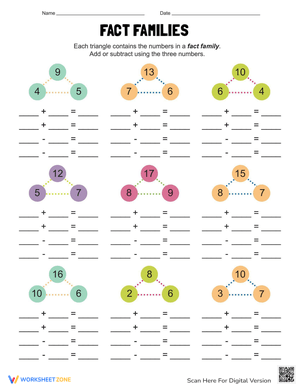
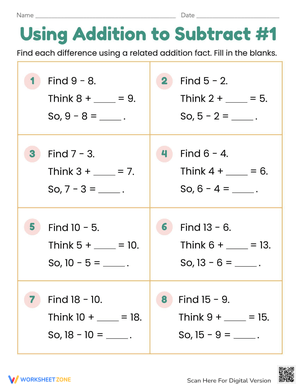
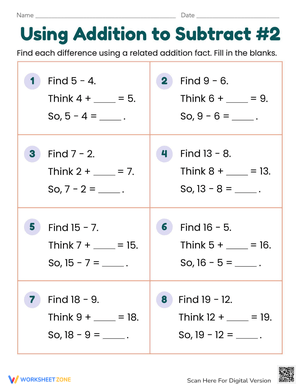
- Keep a folder of think-addition worksheets on hand for students who test strong in addition but weak in subtraction
- Use the same problem numbers across strategies so growth from one worksheet type to the next is easy to compare
Building this kind of set once at the start of the year saves significant prep time later, since the same worksheets can be reused for intervention, review, and enrichment throughout the semester.
Frequently Asked Questions
1. What subtraction strategies should 1st graders learn according to Common Core?
CCSS.MATH.CONTENT.1.OA.C.6 names counting on, making ten, decomposing a number leading to a ten, and using the relationship between addition and subtraction as the core strategies for subtraction within 20.
2. How do I choose the right subtraction strategy worksheet for a struggling student?
Watch how the student solves the first few problems on a mixed worksheet, then move them to a worksheet focused on whichever strategy they default to incorrectly, such as counting all instead of counting back.
3. What is the difference between counting back and think-addition strategies?
Counting back moves down from the larger number to find the answer, while think-addition, or counting up, treats subtraction as an unknown-addend problem and moves toward the larger number instead.
4. How can subtraction strategy worksheets be used for small-group intervention?
Assign one strategy worksheet per rotation so each small-group session targets a single skill gap, rather than mixing strategies and losing track of which one a student still needs.
5. When should students move from concrete manipulatives to number-line subtraction worksheets?
Once a student can consistently solve concrete, manipulative-based problems without recounting from one, they are ready for number-line worksheets as the bridge before fully abstract equations.













 Interactive Worksheet Maker
 Quiz Maker
 Word Search Maker
 Crossword Puzzle Maker
 Word Scramble Generator
 Sentence Scramble Generator
 Handwriting Worksheet Generator
 Name Tracing Generator
 Fill In The Blank Generator