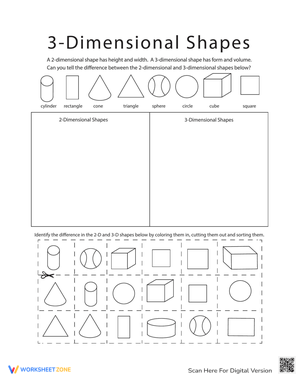
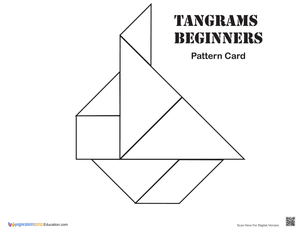
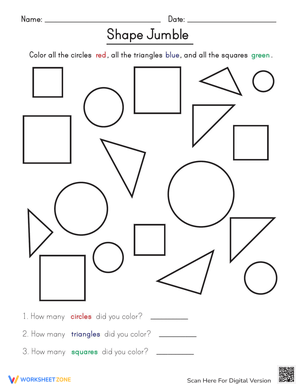
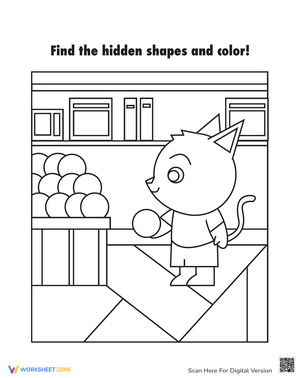
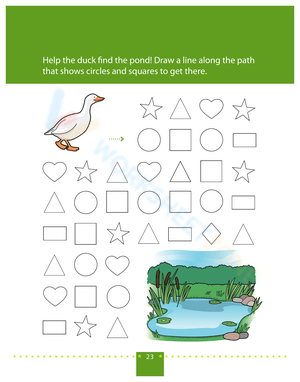
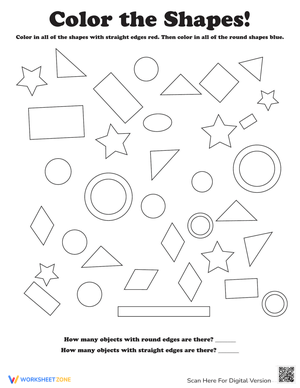
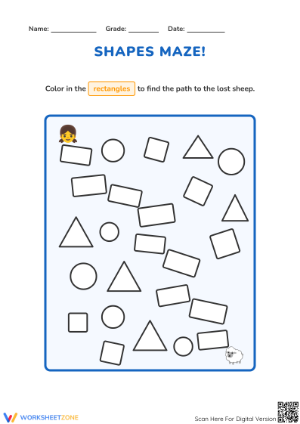
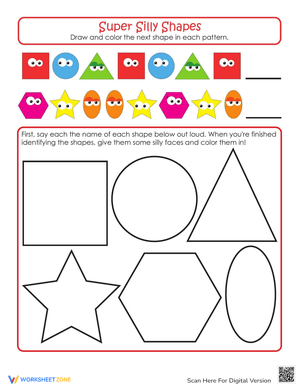
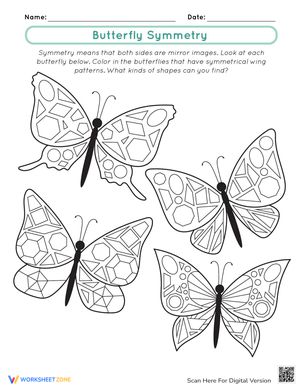
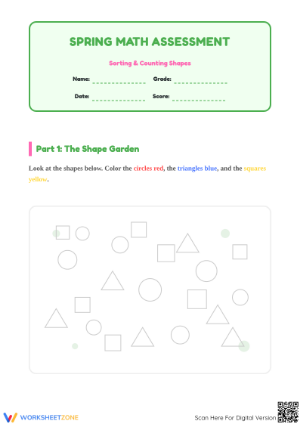
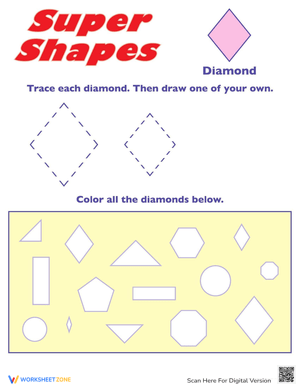
These flat shapes printable worksheets for 1st grade address a specific developmental gap: the distance between a child who can say "square" on cue and one who can explain what makes a square different from a rectangle. Each worksheet focuses on one 2D shape skill — naming, sorting, drawing, or attribute identification — formatted with large visuals and short directions so students can work through them independently.
The Specific Skills These Worksheets Build
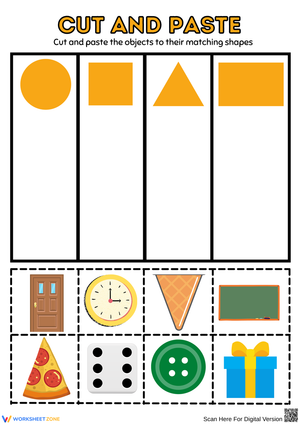
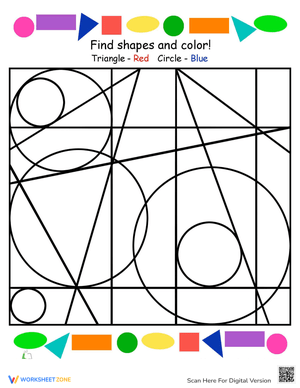
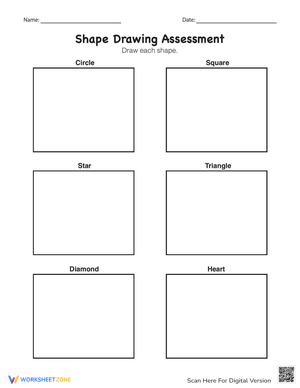
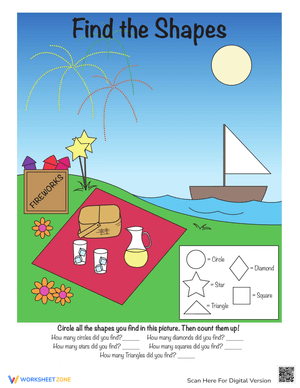
The tasks across the set move deliberately from recognition toward reasoning. Early worksheets ask students to name and circle shapes from a mixed-picture field. Later worksheets ask them to sort by a single attribute — all shapes with exactly four sides, or all shapes with at least one curved edge — and to produce shapes themselves through tracing and freehand drawing.
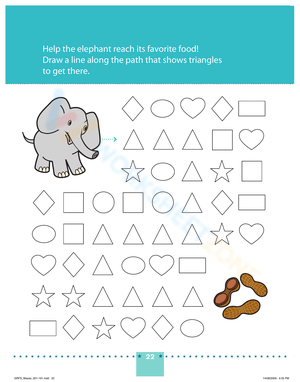
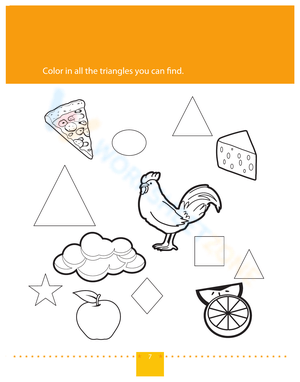
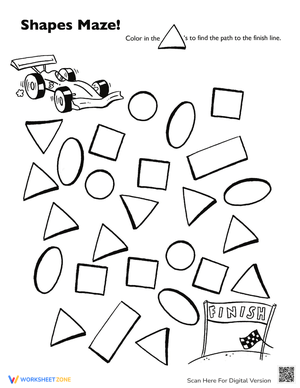
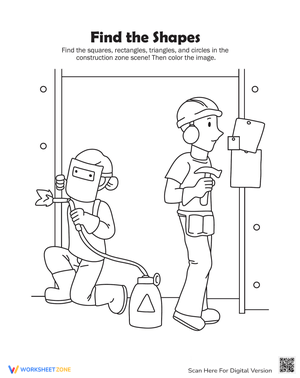
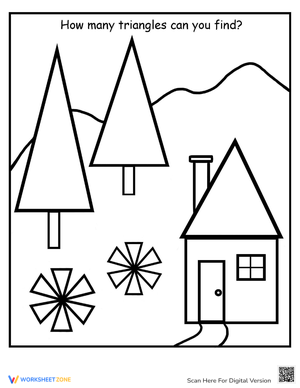
- Naming from pictures: Students identify circles, triangles, squares, rectangles, and hexagons presented in varied sizes and orientations.
- Non-example identification: Students decide which shapes in a mixed field do not belong to a named category — a task that requires genuine attribute knowledge, not image matching.
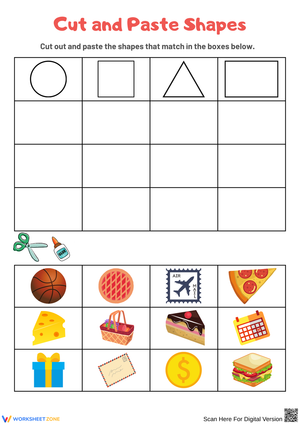
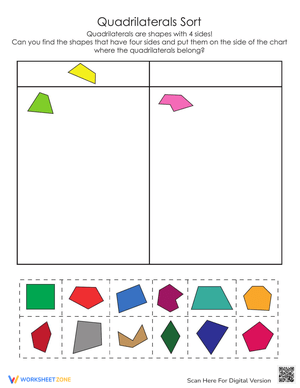
- Attribute sorting: Students group shapes by number of sides, number of corners, or straight versus curved edges.
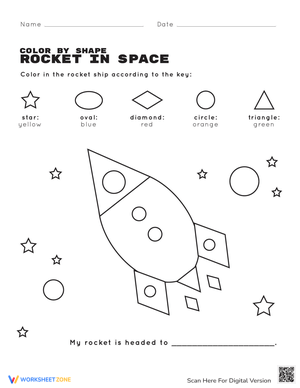
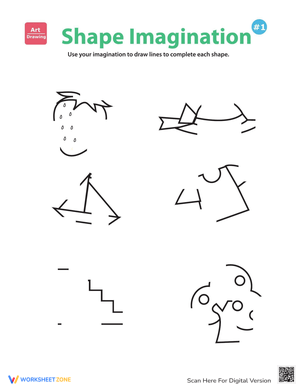
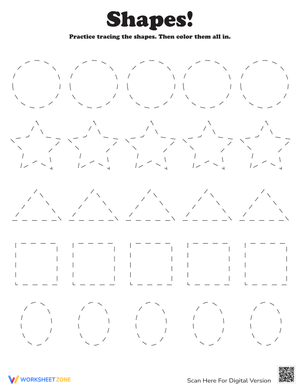
- Tracing and freehand drawing: Students build hand control while reinforcing the distinction between straight and curved lines.
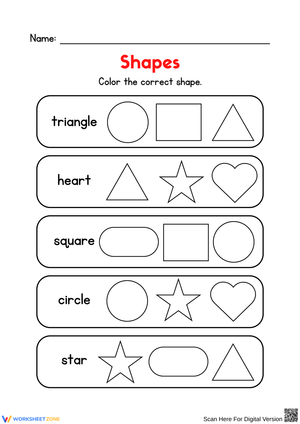
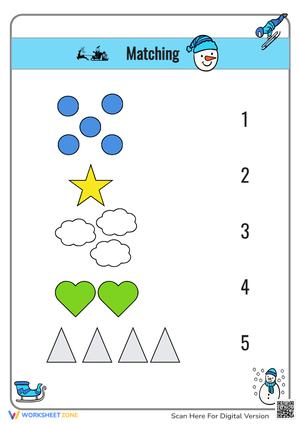
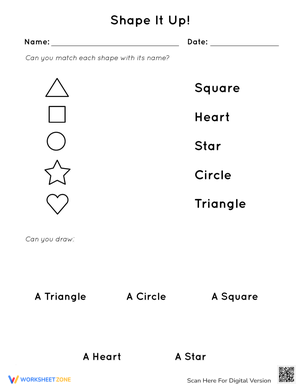
- Name-to-shape matching: Students connect printed vocabulary — triangle, rectangle, hexagon — to the corresponding visual form.
The non-example work carries more instructional weight than it first appears. A student who correctly rejects a near-miss from a named category is applying a rule, not pattern-matching from a single model stored in memory.
Student Mistakes Worth Watching For and Correcting
The most consistent error in first grade geometry is orientation dependence. Present the same equilateral triangle pointing downward or tilted 45 degrees and a notable number of students will say it is "not a real triangle" or skip it on a circling task. On worksheets that include rotated figures, those skipped marks are visible and easy to address. That window into a student's mental model is exactly why rotated examples should stay in the set rather than be removed to make the page feel easier.
The square-rectangle confusion is a separate problem and a slightly subtler one. Students who have correctly memorized "a square has four equal sides" will still sort a square into the non-rectangle pile because they have learned rectangle as a visual prototype — the elongated version — rather than a definition. A worksheet that requires students to indicate why a shape belongs in a group, even with a two-word phrase or a word bank, surfaces that misconception immediately. Without that prompt, the same student passes a matching worksheet with full marks and still holds the wrong concept going into the next lesson.
Fitting These Worksheets Into Your Instructional Week
The most reliable placement in a first grade classroom: the 7–8 minutes between morning meeting and the formal math block. Students settle into a familiar format while the teacher circulates and notices who is hesitating over specific shapes. That brief window catches misconceptions before the lesson begins rather than surfacing them mid-instruction.
For center rotations, pair a sorting or identification worksheet with foam shape tiles or pattern blocks. Students build the shape first, then mark the printed version. That physical-to-paper sequence is especially useful for the drawing worksheets — students who are uncertain about corners often produce a much cleaner shape after placing a tile on the paper and tracing its edge once. The worksheet then functions as a consolidation step rather than a cold start.
Exit-task use is worth building into the unit. A single row of attribute-identification items takes under four minutes and gives clean data: who names shapes correctly, who still conflates squares and rectangles, who is ready to move into comparing attributes across two different shapes. Whole-group lessons often mask individual confusion; a short worksheet makes each student's understanding visible.
Standard Alignment
CCSS.MATH.CONTENT.1.G.A.1 asks first graders to distinguish defining attributes from non-defining attributes and to build and draw shapes that possess those defining attributes. In classroom terms, the standard has two halves: students must reason about what makes a shape what it is, and they must produce shapes from that reasoning — not just receive and label them. The identification, sorting, and drawing worksheets in this set serve both halves directly. The attribute-sorting tasks align specifically to the "distinguish" language in the standard; students are not just labeling, they are making a judgment about what counts as a defining feature and why.
Adjusting the Worksheets for Different Levels of Learners
Flat shapes printable worksheets for 1st grade lend themselves to level adjustments because each worksheet targets a single skill, and reducing the answer set does not alter the core task. For students who need more support, keep a shape reference card visible at the workspace and work through the first item together before independent practice begins. If the answer field offers five shape choices, narrow it to two — circle or not a circle — so cognitive demand stays on the shape concept rather than on managing multiple options at once.
Students who are ready for more challenge move past naming tasks quickly. The sorting worksheets that require a brief written justification — "I put this here because it has three sides" — push toward the definition-based reasoning that 1.G.A.1 is actually after. A further extension: ask students to generate their own sorting rule and test it against a new set of shapes with a partner. That generative step sits firmly in the upper range of the standard's expectations.
In small-group intervention, the predictable format of these worksheets is a genuine asset. Students who struggle with open-ended tasks often work more accurately when the page structure is consistent — same layout, same direction style, new content. That stability directs attention toward the geometry rather than toward decoding what the worksheet is asking.
Frequently Asked Questions
What 2D shapes are covered across the worksheets?
The set covers circles, triangles, squares, rectangles, and hexagons, with some worksheets including additional polygons such as pentagons. Shapes appear in varied sizes and orientations throughout — an intentional design choice, since students need to recognize a shape regardless of how it sits on the page.
Do these worksheets hold up for homework assignments?
Yes. Directions are short, visuals are large, and the tasks — circling, coloring, matching, tracing — require nothing beyond a pencil or crayon. Parents can support their child without needing to understand the instructional sequence behind the geometry unit, which matters at this age when homework is meant to review rather than introduce.
How do these worksheets work for students who are not yet reading independently?
The visual-first format handles this directly. Tasks that rely on pictures and example items rather than extended directions keep the reading demand low enough that a pre-reader understands the task from the example. Reading the direction aloud once before independent work is enough for most students. Using flat shapes printable worksheets for 1st grade this way — brief oral launch, then independent work — is how most early primary teachers already run worksheet time, so no additional routine is required.
Can these worksheets double as informal assessment tools?
A sorting or attribute worksheet collected after direct instruction gives a clear snapshot of where individual students are relative to 1.G.A.1. It does not replace a formal geometry assessment, but it tells a teacher quickly whether the class is ready to shift from naming shapes to reasoning about their attributes. The flat shapes printable worksheets for 1st grade in this set include enough attribute-level tasks — particularly the non-example and sorting work — to make that determination without pulling additional materials.













 Interactive Worksheet Maker
 Quiz Maker
 Word Search Maker
 Crossword Puzzle Maker
 Word Scramble Generator
 Sentence Scramble Generator
 Handwriting Worksheet Generator
 Name Tracing Generator
 Fill In The Blank Generator