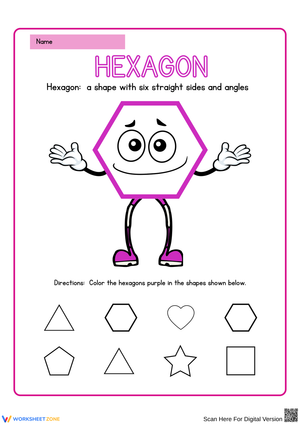
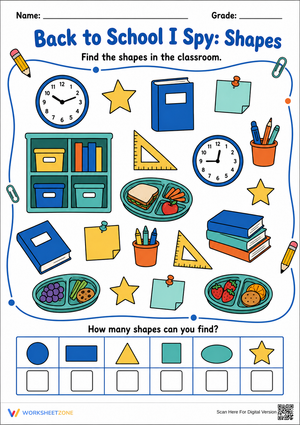
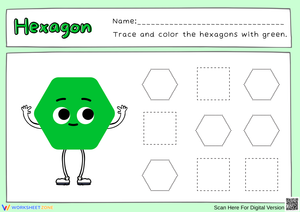
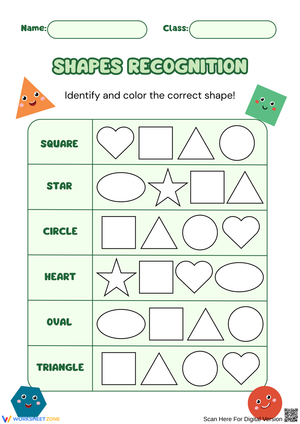
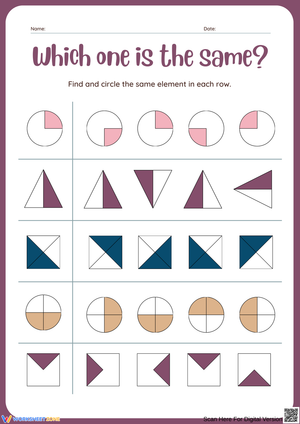
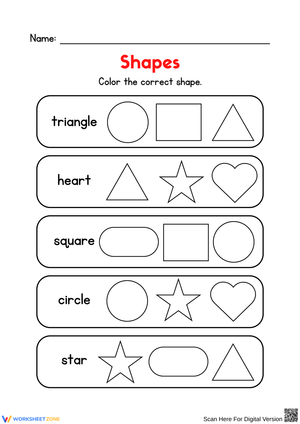
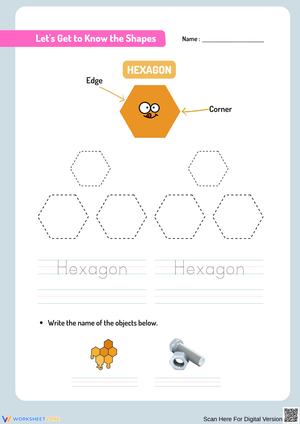
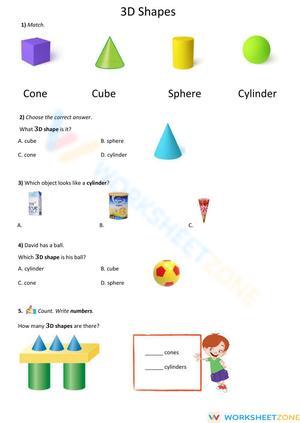
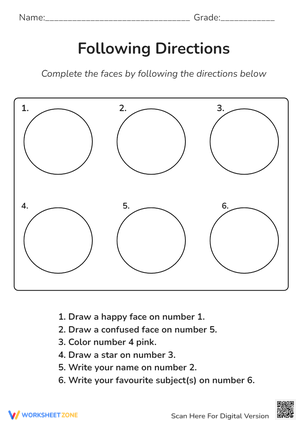
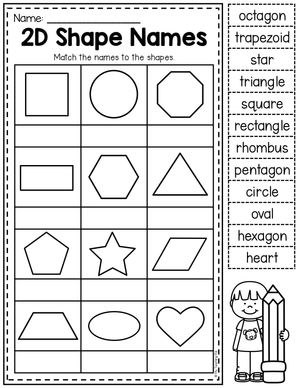
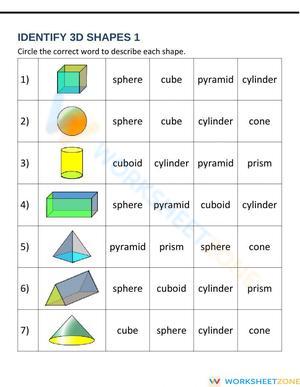
These 1st grade shapes pdf worksheets give teachers a print-ready toolkit for one of first grade's most conceptually demanding geometry standards — distinguishing between what makes a shape what it is and what merely describes how it happens to look on a given day. The set covers both flat and solid figures, moving students from simple naming toward attribute analysis, composition, and real-world connection. Print fidelity matters in geometry specifically: a distorted angle or a slightly oval "circle" will actively mislead students who are building the habit of trusting visual inspection as a reasoning tool.
The Conceptual Lift Behind First-Grade Geometry
What makes 1.G.A.1 genuinely tricky to teach is that it runs against a child's natural visual intuition. A first grader who has learned the word "diamond" looks at a square rotated 45 degrees and sincerely believes it is a different shape. That belief is not carelessness — it is the predictable outcome of how young children store visual templates. The tasks in this set force the confrontation directly: students see the same quadrilateral in three orientations on one worksheet and must decide whether the name changes. Most do not revise their answer until they count the sides and corners themselves, which is exactly the point.
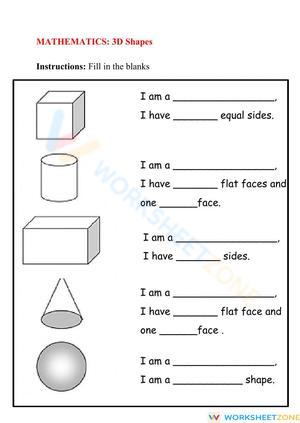
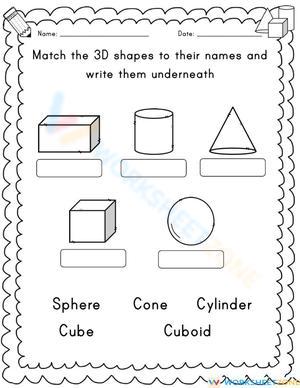
Solid figures add a second layer because students must now bridge the gap between a flat printed image and a three-dimensional object. Placing a physical cylinder directly onto its printed representation and letting students feel the curved surface before they label it closes that gap faster than verbal explanation alone. These worksheets are designed to follow that kind of tactile introduction, not replace it.
The Specific Skills Each Worksheet Targets
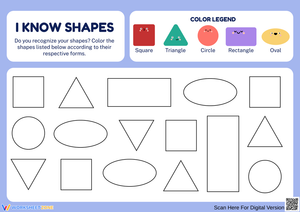
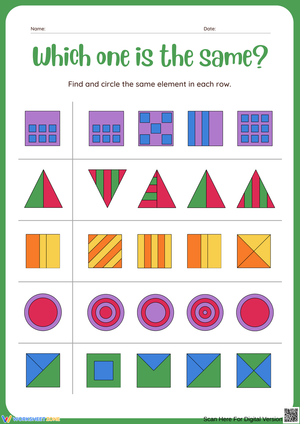
- Defining versus non-defining attributes: Students examine figures that vary in color, size, and rotation, then identify which attributes stay constant regardless of how the figure is drawn. Worksheets include deliberately tricky examples — a very large triangle beside a tiny one, a green trapezoid beside an orange one — to push students past surface-level pattern matching.
- Counting sides and vertices: Students trace each side of a polygon and mark each corner with a dot before entering their counts in a chart. The tracing step matters: students who skip it consistently miscount hexagon vertices and confuse trapezoid sides.
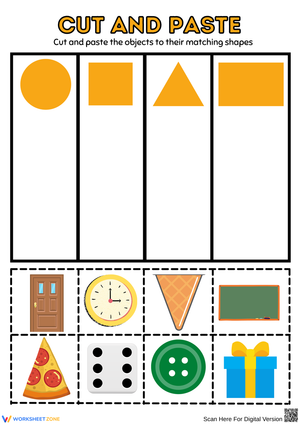
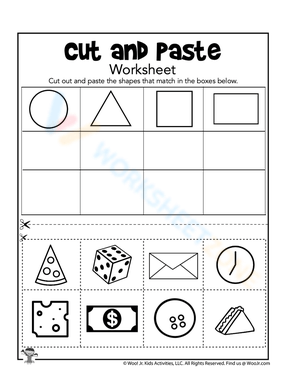
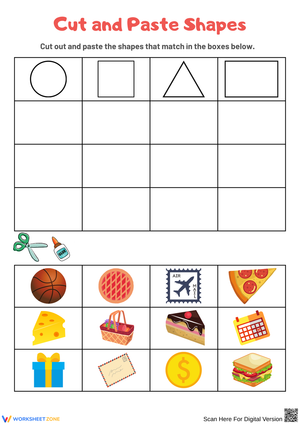
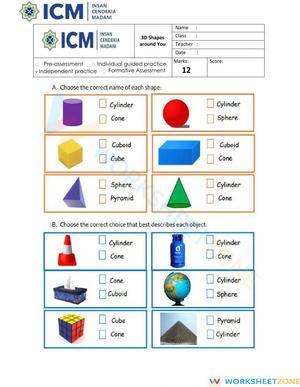
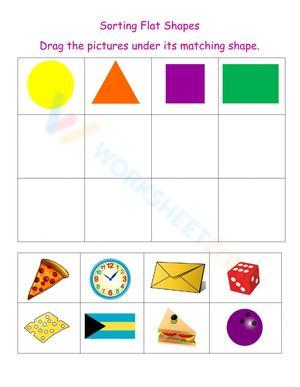
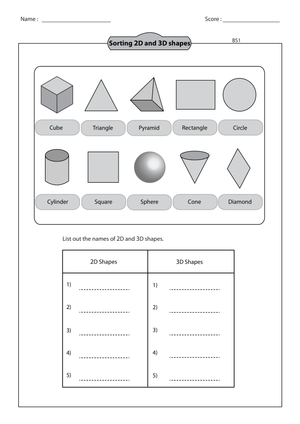
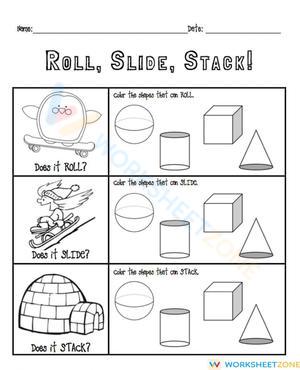
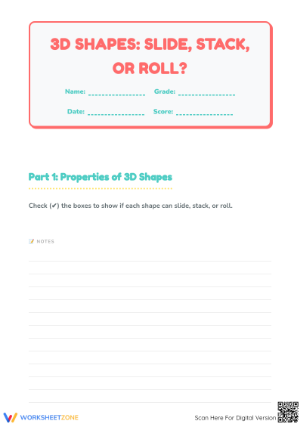
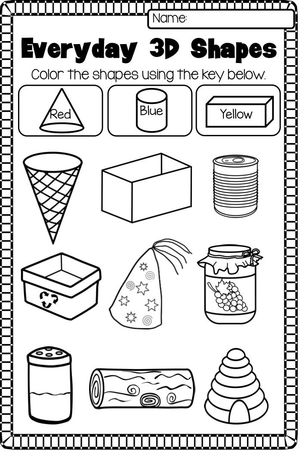
- 2D and 3D sorting: Cut-and-paste tasks ask students to sort image cards into flat-figure and solid-figure columns. Some cards show real-world objects — a soup can, a party hat, a cereal box — so students practice connecting geometric vocabulary to objects they already know.
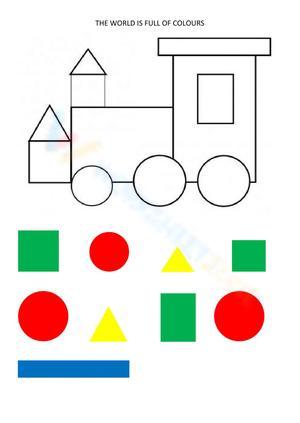
- Composing shapes: Students join two or more smaller figures to build a larger one, either by drawing partition lines or assembling paper cutouts. A reliable task has students join two right triangles to form a rectangle, then write a sentence explaining why the combined figure qualifies as a rectangle.
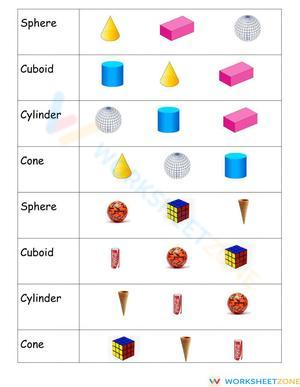
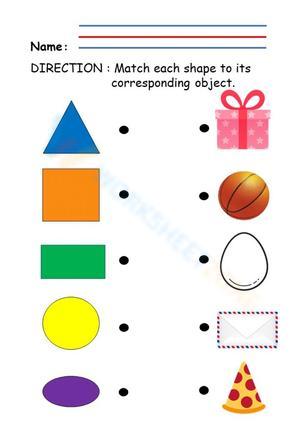
- Real-world attribute matching: Matching tasks pair household objects with their geometric counterparts and require students to name the attribute they used to make the match — not simply draw a line between two pictures.
Standard Alignment
These worksheets address the Common Core cluster 1.G.A — Reason with shapes and their attributes. Standard 1.G.A.1 sits at the center of the set: students distinguish defining attributes (number of sides, number of vertices, whether the figure is closed) from non-defining attributes (color, size, orientation). Standard 1.G.A.2 is covered by the composition tasks, where students build composite figures from triangles, rectangles, and trapezoids and describe what they made. 1st grade shapes pdf worksheets address both standards directly, making them easy to sequence within a unit that follows a gradual release model — whole-group concept introduction one day, independent worksheet practice the same afternoon or the following morning.
How to Build These Worksheets Into Your Lesson Plans
The attribute-sorting worksheets work best as a follow-up to a hands-on activity with physical pattern blocks, not as the first introduction to the concept. Students who have already held a trapezoid, counted its sides by touch, and debated with a partner whether it looks like a triangle bring real knowledge to the printed task. Assign the worksheet at the end of that lesson to formalize what students discovered — not as a substitute for the discovery itself.
For the composition worksheets, a five-minute warm-up where students build a shape with physical blocks before sketching it gives students who struggle with abstraction a reference point before they work independently. The sorting worksheets also move smoothly through math centers: slip each one into a clear sheet protector and hand students a dry-erase marker. The same 1st grade shapes pdf worksheets cycle through four or five center rotations without printing a fresh copy each time, which adds up across a week-long geometry unit.
Student Mistakes That These Worksheets Help You Catch
The orientation error is the most consistent one in this unit. Students who correctly identify a square in standard position will label the rotated version "a diamond" without hesitation. This is not a vocabulary problem — they know both words. They have stored a visual template for "square" that requires a flat bottom edge, and the rotated version does not match it. The instructional fix is deliberate repetition: show the rotated square beside the standard square, count sides and corners together aloud, and ask whether the count changed. It takes two or three cycles before the counting overrides the visual template for most students.
A second persistent error is conflating 2D shapes with their 3D counterparts. Students call a sphere a "circle" and a cube a "square" because their mental image of each solid is its most recognizable face. Worksheets that require students to name one flat face of a cube and then name the solid slow this conflation down considerably. A third error appears in composition tasks: students who build a rectangle from two triangles will often insist the result is "two triangles touching" rather than a rectangle. Asking them to count the outer sides of the combined figure — ignoring the interior seam — usually resolves it on the spot.
Adjusting the Worksheets for a Range of Learners
Students who are still shaky on shape names benefit from a simple visual reference card — each shape drawn beside its name — taped to the desk while they work. This removes vocabulary recall as a barrier and lets the worksheet do what it is meant to do: assess attribute reasoning, not memory retrieval. For students who have already mastered basic identification, the composition worksheets offer genuine challenge: ask them to find two different pairs of smaller shapes that combine into the same larger figure, then write a sentence explaining what both combinations share. Students who freeze when a familiar shape appears in an unfamiliar orientation — and there are always a few in any class — need a two-minute teacher-led tracing warm-up before working independently. That check is far faster than re-explaining the task after a student submits a blank worksheet.
1st grade shapes pdf worksheets in this set span enough variation in task type and cognitive demand that teachers running mixed-readiness groups can assign different worksheets to different students within the same lesson block. The pages look and feel like the same family of work, which matters to students who notice when they are handed something different from their neighbor.
Frequently Asked Questions
What two-dimensional figures do first graders study?
First grade geometry covers rectangles, squares, trapezoids, triangles, half-circles, and quarter-circles. The emphasis falls on describing these figures by their attributes — number of sides and vertices — rather than recognizing them by overall silhouette alone.
How do I teach the difference between defining and non-defining attributes?
Show students three or four versions of the same shape that vary in color, size, and rotation. Ask what stays the same across every version. Guide students to discover that the side count and vertex count remain constant even when everything else changes. The key instructional move is having students count independently before you confirm — let them find the pattern rather than telling them what to find, or the concept does not stick.
Can these worksheets run in a math center without teacher supervision?
The sorting and attribute-counting worksheets work well as independent or partner center tasks once the concept has been introduced in a whole-group lesson. The composition tasks — where students combine shapes to form a new figure — tend to need a brief teacher check-in at the start, because students who misread the direction early will complete an entire worksheet incorrectly before anyone catches it.
Why does PDF format matter for geometry resources specifically?
A right angle that prints slightly acute, or a circle that comes out slightly oval, introduces false information into a lesson built around analyzing defining attributes. Students are counting sides, identifying closed figures, and comparing proportions — all tasks where the accuracy of the printed figure is part of the learning condition. PDF format locks those dimensions in place regardless of printer, device, or software version.













 Interactive Worksheet Maker
 Quiz Maker
 Word Search Maker
 Crossword Puzzle Maker
 Word Scramble Generator
 Sentence Scramble Generator
 Handwriting Worksheet Generator
 Name Tracing Generator
 Fill In The Blank Generator