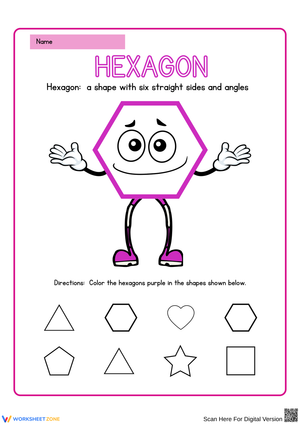
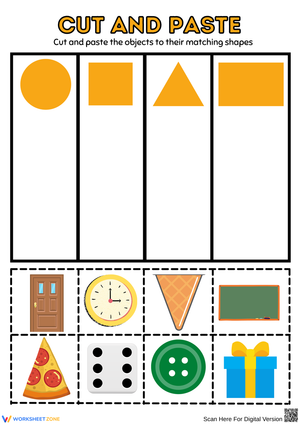
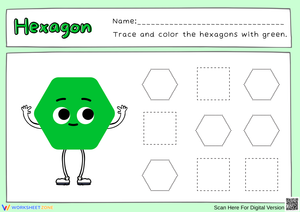
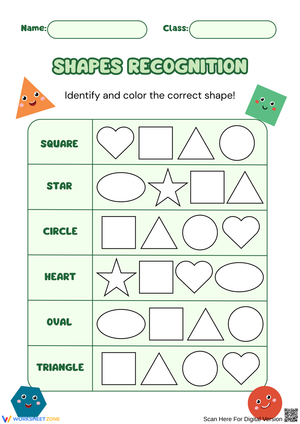
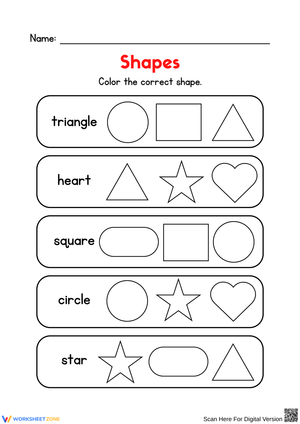
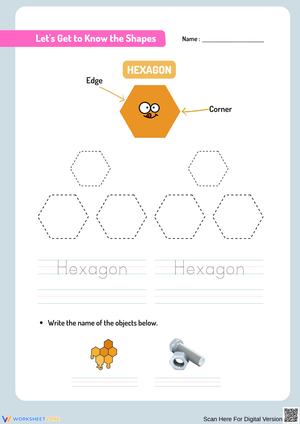
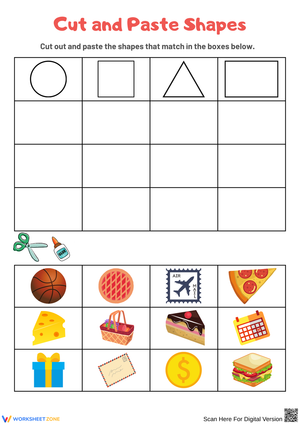
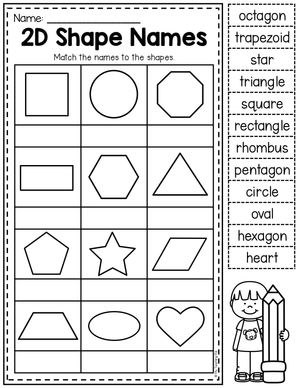
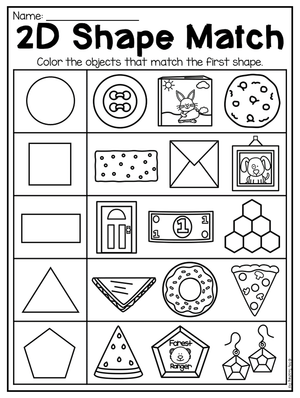
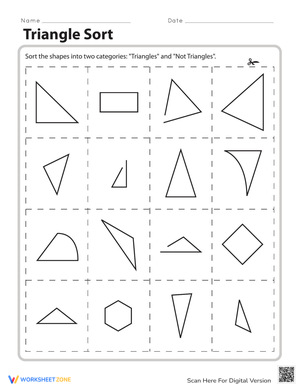
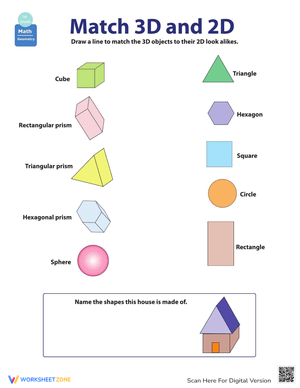
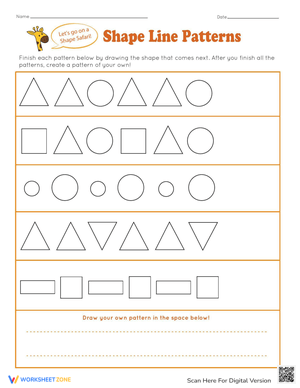
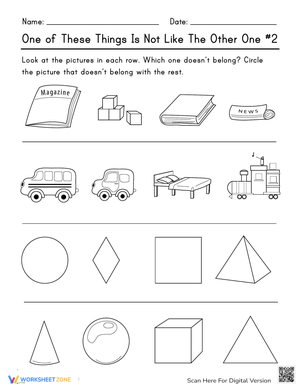
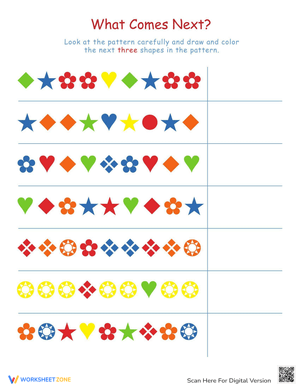
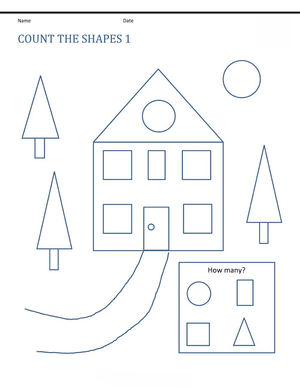
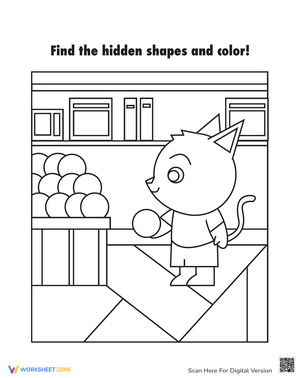
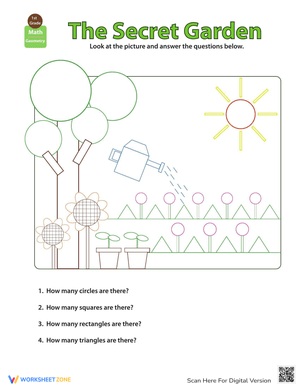
These 1st grade 2d shapes worksheets give first-grade teachers a focused set of practice tasks that move students from casual shape recognition into attribute-based geometric thinking. The set covers circles, triangles, squares, rectangles, and hexagons — not simply naming them, but sorting them by number of sides and vertices, drawing them from written definitions, and combining smaller figures into composite shapes. Each worksheet targets a distinct skill, which means teachers can assign them individually for targeted review or sequence them across a full geometry unit.
The Specific Skills Each Worksheet Builds
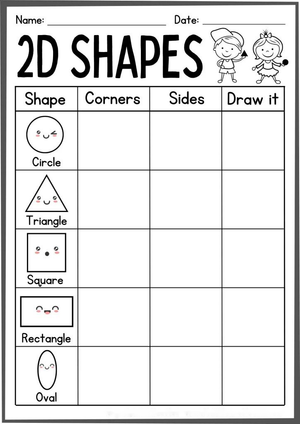
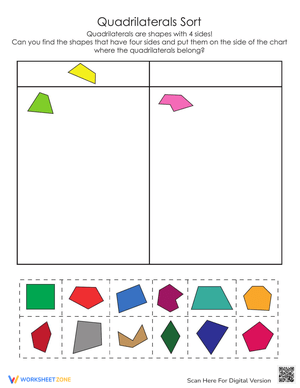
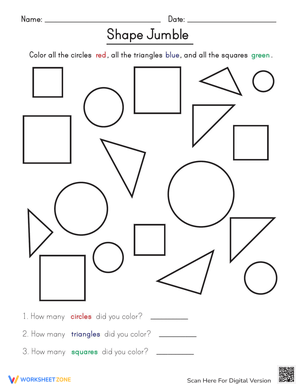
The central conceptual work here is separating defining attributes from non-defining attributes — arguably the most important intellectual move in first-grade geometry. Students sort shapes by number of sides and vertices, establishing that color, size, and rotational orientation do not determine what a shape is called. A blue, small, upside-down triangle has three sides and three vertices — it is still a triangle. Sorting tasks that require students to apply this rule on shapes presented in unfamiliar arrangements are where that understanding actually forms.
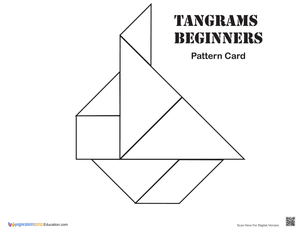
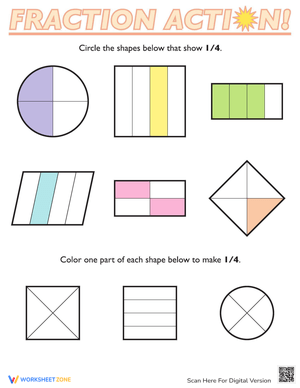
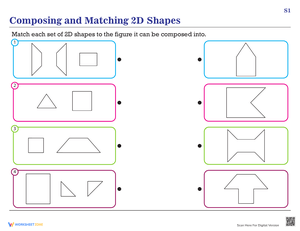
Composing tasks run alongside sorting. Students use two right triangles to construct a square, or fit smaller polygons inside a hexagon outline. Partitioning moves in the opposite direction: students draw lines to divide a rectangle or circle into two or four equal shares. Both skills build the spatial visualization that third-grade fraction instruction will depend on. Vocabulary labeling rounds out the range — students read the word "hexagon," locate the matching shape, then write the word independently. That read-identify-produce sequence is considerably more durable for retention than recognition tasks alone.
Mistakes Students Make That These Worksheets Help Surface
The most consistent error is labeling a rotated square a "diamond." Students who have worked with physical blocks almost always use orientation as a defining feature, so a square turned 45 degrees reads to them as an entirely different shape. A worksheet that presents the same square at four rotations and asks students to name each figure makes this misconception visible immediately — and gives teachers a clear opening to address it before it hardens into a fixed belief.
A second pattern appears on drawing tasks. When asked to draw "a shape with three vertices," students who understand what vertex means in isolation will sometimes place three disconnected dots on the page and stop there. The closed-figure requirement hasn't registered. Asking students to trace the perimeter of what they've drawn with a finger — before moving on — interrupts this error at the moment it forms.
Miscounting on hexagons is also common and predictable. Students touch each side once but lose their place on the longer shapes and recount a side already tallied. Teaching them to mark each side with a small tick as they count — the same system they already use for tally marks — transfers a familiar routine onto an unfamiliar task and reliably reduces the error without requiring any additional instruction.
Why This Format Works for This Skill at This Grade
Six- and seven-year-olds are transitioning from figurative recognition — knowing a shape by its overall silhouette — to analytical classification based on countable properties. That transition is not automatic. It requires repeated encounters where the familiar visual cue is absent or misleading, forcing students to count and categorize rather than match to memory. Worksheets that consistently present shapes in non-standard orientations and sizes create exactly those encounters without requiring new materials each time.
Spaced retrieval also matters here. A student who correctly identifies shapes during Monday's hands-on lesson may not hold those definitions firmly by Thursday. A five-minute worksheet mid-week creates a low-stakes retrieval event that consolidates knowledge more durably than a second manipulative activity would. The printed format is the point — the act of writing and drawing from memory, without blocks in hand, strengthens the mental representation in a way that additional handling alone does not.
Working These Worksheets Into Your Instructional Planning
The most practical entry point is a five-to-eight minute warm-up at the start of math block. A sorting task where students circle all figures with more than three sides primes attention for a lesson on quadrilaterals without consuming instructional time. This 1st grade 2d shapes worksheets set works best alongside direct instruction rather than replacing it — brief and targeted, not a standalone lesson.
Math centers are the other natural home. Slide each worksheet into a dry-erase pocket and students can complete the same task multiple times across the week, erasing and redoing without burning through paper. For the composing worksheets specifically, pair the printed task with physical pattern blocks: students place the blocks directly on the outline, then remove them and draw from memory. That concrete-to-representational move reduces frustration for students who struggle to visualize spatial arrangements without a physical referent — and it takes roughly 90 extra seconds of setup.
Exit tickets are also a reliable use case. Hand one worksheet to each student in the last six minutes of class on the day a new shape is introduced. What students do with the drawing and labeling tasks tells you immediately who has the defining-attributes concept and who needs another day before the class moves forward.
Standard Alignment
The tasks in this 1st grade 2d shapes worksheets align with three standards in the CCSS geometry domain. 1.G.A.1 requires students to distinguish shapes by their defining attributes and to draw shapes that satisfy those definitions — the direct target of the sorting and drawing tasks here. 1.G.A.2 covers building composite shapes from smaller two-dimensional figures, addressed through the composing tasks. 1.G.A.3 addresses partitioning circles and rectangles into equal shares, targeted in the dividing tasks. Teachers in non-CCSS states will find these three skills map closely onto most state geometry standards at this level, typically listed under "geometry" or "spatial sense" strands. The attribute work in 1.G.A.1 is particularly important instructionally: it is the conceptual foundation the other two standards rest on, and rushing past it to reach composing tasks is one of the more common pacing errors in first-grade geometry units.
Adjusting the Worksheets for a Range of Learners
For students still consolidating shape names, pair the sorting and labeling worksheets with a reference card showing each shape alongside its name, side count, and vertex count. This removes vocabulary retrieval from the working memory demand so students can focus on the geometric reasoning the task actually requires. The card can be faded incrementally — available on day one, optional by mid-unit, put away by the end of the sequence.
Students working above grade level get the most from the composing and partitioning tasks pushed into open-ended territory: ask them to find more than one way to build a given shape, or to partition a rectangle into equal shares using two different line placements. Both variations require deeper spatial reasoning without requiring different materials. For the 1st grade 2d shapes worksheets set overall, mixed-ability pairing during center time also works well — a student who has fully grasped defining attributes can articulate the reasoning to a partner still working through it, which deepens both students' understanding in ways that independent seatwork alone does not.
Frequently Asked Questions
Do these worksheets show shapes in non-standard orientations?
Yes. Several worksheets present triangles, squares, and rectangles at rotated angles specifically to surface the orientation misconception. Students who have only seen a triangle pointing upward will often call a downward-pointing version incorrect or give it a different name. These tasks require students to count sides and vertices on every figure regardless of how it sits on the page — the only reliable way to break the orientation habit before it carries into later grades.
How long does each worksheet take to complete?
Most tasks run five to ten minutes for a mid-year first grader working at a steady pace. Drawing tasks take slightly longer because of the fine motor demand. Labeling worksheets move faster. That range makes them practical for warm-ups, center rotations, and six-minute exit tickets without needing to split any single worksheet across two sessions.
Are these tasks appropriate for kindergartners working ahead in geometry?
The defining-versus-non-defining attributes content is calibrated for first-grade standards — kindergarten geometry focuses on naming shapes rather than analyzing their properties, and the composing and partitioning tasks align with 1.G rather than K.G standards. A kindergartner working well ahead may handle the sorting tasks with teacher support on the attribute vocabulary. The drawing tasks, which require students to produce shapes from written descriptions, will be challenging for most kindergartners regardless of overall math readiness.













 Interactive Worksheet Maker
 Quiz Maker
 Word Search Maker
 Crossword Puzzle Maker
 Word Scramble Generator
 Sentence Scramble Generator
 Handwriting Worksheet Generator
 Name Tracing Generator
 Fill In The Blank Generator