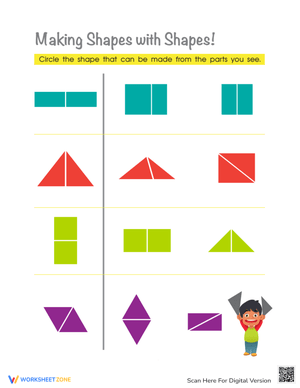
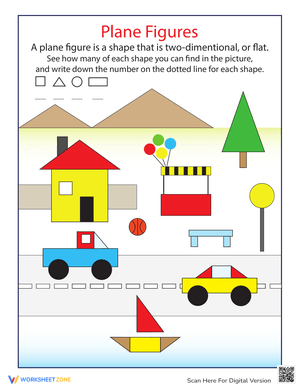
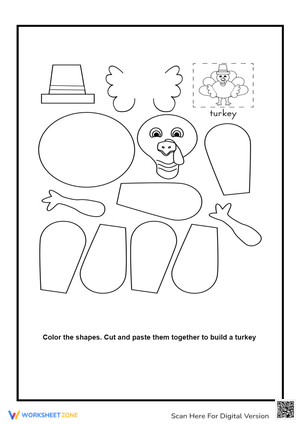
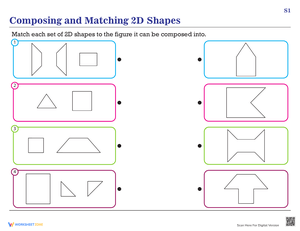
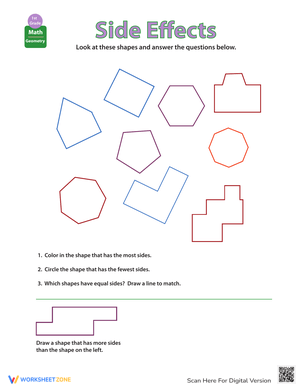
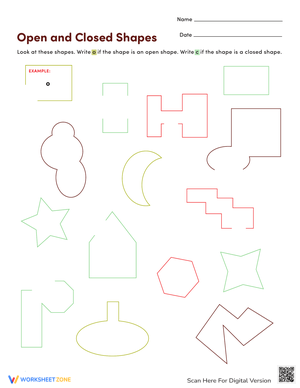
These composing shapes worksheets for 1st grade give teachers a direct entry point into one of early geometry's most visually rewarding skills: assembling smaller figures into entirely new ones. Students fit two triangles together to form a rectangle, or add a triangle to a square and watch a house shape emerge from familiar pieces. The set covers every format the standard demands — pattern block puzzles, cut-and-paste tasks, matching exercises, and real-world composite drawings — with enough variety to carry a full geometry unit without repeating the same activity twice.
The Specific Skills Each Worksheet Targets
The worksheets address six distinct operations, each requiring a different kind of spatial reasoning:
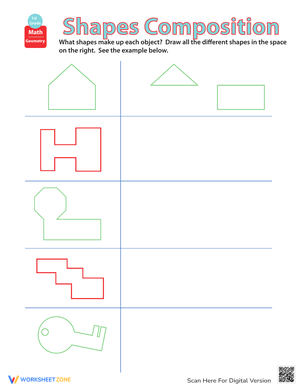
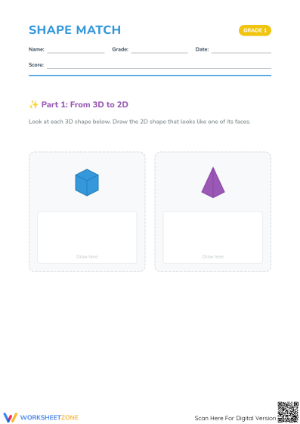
- Component identification: Students examine a finished composite shape and mark the internal boundary lines that reveal the smaller figures hidden inside it.
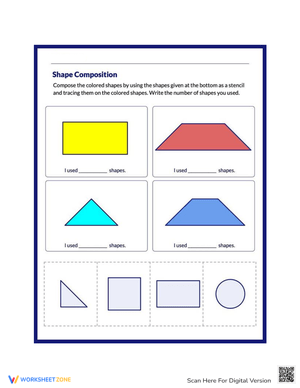
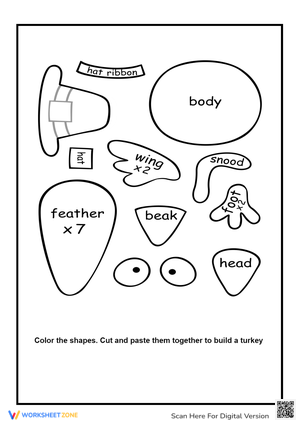
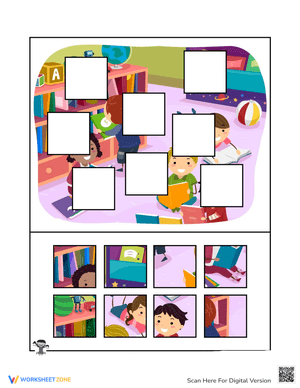
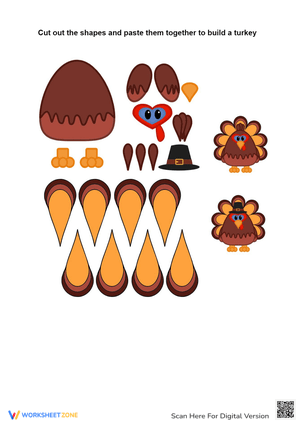
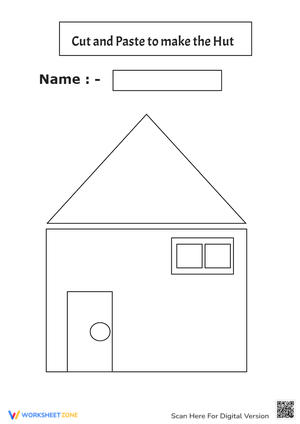
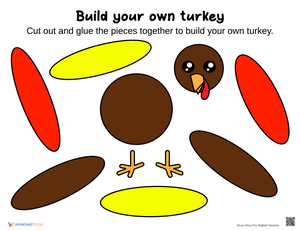
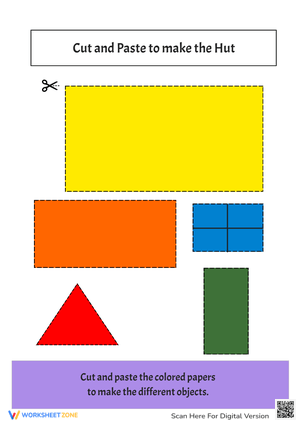
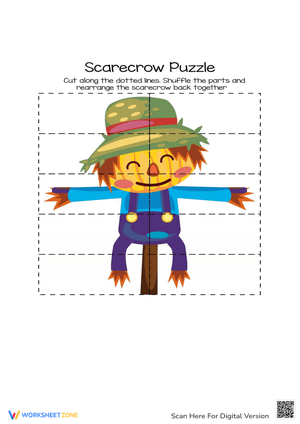
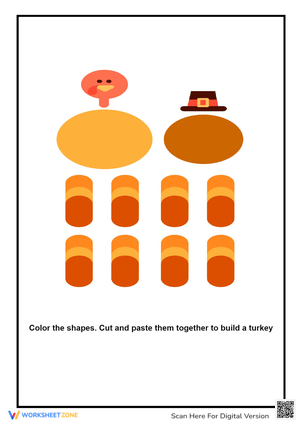
- Cut-and-paste composition: Students cut pre-printed shape outlines, test orientations, and glue them into a larger target silhouette — making the act of composition physical before it becomes abstract.
- Pattern block recording: Students determine which combination of blocks fills an empty outline, then trace or color the corresponding sections directly on the worksheet, bridging manipulative work with written practice.
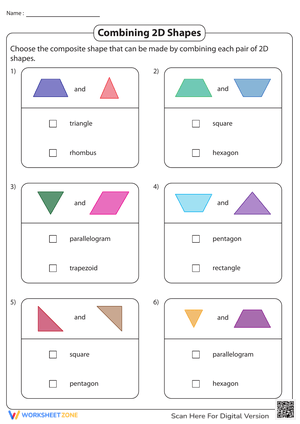
- Matching tasks: Students draw lines connecting a composite shape to the set of smaller shapes that built it, sharpening visual discrimination across multiple shape families.
- Multi-step composition: Students build one composite shape, then use that new shape as a component in a second, larger figure — the two-stage reasoning the standard specifically addresses.
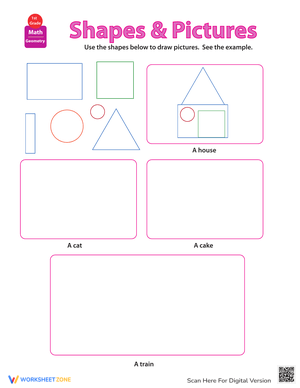
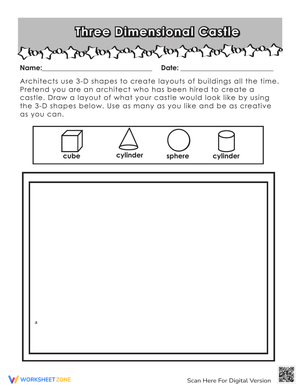
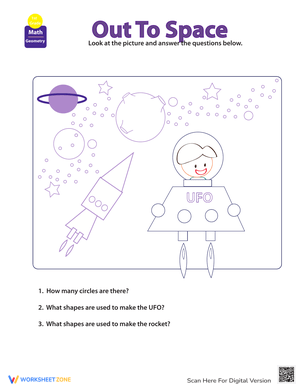
- Real-world construction: Students assemble triangles, rectangles, and half-circles into rockets, trees, and houses, anchoring the geometry in contexts they recognize from daily life.
No single worksheet covers all six operations. Keeping each task format separate is what makes composing shapes worksheets for 1st grade more useful than a single mixed-format page — teachers can assign exactly the right practice to each student based on where their spatial reasoning actually breaks down.
Why This Skill Belongs in First Grade
First grade is the right developmental moment for composition work because students have recently mastered naming and sorting basic shapes — they know what a triangle is — but they are ready to move from static classification into dynamic transformation. The standard is not asking them to measure angles or calculate area. It asks them to see a triangle as a movable piece, not a fixed category. That conceptual shift has meaningful downstream consequences: students who build fluency with shape composition in first grade arrive at fraction instruction — halves, fourths, thirds — with the mental picture already in place. They have already watched a rectangle divide into two triangles, so the idea that a whole can be split into equal parts lands with less resistance than it does for students who have not done this work.
The physical-to-abstract sequence embedded in these worksheets reflects what cognitive load research consistently shows about early mathematics instruction. First graders who skip the hands-on phase and move straight to paper-based tasks make more orientation errors and retain the concept less reliably. Every worksheet works best after a brief manipulative warm-up, not as a replacement for one.
Error Patterns to Anticipate During Shape Composition Work
The most diagnostic error appears during right-triangle combination tasks. When asked to form a rectangle from two right triangles, some students flip one triangle so that the right angles face away from each other rather than meeting at a shared interior edge. The result is a parallelogram, not a rectangle, and the student usually cannot see why it is wrong: they combined two triangles, the task said to combine two triangles, and the shape looks close enough. The cut-and-paste format exposes this error more cleanly than a drawn response does because the physical pieces will not fit inside the target outline if the orientation is off. Use border overlap as your diagnostic signal.
A second pattern surfaces reliably in the multi-step tasks. Students who can compose one shape from two pieces often stall when asked to treat that new composite as a building block for a larger figure. They lose track of what they just constructed and revert to handling all the small pieces as individual, unrelated units. This is not carelessness — working memory at age six genuinely limits how many spatial representations a student can hold simultaneously. When you see this stall, ask the student to hold up the intermediate composite and say aloud what it is before touching anything else. That five-second naming pause stabilizes the representation for most students.
Standard Alignment
CCSS Math 1.G.A.2 requires first graders to compose two-dimensional shapes — squares, rectangles, trapezoids, triangles, half-circles, and quarter-circles — to create a composite shape, and then to use that composite as a component in building a second, new figure. In most instructional sequences, this standard follows the kindergarten shape-identification work in K.G.A and leads directly into the first-grade fraction standard 1.G.A.3, where students partition shapes into equal shares. The connection is not incidental: composing a whole from parts is the spatial groundwork for dividing a whole into parts. Instruction on 1.G.A.2 is most productive after students have reviewed basic shape properties but before fraction vocabulary is formally introduced — typically four to six weeks into the geometry unit.
Where These Worksheets Fit in Your Geometry Unit
The most reliable placement is the small-group rotation block. Assign cut-and-paste worksheets to the teacher-led table so you can observe orientation errors in real time and redirect before a misconception takes hold. The pattern block recording sheets work well as independent center tasks because students can self-check by placing actual blocks on the printed outlines before committing to color. Matching exercises hold up as strong Monday morning warm-ups after morning meeting — students settle back into spatial thinking more quickly when the first task of the week has a clear visual structure and no computation involved.
These composing shapes worksheets for 1st grade also hold up in the final eight minutes before a transition, when a full lesson is impossible but unstructured time produces noise. The real-world construction worksheets — rockets, houses, animals — are particularly useful in that window because the image goal is immediately visible and motivating, students who finish can move to coloring, and the task ends cleanly without requiring teacher facilitation to close out.
Meeting Different Learners With the Same Set of Worksheets
For students who need additional support, the cut-and-paste format is the most accessible entry point because it externalizes the spatial reasoning — the student moves a physical piece rather than visualizing it. If a student is still struggling to manage two shapes simultaneously, trace one component's outline lightly in pencil directly onto the target silhouette before the lesson begins. This reduces the spatial demand to a single placement decision rather than two. For English language learners, the visual density of these tasks is a genuine asset: the worksheet communicates through shape outlines, not word problems, and a student who cannot yet read trapezoid can still correctly compose one.
Students who move through the standard quickly benefit from open-ended extension work built into the matching and multi-step worksheets. Ask them to find a second valid way to fill the same composite outline using a different combination of shapes, then explain to a partner why both arrangements work. This pushes toward the decomposition reasoning second-grade standards formalize. Finding multiple correct answers to a single spatial problem is more cognitively demanding than it appears from the outside.
Frequently Asked Questions
What does composing shapes mean in 1st grade math?
Composing shapes means joining two or more smaller geometric figures into a single larger one. A student who places two right triangles together to form a rectangle has composed a shape. The skill is distinct from simply naming shapes — it requires students to anticipate how edges and angles will align, and to treat figures as movable pieces rather than static categories.
Do students need physical manipulatives alongside these worksheets?
For most first graders, yes — at least during the initial lessons of the unit. These composing shapes worksheets for 1st grade belong after a hands-on phase; they reinforce what students build with their hands rather than substitute for that experience. Students who first construct a target composite with pattern blocks or wooden shape tiles make measurably fewer orientation errors when they move to the printed task. By mid-unit, many students work independently from the worksheet alone, but keeping a set of shape tiles available for check-ins remains useful throughout.
What is the difference between composing and decomposing shapes?
Composing builds up: smaller pieces join to form a larger whole. Decomposing breaks down: a larger shape is divided into smaller named figures. Both appear in CCSS 1.G.A.2 and across this set. Students who compose fluently sometimes struggle to decompose — staring at a solid hexagon and failing to identify the two trapezoids inside it is a genuinely different cognitive task from building a hexagon out of those trapezoids in the first place.
How do I know when a student is ready for multi-step composition tasks?
A reliable readiness marker is single-step fluency: can the student consistently combine two shapes into a target composite without needing to test every possible orientation by touch? If that is stable, the two-stage worksheets are appropriate. If the student still rotates pieces at random until something fits by chance, more work at the single-step level is the right call. Advancing to multi-step composition before single-step fluency is solid is the most common pacing error in first-grade geometry instruction.













 Interactive Worksheet Maker
 Quiz Maker
 Word Search Maker
 Crossword Puzzle Maker
 Word Scramble Generator
 Sentence Scramble Generator
 Handwriting Worksheet Generator
 Name Tracing Generator
 Fill In The Blank Generator