




























1 / 2
0
Views
0
Downloads


0.0
0
Save
0 Likes
Share
Place Mat Activity Worksheet
0 Views
0 Downloads

Paste this activity's link or code into your existing LMS (Google Classroom, Canvas, Teams, Schoology, Moodle, etc.).
Students can open and work on the activity right away, with no student login required.
You'll still be able to track student progress and results from your teacher account.
Information
Description
What It Is:
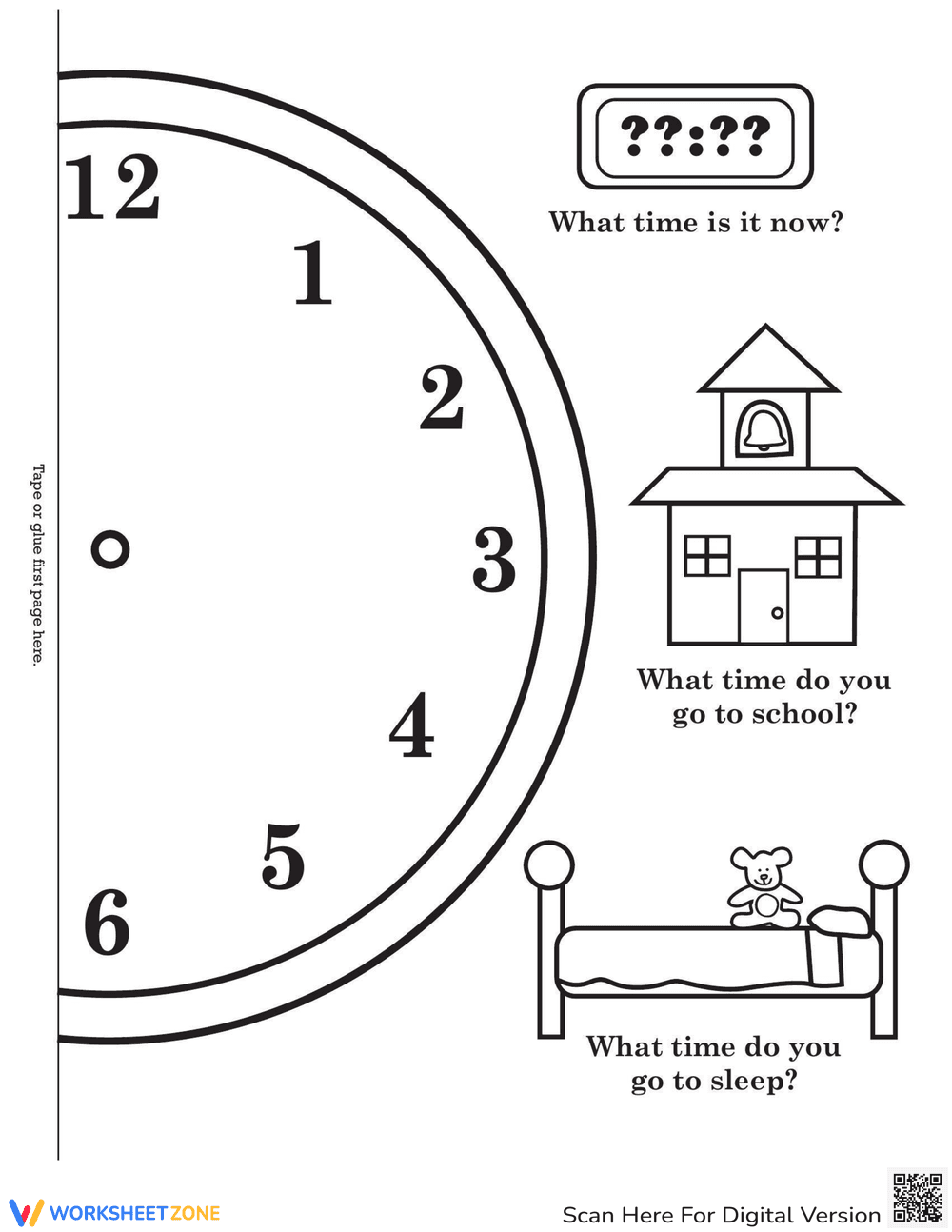
This is a printable worksheet designed to help children learn to tell time. It features a large clock face with numbers 7 through 11 visible. The worksheet includes images of breakfast, lunch, and dinner plates, asking 'What time do you eat breakfast?', 'What time do you eat lunch?', and 'What time do you eat dinner?'. The instructions suggest using a fork as the hour hand and a spoon as the minute hand on the clock. There are instructions to cut along the dotted line and tape or glue the worksheet together.
Grade Level Suitability:
Suitable for Kindergarten, 1st Grade, and 2nd Grade. It helps with basic time-telling skills and understanding daily routines related to meal times. The use of a fork and spoon as hands makes it a hands-on activity appropriate for young learners.
Why Use It:
This worksheet provides a visual and interactive way for children to learn how to tell time. It connects time to familiar daily activities (eating meals), making it more relatable. It also develops fine motor skills through cutting and pasting.
How to Use It:
First, cut along the dotted line. Tape or glue the worksheet together to create a complete clock face. Then, use a fork and a spoon to represent the hour and minute hands. Based on the images of breakfast, lunch, and dinner, set the hands to the approximate times these meals are typically eaten.
Target Users:
This worksheet is designed for young children (ages 5-8) who are learning to tell time. It is beneficial for teachers, parents, and homeschoolers looking for engaging and practical resources to teach time-telling skills.
This is a printable worksheet designed to help children learn to tell time. It features a large clock face with numbers 7 through 11 visible. The worksheet includes images of breakfast, lunch, and dinner plates, asking 'What time do you eat breakfast?', 'What time do you eat lunch?', and 'What time do you eat dinner?'. The instructions suggest using a fork as the hour hand and a spoon as the minute hand on the clock. There are instructions to cut along the dotted line and tape or glue the worksheet together.
Grade Level Suitability:
Suitable for Kindergarten, 1st Grade, and 2nd Grade. It helps with basic time-telling skills and understanding daily routines related to meal times. The use of a fork and spoon as hands makes it a hands-on activity appropriate for young learners.
Why Use It:
This worksheet provides a visual and interactive way for children to learn how to tell time. It connects time to familiar daily activities (eating meals), making it more relatable. It also develops fine motor skills through cutting and pasting.
How to Use It:
First, cut along the dotted line. Tape or glue the worksheet together to create a complete clock face. Then, use a fork and a spoon to represent the hour and minute hands. Based on the images of breakfast, lunch, and dinner, set the hands to the approximate times these meals are typically eaten.
Target Users:
This worksheet is designed for young children (ages 5-8) who are learning to tell time. It is beneficial for teachers, parents, and homeschoolers looking for engaging and practical resources to teach time-telling skills.


