These high frequency words printable worksheets for 1st grade address the central challenge of early reading instruction: building automatic word recognition before the gap between decoding effort and text complexity becomes too wide. Each worksheet focuses on the words that appear most often in beginning texts — drawn primarily from the Dolch Grade 1 list and the first 100 Fry words — through varied formats that build both visual recognition and motor memory.
What Each Worksheet Targets
The set covers the words Grade 1 students encounter on nearly every page of leveled readers and classroom texts. Words like said, was, they, have, and when appear constantly in early chapter books, yet none of them follow standard phonetic rules. Students cannot sound them out reliably; they have to know them by sight. The worksheets build that knowledge through five core activity formats:
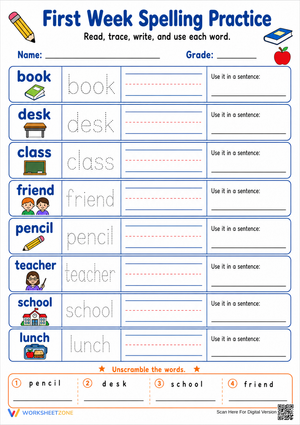
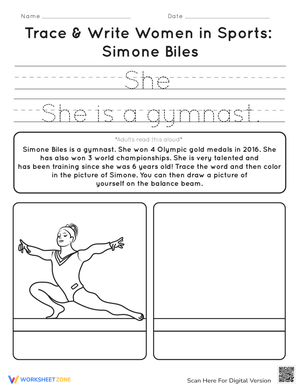
- Trace and write: Students trace the word in dotted font, then write it twice without the guide. The physical act of writing activates memory pathways that looking at a flashcard alone does not.
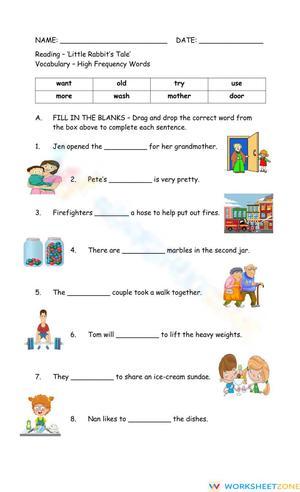
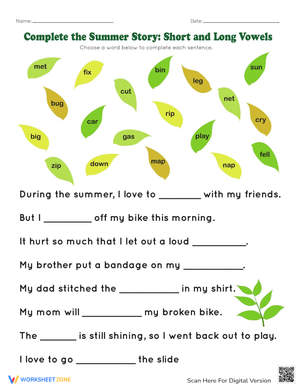
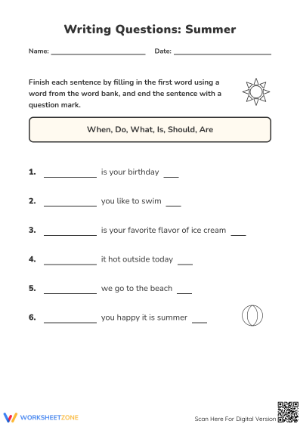
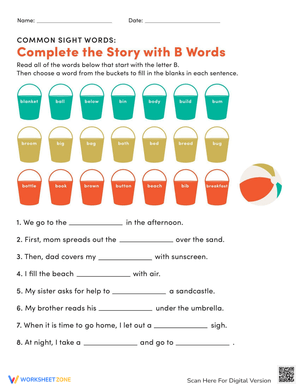
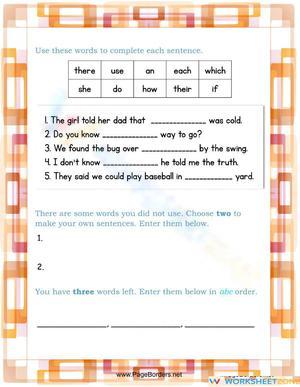
- Sentence completion: Students read a short sentence with one word missing and write the correct sight word in the blank. This moves recognition from isolation into context, which is where it has to actually function.
- Rainbow writing: Students write the target word in three different crayon colors. The activity works because the repetition is embedded in something that feels creative rather than drill-like.
- Word sort: Students sort words into learned and still-learning columns, which generates metacognitive awareness — first graders begin tracking their own progress in a concrete, visible way.
- Read and illustrate: Students read a sentence containing the target word, then draw what it describes. This confirms comprehension rather than just recall.
Each worksheet concentrates on one to three words rather than cycling through the full list at once. That narrow focus reflects how working memory operates in six- and seven-year-olds: fewer words practiced to automaticity consistently outperforms longer lists practiced to partial recognition.
The Cognitive Case for Paper Practice at This Grade Level
First grade is the window when sight-word automaticity must be established. By second grade, texts introduce multi-syllabic words and complex syntax that demand full cognitive attention — students who are still decoding the and said word-by-word arrive at second grade already behind on comprehension. Printed worksheet practice works at this stage because it pairs the hand with the eye. Handwriting a word recruits motor activity that reinforces the visual memory trace in a way that clicking or tapping does not replicate. The trace-and-write format specifically lets students experience a word's letter sequence as physical movement before they are asked to produce it from memory.
Frequent Errors Worth Watching For and Correcting
The most consistent confusion in first-grade sight-word work involves visually similar words that mirror each other: was and saw, on and no, then and when. A student who writes saw when copying the word was is not being careless — they are processing letters out of sequence because left-to-right directionality is still consolidating. When this error appears in a worksheet, it is worth checking whether it also shows up in the student's independent writing, because the same pattern across multiple contexts points to a tracking issue rather than a one-time slip.
A second error that surfaces regularly: students recognize a target word when it stands alone on a card, then miss it mid-sentence. The word have reads correctly in isolation for most students by mid-year; that same word inside I have a dog. gets skipped or substituted because readers are tracking meaning rather than scanning each individual word. The sentence-completion worksheets target this gap directly — they require students to hold sentence context while locating the correct word, which is the actual skill reading demands.
Building These Worksheets Into a Repeatable Daily Routine
High frequency words printable worksheets for 1st grade work best when they anchor a brief, predictable daily block rather than appearing as occasional supplements. A five- to eight-minute morning warm-up centered on one target word — introduce it at the board, read it in a sentence together, then distribute the worksheet — creates the spaced retrieval practice that sight-word research consistently supports. Students who practice a word on Monday, encounter it again in a Wednesday reader, and write it in a Friday sentence dictation show stronger long-term retention than students who complete a full worksheet on Monday and do not revisit the word for another week.
These worksheets also run efficiently as literacy center activities. One center focuses on the trace-and-write worksheet for the week's word; another pairs a completed worksheet with a decodable reader containing the same word. The physical worksheet becomes an anchor — some first graders will carry it to the reading rug to confirm a word they just spotted in text, which is exactly the transfer behavior the practice is meant to produce.
Standard Alignment
These worksheets align to CCSS.ELA-Literacy.RF.1.3g, which requires that first-grade students recognize and read grade-appropriate irregularly spelled words. This standard sits within the phonics and word recognition strand precisely because sight words cannot be taught through decoding rules alone — the standard acknowledges that a separate recognition pathway is required. Teachers using these worksheets in word-work rotations are directly addressing RF.1.3g during every session, which makes the worksheets straightforward to cite in lesson plans and instructional documentation.
Adjusting the Worksheets for Different Points in Student Development
For students who are still building letter formation, the trace-and-write worksheets provide the right entry point — the dotted font removes the production burden while keeping the student engaged with the word's spelling. For students who have already mastered the first 25 Fry words and need more challenge, the sentence-completion and read-and-illustrate formats push toward word use rather than mere word recognition. High frequency words printable worksheets for 1st grade cover enough variation in format and word difficulty that a teacher can assign different worksheets to different students during the same literacy block without creating a visible tracking system that students notice and compare.
Students who are English language learners benefit specifically from the read-and-illustrate format, where they confirm understanding through drawing rather than through a written response that depends on English production. Pairing that worksheet with a bilingual word card allows the student to connect the English sight word to a known concept without a full translation interruption in the middle of practice.
Frequently Asked Questions
Do these worksheets cover Dolch words, Fry words, or both?
The worksheets draw from both lists, which overlap substantially at the Grade 1 level. Words like said, was, they, have, when, and about appear on both the Dolch Grade 1 list and in the first 100 Fry words. Teachers who follow one list exclusively will find the coverage compatible; teachers who blend both lists will find the word selection familiar across the full set.
How many words does each worksheet focus on?
Each worksheet targets one to three words. Narrowing the scope is intentional — first graders build automaticity faster when they practice fewer words more deeply than when they cycle through a long list shallowly. A student who can write, recognize in context, and use said correctly by Thursday has learned more than a student who traced twelve words once on Monday and recalled none of them by Wednesday.
Are these appropriate to send home as practice?
Yes. The formats are self-explanatory enough that a parent or caregiver can sit alongside a child without needing a teacher's guide. High frequency words printable worksheets for 1st grade sent home as weekly practice reinforce what students worked on in class, and the completed worksheets come back as an informal check — a child who wrote the correct word in the blank at home is demonstrating the same recognition the teacher introduced that week.
What do I do when a student finishes every worksheet quickly and correctly?
That student is ready for sentence-level production work. Ask them to write two original sentences using the target word, or have them hunt through a leveled reader and mark every instance of that word with a sticky note. The worksheet confirms automaticity — then you move the student to application. It functions as a floor rather than a ceiling.












 Interactive Worksheet Maker
 Quiz Maker
 Word Search Maker
 Crossword Puzzle Maker
 Word Scramble Generator
 Sentence Scramble Generator
 Handwriting Worksheet Generator
 Name Tracing Generator
 Fill In The Blank Generator