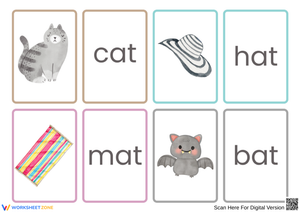
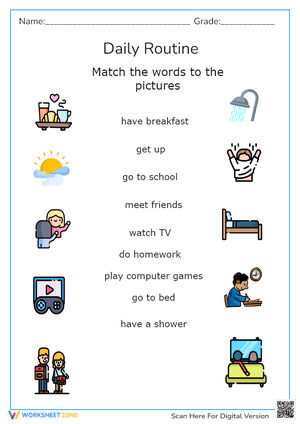
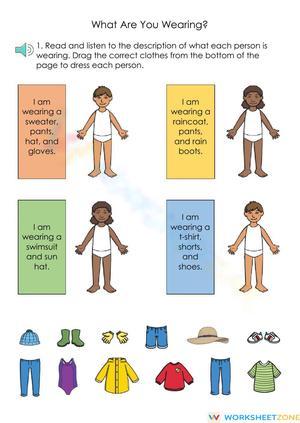
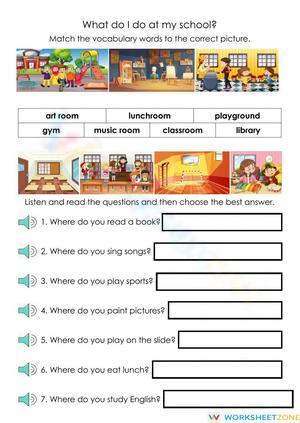
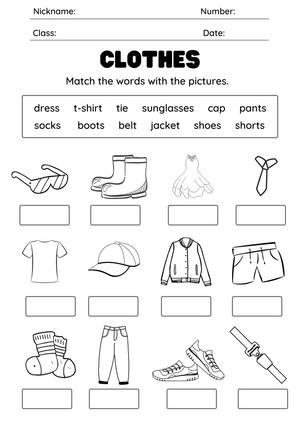
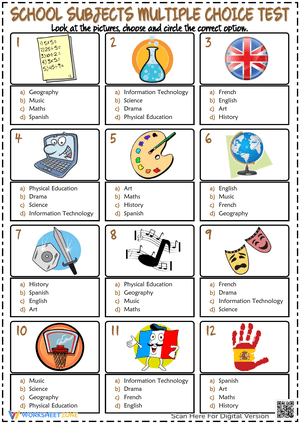
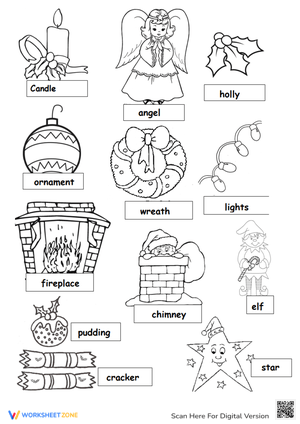
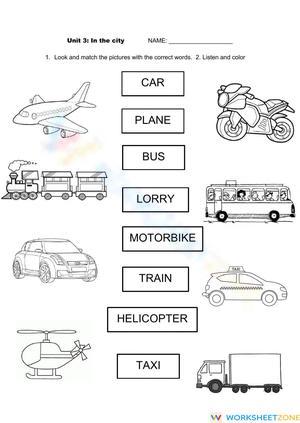
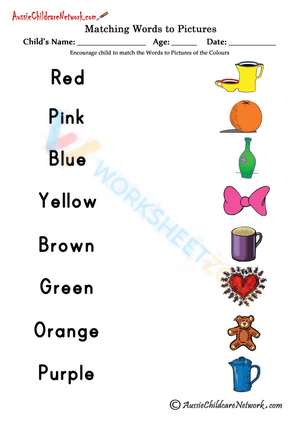
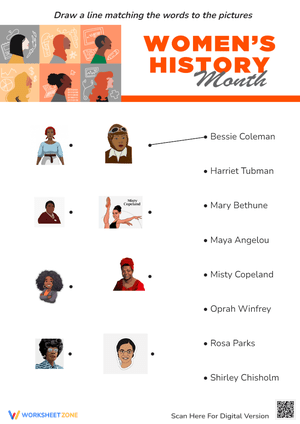
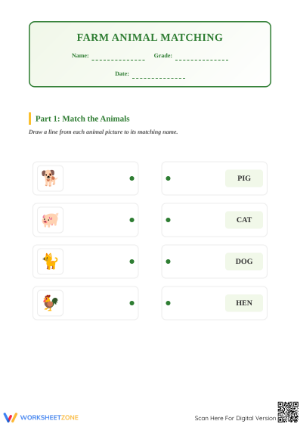
1st grade picture word matching pdf worksheets give teachers something purely phonics drills rarely provide: immediate visual confirmation that a student decoded a word and understood it, not just guessed at the letters. A child who sounds out "shell" and then locates the corresponding picture has completed a full decoding-plus-comprehension loop in under ten seconds — no teacher prompt required. The set spans CVC words, consonant digraphs, initial blends, and high-frequency nouns, covering the phonics territory most first graders work through between September and March.
What Each Worksheet Targets
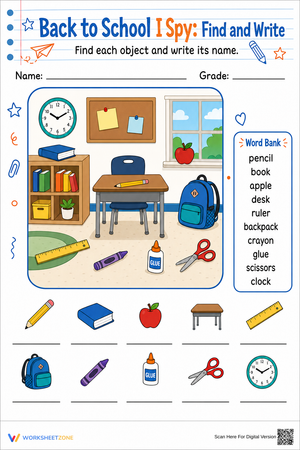
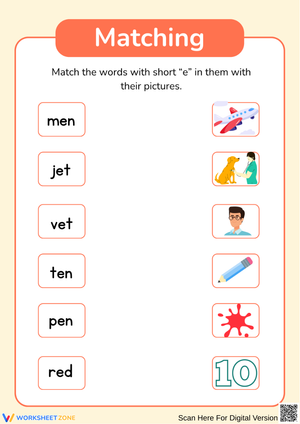
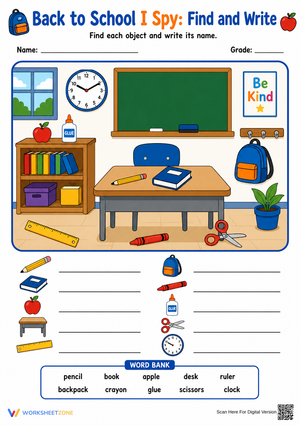
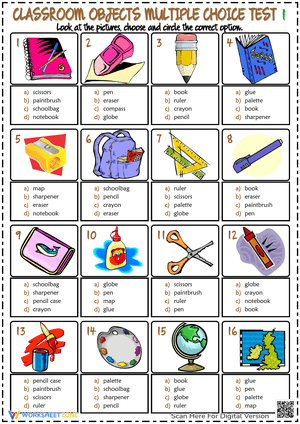
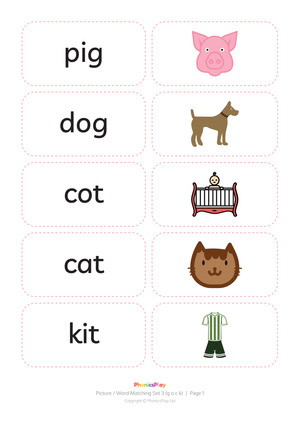
The worksheets divide by skill category, each tied to a distinct stage in first-grade phonics progression. Short-vowel CVC sets come first, pairing pictures of familiar objects — bat, bed, pig, log, bug — with their printed forms. Digraph sets follow, with sh-, ch-, th-, and wh- words that students often hear in speech but struggle to decode in print because they expect one letter to make one sound. Blend sets cover two-letter and three-letter initial clusters. A final group of thematic vocabulary worksheets organizes words by category — classroom objects, weather terms, animal names — so teachers can reinforce specific semantic fields during science or social studies units.
- Short-vowel CVC words across all five vowel sounds
- Consonant digraphs: sh, ch, th, wh
- Initial blends: bl, cr, fl, st, spr, str
- High-frequency action verbs: run, jump, sit, clap
- Thematic noun sets aligned to early science and social studies topics
- Long-vowel silent-e words for students ready to move ahead of the core sequence
Why This Format Works for First Graders Specifically
First graders arrive with a spoken vocabulary that dramatically outpaces their reading vocabulary. A student who uses "frog," "jacket," and "shovel" in conversation daily may still pause for fifteen seconds over those same words in print. Picture-word matching targets that specific gap: the image activates the spoken word the child already knows, and the task is to confirm that the printed letters decode to the same word. This is cognitively different from rote phonics drill. The student isn't just applying a rule in the abstract — she's verifying meaning, which is what reading actually is. Research on dual coding suggests that pairing visual and verbal representations strengthens retention more than either channel alone, and matching tasks make that pairing explicit and deliberate at exactly the right developmental window, before word recognition has become automatic enough to make the connection invisible.
Common Student Mistakes Teachers Should Anticipate and Address
The most pervasive error in matching tasks is first-letter anchoring. A student sees "fish," identifies the initial f, scans for a picture starting with that sound, and draws a line to the fan — without decoding the medial vowel or final consonant. This error is quiet and fast, which makes it easy to miss during center rotations. Students who finish matching worksheets unusually quickly are often first-letter guessers, not fluent decoders. A second pattern surfaces with digraphs: students who can name "sh" in isolation still misread "ship" as "sip" because single-letter decoding is the habit they're overriding. The picture exposes them — a line from "ship" to a boat means they decoded correctly; a line to the lips image means the digraph didn't register.
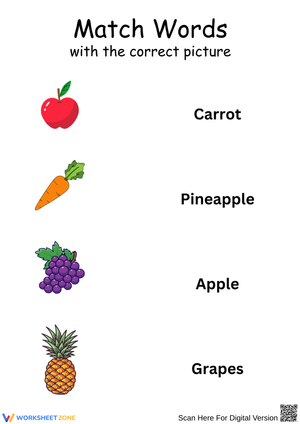
There's also a visual-similarity trap that appears on thematic sets. When a worksheet features multiple animals, some students match by size association — "that's a long word and this is a big animal, so they go together" — rather than by reading. Mixing image sizes between the two columns removes that shortcut and forces genuine decoding. Worth catching early, because students who rely on it look productive but are not building transferable phonics skill.
Standard Alignment
These worksheets target CCSS.ELA-Literacy.RF.1.3, which asks first graders to know and apply grade-level phonics and word analysis skills in decoding words. That standard spans CVC words, digraphs, blends, and long-vowel patterns — exactly the scope covered here. In most first-grade pacing guides, RF.1.3 anchors the phonics block from late September through April, making these worksheets most useful as independent practice during that stretch. Each worksheet also touches RF.1.4 at the word level: matching requires comprehension alongside decoding, so a student who says "ship" but draws a line to the shirt has a decoding-without-meaning problem that RF.1.4 directly addresses.
How to Build These Worksheets Into Your Lesson Plans
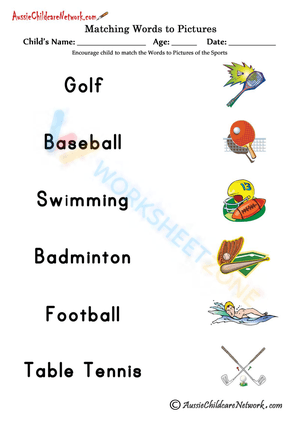
The most reliable placement for 1st grade picture word matching pdf worksheets is as center material during guided reading rotations. Because the task format is self-explanatory — pictures on one side, words on the other, a clear visual prompt to connect them — students start without a teacher launch. That self-sufficiency matters during the twenty-five minutes you're at the guided reading table. A matching worksheet keeps the rest of the class in meaningful literacy practice without requiring a monitor or a complex set of directions.
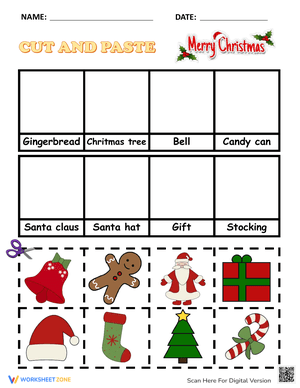
The cut-and-paste format works best on Fridays, when transition time is looser and the kinesthetic element adds novelty at the end of the week. Line-drawing formats are better suited to Monday mornings immediately after meeting — familiar, focused, completable in eight to ten minutes before the whole-group phonics lesson begins. Teachers who use these as exit tasks after a phonics mini-lesson find them especially useful for quick formative reads: a glance at a completed worksheet tells you which students decoded independently and which need the concept revisited before you move on.
Adjusting the Worksheets for a Range of Learners
For students still consolidating letter-sound correspondence, reduce the field — present six matches instead of twelve and choose words with no overlapping initial sounds, so that partial-letter cueing at least produces a correct answer while the student builds toward full decoding. For students who have moved past basic CVC words, the long-vowel and blend worksheets in the set provide the next level of challenge without requiring a different format. These 1st grade picture word matching pdf worksheets are also a natural fit for English language learners because the images remove the ambiguity of word meaning: an ELL student who knows what a frog looks like can decode the word and verify it independently, without needing a translation or a more proficient peer. For students receiving special education services, enlarging the PDF to 125% and reducing items per page prevents the visual crowding that makes the task feel impossible before it's started.
Frequently Asked Questions
Do these worksheets work for kindergarteners or second graders?
The CVC and short-vowel sets are a natural fit for late-kindergarten students who have completed initial phonics instruction and are ready to decode whole words. Second graders who are behind grade level in phonics use the same sets for targeted reteaching without the material feeling babyish, since the images are simple line drawings rather than primary-level cartoon art. The digraph and blend worksheets are most appropriate for first grade; advanced second graders working on multisyllabic decoding would outgrow them quickly.
How do I use matching worksheets for small-group intervention without just repeating the same lesson?
Pull two or three worksheets targeting the specific phonics pattern the group is struggling with, then have students complete one match at a time aloud — saying the word, then pointing to the image they chose — rather than working silently. Oral production surfaces decoding errors you would miss if students worked independently, and it shifts the worksheet from a practice task to a diagnostic conversation. Asking a student to explain why she rejected a wrong answer is often more instructive than confirming the right one.
Can I project these in PDF form for whole-class instruction?
Projecting 1st grade picture word matching pdf worksheets on a display during a whole-group phonics lesson is one of the more effective launch strategies for the format. Display the worksheet, complete two or three matches while thinking aloud through the decoding process, then send students to finish the remaining matches independently. The shared experience establishes what full decoding sounds like before students work on their own — which directly reduces the first-letter-anchoring errors described above, because students have just heard a model of what it sounds like to decode all the way through a word.












 Interactive Worksheet Maker
 Quiz Maker
 Word Search Maker
 Crossword Puzzle Maker
 Word Scramble Generator
 Sentence Scramble Generator
 Handwriting Worksheet Generator
 Name Tracing Generator
 Fill In The Blank Generator