


























Views
Downloads

Christmas Paragraph Writing | Essential Grade 3-6 ELA
Paste this activity's link or code into your existing LMS (Google Classroom, Canvas, Teams, Schoology, Moodle, etc.).
Students can open and work on the activity right away, with no student login required.
You'll still be able to track student progress and results from your teacher account.
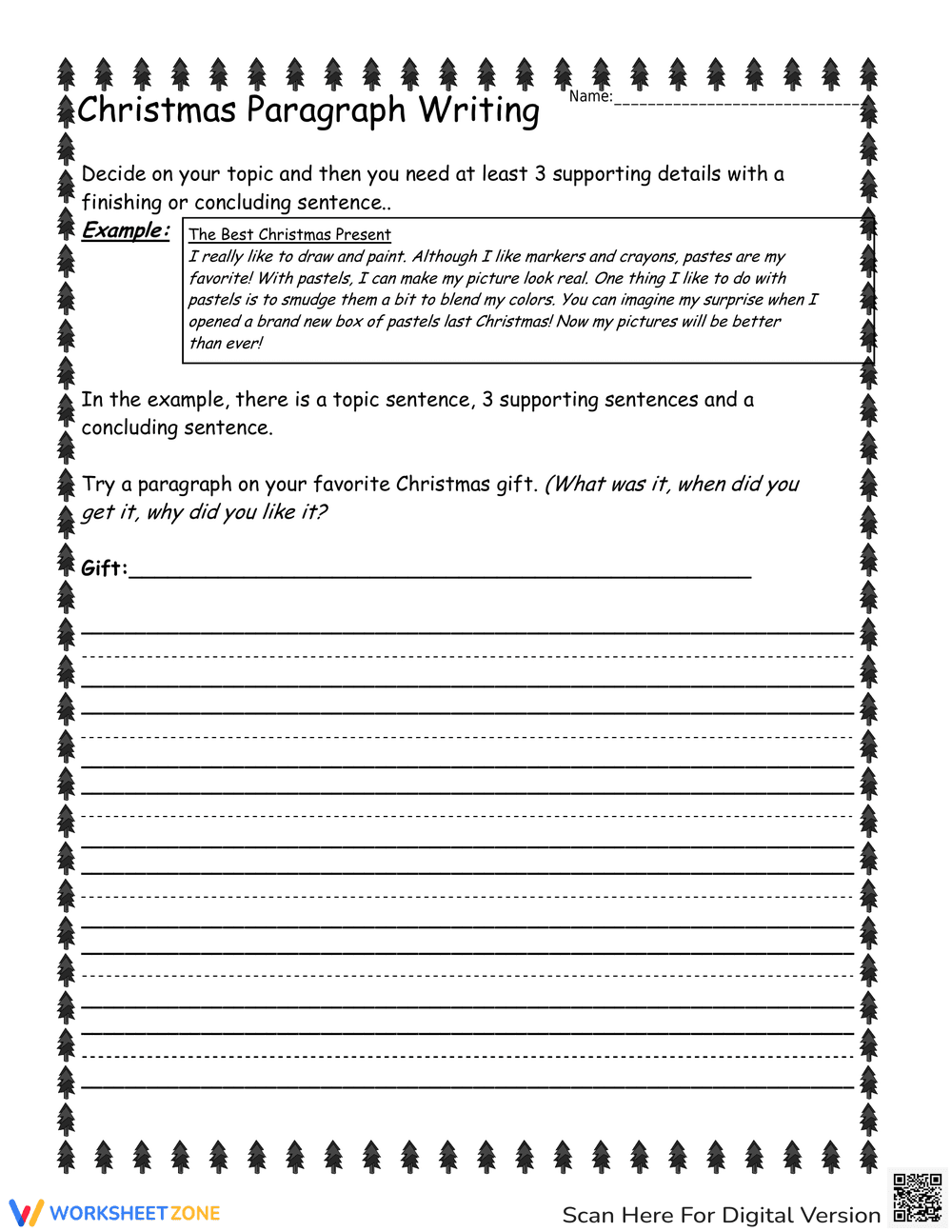
This Christmas paragraph writing worksheet helps students in grades 3 through 6 master the art of structured composition. By focusing on a festive holiday theme, students learn to organize their thoughts into a cohesive unit featuring a clear topic sentence, three supporting details, and a strong concluding sentence for effective communication.
At a Glance
- Grade: 3-6 · Subject: ELA Writing
- Standard:
CCSS.ELA-LITERACY.W.3.2— Write informative texts to examine a topic and convey ideas clearly- Skill Focus: Paragraph Structure
- Format: 1 page · 1 writing task · PDF
- Best For: Holiday writing centers or morning work
- Time: 15–25 minutes
Inside this resource, you will find a single-page writing guide that provides a clear definition of a successful paragraph. It features a mentor text example titled "The Best Christmas Present" to model the expected structure. Below the example, students are provided with primary-ruled lines and a specific prompt regarding their favorite Christmas gift to practice their independent writing skills.
The zero-prep workflow for this resource is designed for maximum efficiency. First, print the single-page PDF (30 seconds). Next, distribute the sheets to your students during your ELA block or as a festive morning starter (1 minute). Finally, review the completed paragraphs using the structural criteria provided at the top of the page (1 minute per student). Total teacher prep time is under 2 minutes, making this an ideal sub plan or seasonal filler.
This worksheet aligns with CCSS.ELA-LITERACY.W.3.2, which requires students to write informative texts that examine a topic and convey ideas clearly. It also supports CCSS.ELA-LITERACY.W.4.2 by encouraging the development of a topic with facts and details. Both standard codes can be copied directly into lesson plans, IEP goals, or district curriculum mapping tools.
Use this worksheet as a formative assessment after a lesson on paragraph anatomy. It is particularly effective during the week before winter break when engagement is high for holiday themes. Teachers should observe if students can transition from the mentor text to their own writing while maintaining the "Topic-Detail-Conclusion" framework. Completion typically takes 20 minutes.
This resource is ideal for elementary and middle school students who need a refresher on basic composition. It serves as an excellent scaffold for English Language Learners (ELLs) due to the included mentor example. Pair this with a holiday-themed anchor chart or a direct instruction lesson on transition words for a complete writing experience.
Writing instruction in the elementary years is critical for developing the cognitive load management required for complex tasks. This worksheet addresses CCSS.ELA-LITERACY.W.3.2 by providing a structured environment for students to practice informative writing. According to Fisher & Frey (2014), the use of mentor texts and clear structural scaffolds—like the topic sentence and supporting detail requirements found here—is essential for the gradual release of responsibility. By providing a concrete example before asking for independent production, this resource reduces student anxiety and improves the quality of the final written product. Research from the NAEP indicates that students who practice structured writing frequently perform significantly better on standardized assessments. This 1-page tool offers a high-impact, low-barrier way to integrate seasonal engagement with rigorous academic standards, ensuring that holiday activities remain instructionally sound and aligned with district-level literacy goals.


