


























1 / 3
0
Views
0
Downloads



0.0
0
Save
0 Likes
Share
Exploring Text Features Worksheet
0 Views
0 Downloads
Paste this activity's link or code into your existing LMS (Google Classroom, Canvas, Teams, Schoology, Moodle, etc.).
Students can open and work on the activity right away, with no student login required.
You'll still be able to track student progress and results from your teacher account.
Information
Description
What It Is:
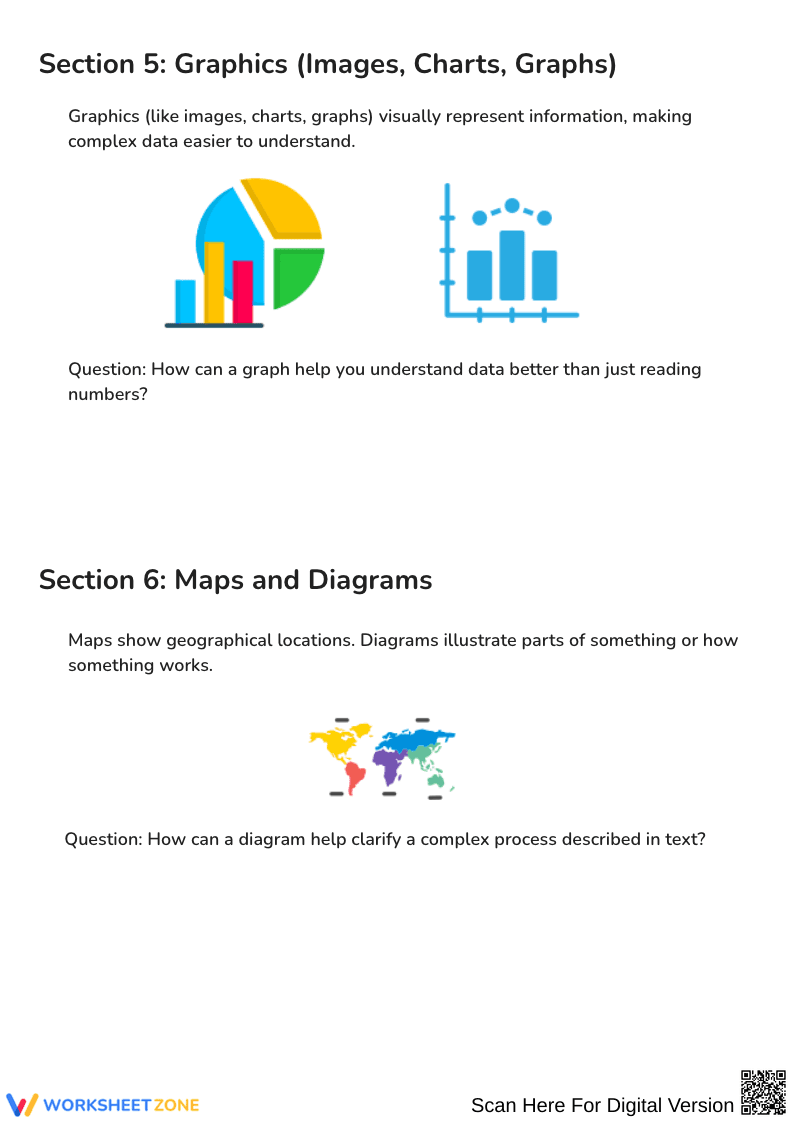
A structured reading worksheet that introduces students to common text features used in informational texts. Students learn what text features are and explore specific examples such as headings, subheadings, bold and italic text, and captions. Each section includes clear explanations, examples, and open-ended questions to encourage thoughtful analysis.
Why Use It:
This worksheet helps students become more strategic readers by showing how text features support comprehension and navigation. Understanding how authors use headings, emphasis, and captions allows students to locate key information faster, predict content, and better understand nonfiction texts across subjects like science and social studies.
How to Use It:
• Read each section together or assign for independent reading.
• Discuss the examples provided for each text feature.
• Have students answer the reflection questions to explain how each feature helps readers.
• Use as classwork, guided reading practice, or a review lesson on nonfiction text structures.
Grade Suitability:
Best suited for Grades 6-9.
• Upper elementary students learning nonfiction reading strategies.
• Students developing informational text comprehension skills.
Target Users:
ELA teachers, reading specialists, homeschool parents, tutors, and students practicing nonfiction text feature analysis.
A structured reading worksheet that introduces students to common text features used in informational texts. Students learn what text features are and explore specific examples such as headings, subheadings, bold and italic text, and captions. Each section includes clear explanations, examples, and open-ended questions to encourage thoughtful analysis.
Why Use It:
This worksheet helps students become more strategic readers by showing how text features support comprehension and navigation. Understanding how authors use headings, emphasis, and captions allows students to locate key information faster, predict content, and better understand nonfiction texts across subjects like science and social studies.
How to Use It:
• Read each section together or assign for independent reading.
• Discuss the examples provided for each text feature.
• Have students answer the reflection questions to explain how each feature helps readers.
• Use as classwork, guided reading practice, or a review lesson on nonfiction text structures.
Grade Suitability:
Best suited for Grades 6-9.
• Upper elementary students learning nonfiction reading strategies.
• Students developing informational text comprehension skills.
Target Users:
ELA teachers, reading specialists, homeschool parents, tutors, and students practicing nonfiction text feature analysis.


