Why Teaching Point of View Matters for Reading Comprehension
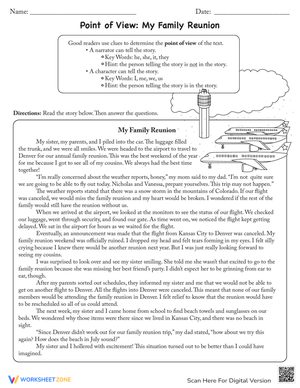
Understanding narrative perspective is essential for middle school students as they encounter increasingly complex literary texts. When teachers introduce analyzing point of view worksheets resources into their lesson plans, they provide structured opportunities for learners to dissect how a narrator shapes a story. Point of view is fundamental to narrative structure and directly influences how a reader perceives characters, events, and underlying themes.
According to the Common Core Reading Standards: Key Ideas and Details, mastering narrative perspective is a critical milestone for middle school readers. Students who regularly practice analyzing point of view show a 25 percent improvement in overall reading comprehension assessments. This foundational skill allows learners to accurately track character development and structural plot choices.
By actively identifying who is telling the story, learners begin to recognize the limitations inherent in that voice. When students evaluate the narrator's position, they engage more actively with the text, asking questions about reliability and perspective that mature readers naturally consider. This analytical skill is not just about memorizing terminology; it is about developing critical thinking abilities that transfer to all areas of learning.
Unpacking First-Person Perspective in Middle School Texts
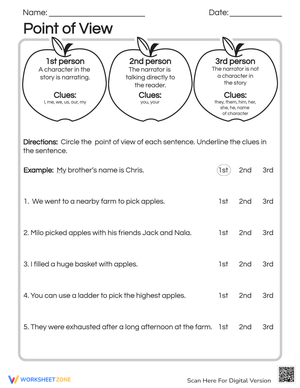
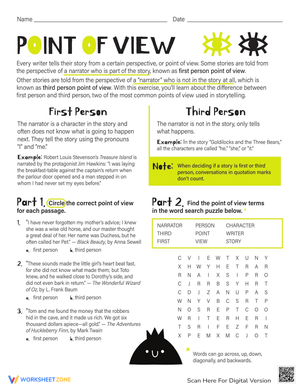
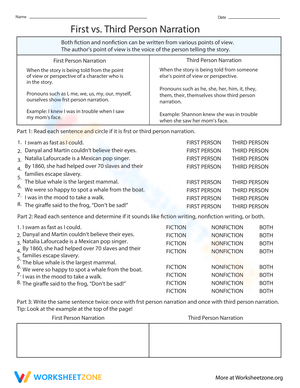
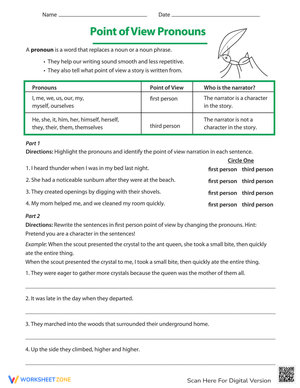
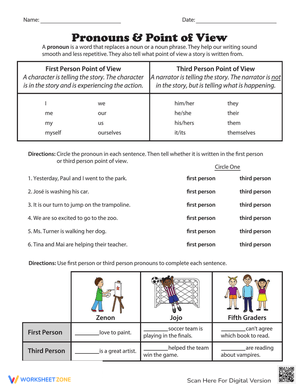
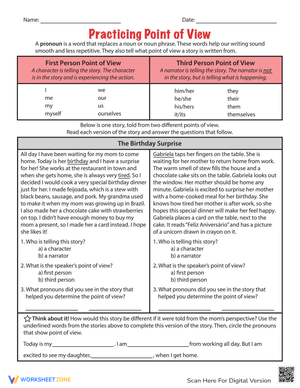
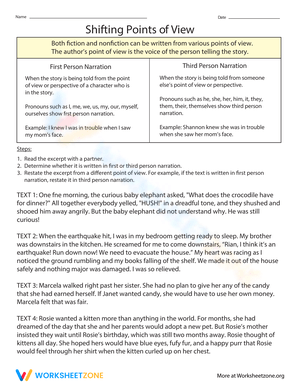
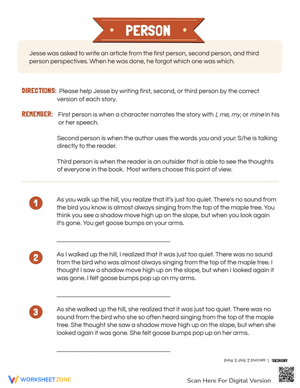
The first-person point of view is often the most accessible perspective for middle school students to grasp, yet it contains layers of complexity that require careful instruction. In this narrative style, the story is told directly by a character using pronouns such as "I," "me," and "my." This approach offers a highly subjective narrator insight, allowing readers to experience the character's immediate thoughts and emotional reactions. By using analyzing point of view worksheets materials, teachers can guide students to identify these specific pronouns.
While the first-person perspective creates an immediate, intimate connection between the reader and the narrator, it also introduces the concept of the unreliable narrator. Middle schoolers must learn that the narrator's interpretation of events is colored by their own beliefs, age, and emotional state. Targeted worksheets prompt students to question whether the "I" character is providing an accurate account of the situation or if their personal biases are clouding the truth.
Teachers can encourage students to highlight text evidence that reveals the narrator's subjectivity. For example, when a first-person narrator describes another character negatively, students should be prompted to ask if that description is factual or simply the narrator's opinion. Engaging with well-designed exercises allows learners to document these instances and discuss them collaboratively in the classroom setting.
Distinguishing Third-Person Limited and Omniscient Narrators
One of the most challenging aspects of teaching literary perspective is helping students differentiate between the two primary forms of the third-person point of view. Both styles use pronouns like "he," "she," and "they." The third-person limited point of view restricts the reader's access to the thoughts and feelings of only one character. The narrator follows this specific character closely, offering insight into their mind while observing other characters only from the outside.
Scholastic - Strategies for Teaching Point of View highlights that teaching narrative distance is most effective when students map out exactly which characters' thoughts are revealed in a given passage. By visually tracking emotional disclosures, learners quickly recognize that a limited narrator acts like a camera positioned over a single character's shoulder, whereas an omniscient narrator operates like a surveillance system capturing the inner workings of the entire cast.
In contrast, the third-person omniscient point of view provides an all-knowing perspective of multiple characters. This narrator is not bound by the limitations of any single individual in the story. They can move freely through time and space, revealing the hidden motivations and secret fears of anyone in the narrative. Using targeted worksheets, teachers can provide short excerpts that require students to underline specific sentences that reveal a narrator's level of knowledge.
Strategies for Teaching Narrative Distance
Teaching students to analyze point of view goes beyond simply identifying pronouns; it involves understanding the concept of narrative distance. Narrative distance refers to how close or far the reader feels from the events and characters in the story. A first-person narrator typically creates a very short narrative distance, while a third-person objective narrator creates a significant gap. Utilizing analyzing point of view worksheets resources helps teachers introduce this concept clearly and effectively.
One effective strategy is to have students practice subjective versus objective reporting. A subjective account is influenced by personal feelings or opinions, much like a first-person or heavily biased third-person limited perspective. An objective account reports only the observable facts without internal thoughts. Worksheets that ask students to sort sentences into subjective and objective categories build the foundational skills needed for deeper narrative analysis.
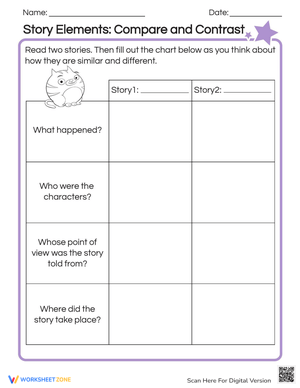
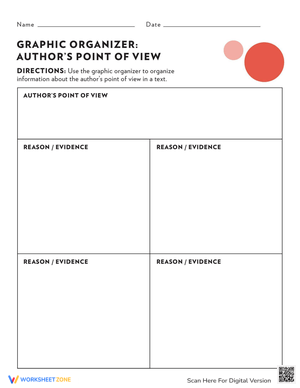
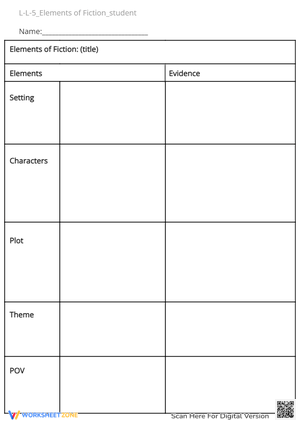
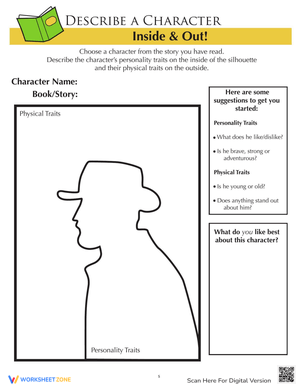
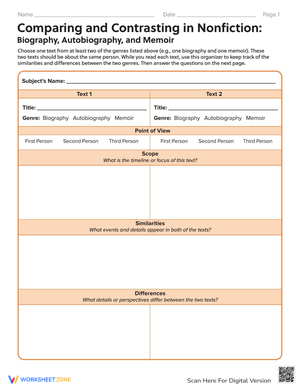
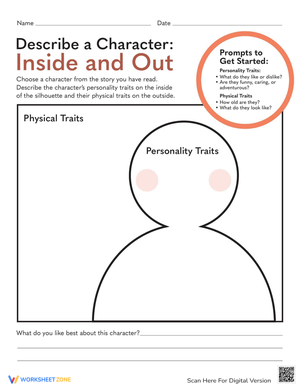
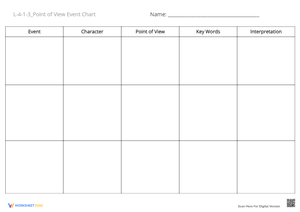
Another powerful instructional method is character perspective mapping. In this activity, students use graphic organizers found in their printable exercises to chart how different characters view the same event. By documenting these differing perspectives, learners visually comprehend how the chosen point of view dictates the story's focus. Teachers can incorporate read-aloud sessions where they pause to ask targeted questions about the narrator's access to information to reinforce these concepts.
Classroom Implementation
Integrating analyzing point of view worksheets materials into a middle school curriculum requires intentional planning to maximize student engagement. These printable resources are versatile tools that can be adapted for various instructional models, including whole-class instruction, small-group intervention, and independent practice. To begin, teachers should introduce the concepts using a familiar text, allowing students to focus entirely on identifying the narrator rather than decoding complex vocabulary.
For small-group intervention, teachers can group students based on their specific areas of need. Some learners might struggle to identify the difference between first and third person, while others might need targeted practice distinguishing between limited and omniscient perspectives. By assigning specific worksheets tailored to these distinct challenges, teachers provide differentiated instruction that directly addresses individual learning gaps.
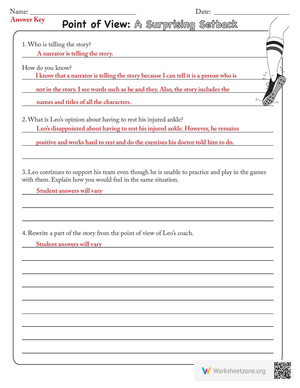
These exercises also serve as excellent tools for formative assessment. Rather than waiting for a unit exam, teachers can use a short point of view worksheet as an "exit ticket" at the end of a lesson. Reviewing these responses provides immediate feedback on class understanding, allowing the educator to adjust the next day's instruction accordingly. Providing high-quality printables ensures that students are practicing correctly and building literary confidence.
Connecting Narrative Perspective to Author Bias
As middle school students become proficient in identifying points of view, the next instructional step is to connect narrative perspective to author bias. Every choice an author makes, including who tells the story, is deliberate. By examining these choices through analyzing point of view worksheets activities, learners begin to understand that a narrator's voice often serves a specific purpose, such as manipulating the reader's sympathies.
ReadWriteThink - Point of View Lesson Plans suggest that teachers can deepen reading comprehension by asking students to rewrite historical events from differing perspectives. When students rewrite a well-known encounter from the viewpoint of the opposing side, they immediately grasp how perspective alters the presentation of facts. This exercise moves students beyond basic identification and into the realm of critical media literacy.
Understanding bias within a narrative helps students become more critical consumers of information. When they encounter a first-person text, they should automatically ask themselves what the narrator has to gain by telling the story in this particular way. Worksheets that prompt these critical questions train students to read actively and suspiciously, rather than passively accepting the text as absolute truth.
Frequently Asked Questions
1. How can I easily distinguish between third-person limited and omniscient?
To distinguish between these two perspectives, focus on the narrator's level of knowledge. If the text reveals the internal thoughts, feelings, and hidden motivations of only one specific character, it is a third-person limited point of view. If the narrator jumps between the minds of multiple characters and shares information that the protagonist does not know, you are reading a third-person omniscient text. Utilizing specialized analyzing point of view worksheets resources provides the repetitive practice students need to identify these subtle narrative shifts with confidence.
2. Why is identifying the narrator's point of view essential for reading comprehension?
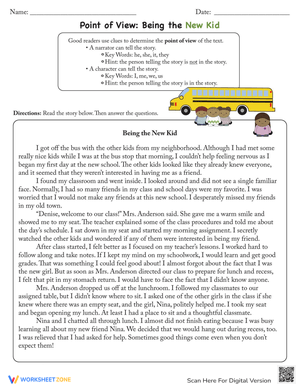
Identifying the narrator's point of view is essential because it determines the reliability and scope of the information provided to the reader. A narrator acts as the lens through which the entire story is viewed. If students do not understand who is telling the story, they cannot accurately evaluate character motivations, identify potential biases, or fully grasp the author's underlying themes. Mastering this skill transforms students from passive readers into active, critical thinkers who interrogate the text.
3. What activities best help students practice rewriting scenes in different points of view?
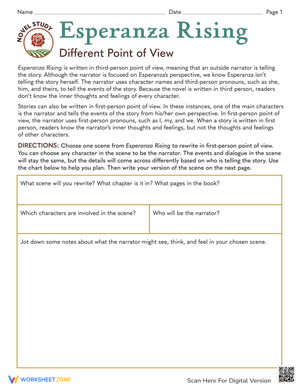
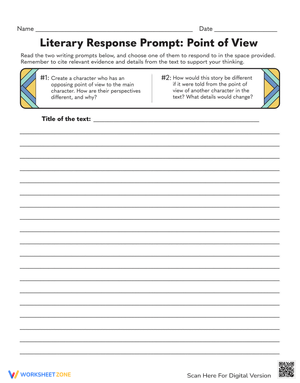
The most effective activities involve taking a familiar scene and intentionally altering the narrator. For example, teachers can provide a short, third-person objective text and ask students to rewrite it from the first-person perspective of the main character, adding subjective emotional reactions. Conversely, taking a highly biased first-person account and rewriting it as an impartial third-person observer helps students understand narrative distance. Printable worksheets that offer guided templates for these rewriting exercises ensure students stay focused on the specific mechanics of perspective shifts.












 Interactive Worksheet Maker
 Quiz Maker
 Word Search Maker
 Crossword Puzzle Maker
 Word Scramble Generator
 Sentence Scramble Generator
 Handwriting Worksheet Generator
 Name Tracing Generator
 Fill In The Blank Generator