


























Views
Downloads

Unscramble Short I Words | Printable Grade 1 Phonics
Paste this activity's link or code into your existing LMS (Google Classroom, Canvas, Teams, Schoology, Moodle, etc.).
Students can open and work on the activity right away, with no student login required.
You'll still be able to track student progress and results from your teacher account.
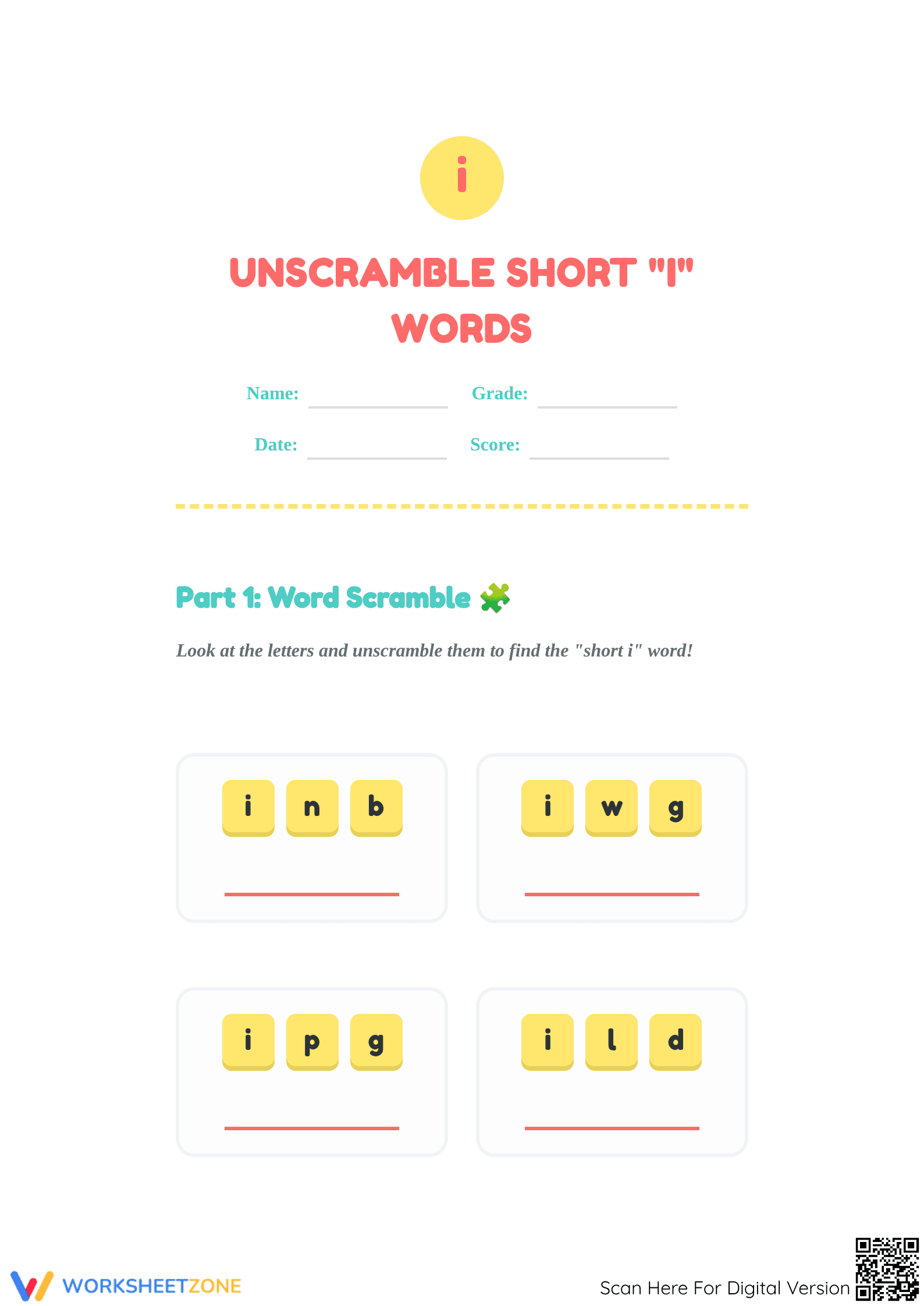
This Grade 1 phonics worksheet strengthens decoding skills by focusing on the short "i" vowel sound. Students practice letter-sound relationships through word unscrambling and contextual application in sentences. By rearranging letters to form familiar CVC words, learners build phonemic awareness and spelling accuracy essential for early reading fluency and literacy development.
At a Glance
- Grade: 1 · Subject: ELA
- Standard:
CCSS.ELA-LITERACY.RF.1.3.B— Decode regularly spelled one-syllable words with short vowel sounds.- Skill Focus: Short "i" Phonics
- Format: 3 pages · 17 problems · Answer key included · PDF
- Best For: Independent phonics practice or sub plans
- Time: 15–20 minutes
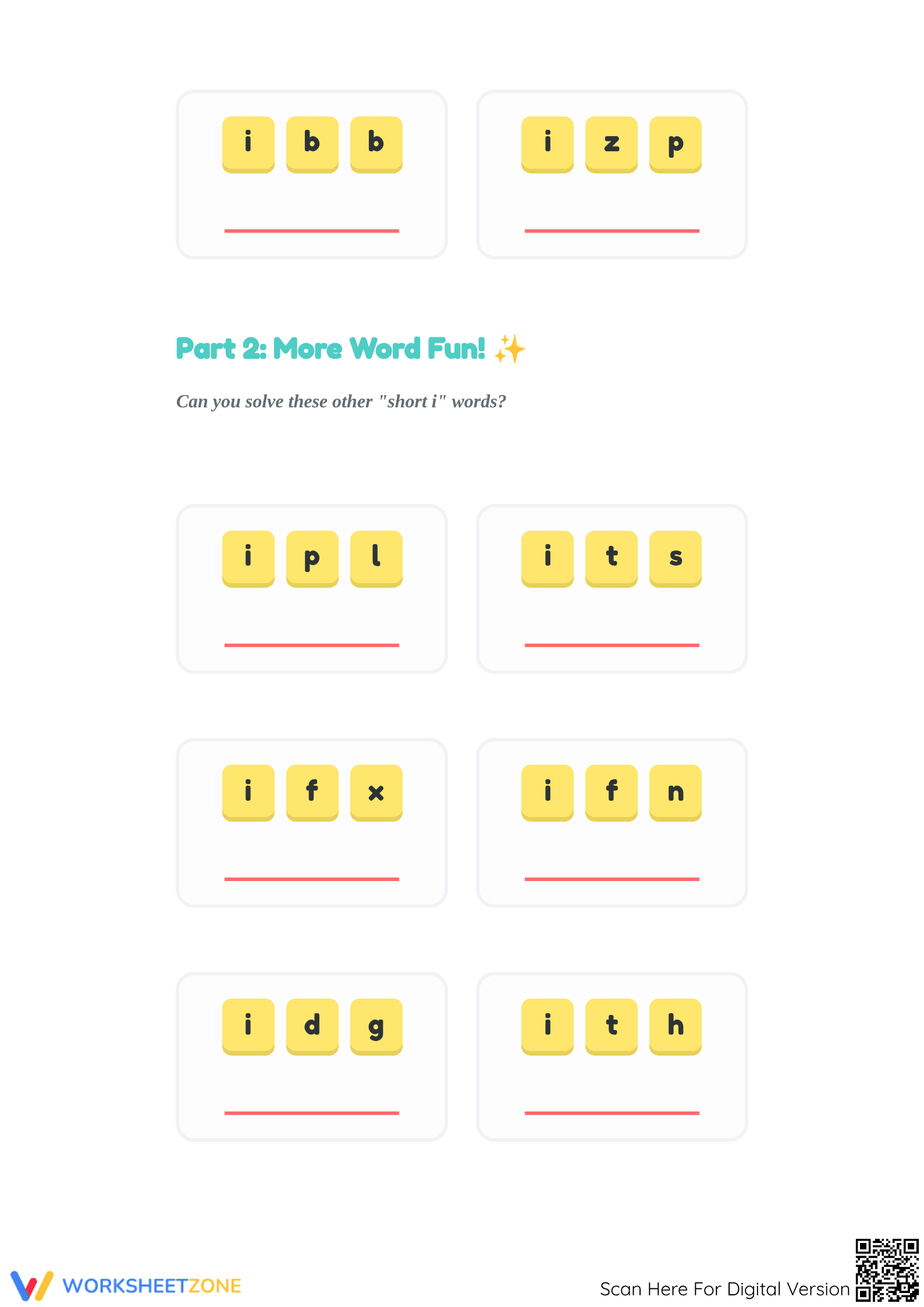
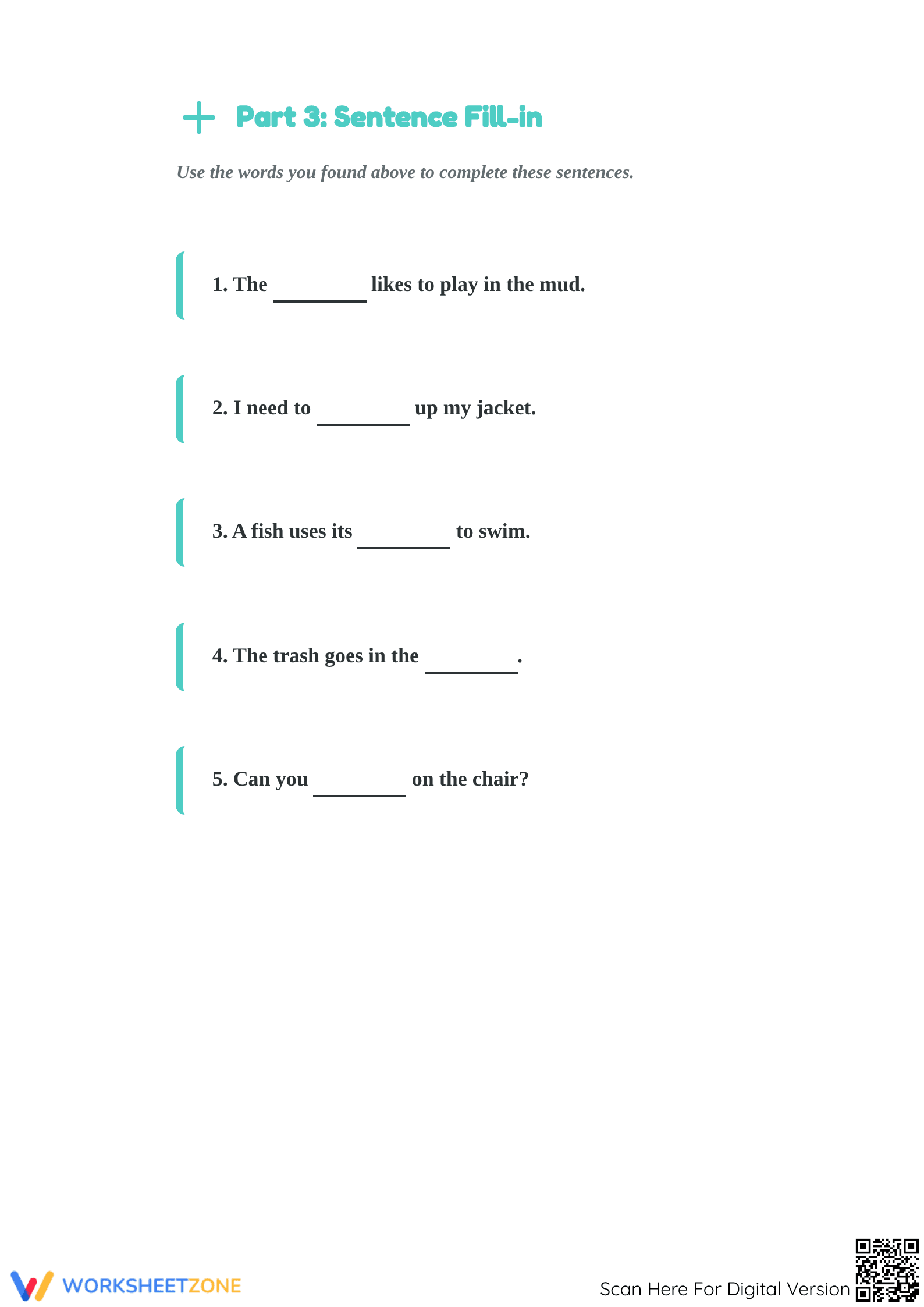
The resource spans 3 comprehensive pages designed for ease of use. It features 12 word-scramble boxes where students manipulate letters to identify words like "bin," "pig," and "fin." The final page provides 5 sentence-level tasks where students apply their newly formed words to complete meaningful thoughts, ensuring a transition from isolated spelling to functional reading.
Zero-Prep Workflow
- Print: Select the three-page PDF and print enough copies for your group (30 seconds).
- Distribute: Hand out the worksheets for independent work, literacy centers, or small-group instruction (1 minute).
- Review: Use the provided answer key for immediate feedback or self-grading (5 minutes).
Total teacher preparation time is under 2 minutes, making this an ideal solution for morning work, homework, or unexpected substitute teacher plans.
Standards Alignment
This worksheet aligns primarily with CCSS.ELA-LITERACY.RF.1.3.B, which requires students to decode regularly spelled one-syllable words. Additionally, it supports CCSS.ELA-LITERACY.L.1.2.E by encouraging students to use phonetic spelling patterns for untaught words. Both standard codes can be copied directly into lesson plans, IEP goals, or district curriculum mapping tools.
How to Use It
Use this during the independent practice phase of a lesson on medial vowels. It serves as an excellent formative assessment; observe if students struggle with the medial "i" or the surrounding consonants. Completion typically takes 15–20 minutes. For students needing more support, provide a word bank of the 12 target words before they begin the unscrambling process.
Who It's For
Designed for first-grade students, this resource also supports Kindergarteners ready for a challenge or second graders needing remedial spelling support. It pairs naturally with short vowel anchor charts, CVC flashcards, or decodable readers focusing on the "i" sound. It is particularly effective for English Language Learners (ELL) practicing basic English phonology.
This instructional resource targets CCSS.ELA-LITERACY.RF.1.3.B, focusing on the decoding of regularly spelled one-syllable words containing the short 'i' vowel sound. By engaging in word unscrambling, students perform phonemic manipulation, a critical precursor to reading fluency. Research from Fisher & Frey (2014) emphasizes that scaffolded practice—moving from isolated word recognition to sentence-level application—is vital for consolidating foundational literacy skills in early childhood education. The worksheet provides 17 distinct opportunities for students to practice these skills, ensuring high-frequency exposure to common CVC patterns. This systematic approach to phonics instruction helps bridge the gap between letter-sound knowledge and reading comprehension. Educators can utilize this tool to provide targeted intervention or independent practice, facilitating a clear pathway toward word mastery. The inclusion of a full answer key allows for rapid assessment and data collection, supporting evidence-based instructional decisions in diverse classroom settings.


