


























Views
Downloads

Oak Tree Life Cycle Worksheet | Grade 3 Essential
Paste this activity's link or code into your existing LMS (Google Classroom, Canvas, Teams, Schoology, Moodle, etc.).
Students can open and work on the activity right away, with no student login required.
You'll still be able to track student progress and results from your teacher account.
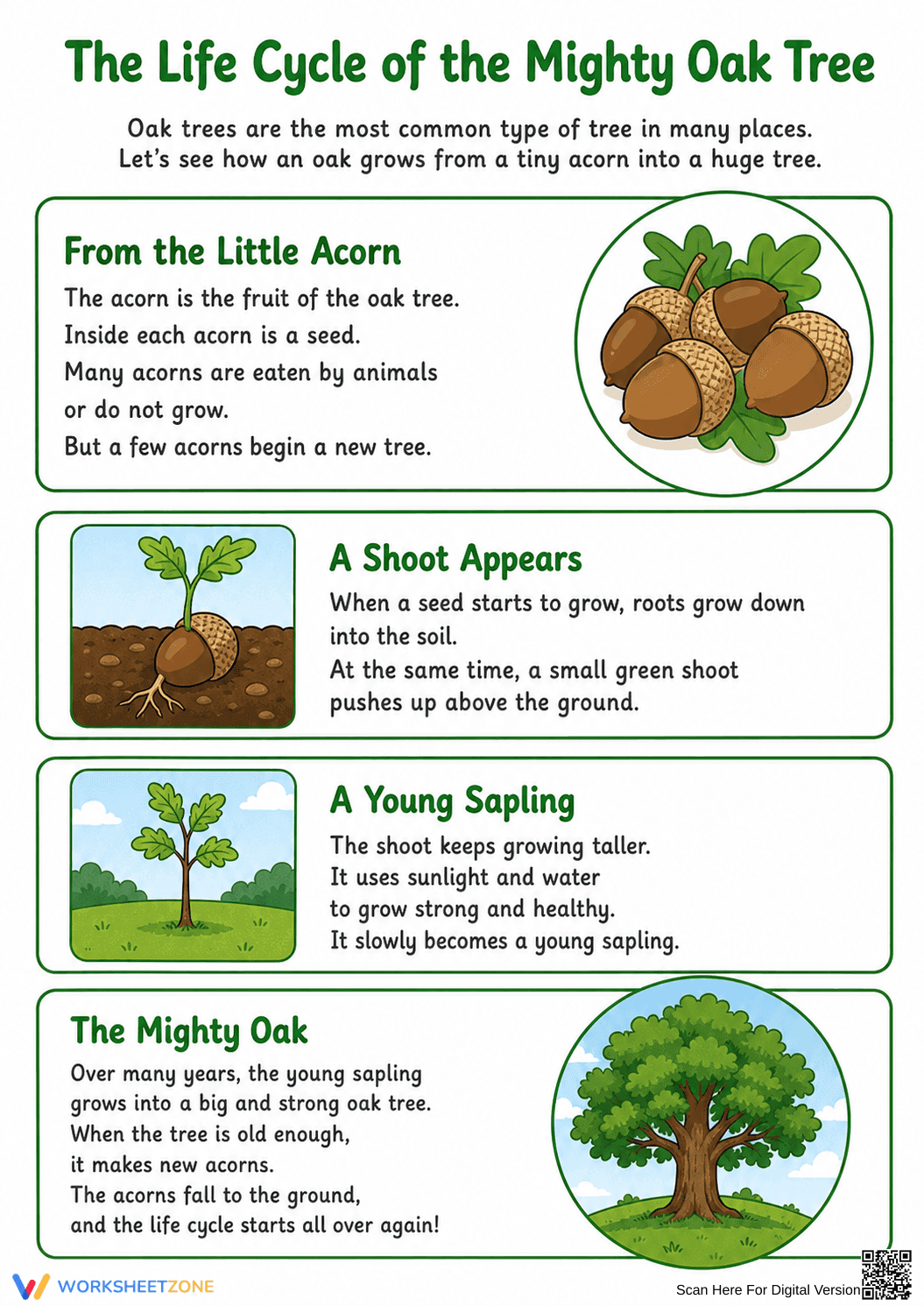
Students will master plant development stages with this comprehensive oak tree life cycle resource. By engaging with informational text and practical tasks, learners identify how an acorn transforms into a mature organism. This resource ensures students understand the sequential nature of growth, providing a solid foundation for elementary life science units.
At a Glance
- Grade: 3 · Subject: Science
- Standard:
3-LS1-1— Develop models to describe that organisms have unique and diverse life cycles- Skill Focus: Plant life cycle sequencing and terminology
- Format: 3 pages · 9 problems · Answer key included · PDF
- Best For: Introduction to plant biology and sequencing
- Time: 20–30 minutes
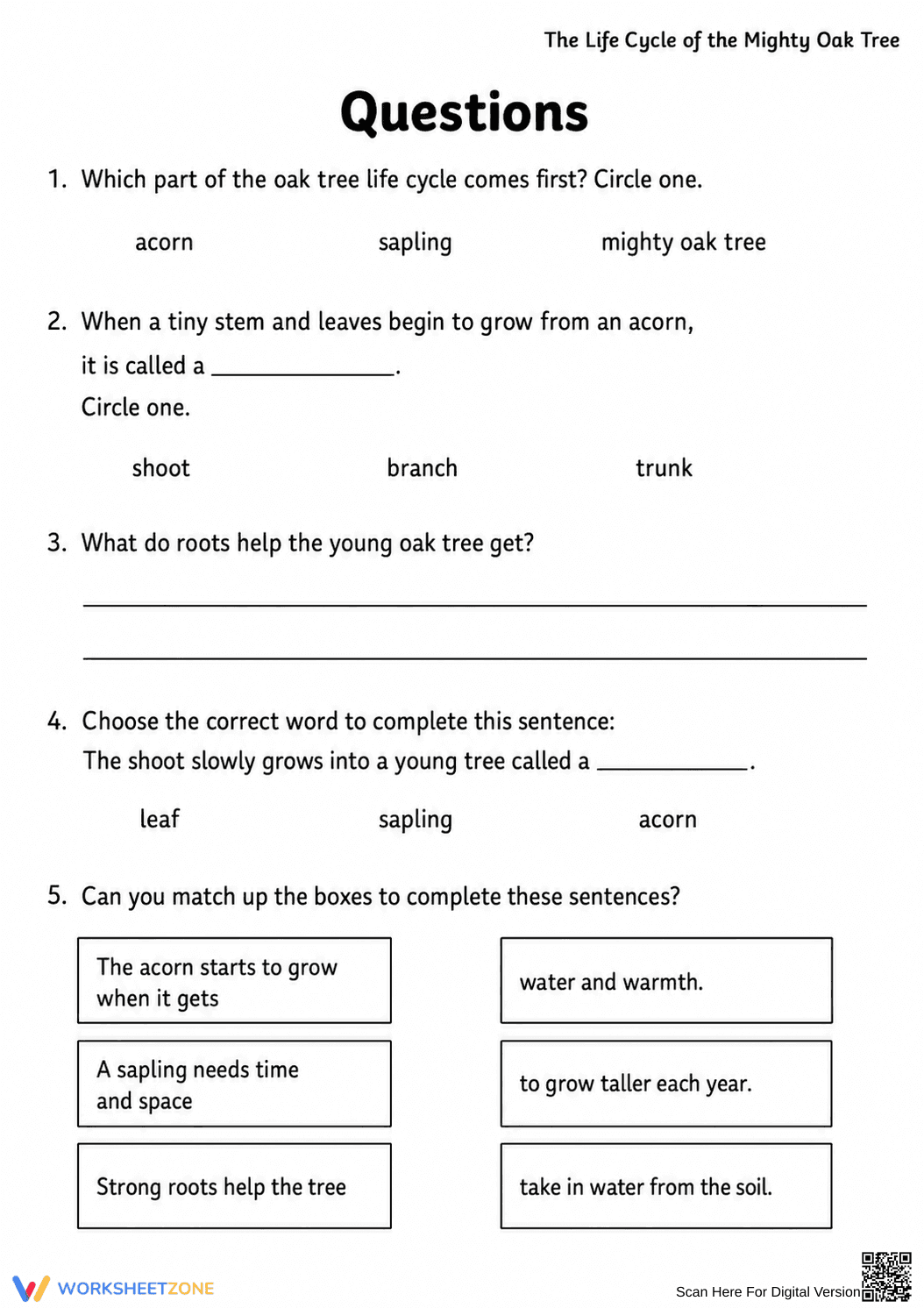
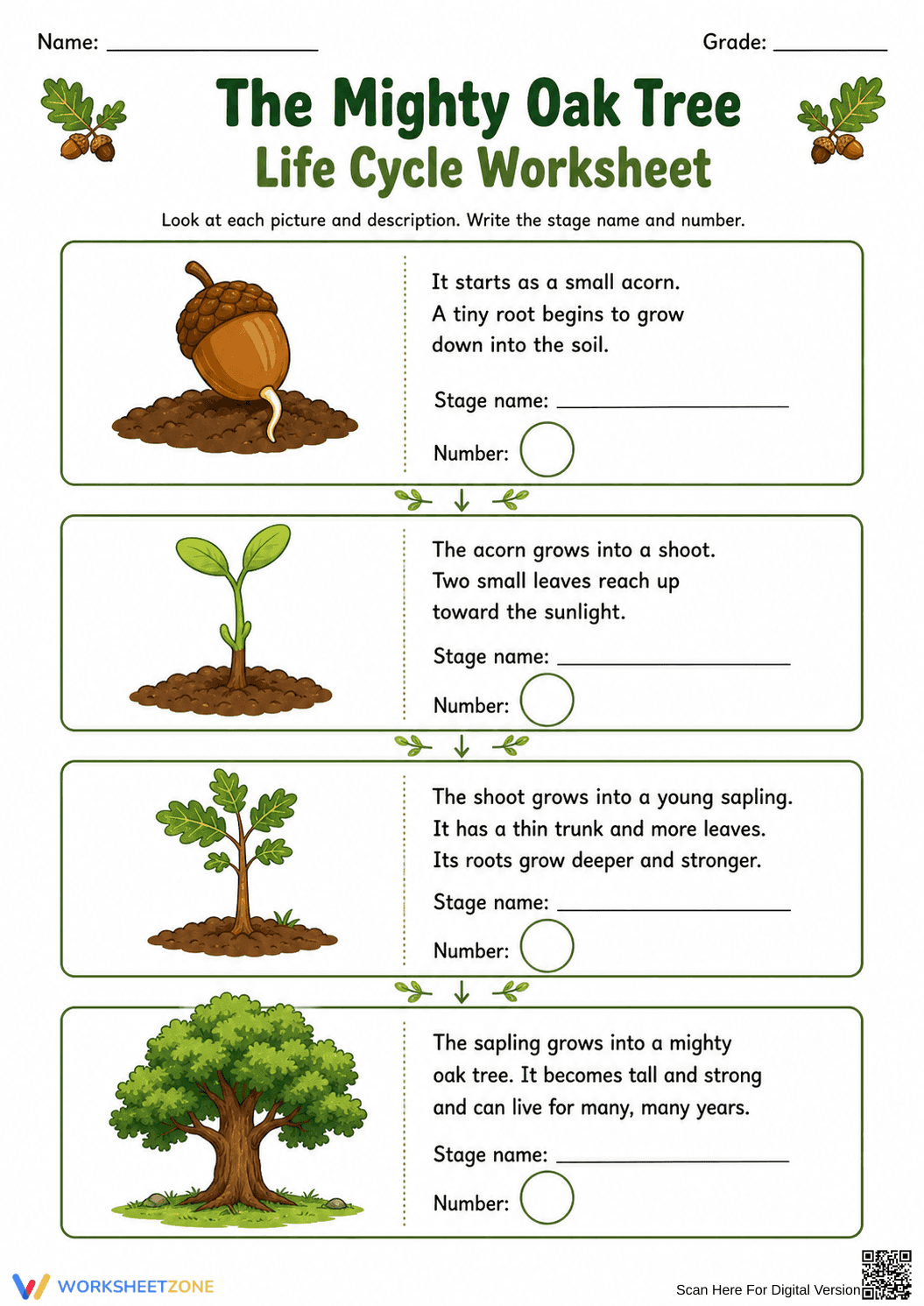
What's Inside: This 3-page PDF includes an informational anchor page detailing the four primary stages of an oak tree. The second page features 5 comprehension tasks, including multiple-choice questions and sentence matching. The final page provides a hands-on sequencing activity where students name and number stages based on visual cues. A full answer key is provided for quick grading.
Zero-Prep Workflow: This resource is designed for immediate classroom implementation. First, print the three-page packet for each student. Second, distribute the materials during your science block; the self-explanatory instructions allow students to work independently or in pairs. Finally, review the matching and sequencing tasks as a whole group to check for understanding. This layout is ideal for emergency sub plans.
Standards Alignment: This worksheet aligns to 3-LS1-1, requiring students to develop models describing that organisms have unique life cycles but share commonalities like birth, growth, reproduction, and death. It also supports ELA standards for reading informational text by requiring students to extract specific facts. These standards can be copied directly into lesson plans or IEP goals.
How to Use It: Use this worksheet during the "Explore" phase of a 5E lesson model to introduce plant life cycles. It serves as an excellent formative assessment tool; observe students during the sequencing task to see if they can distinguish between the shoot and sapling stages. Expected completion time ranges from 20 to 30 minutes depending on reading level. It can also be used as a follow-up activity after an outdoor nature walk or forest school session.
Who It's For: This resource is tailored for 3rd-grade elementary students but is highly effective for 2nd-grade enrichment or 4th-grade review. It is particularly helpful for visual learners who benefit from the clear illustrations paired with descriptive text. Pair this worksheet with a physical acorn collection or a time-lapse video of a growing tree for a multi-sensory learning experience.
The 3-LS1-1 standard emphasizes that while life cycles vary, the fundamental progression of growth remains constant. Using integrated reading and diagramming tasks significantly improves long-term retention of biological sequences in primary learners. This worksheet utilizes this approach by combining 9 specific tasks that move from passive reading to active labeling. By identifying the acorn, shoot, sapling, and mature oak, students build vocabulary necessary for more complex botanical studies. The matching section reinforces the functional roles of roots and sunlight, bridging the gap between simple sequencing and understanding the needs of living things. This structured approach ensures students can accurately describe the oak tree life cycle while meeting core NGSS requirements.


