


























Views
Downloads

STEM Tower Challenge Worksheet | Grade 3 Printable
Paste this activity's link or code into your existing LMS (Google Classroom, Canvas, Teams, Schoology, Moodle, etc.).
Students can open and work on the activity right away, with no student login required.
You'll still be able to track student progress and results from your teacher account.
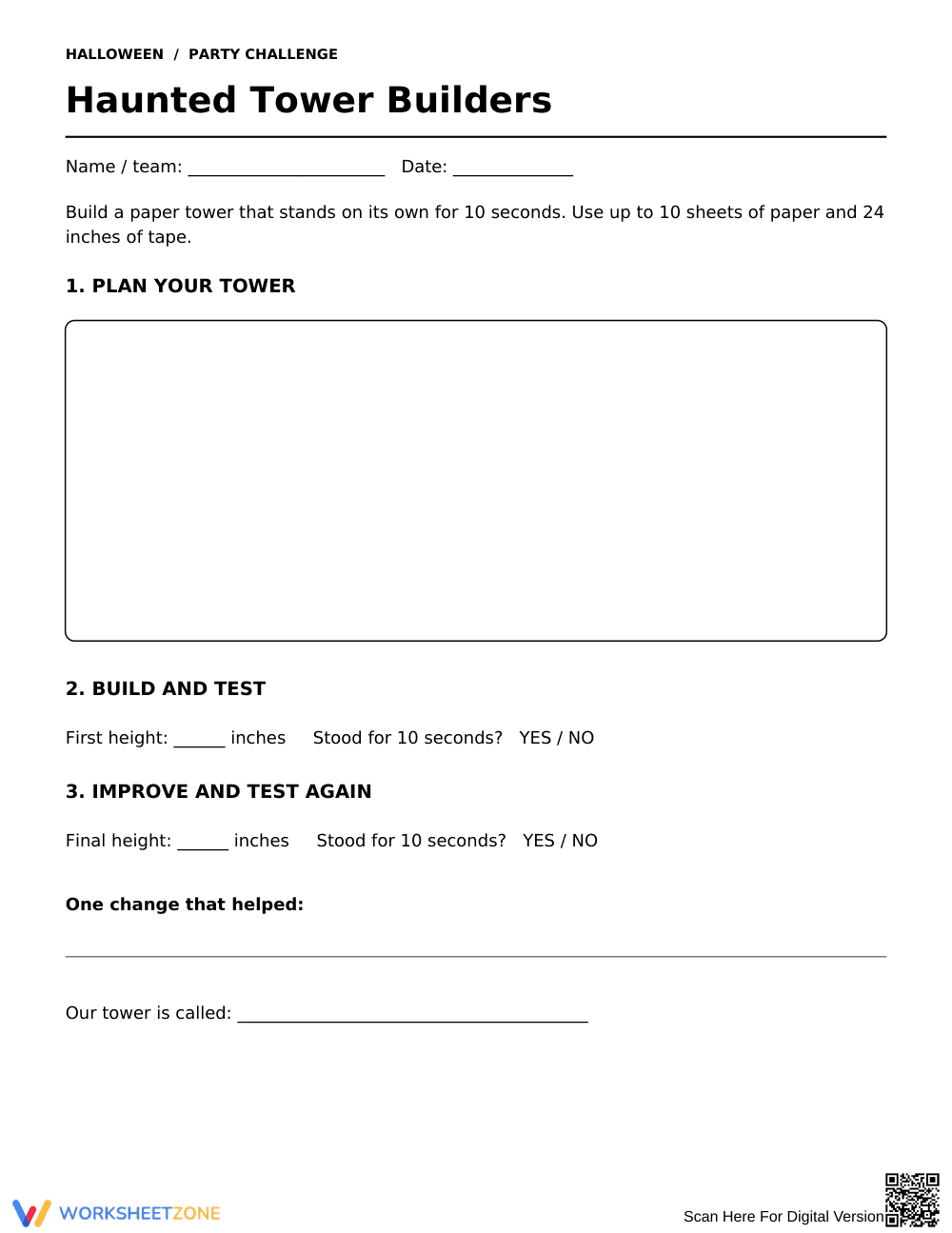
This engineering challenge worksheet guides elementary students through the iterative design process as they construct freestanding paper towers. Students blueprint an initial design, measure structural height and stability, and redesign to optimize their build. Aligned to engineering standards, this activity develops problem-solving and measurement skills.
At a Glance
- Grade: 3 · Subject: Science (STEM)
- Standard:
3-5-ETS1-3— Plan and conduct fair tests to improve a prototype model- Skill Focus: Iterative engineering design and measurement
- Format: 2 pages · 3 tasks · Answer key included · PDF
- Best For: Collaborative elementary STEM challenges and holiday science stations
- Time: 20–25 instructional minutes
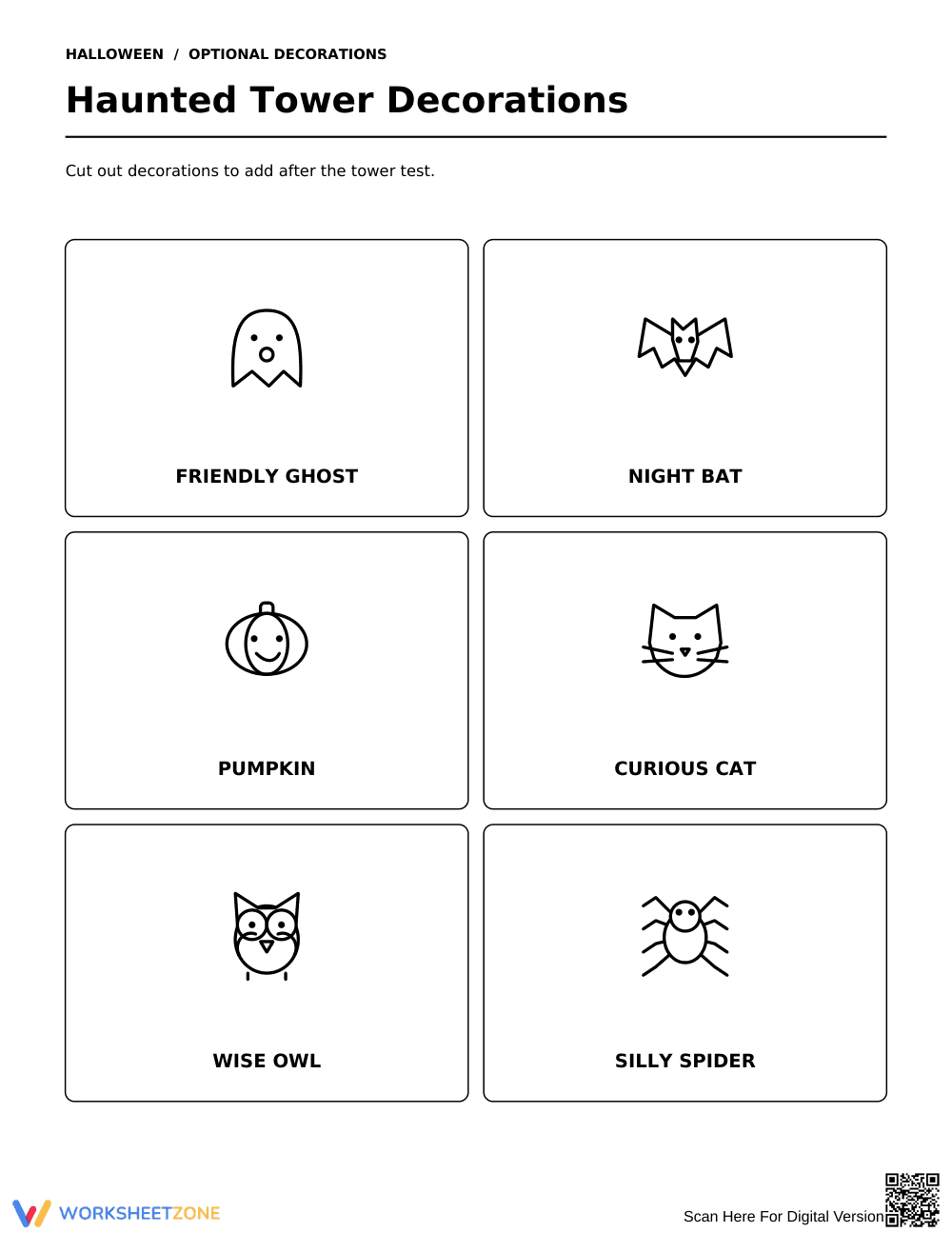
The resource includes a 2-page student packet and a host guide. Page 1 provides an engineering record sheet with a blueprint planning box, height tracking fields, and an improvement reflection prompt. Page 2 offers six seasonal cut-out figures to decorate completed towers. The accompanying host guide details material rules and timing.
Skill Progression
- Guided practice (Step 1): Students sketch a blueprint in the planning frame, discussing base stability with teacher support.
- Supported practice (Step 2): Teams build their initial prototype and conduct a 10-second stability test, recording height in inches.
- Independent practice (Step 3): Learners analyze design failures, modify the structure, retest stability, and document their most effective change.
This sequence mirrors the gradual-release framework, moving learners from collaborative planning toward independent structural evaluation.
Standards Alignment
This activity aligns with `3-5-ETS1-3`: Plan and carry out fair tests in which variables are controlled and failure points are considered to identify aspects of a model or prototype that can be improved. It also supports `CCSS.MATH.CONTENT.3.MD.B.4` through linear measurement using standard rulers. Both standard codes can be copied directly into lesson plans, IEP goals, or district curriculum mapping tools.
How to Use It
Deploy this activity after direct instruction on mechanical stability or the engineering cycle. In a STEM lab, assign students to small teams of 2 to 4 to encourage collaborative problem-solving. During testing, check whether students identify weak structural points—such as unreinforced bases—before they modify their towers. Expect total completion to take 20 to 25 minutes.
Who It's For
This challenge serves students in Grades 1 through 5, supporting mixed-ability teams. Provide pre-cut tape strips for younger learners who need motor scaffolding, or challenge advanced students by limiting paper sheets. Pair this activity with an anchor chart illustrating structural columns and geometric shapes to deepen comprehension.
The Haunted Tower Builders challenge operationalizes Next Generation Science Standard 3-5-ETS1-3 by guiding elementary students through iterative prototyping, measurement recording, and evidence-based structural refinement. Learners plan, build, and test a freestanding paper tower under defined material constraints, actively analyzing failure points to increase vertical height and balance. According to Fisher & Frey (2014), structured collaborative tasks that incorporate deliberate planning, hands-on testing, and written reflection reinforce conceptual mastery far more effectively than unguided building. By pairing tactile construction with linear measurement, this activity translates abstract physical science principles into concrete empirical data. Students articulate how specific design adjustments resolve instability, developing foundational spatial reasoning alongside clear technical communication skills. Consequently, this classroom-tested engineering resource equips educators with a rigorous, standards-aligned instructional framework that transforms festive group challenges into meaningful STEM learning across diverse elementary grade levels.


