


























1 / 3
0
Views
0
Downloads


0.0
0
Save
0 Likes
Share
Explore the Silent Film Era
0 Views
0 Downloads
Paste this activity's link or code into your existing LMS (Google Classroom, Canvas, Teams, Schoology, Moodle, etc.).
Students can open and work on the activity right away, with no student login required.
You'll still be able to track student progress and results from your teacher account.
Information
Description
What It Is:
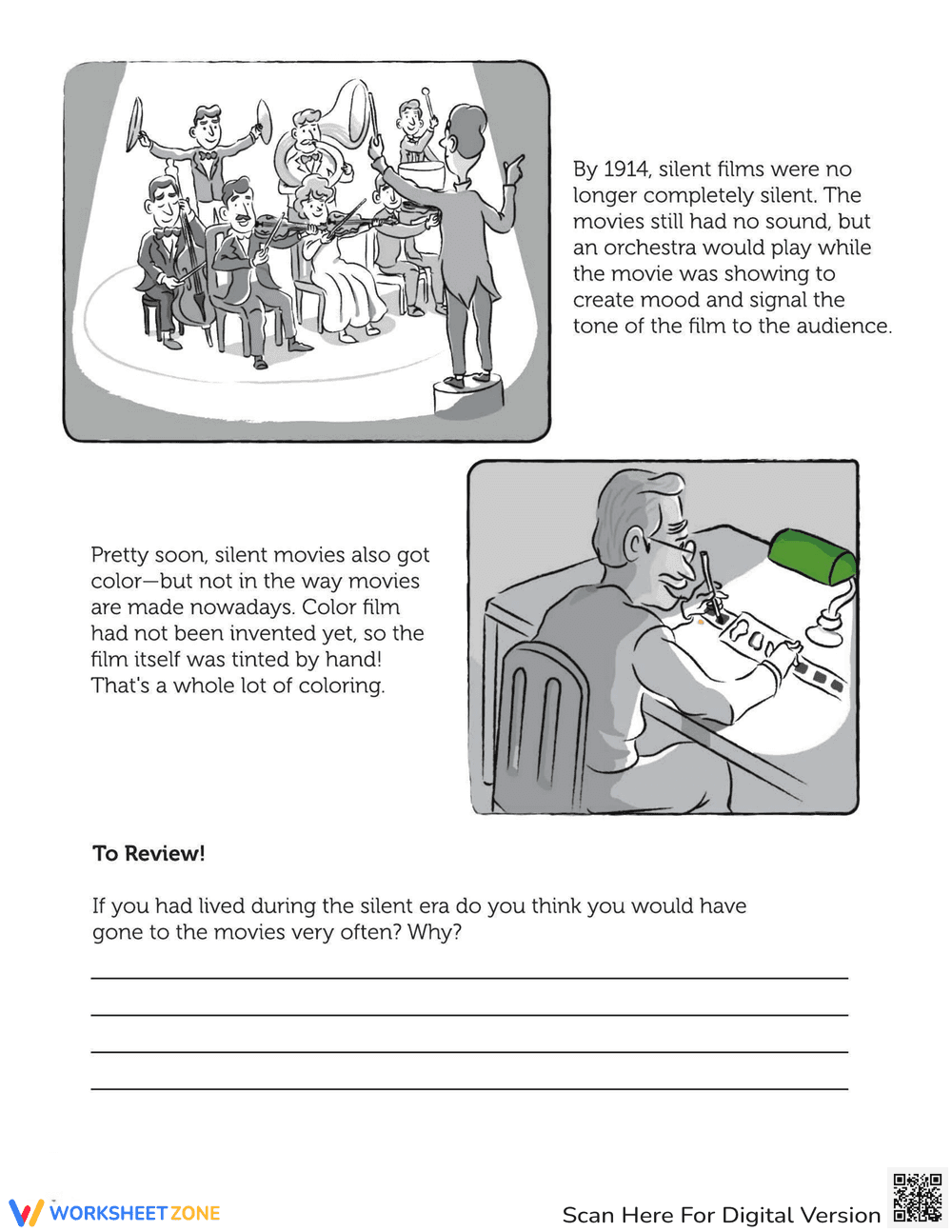
This is an educational worksheet about the Silent Era of film (1894-1929). It includes an introductory paragraph explaining the concept of silent films and how they relied on visual storytelling. It also features a section explaining the importance of miming, title cards, and exaggerated expressions in silent films, with a reference to Charlie Chaplin and slapstick comedy. The worksheet has an illustration showing a scene reminiscent of a silent film comedy with actors in exaggerated poses and props like a hat, cane, and plates.
Grade Level Suitability:
This worksheet is suitable for grades 4-7. The language is accessible, and the content introduces a historical period in a simplified and engaging manner. The reference to Charlie Chaplin makes it relatable for this age group.
Why Use It:
This worksheet introduces students to the history of silent films and the creative techniques used in the absence of sound. It helps students understand visual storytelling and the role of body language and expression in communication. It also introduces the concept of slapstick comedy.
How to Use It:
This worksheet can be used as an introduction to a unit on film history, or as a standalone activity. Students can read the information provided and then discuss the characteristics of silent films. The illustration can be used as a prompt for creative writing or acting exercises. Students could also research Charlie Chaplin or other silent film stars.
Target Users:
The target users are elementary and middle school students learning about film history, visual storytelling, or communication techniques. It's also suitable for teachers looking for a simple, engaging worksheet to introduce the Silent Era.
This is an educational worksheet about the Silent Era of film (1894-1929). It includes an introductory paragraph explaining the concept of silent films and how they relied on visual storytelling. It also features a section explaining the importance of miming, title cards, and exaggerated expressions in silent films, with a reference to Charlie Chaplin and slapstick comedy. The worksheet has an illustration showing a scene reminiscent of a silent film comedy with actors in exaggerated poses and props like a hat, cane, and plates.
Grade Level Suitability:
This worksheet is suitable for grades 4-7. The language is accessible, and the content introduces a historical period in a simplified and engaging manner. The reference to Charlie Chaplin makes it relatable for this age group.
Why Use It:
This worksheet introduces students to the history of silent films and the creative techniques used in the absence of sound. It helps students understand visual storytelling and the role of body language and expression in communication. It also introduces the concept of slapstick comedy.
How to Use It:
This worksheet can be used as an introduction to a unit on film history, or as a standalone activity. Students can read the information provided and then discuss the characteristics of silent films. The illustration can be used as a prompt for creative writing or acting exercises. Students could also research Charlie Chaplin or other silent film stars.
Target Users:
The target users are elementary and middle school students learning about film history, visual storytelling, or communication techniques. It's also suitable for teachers looking for a simple, engaging worksheet to introduce the Silent Era.


