


























Views
Downloads
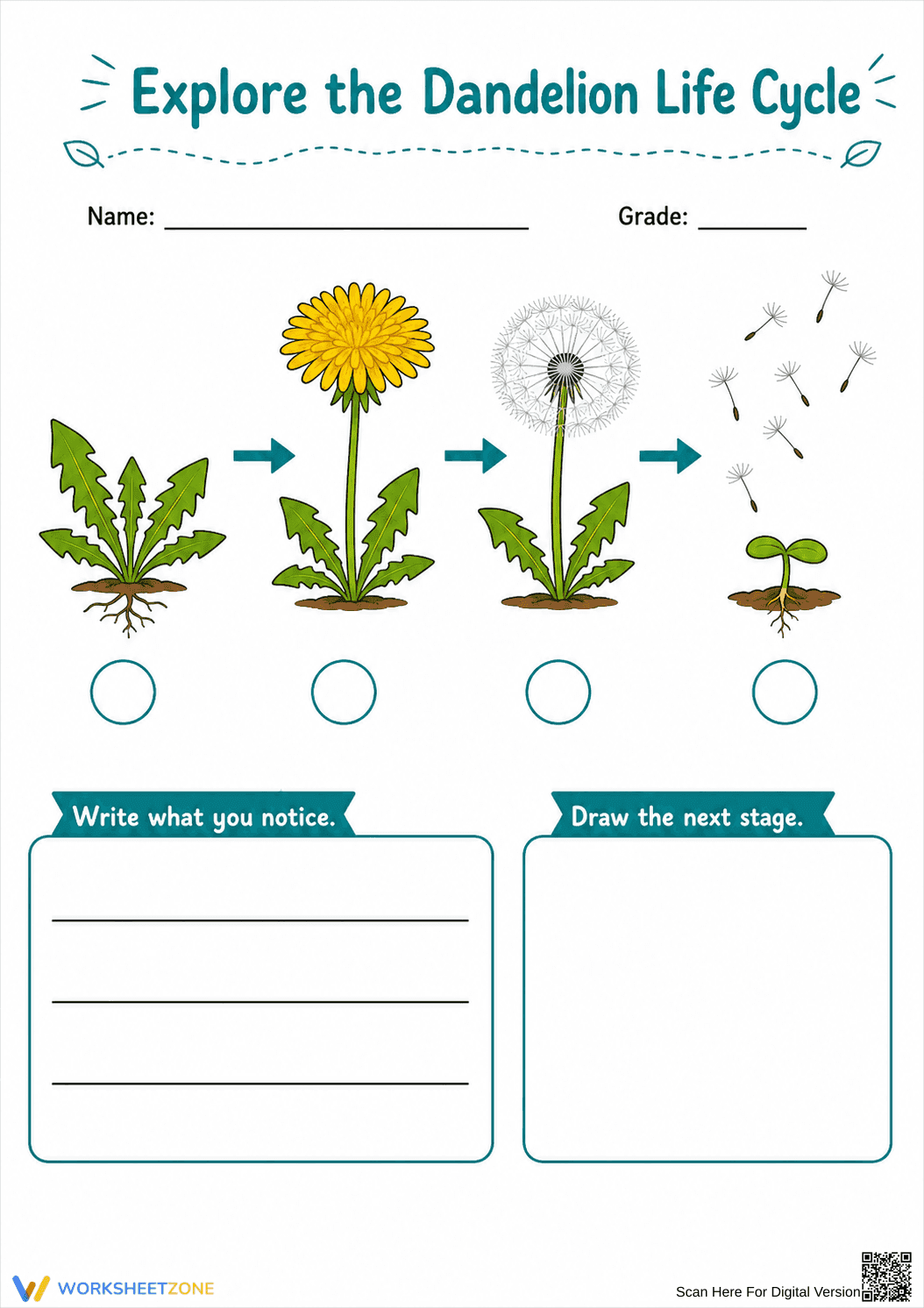

Grade 3 Dandelion Life Cycle — Printable No-Prep Worksheet
Paste this activity's link or code into your existing LMS (Google Classroom, Canvas, Teams, Schoology, Moodle, etc.).
Students can open and work on the activity right away, with no student login required.
You'll still be able to track student progress and results from your teacher account.
This Grade 3 science worksheet helps students understand plant life cycles by examining the stages of a dandelion. Students observe the progression from seed to mature plant, reinforcing their knowledge of growth and reproduction. The clear visual model allows young learners to sequence events and articulate their scientific observations effectively.
At a Glance
- Grade: 3 · Subject: Science
- Standard:
3-LS1-1— Describe that organisms have unique and diverse life cycles.- Skill Focus: Plant Life Cycles
- Format: 1 page · 6 problems · PDF
- Best For: Independent practice
- Time: 15–20 minutes
This single-page resource features a detailed, four-stage visual model of a dandelion's growth. Students are tasked with numbering the sequence of development in the provided circles beneath each illustration. Additionally, the worksheet includes a structured writing prompt for students to document their observations and a blank drawing panel where they must predict and illustrate the next stage of the cycle.
Zero-Prep Workflow
- Print (1 minute): Simply print the PDF. The black-and-white friendly design ensures clear copies for the whole class.
- Distribute (1 minute): Hand out the worksheet as a standalone activity or alongside a science journal.
- Review (3 minutes): Quickly check the sequencing circles and read the short observation sentences to gauge comprehension.
With under two minutes of total teacher prep time, this resource is highly effective for busy educators and makes an excellent addition to any substitute teacher plan.
Standards Alignment
This activity aligns with 3-LS1-1: Develop models to describe that organisms have unique and diverse life cycles but all have in common birth, growth, reproduction, and death. By sequencing the dandelion's growth and predicting the next phase, students actively engage with the core concepts of biological reproduction. Both standard codes can be copied directly into lesson plans, IEP goals, or district curriculum mapping tools.
How to Use It
Deploy this worksheet during the independent practice phase of a botany or life cycles unit. After direct instruction on how plants grow, students can use this sheet to apply their knowledge to a familiar weed. As a formative assessment tip, observe whether students correctly identify the seed dispersal stage as the precursor to a new sprout. The entire activity has an expected completion time range of 15 to 20 minutes.
Who It's For
This resource is designed for third-grade general education students, though it serves as an excellent review for fourth graders. The clear visual scaffolds make it highly accessible for English Language Learners and students needing visual supports. Pair this worksheet with a hands-on nature walk or a read-aloud book about seeds to solidify the concepts.
Understanding biological progression is a foundational element of elementary science education. This worksheet targets 3-LS1-1, helping students describe that organisms have unique and diverse life cycles. According to a 2024 report by EdReports, integrating visual models with written observation prompts significantly improves long-term retention of scientific concepts in early elementary grades. When students are required to not only sequence events but also articulate their reasoning and illustrate subsequent stages, they engage multiple cognitive pathways. This multimodal approach ensures that abstract concepts, such as plant reproduction and seed dispersal, become concrete and understandable. By utilizing structured visual aids alongside targeted writing tasks, educators can foster deeper scientific inquiry and better prepare students for more complex biological studies in later grades. This resource provides exactly that targeted, evidence-based practice.


