


























Views
Downloads

Pennsylvania Wetlands Booklet | Grade 2 Essential Science
Paste this activity's link or code into your existing LMS (Google Classroom, Canvas, Teams, Schoology, Moodle, etc.).
Students can open and work on the activity right away, with no student login required.
You'll still be able to track student progress and results from your teacher account.
This Grade 2 Pennsylvania Wetlands booklet helps students identify and differentiate between various aquatic ecosystems. By engaging with specific wetland types like swamps, ponds, and fens, learners develop a foundational understanding of local natural resources and habitats. Students will demonstrate their knowledge through descriptive writing and scientific illustration.
At a Glance
- Grade: 2 · Subject: Science
- Standard:
2-LS4-1— Make observations of plants and animals to compare diversity in different habitats- Skill Focus: Identifying wetland types
- Format: 4 pages · 3 writing tasks · Drawing prompts · PDF
- Best For: Introductory habitat lessons and independent study
- Time: 20–30 minutes
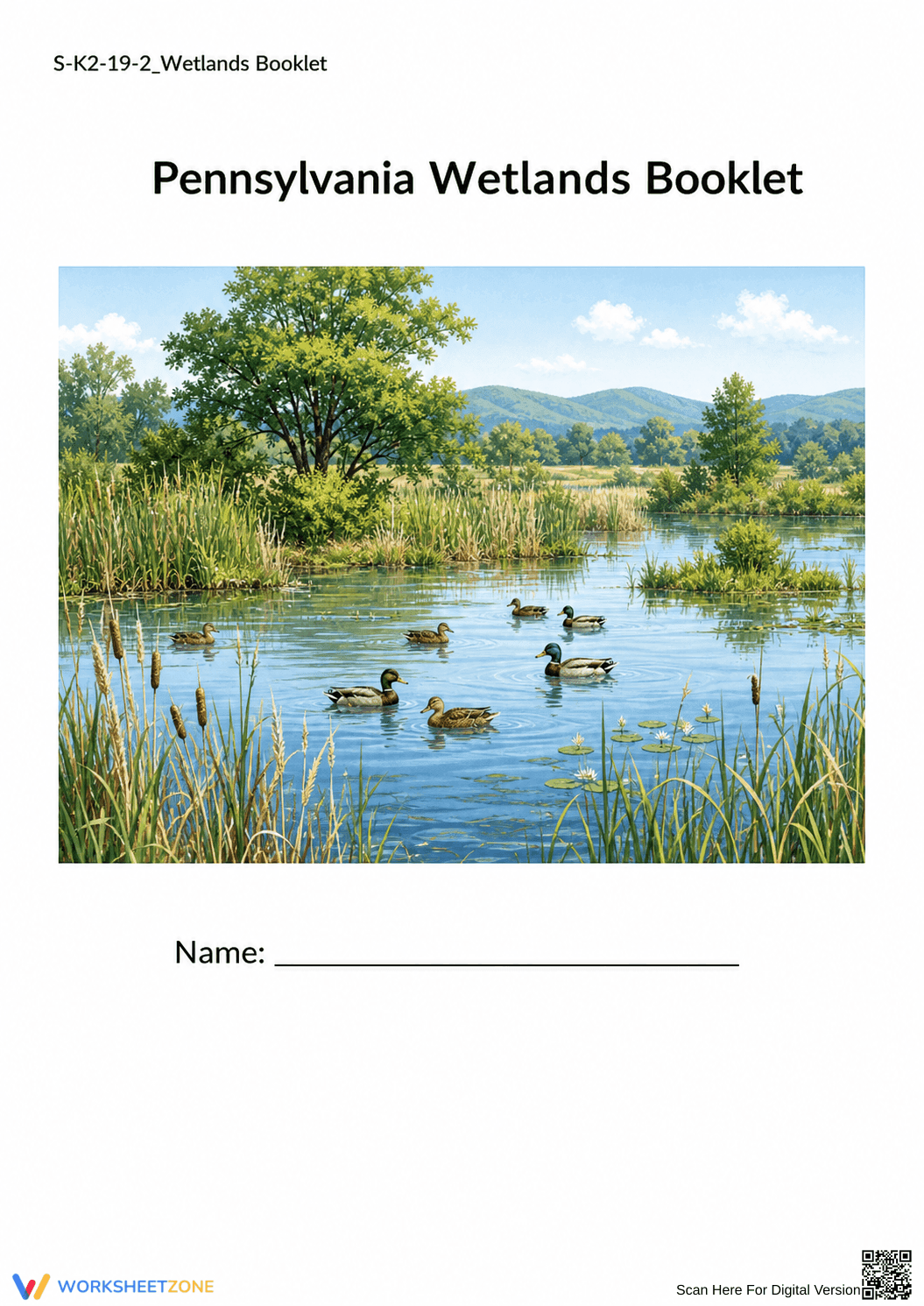
The resource consists of a 4-page printable booklet designed for ease of use. It includes a professional cover page with a name line, followed by dedicated pages for swamps, ponds, and fens. Each content page provides structured writing lines for students to define the wetland type and a large frame for scientific drawing, encouraging both literacy and visual observation skills.
Zero-Prep Workflow
The zero-prep workflow for this booklet is designed for maximum efficiency. First, print the 4-page PDF (1 minute). Second, distribute the packets to students with no additional teacher explanation required (1 minute). Finally, review student drawings and descriptions to assess their understanding of habitat characteristics (5 minutes). This makes it an ideal solution for emergency sub plans or Friday science blocks.
Standards Alignment
This activity aligns with `2-LS4-1`, focusing on comparing the diversity of life in different habitats. By distinguishing between a swamp and a pond, students begin to recognize how environmental factors influence biological diversity. This standard code can be copied directly into lesson plans, IEP goals, or district curriculum mapping tools.
How to Use It
Use this booklet as a formative assessment after a lesson on water-based ecosystems. It works effectively during the elaborate phase of a science lesson cycle. Teachers should observe if students include specific features in their drawings, such as woody plants for swamps versus open water for ponds. Completion typically takes 25 minutes.
Who It's For
This resource is tailored for Grade 2 students but remains accessible for Grade 3 learners requiring literacy support. It pairs naturally with a classroom anchor chart about Pennsylvania geography or a read-aloud text regarding local wildlife. It is particularly useful for students who benefit from visual-spatial learning through drawing.
The Pennsylvania Wetlands Booklet provides a structured framework for meeting the 2-LS4-1 standard through integrated science and literacy tasks. Research by Fisher & Frey (2014) emphasizes the importance of scaffolded writing and drawing in the primary grades to solidify conceptual understanding of complex scientific topics like ecosystems. By requiring students to both describe and illustrate different wetland types, this resource leverages dual-coding theory to improve long-term retention of environmental science vocabulary. The 4-page format ensures that the cognitive load remains appropriate for 7- to 8-year-old learners while still providing enough depth to distinguish between similar habitats. This printable tool serves as a reliable artifact for student portfolios, demonstrating a clear progression from basic identification to descriptive mastery of local natural resources and environmental science concepts.


