




























Views
Downloads

Grade 1 Aquatic Habitats — Printable No-Prep Worksheet

Paste this activity's link or code into your existing LMS (Google Classroom, Canvas, Teams, Schoology, Moodle, etc.).
Students can open and work on the activity right away, with no student login required.
You'll still be able to track student progress and results from your teacher account.
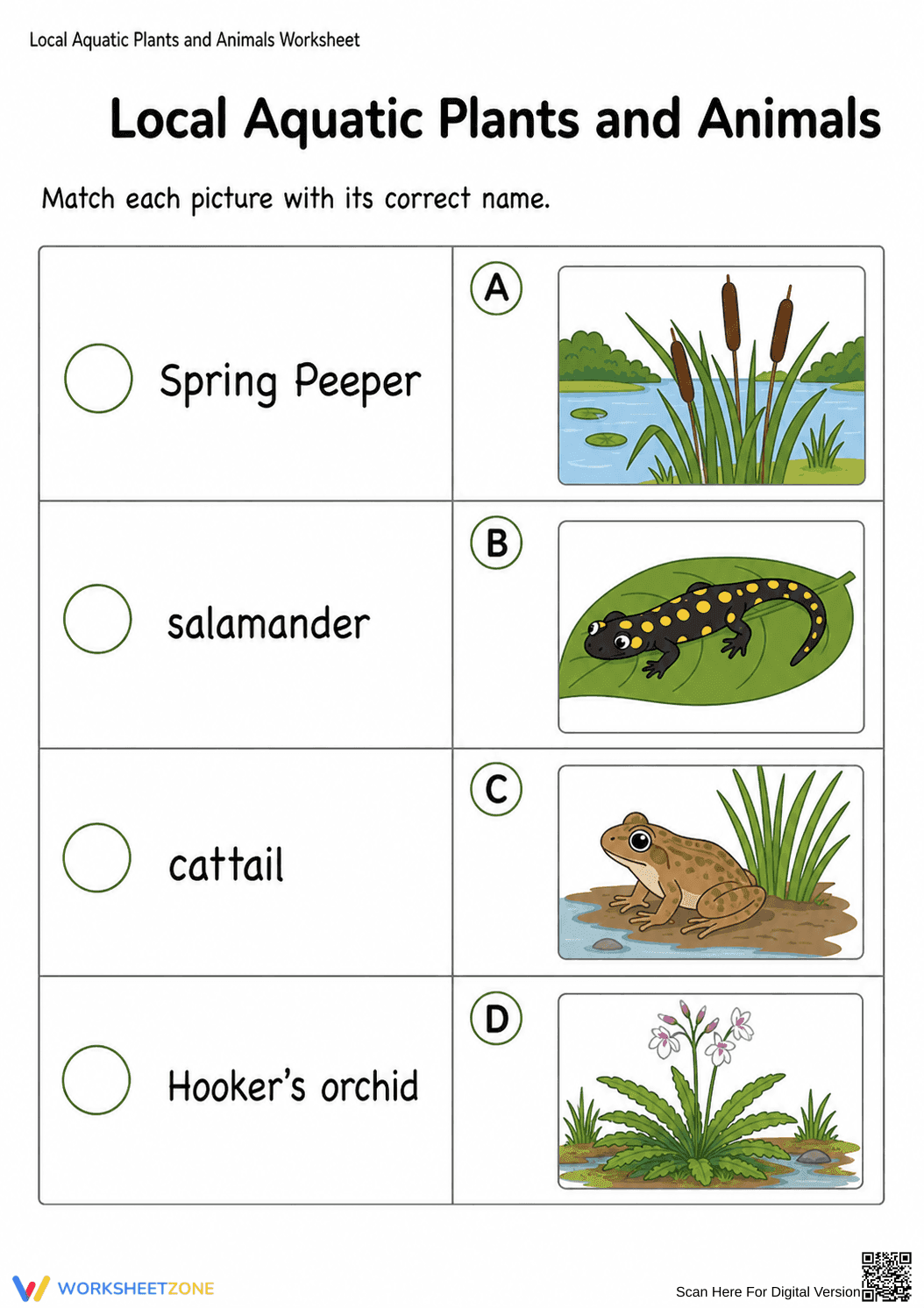
This Grade 1 science worksheet helps students identify local aquatic plants and animals while building foundational vocabulary. By connecting recognizable species like the Spring Peeper and cattail to their correct names, young learners develop visual recognition skills and a deeper understanding of pond ecosystems and natural habitats.
At a Glance
- Grade: 1 · Subject: Science
- Standard:
NGSS 2-LS4-1— Observe plants and animals to compare diversity in habitats- Skill Focus: Identifying aquatic plants and animals
- Format: 3 pages · 9 problems · Answer key included · PDF
- Best For: Independent practice
- Time: 15–20 minutes
What's Inside
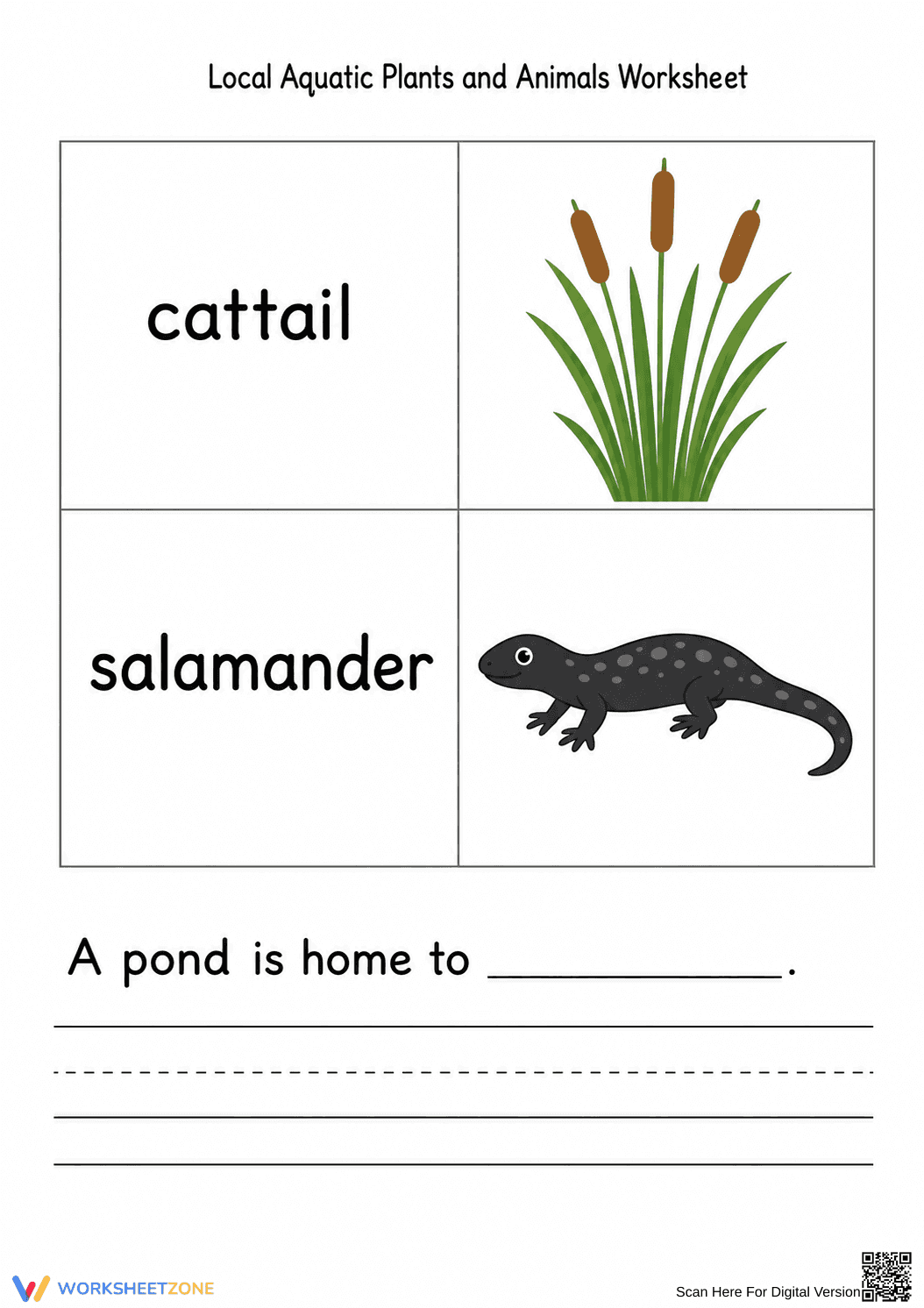
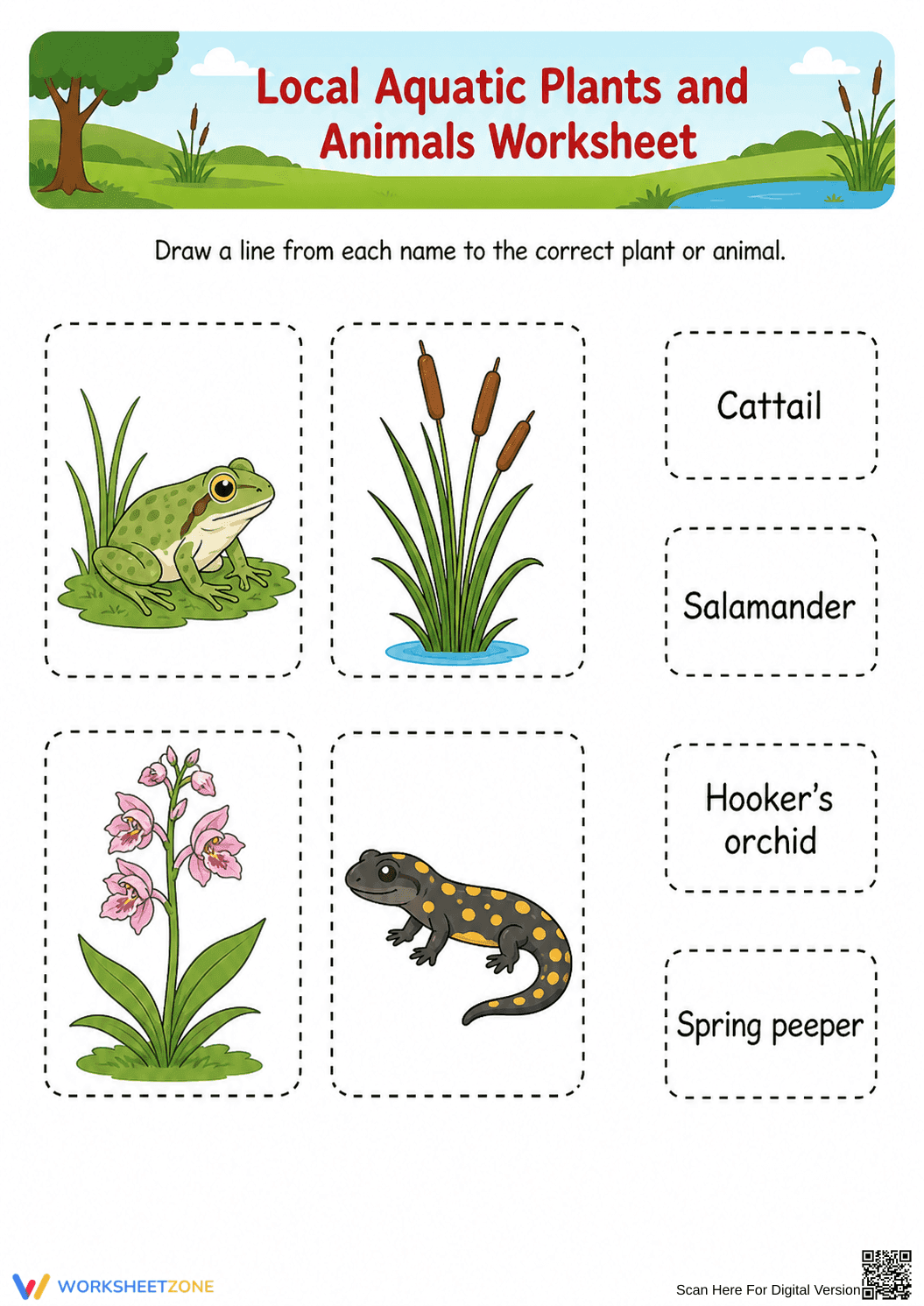
This comprehensive resource includes three distinct pages of activities designed to reinforce habitat vocabulary. Students will complete four multiple-choice style matching tasks, a line-drawing vocabulary match with four distinct species, and a short writing prompt with a sentence frame to contextualize their learning. A complete answer key is provided to ensure quick and accurate grading.
Zero-Prep Workflow
- Print (1 minute): Simply download the PDF and print the three activity pages. No special materials or cutting are required for the core activities.
- Distribute (1 minute): Hand out the worksheets to students along with pencils or crayons. The instructions are simple and self-explanatory.
- Review (3 minutes): Use the included answer key to quickly check student work or review the correct matches together as a class.
Total teacher prep time is under two minutes, making this an excellent option for emergency sub plans, morning work, or a quick science center activity.
Standards Alignment
Aligned to primary standard NGSS 2-LS4-1: Make observations of plants and animals to compare the diversity of life in different habitats. It also supports early literacy by requiring students to read and match domain-specific vocabulary words. Both standard codes can be copied directly into lesson plans, IEP goals, or district curriculum mapping tools.
How to Use It
Use this worksheet during a broader unit on animal habitats or pond life. It serves as an excellent independent practice activity after a direct instruction lesson on local ecosystems. As a formative assessment tip, observe whether students rely on initial letter sounds to match the animal names to the pictures, which indicates cross-curricular literacy application. Expected completion time is 15 to 20 minutes.
Who It's For
This resource is primarily designed for Grade 1 students, though it is highly suitable for Kindergarten and Grade 2 learners exploring life science. For students needing extra support, teachers can read the vocabulary words aloud before independent work begins. It pairs perfectly with a read-aloud book about pond habitats or a nature walk to observe local aquatic environments.
Aligning early science instruction with NGSS 2-LS4-1 ensures students can observe plants and animals to compare diversity in habitats effectively. According to the RAND AIRS 2024 report, integrating visual matching tasks with domain-specific vocabulary significantly improves retention of scientific concepts in early elementary grades. When young learners are exposed to structured activities that require them to connect ecological terms with accurate visual representations, their overall comprehension of local ecosystems deepens. By providing clear, recognizable images of local species like salamanders, cattails, and orchids alongside their written names, educators can bridge the gap between visual recognition and early literacy. This dual-coding approach not only reinforces critical habitat knowledge but also supports foundational reading skills. Furthermore, consistent exposure to these integrated science and literacy tasks builds confidence, making it a highly effective, research-backed strategy for young learners exploring the natural world and its diverse biological communities.


