


























Views
Downloads



Ready Rhetorical Situation Worksheet | Grade 11 English III
Paste this activity's link or code into your existing LMS (Google Classroom, Canvas, Teams, Schoology, Moodle, etc.).
Students can open and work on the activity right away, with no student login required.
You'll still be able to track student progress and results from your teacher account.
This rhetorical situation worksheet teaches Grade 11 students to identify speaker, audience, exigence, and constraints in a persuasive town hall speech, then explain how those elements shape its appeals and purpose. Students move from labeling concepts to writing text-based arguments, building the analysis skills that RI.11-12.6 requires.
At a Glance
- Grade: 11 · Subject: English III
- Standard:
RI.11-12.6— Analyze how a speaker's style and content make a speech persuasive- Skill Focus: Speaker, Audience, Exigence, and Constraints in a speech
- Format: 6 pages · 10 problems · Answer key included · PDF
- Best For: Rhetorical analysis practice after direct instruction
- Time: 40–50 minutes
What's Inside
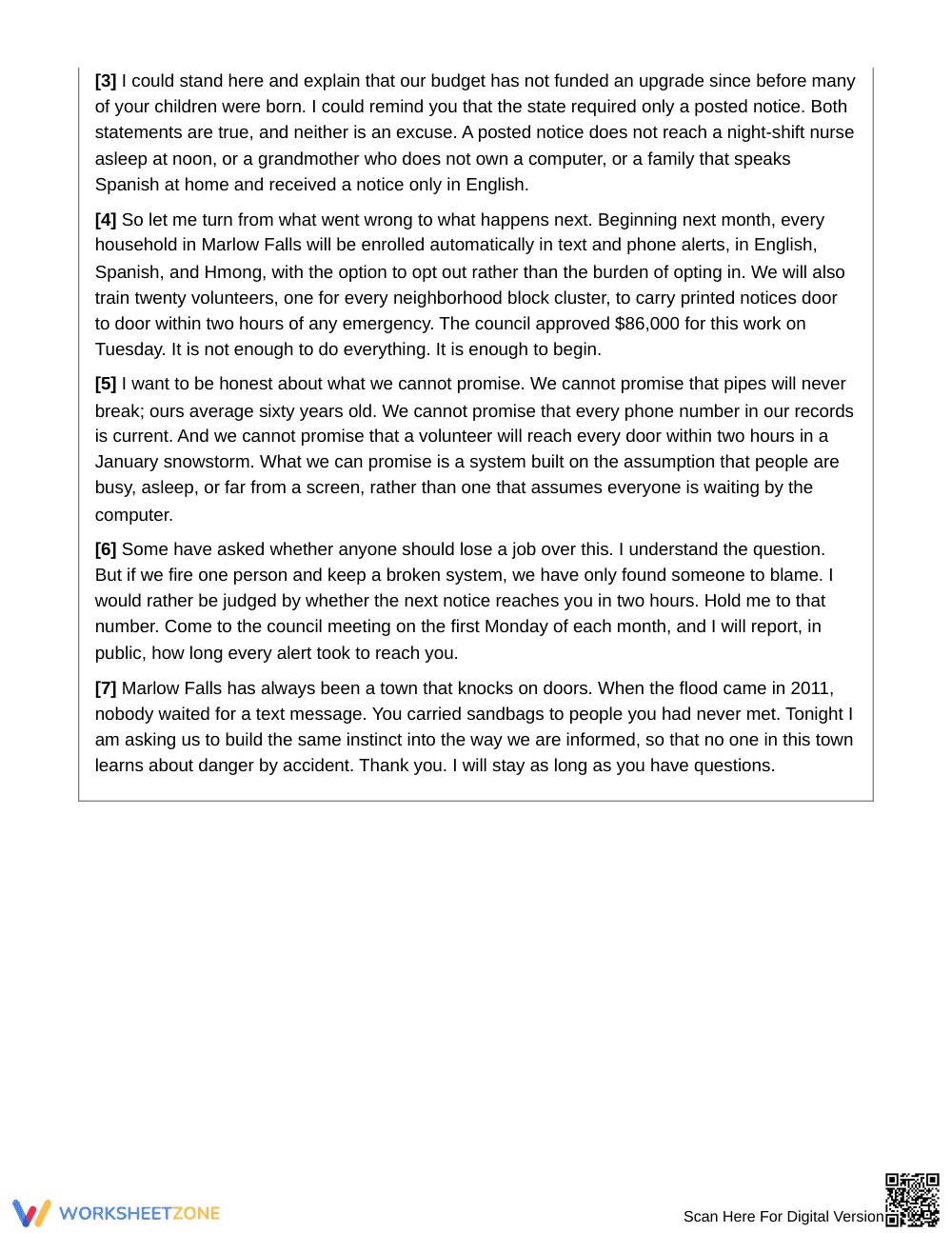
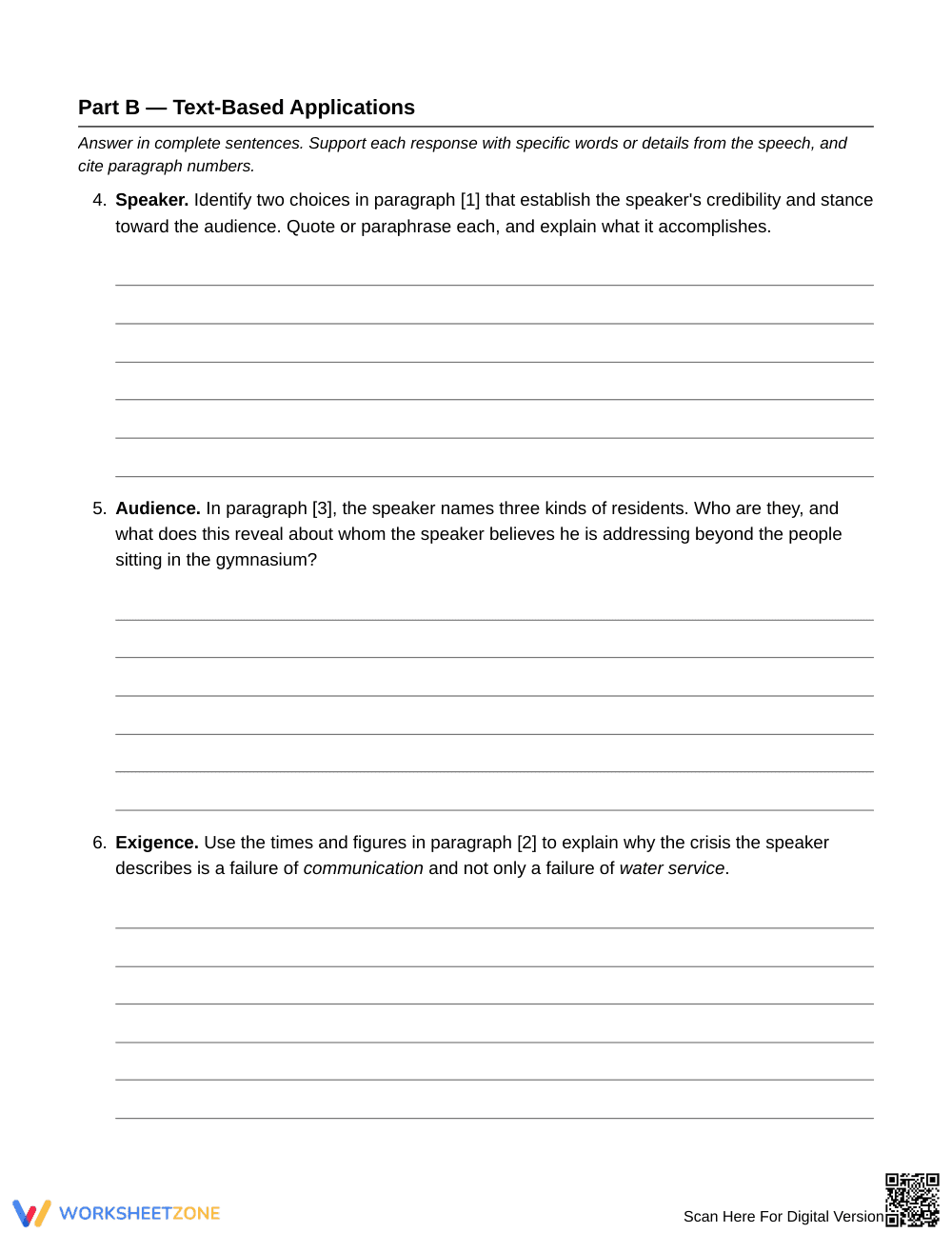
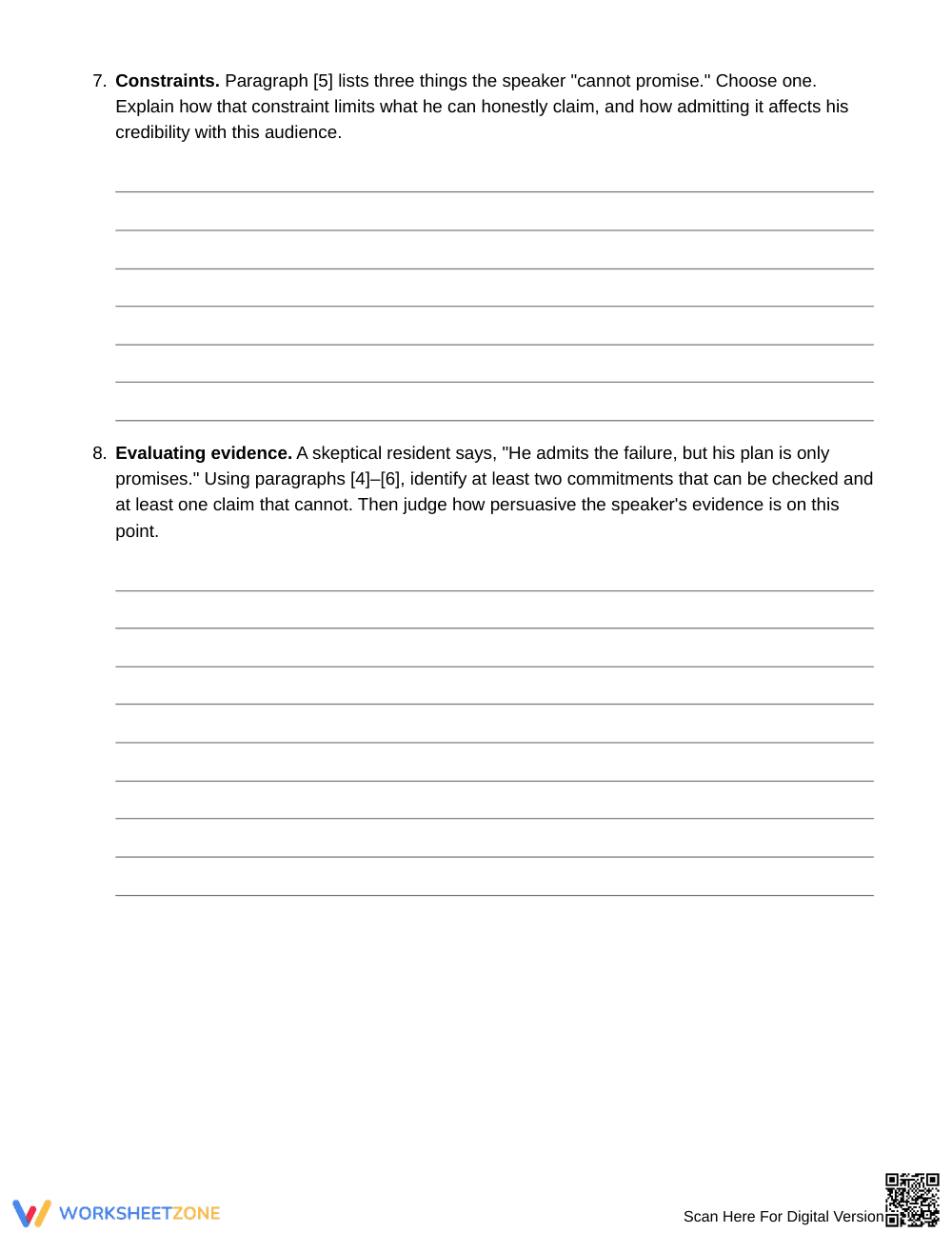
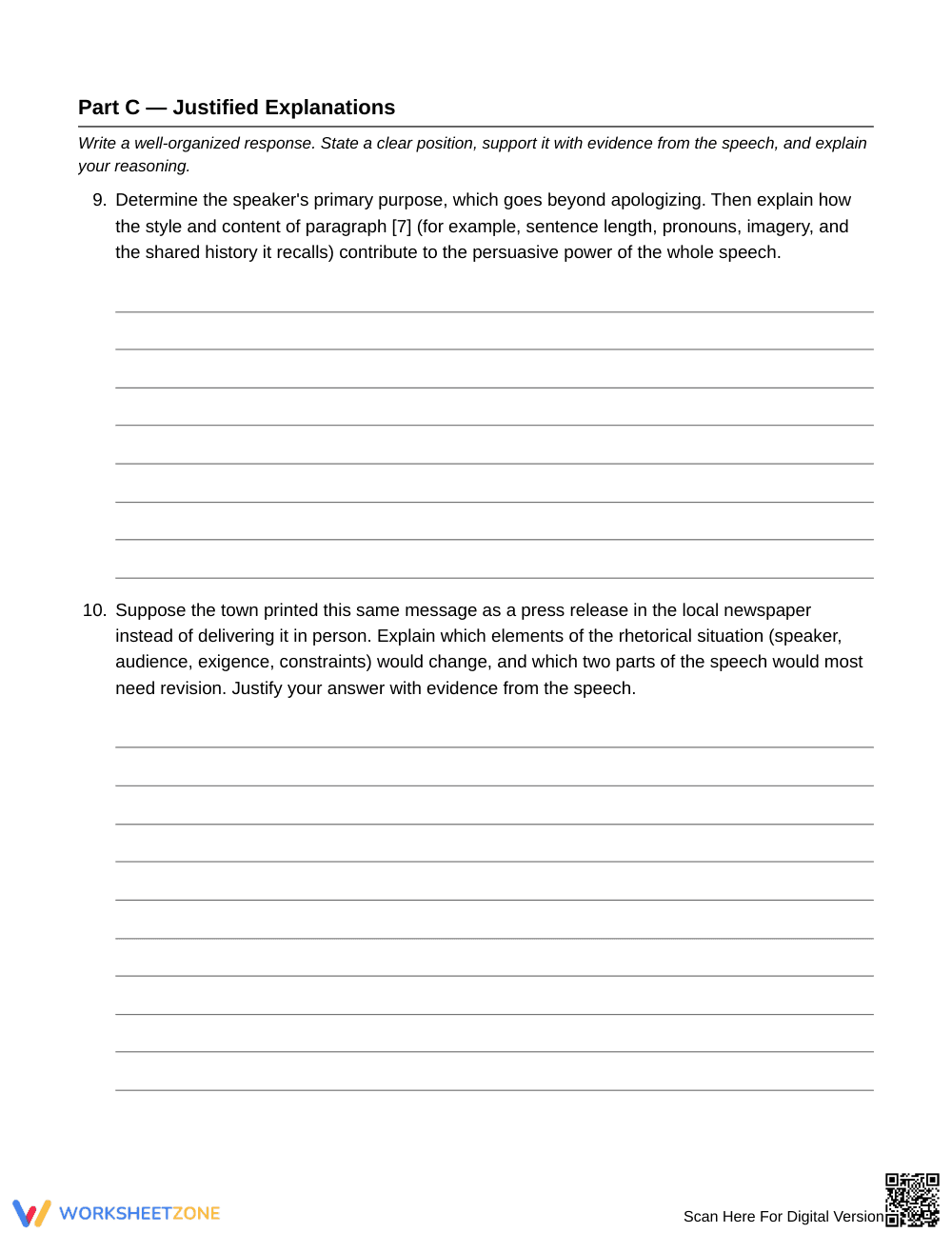
Students read a fictional town hall speech, “Remarks to the Marlow Falls Town Hall,” with a Concept Box that defines the rhetorical situation. Three parts follow: concept distinctions (multiple choice and a labeling table), five text-based short responses, and two justified explanations. The 6-page PDF includes a 4-page answer key.
Skill Progression
- Guided practice: 3 items in Part A, supported by the Concept Box and answer choices.
- Supported practice: 5 short responses in Part B, each requiring paragraph citations and specific evidence.
- Independent practice: 2 extended responses in Part C that require a clear position and reasoning.
The sequence follows gradual release: I Do, We Do, You Do.
Standards Alignment
RI.11-12.6: Determine an author's point of view or purpose in a text in which the rhetoric is particularly effective, analyzing how style and content contribute to the power, persuasiveness, or beauty of the text. Part C targets purpose, style, and content directly. This standard code can be copied directly into lesson plans, IEP goals, or district curriculum mapping tools.
How to Use It
- After direct instruction on appeals: assign Part A as an independent check for understanding.
- During a rhetoric unit: have pairs discuss Part B, then write Part C individually as a written assessment.
While students work, listen for any confusion between exigence and constraints, a common slip. Expect 40–50 minutes in total.
Who It's For
Designed for Grade 11 English III students analyzing nonfiction rhetoric. The multiple-choice and labeling items give extra structure to students who need it, while Part C stretches strong writers. Pair it with an anchor chart on ethos, pathos, and logos.
Standard RI.11-12.6 asks students to determine an author's purpose and analyze how style and content make rhetoric persuasive. This Grade 11 English III worksheet builds that skill by having students identify the speaker, audience, exigence, and constraints of a fictional town hall speech. Ten tasks progress from labeling and multiple-choice distinctions to text-based short responses and two justified explanations. The structure reflects the gradual release of responsibility described by Fisher & Frey (2014), moving from modeling to guided work to independent application. Students cite paragraph numbers, quote evidence, and judge whether a speaker's commitments can be verified, turning rhetorical vocabulary into usable analysis. The 6-page printable PDF includes a 4-page answer key and fits one 40 to 50 minute class period. It suits English III classrooms preparing students to analyze persuasive nonfiction with confidence.


