


























Views
Downloads



Ready Purpose & Credibility Worksheet | Grade 11 English III
Paste this activity's link or code into your existing LMS (Google Classroom, Canvas, Teams, Schoology, Moodle, etc.).
Students can open and work on the activity right away, with no student login required.
You'll still be able to track student progress and results from your teacher account.
This worksheet teaches Grade 11 students to connect a speaker's purpose, occasion, and credibility by analyzing two paired texts. Students leave able to explain how a moment shapes a message, judge whether a speaker earns trust, and defend that judgment with evidence from specific paragraphs.
At a Glance
- Grade: 11 · Subject: English III
- Standard:
RI.11-12.6— Analyze how a speaker's style and content make a text persuasive- Skill Focus: Connect Purpose, Occasion, and Credibility in paired texts
- Format: 6 pages · 12 problems · Answer key included · PDF
- Best For: Rhetoric units and argument analysis practice
- Time: 40–50 minutes
What's Inside
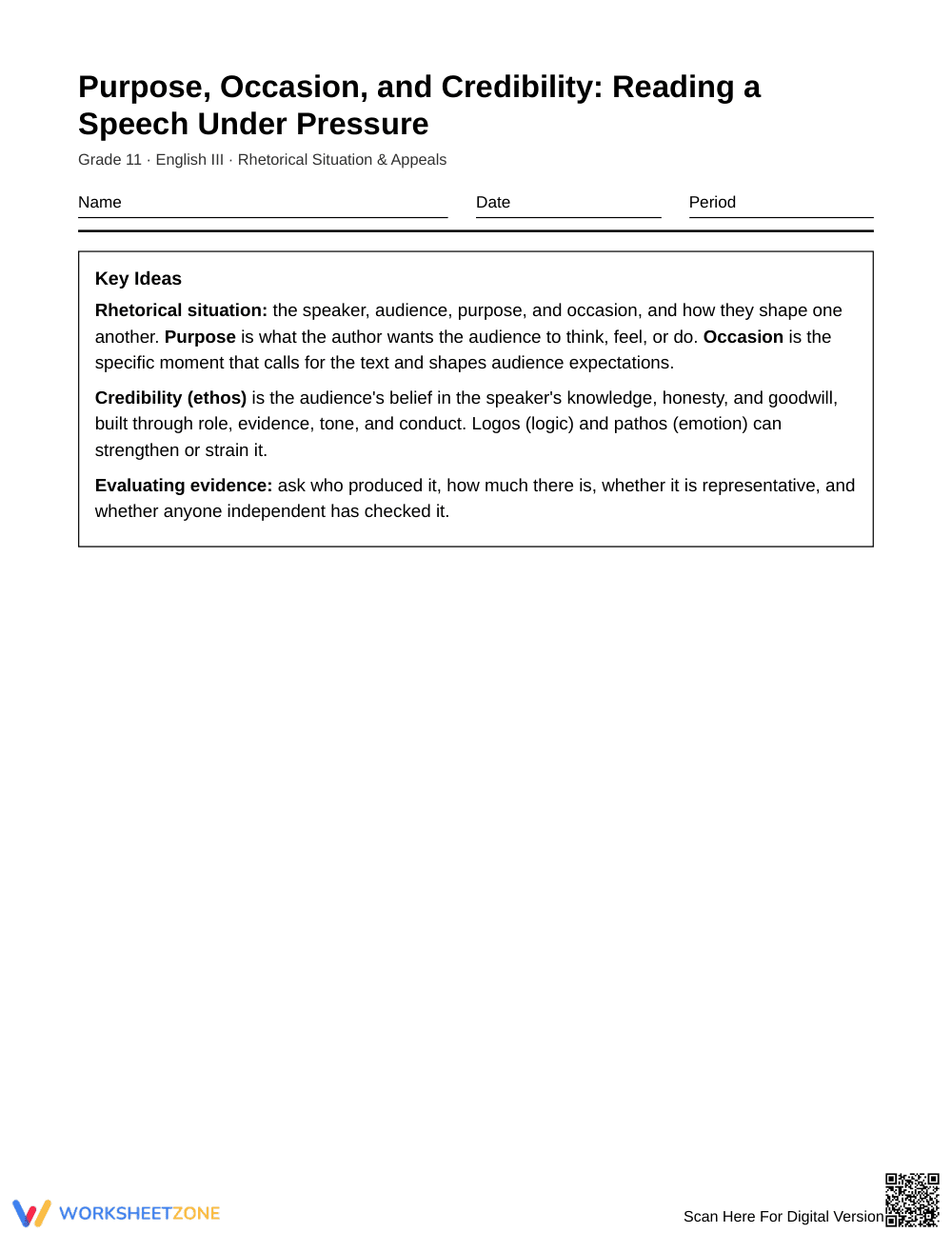
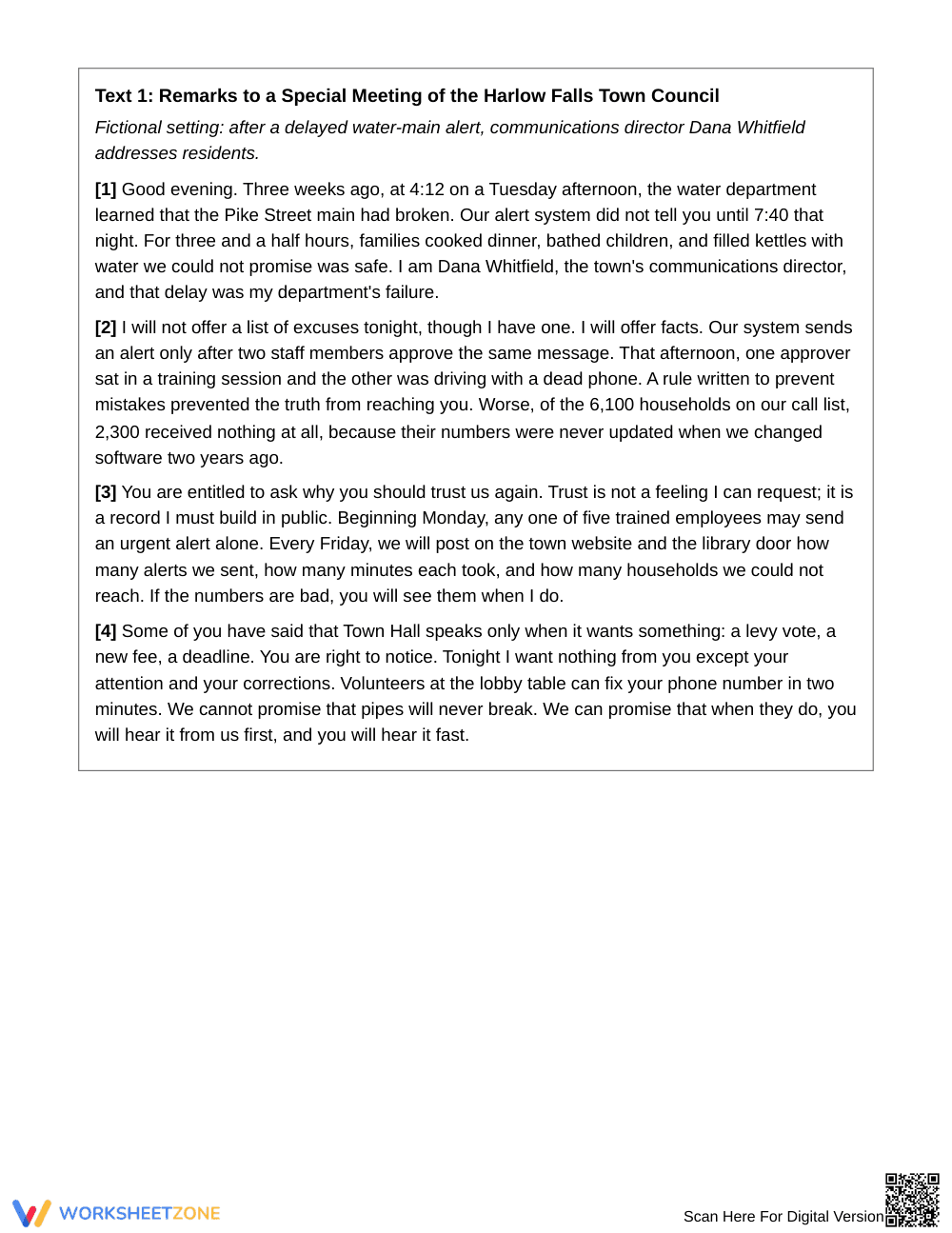
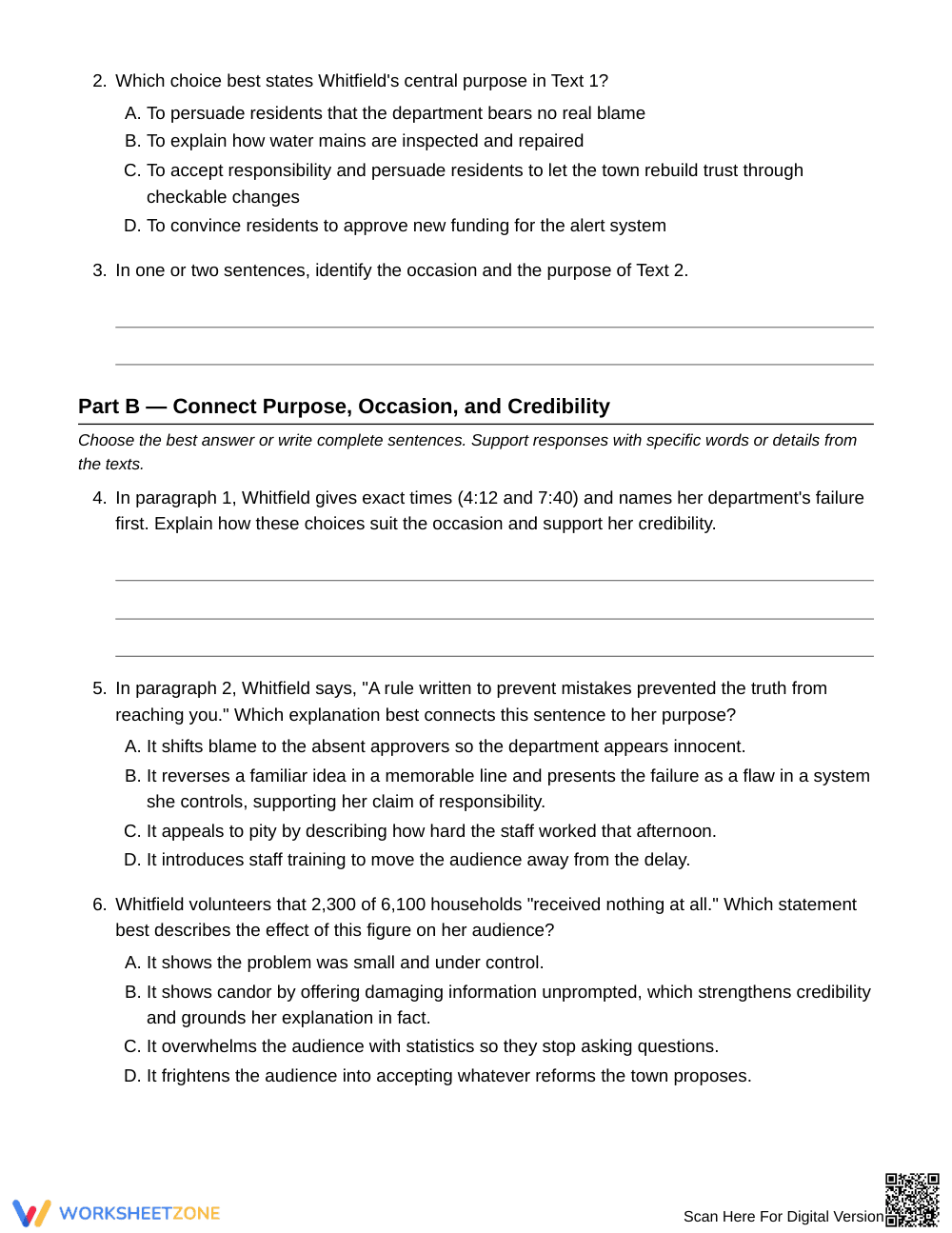
Twelve tasks sit across 6 pages: multiple-choice items, short explanations, and extended analytical responses. A Key Ideas box defines rhetorical situation, credibility, and evidence evaluation. Two fictional texts, a council apology and a resident's letter, use numbered paragraphs for citation. A 3-page answer key and a four-point self-check are included.
Skill Progression
- Guided practice (Part A, 3 tasks): identify the occasion, audience, and purpose, with answer choices and paragraph cues.
- Supported practice (Part B, 6 tasks): explain how specific word choices link purpose, occasion, and credibility, with choices and prompts.
- Independent practice (Part C, 3 tasks): take a position and defend it with evidence from two or more paragraphs.
This sequence follows gradual release: I Do, We Do, You Do.
Standards Alignment
RI.11-12.6: Determine an author's point of view or purpose in a text in which the rhetoric is particularly effective, analyzing how style and content contribute to the power, persuasiveness, or beauty of the text. The standard code can be copied directly into lesson plans, IEP goals, or district curriculum mapping tools.
How to Use It
- After direct instruction on ethos, logos, and pathos: complete Part A together, then assign Parts B and C.
- During a rhetoric unit as a formative check: students work independently.
Observation tip: listen for students who explain why a detail works instead of only naming an appeal. Expect 40–50 minutes.
Who It's For
Built for Grade 11 English III students, including those preparing for argument analysis on state tests. Multiple-choice items in Parts A and B support students who need structure, while Part C stretches stronger writers. Pair it with a rhetorical-appeals anchor chart or a mini-lesson on evaluating evidence.
RI.11-12.6 asks Grade 11 students to analyze how a speaker's style and content make a text persuasive. This worksheet, Purpose, Occasion, and Credibility: Reading a Speech Under Pressure, builds that skill through 12 tasks across 6 pages, pairing a fictional town council apology with a skeptical letter to the editor. Students identify the occasion and purpose, explain how specific word choices build credibility, and defend a position about whether the speech succeeds. The structure follows the gradual release of responsibility model described by Fisher & Frey (2014), moving from identification to explanation to independent justification. A 3-page answer key supports quick scoring and feedback. Teachers can use the worksheet in English III units on rhetorical situation and appeals, or in any course teaching argument analysis, to give students repeated practice citing paragraph numbers and explaining why a rhetorical choice works.


