




























Ready Gametes & Cross Outcomes Worksheet | Grade 9 Biology
Paste this activity's link or code into your existing LMS (Google Classroom, Canvas, Teams, Schoology, Moodle, etc.).
Students can open and work on the activity right away, with no student login required.
You'll still be able to track student progress and results from your teacher account.
This Grade 9 biology worksheet equips students to master gamete formation and Mendelian cross outcomes through rigorous probability calculations. Learners distinguish between alleles and gametes, calculate genotypic and phenotypic ratios in monohybrid crosses, and evaluate experimental data against theoretical models across 12 structured tasks designed for conceptual understanding and quantitative precision.
At a Glance
- Grade: 9 · Subject: Biology
- Standard: Mendelian Genetics — Predict offspring genotypes and phenotypes using alleles and probability
- Skill Focus: Gametes and Cross Outcomes
- Format: 4 pages · 12 problems · Answer key included · PDF
- Best For: High school genetics practice and review
- Time: 45–55 minutes
What's Inside
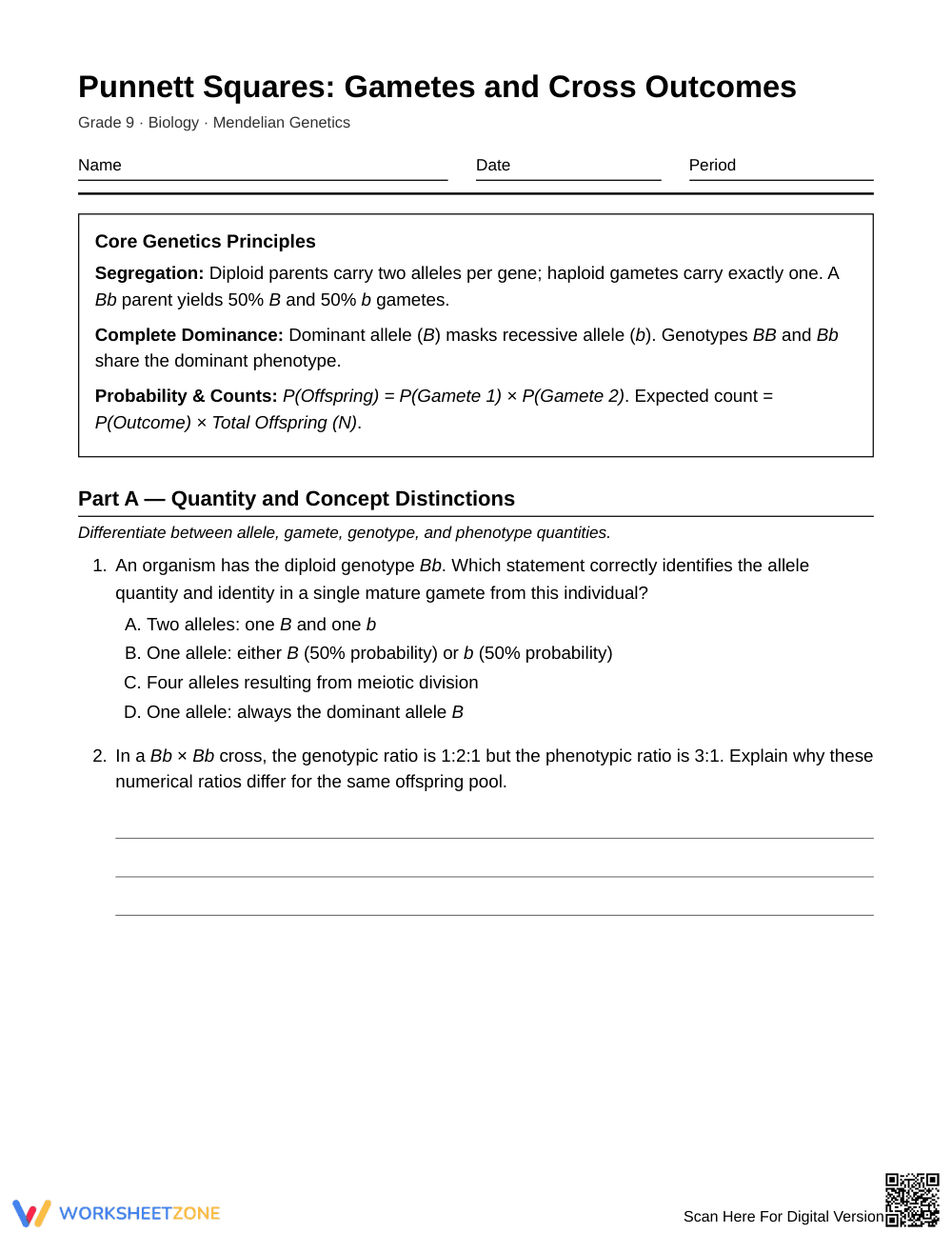
The 4-page activity contains 12 multi-part items anchored by a Core Genetics Principles reference box outlining segregation, complete dominance, and probability formulas. Students work through multiple-choice conceptual checks, Punnett square constructions, ratio deductions from sample counts, and multi-step word problems involving synthetic botanical datasets, supported by a comprehensive 3-page answer key.
Skill Progression
- Guided Practice (Part A, Problems 1–4): Scaffolds core terminology, targeting distinctions between diploid genotypes and haploid gametes alongside probability misconceptions with conceptual prompts.
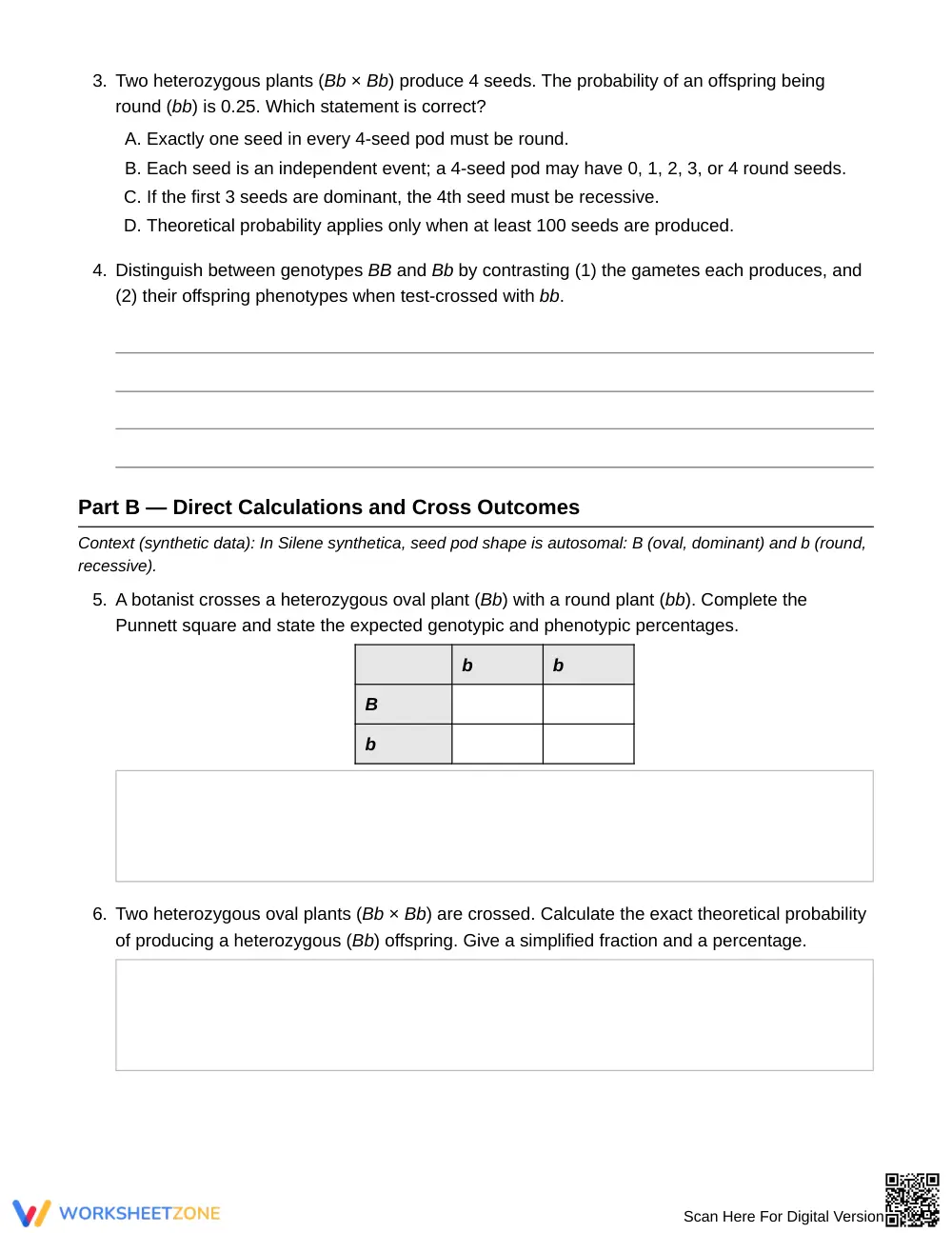
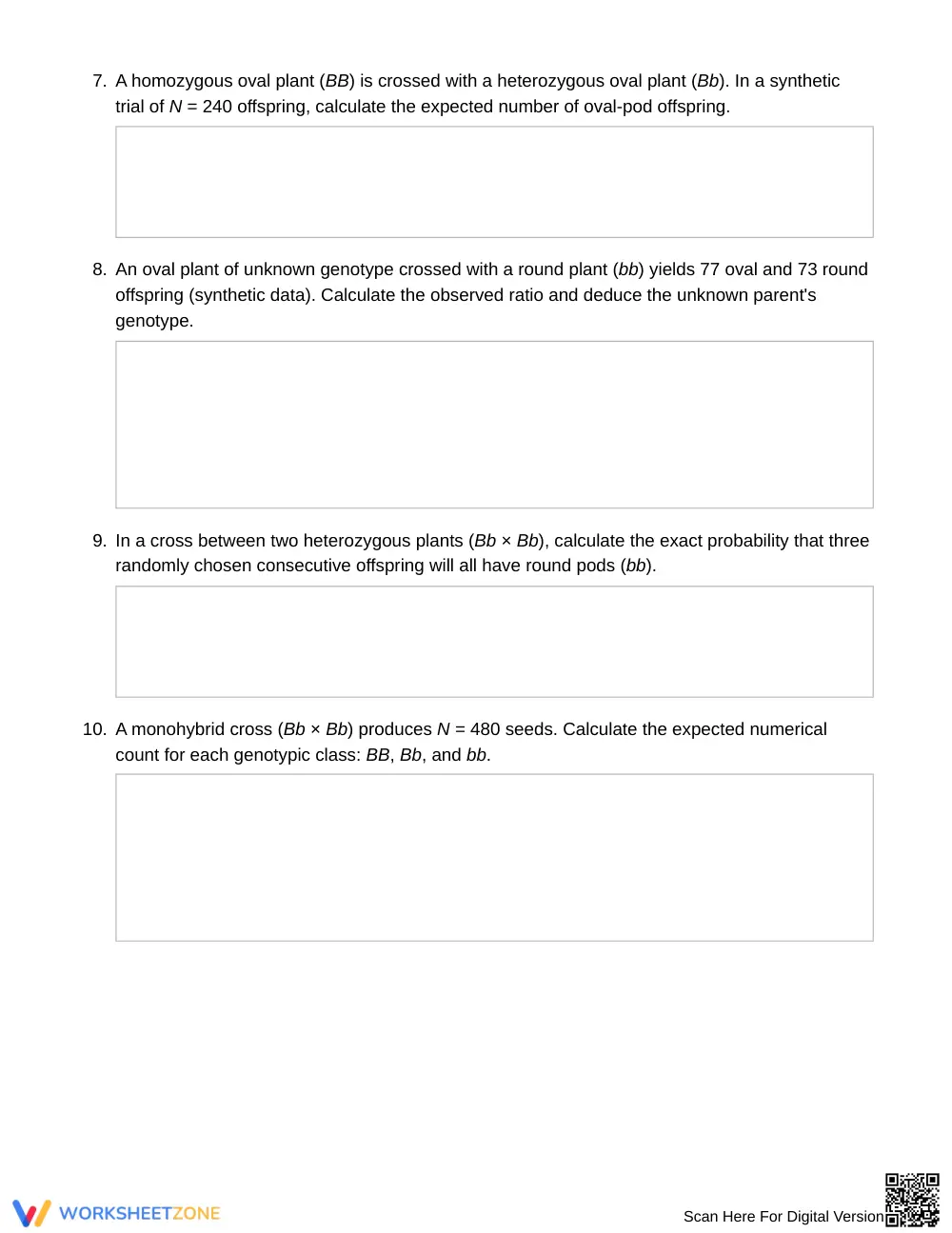
- Supported Practice (Part B, Problems 5–10): Guides students through direct Punnett square calculations, theoretical offspring percentages, and expected population counts using realistic synthetic trials.
- Independent Practice (Part C, Problems 11–12): Demands critical model evaluation, requiring students to assess sample size anomalies and propose biological explanations for skewed empirical ratios.
This sequence embodies the gradual-release framework, transitioning students from foundational allele identification to autonomous statistical analysis.
Standards Alignment
This resource aligns with high school life science standards addressing inheritance and variation of traits: students use conceptual and mathematical models to explain how parent genotypes segregate into gametes and combine to determine offspring phenotypes. Both standard codes can be copied directly into lesson plans, IEP goals, or district curriculum mapping tools.
How to Use It
Deploy this worksheet after direct instruction on meiosis and monohybrid Punnett squares. As a mid-unit formative check, assign Parts A and B during class (25–30 minutes) and use Part C as an exit evaluation. For formative assessment, observe whether students confuse individual offspring probability with fixed litter ratios in Part A. Total expected completion time is 45 to 55 minutes.
Who It's For
Built for Grade 9 General and Honors Biology students, this worksheet offers structured scaffolding for developing quantitative thinkers while challenging advanced students with probability evaluation. Provide struggling learners with extra Punnett square grids, and pair this resource with a hands-on coin-tossing allele segregation lab or interactive chromosome modeling lesson.
According to Fisher & Frey (2014), structured instructional design that moves deliberately from conceptual differentiation to independent evaluation significantly deepens secondary science comprehension. This worksheet applies that gradual-release architecture to Mendelian genetics, guiding Grade 9 students through the calculation of gametes and cross outcomes. By isolating haploid allele segregation before demanding multi-step phenotypic probability calculations, the resource prevents common conflations between individual event probability and deterministic population counts. Students apply mathematical thinking to synthetic botanical datasets, progressing from simple monohybrid Punnett squares to rigorous model evaluation involving sample size limitations and experimental bias. Research on deliberate practice indicates that pairing concise reference principles with immediate numerical application enhances schema acquisition in molecular and classical genetics. This design provides educators with an actionable diagnostic tool to ensure mastery of inheritance patterns before advancing toward dihybrid crosses or complex non-Mendelian traits.


