


























Views
Downloads



Ready Changed Constraints Worksheet | Grade 11 English III
Paste this activity's link or code into your existing LMS (Google Classroom, Canvas, Teams, Schoology, Moodle, etc.).
Students can open and work on the activity right away, with no student login required.
You'll still be able to track student progress and results from your teacher account.
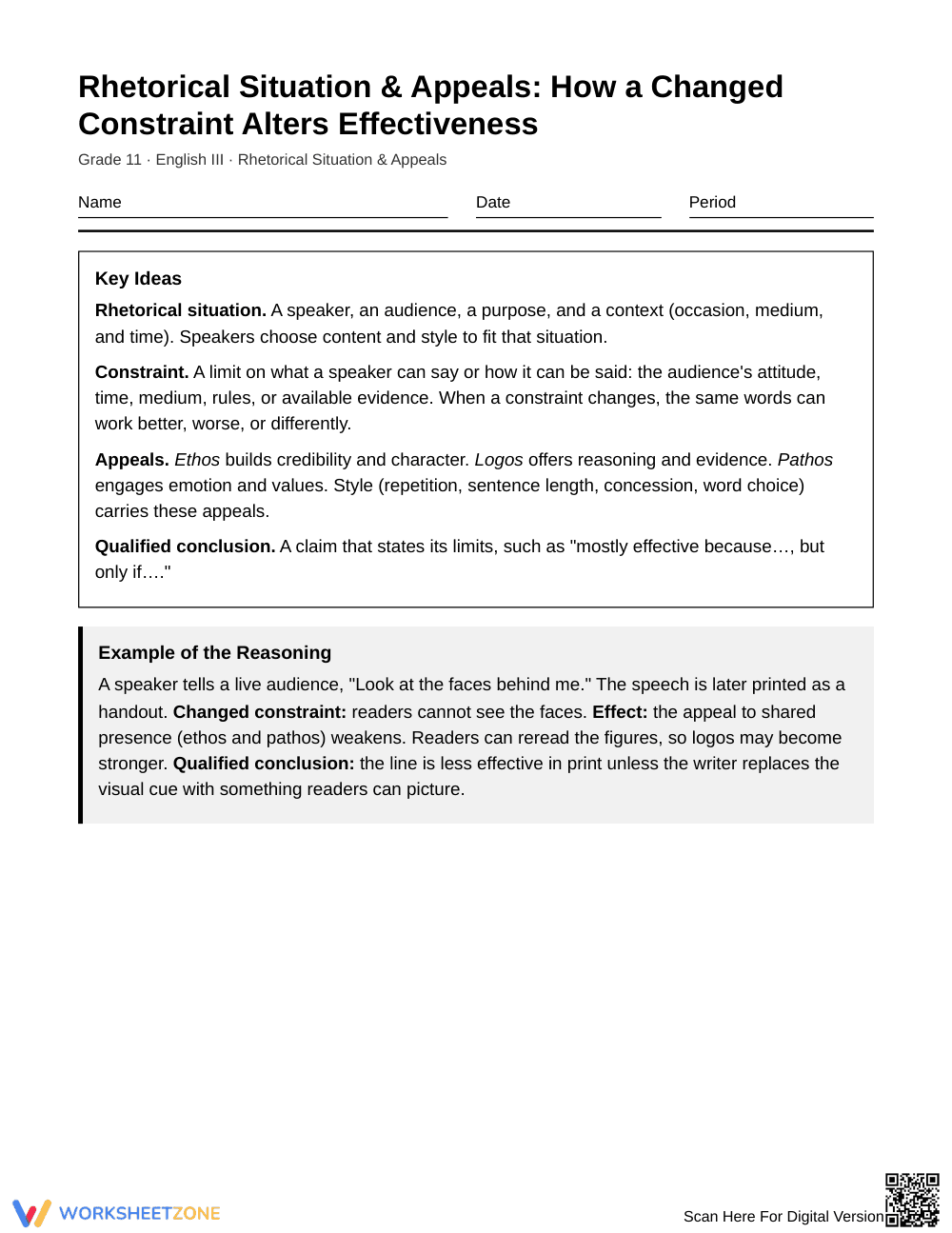
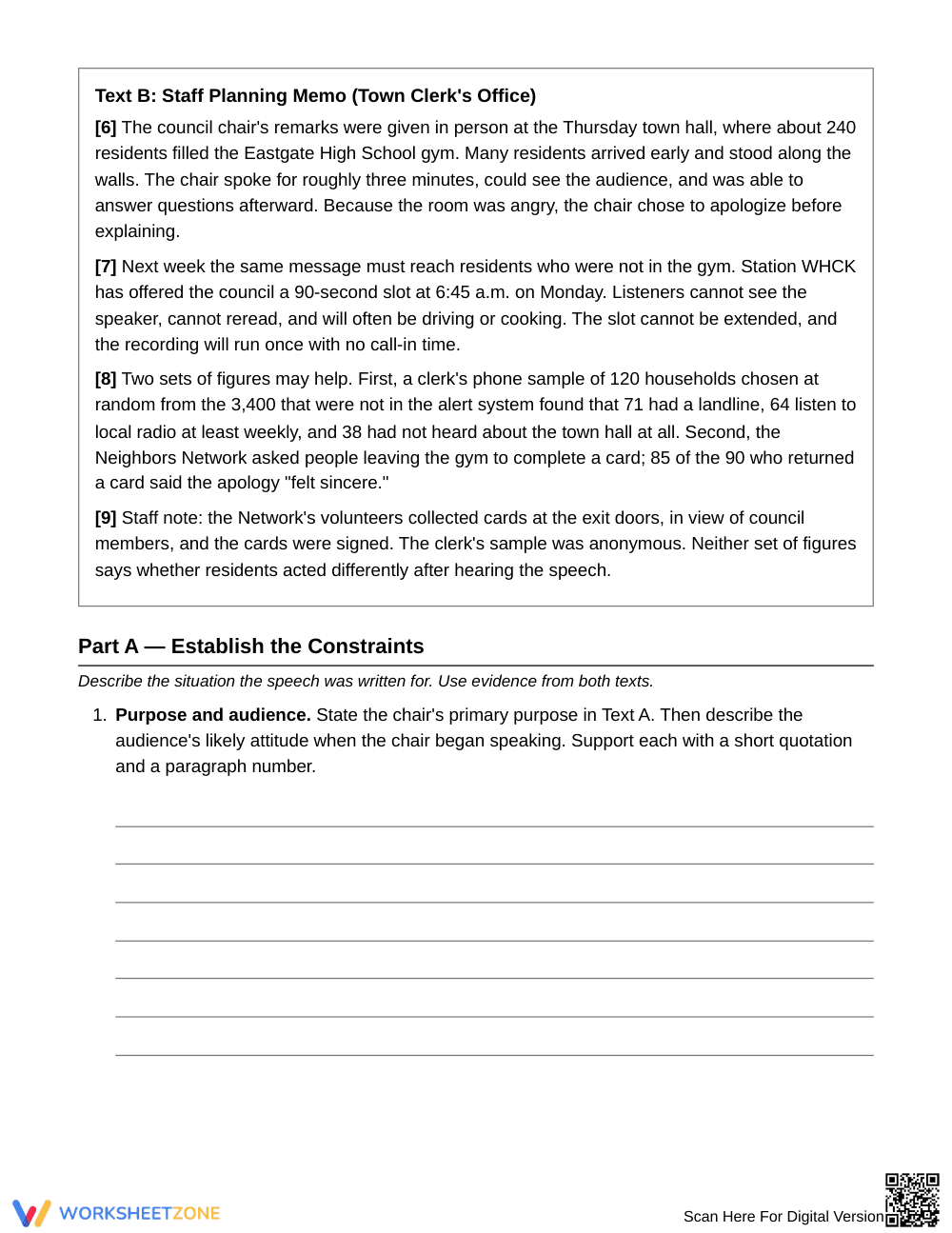
This worksheet teaches Grade 11 students to explain how a changed constraint alters a speech's effectiveness. Using a town hall apology and a radio-slot memo, students compare two rhetorical situations, test revision choices, and defend qualified conclusions about ethos, logos, and pathos with cited evidence.
At a Glance
- Grade: 11 · Subject: English III
- Standard: Rhetorical situation and appeals — explain how a changed constraint shifts a speech's effectiveness
- Skill Focus: Explaining how a changed constraint alters effectiveness
- Format: 6 pages · 8 problems · Answer key included · PDF
- Best For: Rhetorical analysis practice after direct instruction
- Time: 50–70 minutes
What's Inside
Students read two fictional texts: a five-paragraph town hall speech excerpt (Text A) and a staff planning memo (Text B), both numbered by paragraph for citation. A Key Ideas box and a worked example come before eight tasks in three parts: two that establish constraints (including one multiple-choice item), four that test alternatives, and two qualified-conclusion paragraphs. The set runs 6 pages, followed by a 3-page answer key.
Skill Progression
- Guided practice (Part A, 2 tasks): Students identify purpose, audience, and the shaping constraint, supported by the worked example and a multiple-choice item.
- Supported practice (Part B, 4 tasks): Each task changes one constraint or revision choice (a cut, a reorder, a visual appeal, new evidence). Students decide what changes and what stays the same.
- Independent practice (Part C, 2 tasks): Students write organized paragraphs with a qualified claim and cited evidence, with no scaffold beyond the stated requirements.
The sequence follows gradual release: I Do (worked example), We Do (Parts A and B), You Do (Part C).
Standards Alignment
Focus skill: evaluating how a speaker's choices of content, style, and appeal fit the rhetorical situation, and how a change in audience, medium, or time alters that fit. Supporting skill: citing specific textual evidence by paragraph number. No standard code is listed for this worksheet, so add your state or district code when mapping it to lesson plans.
How to Use It
Use it after direct instruction on appeals: assign Part A in class, then Part B in pairs. Or use it as a post-unit check by assigning Part C independently. Formative tip: watch whether students name a constraint before judging effectiveness. Weaker responses label an appeal without saying what changed. Expect 50–70 minutes, or split it into two 30-minute sessions.
Who It's For
Grade 11 English III students who can already identify ethos, logos, and pathos and are ready to judge effectiveness. For extra support, assign Part A and two Part B tasks first. For extension, ask students to draft a full radio version. Pair it with an anchor chart on the rhetorical situation.
This Grade 11 English III worksheet addresses the skill of explaining how a changed constraint alters a speech's effectiveness within the rhetorical situation and appeals unit. Students read a fictional town hall apology and a staff memo describing a 90-second radio slot, then identify constraints, test four revision proposals, and write two qualified conclusions that name an appeal, a condition, and cited paragraph evidence. The design follows the gradual-release model described by Fisher & Frey (2014), in which teachers move from modeling to guided practice to independent application. Eight tasks over six pages, plus a three-page answer key, give teachers a compact way to see whether students can move beyond labeling ethos, logos, and pathos to judging how audience, medium, time, and evidence limits change what a speech can accomplish. It suits classroom practice, writing conferences, and assessment preparation.


