


























Views
Downloads


Ready Aerobic & Fermentation Worksheet | Grade 10 Biology
Paste this activity's link or code into your existing LMS (Google Classroom, Canvas, Teams, Schoology, Moodle, etc.).
Students can open and work on the activity right away, with no student login required.
You'll still be able to track student progress and results from your teacher account.
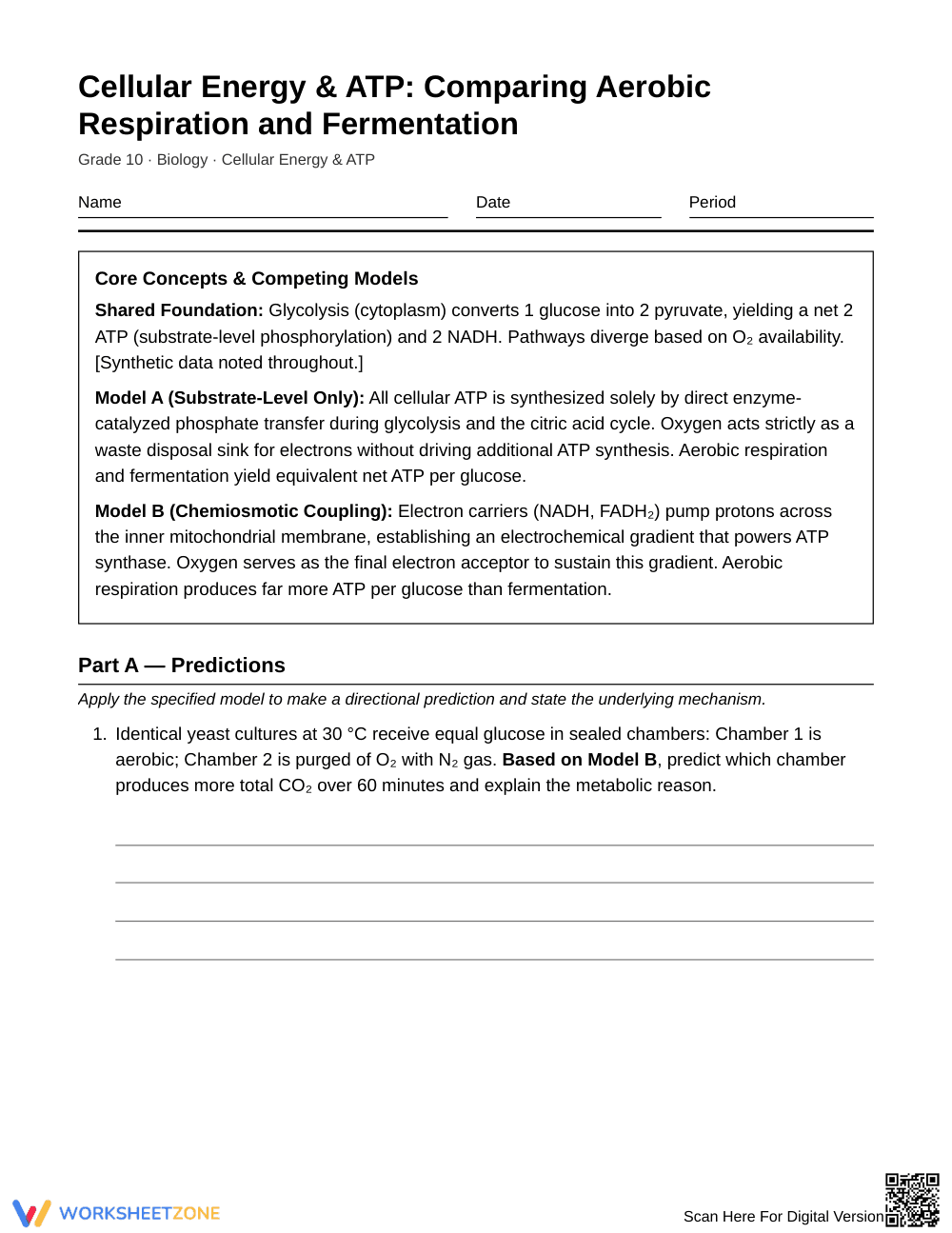
This high school biology worksheet guides students to compare aerobic respiration and fermentation through evidence-based model evaluation. Learners analyze metabolic mechanisms, predict energetic outcomes under shifting oxygen levels, and evaluate synthetic laboratory data to contrast substrate-level phosphorylation with chemiosmotic coupling across 10 analytical problems.
At a Glance
- Grade: 10 · Subject: Biology
- Standard: Cellular Respiration — Compare aerobic and anaerobic pathways using biological models and biochemical evidence
- Skill Focus: Compare Aerobic and Fermentation Models
- Format: 5 pages · 10 problems · Answer key included · PDF
- Best For: Mid-unit biochemical energetic model analysis practice
- Time: 40–50 minutes of instructional work
What's Inside
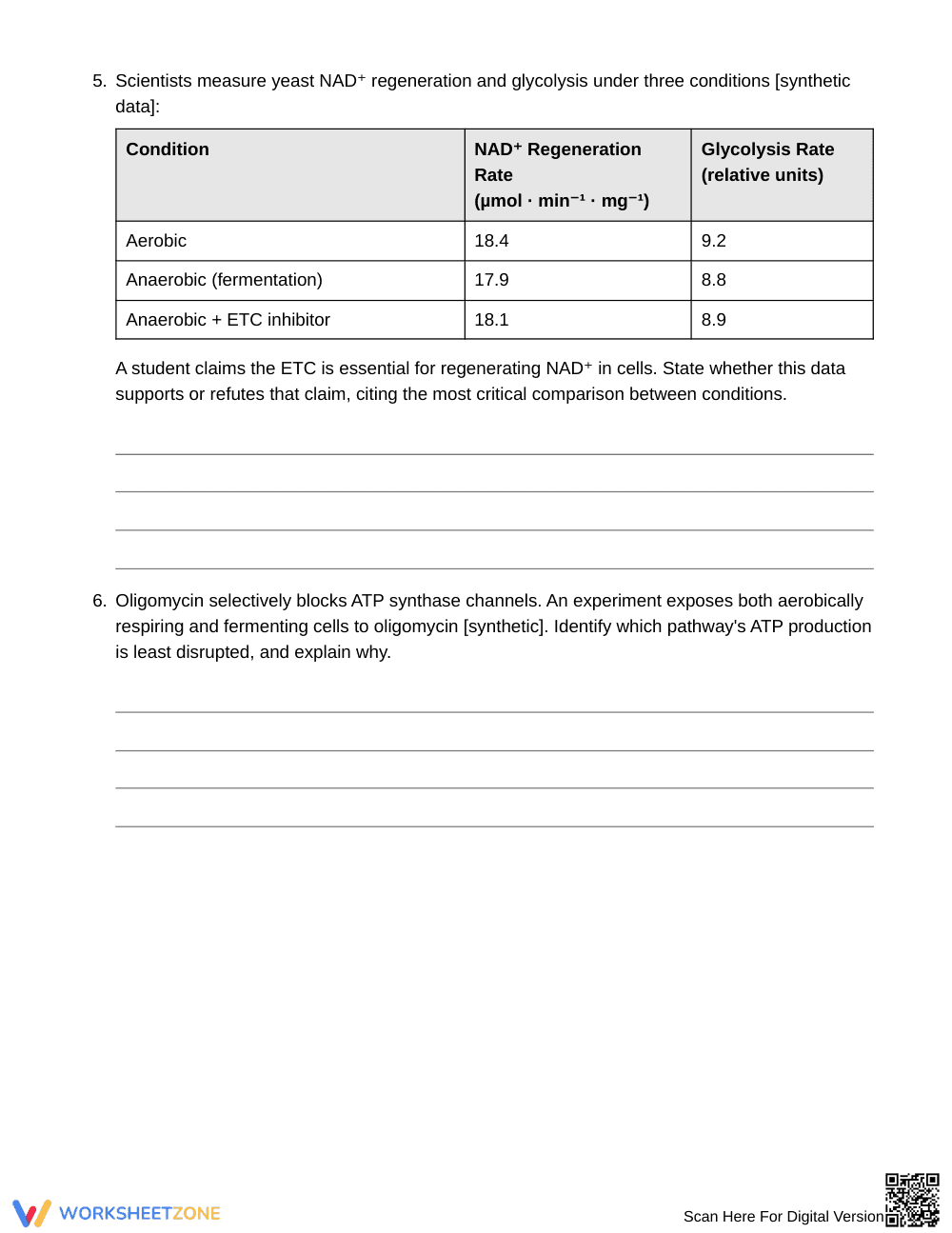
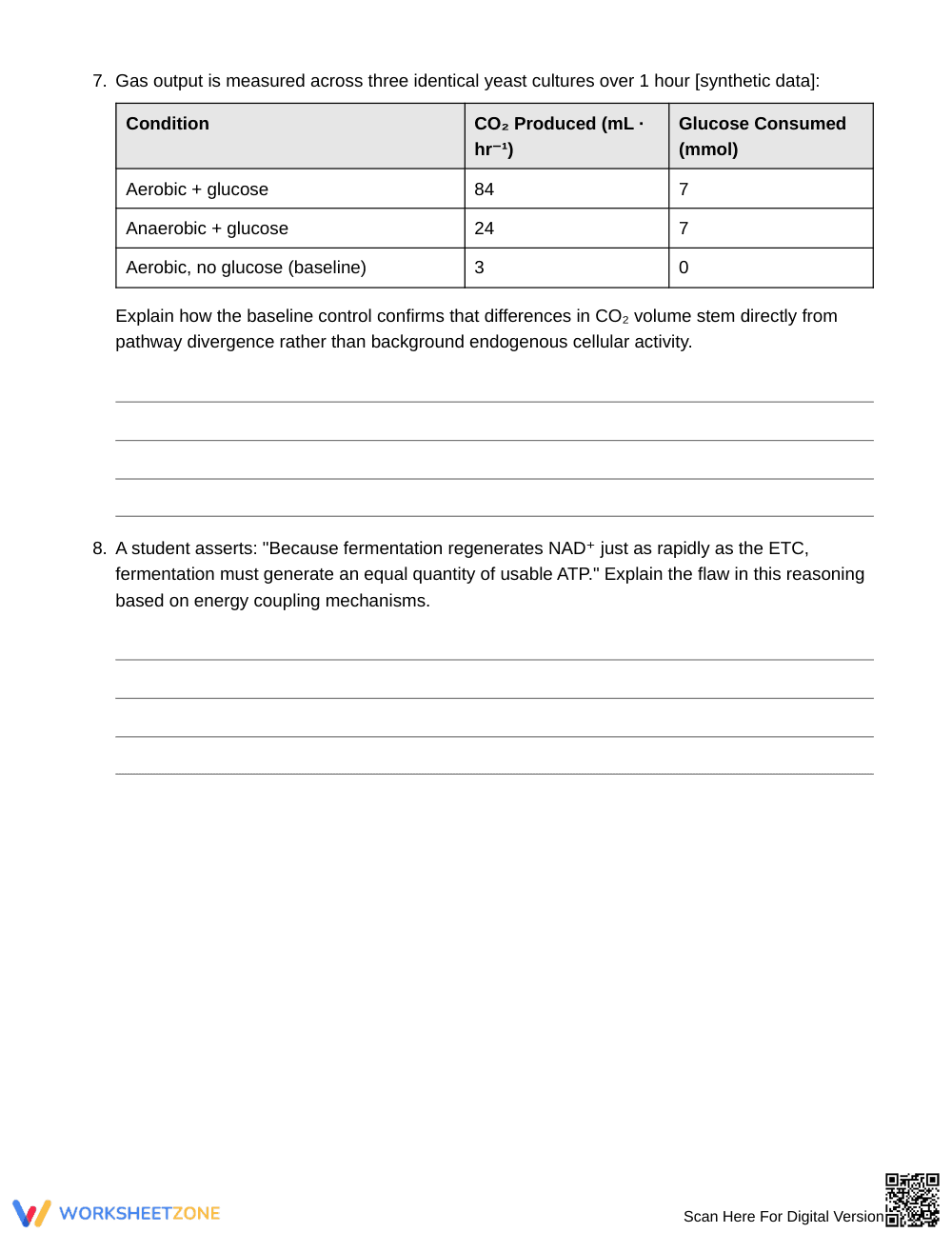
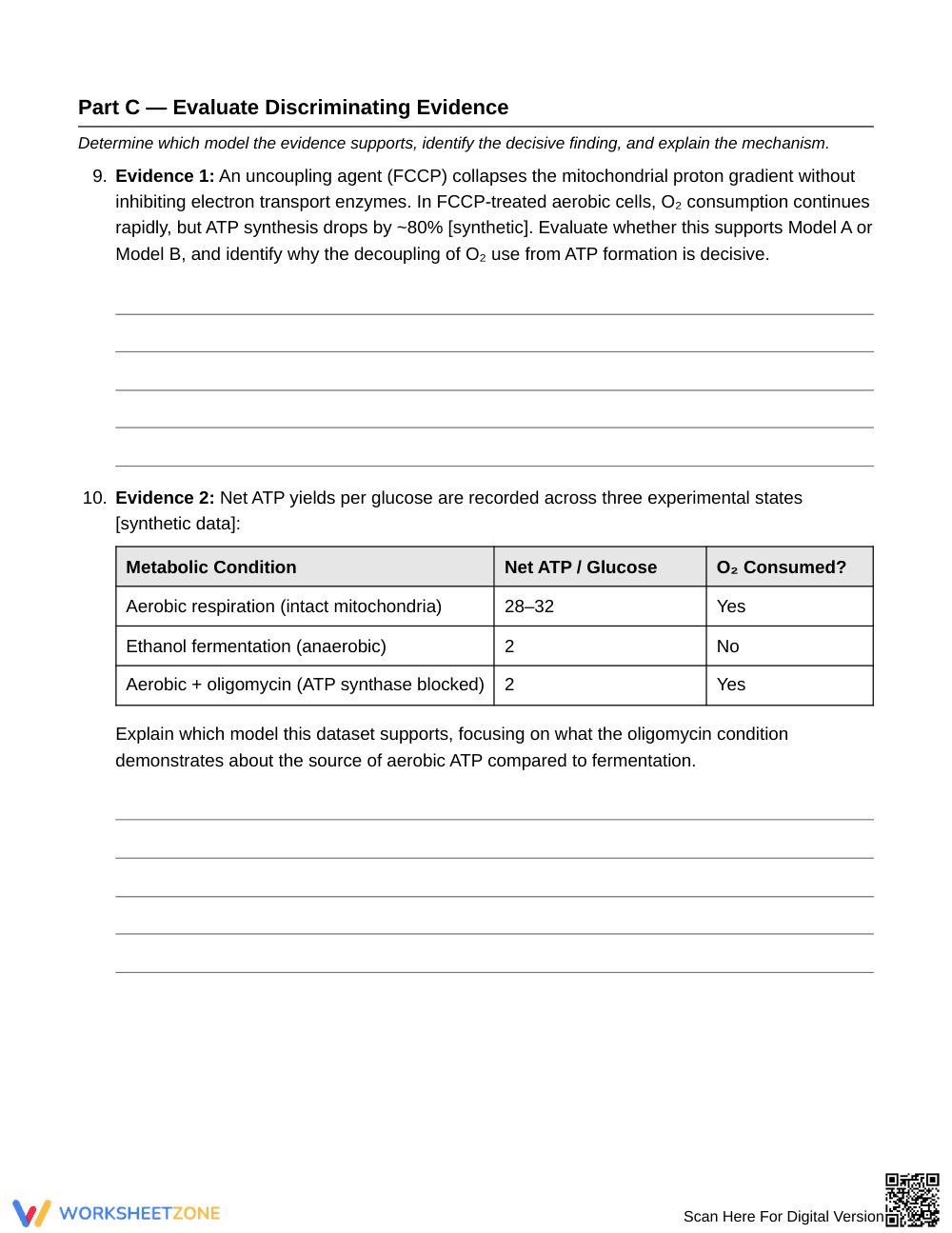
This 5-page resource includes two student pages featuring 10 structured items and a 3-page teacher answer key. Students contrast Model A (substrate-level phosphorylation only) and Model B (chemiosmotic coupling) through quantitative tables covering gas output, NAD⁺ regeneration rates, and inhibitor assays.
Skill Progression
- Guided practice (Tasks 1–2): Students apply theoretical models to predict directional changes in carbon dioxide and muscle ATP production under oxygen shifts.
- Supported practice (Tasks 3–8): Students evaluate variables, identify negative controls, and interpret data tables comparing NAD⁺ regeneration and glycolysis with moderate scaffolding.
- Independent practice (Tasks 9–10): Students evaluate complex data involving uncoupling agents (FCCP) and oligomycin to independently validate chemiosmotic coupling.
This sequence follows the gradual-release framework (I Do, We Do, You Do) to build independent data interpretation.
Standards Alignment
This activity aligns with high school biology standards for cellular energy transformation: construct an explanation based on evidence for how cellular respiration produces ATP through chemical bond rearrangements. Students evaluate aerobic and anaerobic pathways using biochemical evidence. Both standard codes can be copied directly into lesson plans, IEP goals, or district curriculum mapping tools.
How to Use It
Assign this worksheet after direct instruction on cellular respiration. First, use Part A during guided practice to check predictions before introducing data. Second, assign Parts B and C for independent or paired data analysis. During work, check if students misattribute oligomycin inhibition to glycolysis rather than ATP synthase. Expected completion time is 40 to 50 minutes.
Who It's For
This worksheet serves Grade 10 biology students studying bioenergetics. For struggling learners, provide an annotated diagram showing where substrate-level phosphorylation occurs relative to the electron transport chain. Pair this assignment with a lab on yeast fermentation or an interactive respiration simulation.
Mastering cellular respiration requires students to distinguish how biochemical energy pathways diverge based on molecular oxygen availability. According to Fisher & Frey (2014), student learning accelerates when guided instructional modeling transitions into evidence-based claims where learners interpret authentic quantitative representations. This Grade 10 biology resource targets model evaluation by prompting students to compare aerobic respiration and fermentation mechanisms across controlled experimental contexts. Rather than relying on simple memorization of chemical equations, learners examine how chemiosmotic coupling and substrate-level phosphorylation yield radically different ATP quantities. Empirical evidence demonstrates that working through explicit variable manipulation, baseline controls, and targeted metabolic disruptions strengthens scientific argumentation skills and solidifies conceptual retention of bioenergetic transformations. By analyzing synthetic inhibitor assays alongside rate data, students build deep disciplinary literacy that connects cellular mechanisms directly to overarching high school life science energy standards.


