


























Views
Downloads
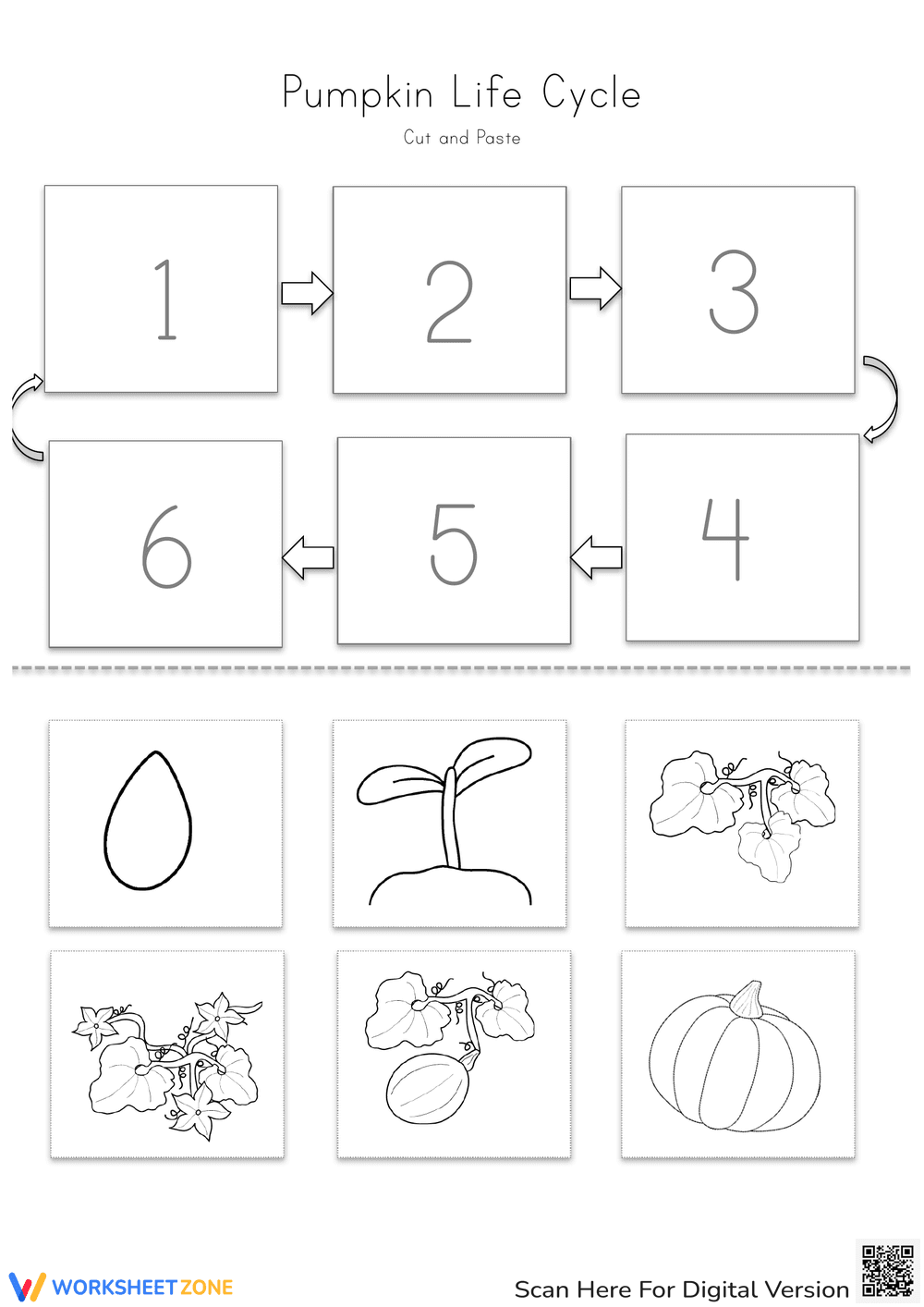

Pumpkin Life Cycle Worksheet | Grade 3 Essential
Paste this activity's link or code into your existing LMS (Google Classroom, Canvas, Teams, Schoology, Moodle, etc.).
Students can open and work on the activity right away, with no student login required.
You'll still be able to track student progress and results from your teacher account.
This Grade 3 pumpkin life cycle worksheet helps students visualize and sequence the biological stages of a plant's growth. By identifying and ordering six distinct phases from seed to mature fruit, learners develop a concrete understanding of life science patterns. This activity ensures students can explain how organisms grow and change over time through hands-on interaction.
At a Glance
- Grade: 3 · Subject: Science
- Standard:
3-LS1-1— Develop models to describe that organisms have unique and diverse life cycles- Skill Focus: Sequencing biological growth stages
- Format: 1 page · 6 problems · Answer key included · PDF
- Best For: Independent practice or science centers
- Time: 15–20 minutes
The resource features a clear, circular flow chart numbered 1 through 6, providing a visual scaffold for the sequencing task. Below the main diagram, students find six high-quality illustrations representing the seed, sprout, vine, flower, green pumpkin, and mature orange pumpkin. The layout is optimized for clean cutting and pasting, with a dedicated answer key for quick grading.
The zero-prep workflow is designed for maximum efficiency in busy classrooms. First, print the single-page PDF for your class in under 30 seconds. Second, distribute the sheets along with scissors and glue sticks, taking about 1 minute. Third, review the completed cycles as a whole group to reinforce vocabulary like germination and pollination in roughly 5 minutes. This makes it an ideal choice for emergency sub plans or Friday science blocks.
This activity is directly aligned with `3-LS1-1`. Students develop a model to describe the commonalities in life cycles, specifically focusing on growth and development. By physically moving the stages into the correct order, they demonstrate mastery of chronological biological events. This standard code can be copied directly into lesson plans, IEP goals, or district curriculum mapping tools.
Use this worksheet as a formative assessment after a read-aloud about autumn harvests. It works well during the elaborate phase of a 5E lesson plan. Teachers should observe if students can distinguish between the flowering stage and the initial fruit growth. Expect most students to complete the cutting, arranging, and pasting within a 15 to 20-minute window.
This resource is designed for Grade 3 students but is highly effective for English Language Learners (ELLs) due to its heavy reliance on visual cues rather than complex text. It pairs naturally with a classroom pumpkin carving activity or a non-fiction passage about plant biology. The tactile nature of the task supports kinesthetic learners who benefit from physical manipulation of concepts.
According to the RAND AIRS 2024 report, hands-on sequencing activities significantly improve long-term retention of scientific processes in elementary learners compared to passive observation. This worksheet utilizes the 3-LS1-1 standard to ground student learning in observable biological phenomena. By requiring students to manipulate the six stages of the pumpkin life cycle—seed, sprout, vine, flower, green fruit, and mature fruit—the activity builds a mental model of growth and reproduction. Research indicates that integrating fine motor skills with conceptual science content helps bridge the gap between abstract cycles and physical reality. This specific resource provides the structured practice necessary for students to meet state and national science benchmarks. Educators can rely on this evidence-based approach to ensure that foundational life science concepts are mastered before moving on to more complex ecological interactions or genetic studies in later grades. This summary confirms the worksheet's utility for standards-aligned instruction.


