


























Views
Downloads
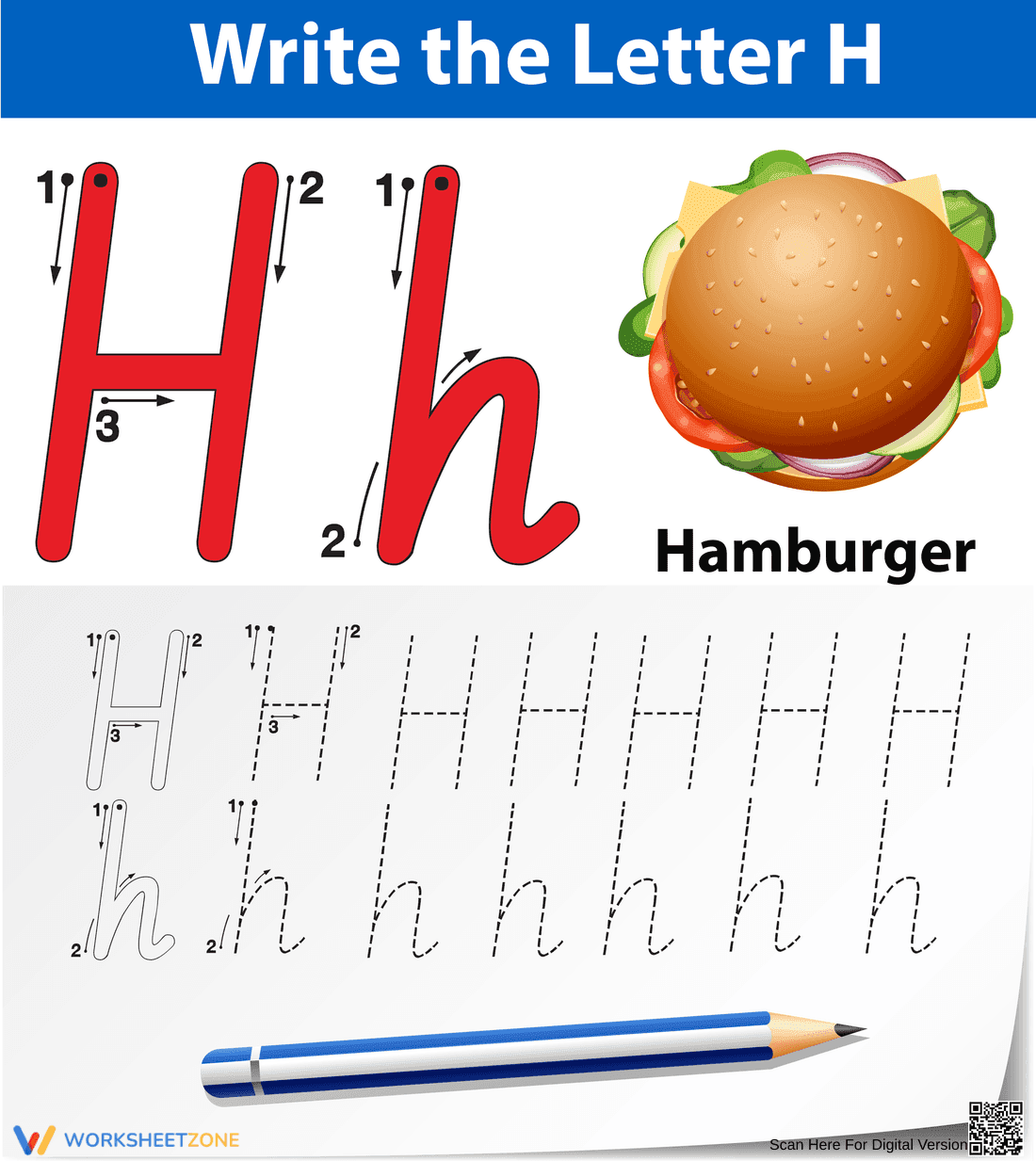

Printable Cursive Letter H Tracing Worksheet | Grade K-1
Paste this activity's link or code into your existing LMS (Google Classroom, Canvas, Teams, Schoology, Moodle, etc.).
Students can open and work on the activity right away, with no student login required.
You'll still be able to track student progress and results from your teacher account.
This printable cursive Letter H worksheet provides young learners with a structured path to mastering letter formation. By focusing on both uppercase and lowercase variants, students develop the muscle memory necessary for fluid handwriting. This resource ensures that early writers can confidently transition from simple strokes to complete character recognition and production.
At a Glance
- Grade: Kindergarten · Subject: Handwriting
- Standard:
CCSS.ELA-LITERACY.L.K.1.A— Print many upper- and lowercase letters accurately using proper stroke sequence- Skill Focus: Cursive Letter H formation
- Format: 1 page · 16 problems · Visual stroke guides · PDF
- Best For: Daily morning work or literacy centers
- Time: 10–15 minutes
What's Inside: This single-page PDF features two large, numbered stroke guides for the letter H, providing a clear visual model for students. Below the instructional header, the worksheet contains 16 specific tracing tasks: 8 for uppercase "H" and 8 for lowercase "h." The inclusion of a "Hamburger" illustration serves as a mnemonic device to reinforce the letter-sound connection while keeping young learners engaged.
Zero-Prep Workflow: This resource is designed for immediate classroom implementation with a total teacher preparation time of under 2 minutes. First, print the required number of copies for your cohort (30 seconds). Second, distribute the sheets during your handwriting block or as a quiet transition activity (30 seconds). Finally, review student stroke directionality by circulating the room as they follow the numbered guides (1 minute).
Standards Alignment: The primary focus is CCSS.ELA-LITERACY.L.K.1.A, which requires students to "Print many upper- and lowercase letters." While this worksheet utilizes a cursive style, it supports the foundational goal of legible character production and fine motor control. This standard code can be copied directly into lesson plans, IEP goals, or district curriculum mapping tools to document handwriting progress.
How to Use It: Use this worksheet during the "I Do" phase of direct instruction to demonstrate proper stroke order on an interactive whiteboard. It also serves as an excellent formative assessment tool; observe students as they trace to identify those struggling with grip or directionality. Expect most Kindergarten students to complete the 16 tracing tasks within a 10 to 15-minute window.
Who It's For: This resource is tailored for Preschool, Kindergarten, and Grade 1 students who are beginning their cursive or D'nealian handwriting journey. It is particularly effective for students requiring extra fine motor support. Pair this worksheet with a tactile "sand tray" activity or a Letter H anchor chart to create a comprehensive multi-sensory literacy experience.
Research by Fisher & Frey (2014) emphasizes the importance of the gradual release of responsibility, which is mirrored in the design of this tracing resource. By providing explicit numbered stroke guides followed by 16 opportunities for supported practice, the worksheet facilitates the transition from guided modeling to independent mastery. Handwriting remains a critical component of early literacy, as the physical act of forming letters like the cursive "H" reinforces orthographic mapping in the developing brain. According to the NAEP, students who develop fluent handwriting early are better positioned to focus cognitive resources on higher-level composition tasks in later grades. This worksheet aligns with evidence-based practices by combining visual cues with repetitive motor tasks, ensuring that the standard CCSS.ELA-LITERACY.L.K.1.A is met through high-quality, focused practice. Using these structured tools helps bridge the gap between letter recognition and fluent written expression.


