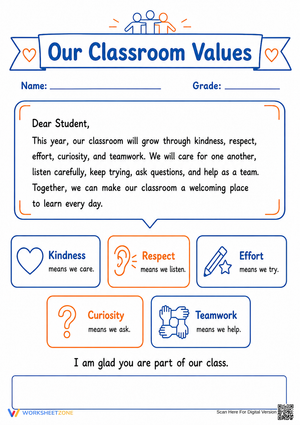
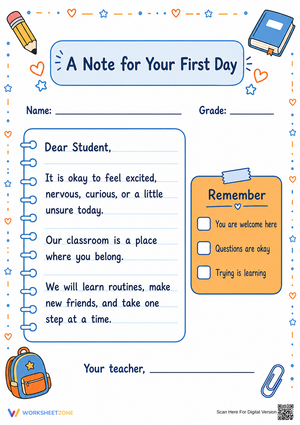
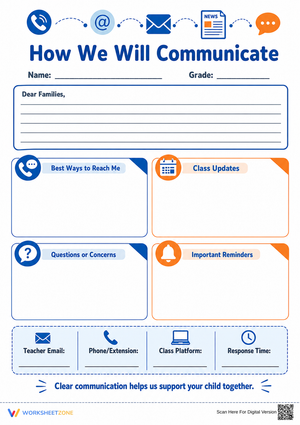
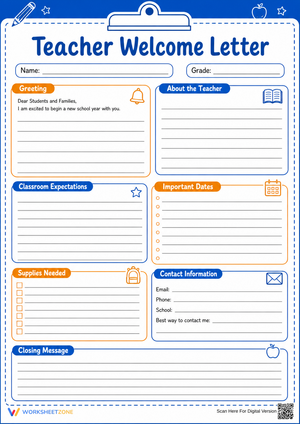
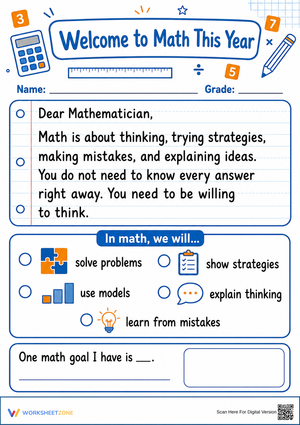
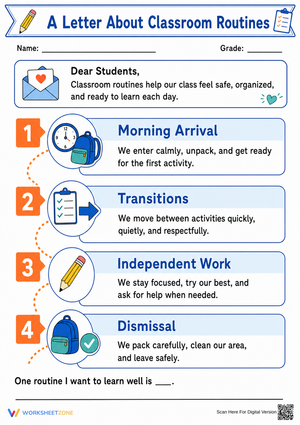
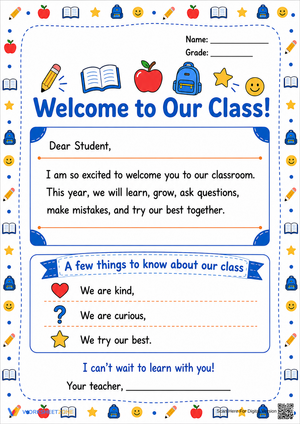
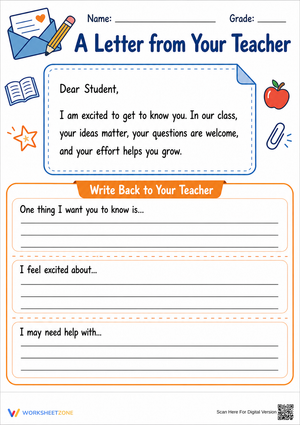
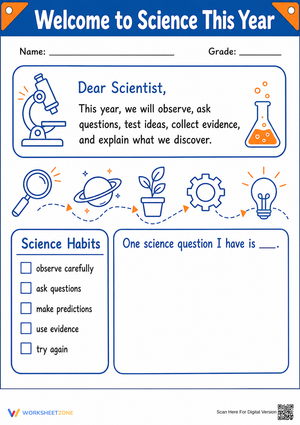
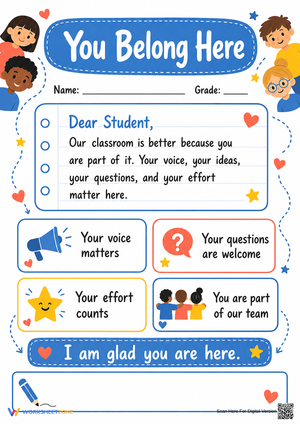
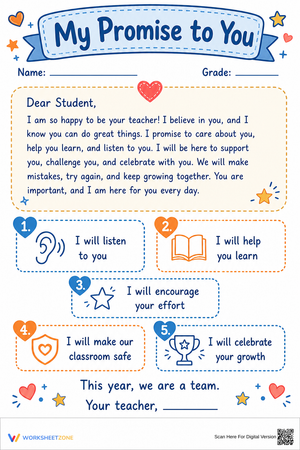
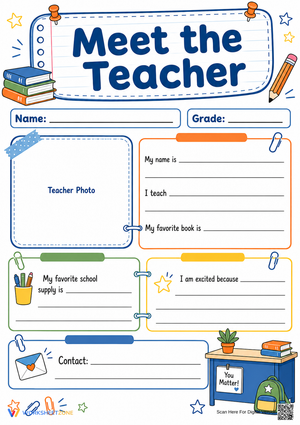
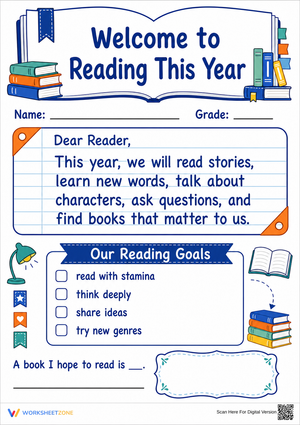
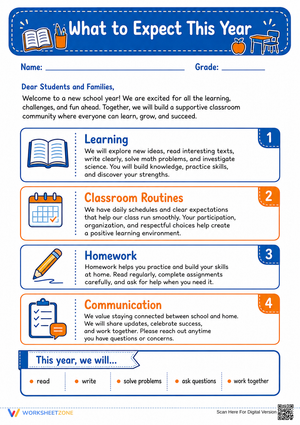
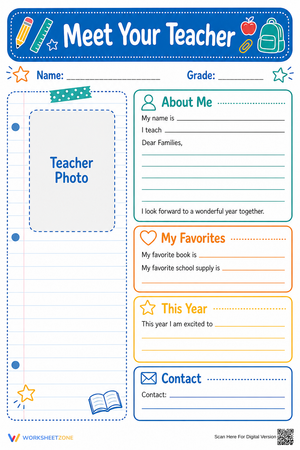
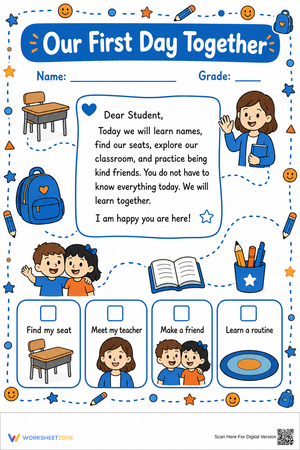
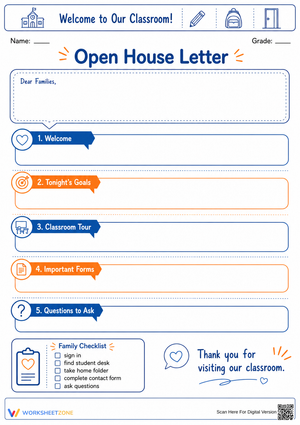
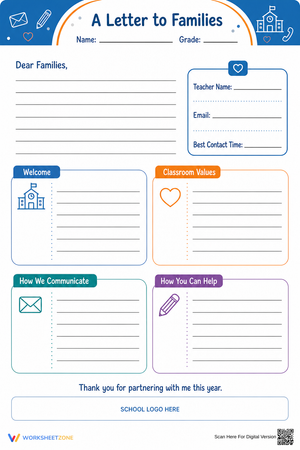
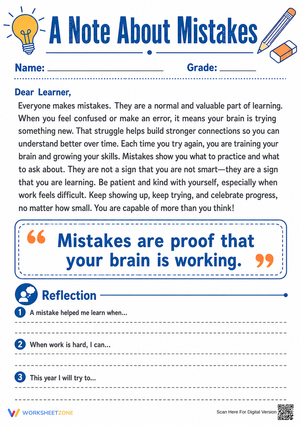
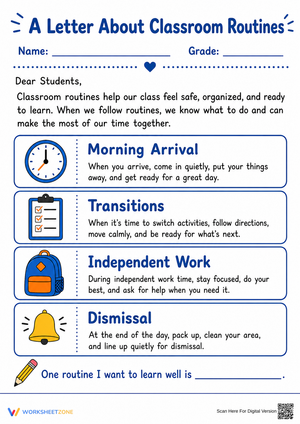
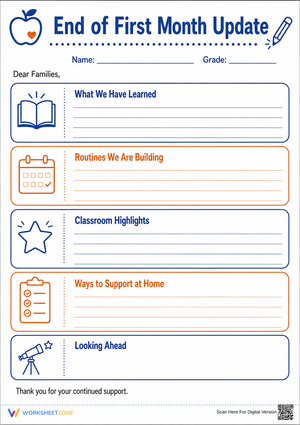
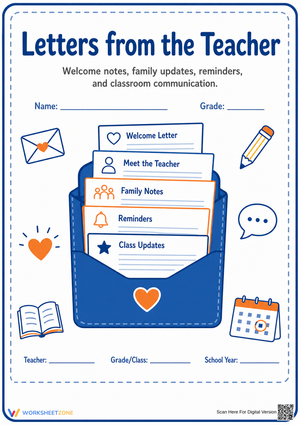
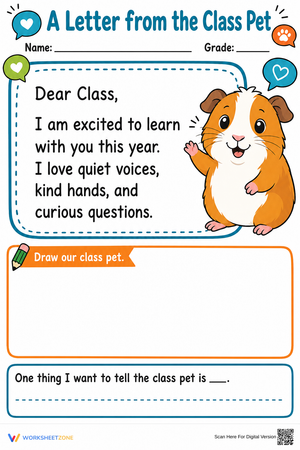
These back to school letter from teacher worksheets pdf give educators a structured starting point for the most-read piece of paper they'll send home all year. Each worksheet is a fill-in format: teachers supply their name, contact hours, educational background, classroom expectations, and a few personal details, then print or email the completed document before orientation night. The set includes a condensed visual layout suited to elementary grades and a longer, prose-forward version for middle and high school courses where grading policies and academic expectations need more room.
What Each Worksheet Contains
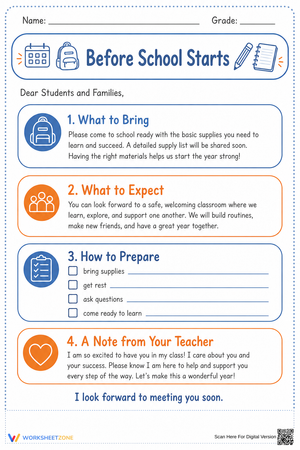
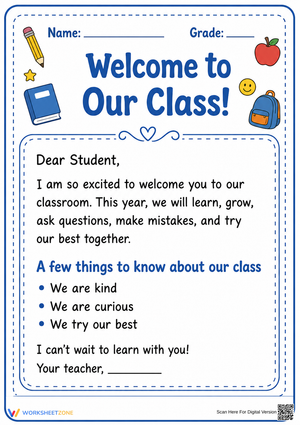
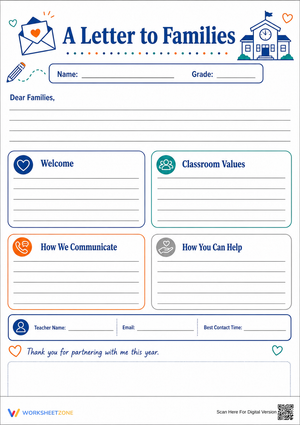
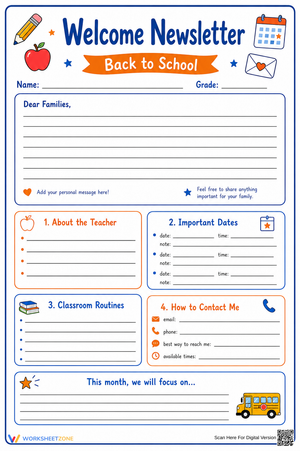
The visual elementary format uses a grid layout with labeled boxes — About Your Teacher, Contact Information, Classroom Expectations, and a short Favorite Things section where teachers jot a favorite book, color, or weekend activity. That last section is not decorative filler; young students often approach the first day with noticeably less anxiety when they know their teacher reads mysteries or keeps a dog named Chester. The secondary-level worksheet shifts to a block structure that walks teachers through a brief professional bio, course overview, grading breakdown, and preferred communication channels. Both worksheets include a rectangular photo placeholder — important because families remember faces, not names, after an open house with seven teachers in ninety minutes.
Why Letter Design Affects Whether Families Actually Read It
Teachers spend real time writing welcome letters, and the most common reason families don't absorb the information is not that they're disengaged — it's that dense paragraphs get skimmed and details about communication hours or grading weights never register. The worksheet's structure counters this with deliberate information hierarchy: high-priority items (phone number, email, office hours) appear in a visually distinct block near the top; secondary context (teaching philosophy, curriculum overview) fills the middle. This mirrors how readers move through a document under time pressure, which describes most parents reviewing first-day paperwork at the kitchen table while also handling dinner. PDF format locks this layout so the hierarchy survives printing on a school copier and forwards intact through a parent communication app.
Common Oversights Worth Catching Before You Hit Print
The most frequent mistake teachers make when completing these worksheets is treating the contact information field as a formality. A generic school phone number without stated hours leaves parents guessing — they call at 7:15 a.m. and again at 4:45 p.m., reach voicemail both times, and stop trying. Fill that block with specifics: "Email before 4 p.m.; I respond same day. Phone calls: leave a voicemail and expect a callback within 24 hours." A second error that surfaces across grade levels is writing the classroom expectations section in the same abstract language from the student handbook — "Students will respect all community members." That phrasing means nothing actionable to a third grader's parent. Replace it with one concrete daily behavior — "Homework is due every Thursday in the blue folder" — and the expectation becomes something families reinforce at home. The back to school letter from teacher worksheets pdf walks teachers through each section with structured prompts, but those prompts work only when teachers treat them as invitations to write specific language rather than slots for boilerplate.
Working These Worksheets Into Your Pre-Year Routine
Most teachers complete the worksheets during the last week of summer, when classroom setup is done but the mental bandwidth for writing from scratch has run out. A fill-in format reduces that work to roughly twenty minutes rather than an hour of staring at a blank document. Print a stack before Meet the Teacher night and place one on each student's desk — when families walk in and see a crisp letter waiting, the room communicates organization before the teacher says a word. For schools without a formal open house, the PDF exports cleanly for email: attach it to your welcome message in the parent communication platform two or three days before the year begins. Keep the completed file on your desktop; next August, updating contact hours or course details takes five minutes. The back to school letter from teacher worksheets pdf holds its formatting whether a parent opens it on a phone, a Chromebook, or a black-and-white school copy that ran through the hallway copier between second and third period.
Adjusting the Templates for Different Grade Levels and Contexts
The elementary worksheet works across K–5, but teachers in the primary grades often need to trim the Expectations section to a single concrete rule rather than a list — "We take care of our materials and each other" lands better with a kindergarten family than three abstract behavioral statements. Third- and fourth-grade teachers can add a short read-aloud recommendation to the Favorite Things box, which connects the personal tone of the letter to the reading curriculum before day one. Middle school teachers covering multiple sections benefit from completing a separate worksheet per course; each takes only a few minutes to adjust, and course-specific language is far more useful to families than a vague overview that fits no subject precisely. High school teachers in AP or dual-enrollment courses repurpose the philosophy block as a condensed course rationale — why the reading load is what it is, and what that rigor produces over a semester. That specificity at the outset reduces the drop-in conversations during the first week about whether the workload is "really this heavy."
Frequently Asked Questions
Should I send the letter before school starts or hand it out on the first day?
Both approaches work, and the right choice depends on whether your school provides contact information before orientation. If you receive a class roster with parent emails in advance, send the completed PDF two or three days before school starts — parents appreciate the early communication and you begin the year with an established message thread. If the roster arrives late, distributing the letter in a take-home folder on the first day is reliable. A Meet the Teacher event is the strongest option when available, because it pairs the document with a face-to-face introduction that families are far more likely to remember.
Can I use these worksheets if I co-teach or share a room?
Each worksheet uses a single-teacher format, but co-teachers complete separate worksheets and staple them together, or use the secondary template's bio section to introduce both names in one block. When two teachers share a room but cover different subjects, separate completed worksheets are clearer — families appreciate knowing exactly who to contact about math versus reading without having to decode a joint document.

How do these print on a standard school copier?
The back to school letter from teacher worksheets pdf uses high-contrast layout elements that reproduce cleanly in black and white. The photo placeholder prints clearly in grayscale. Teachers who want the full color version should plan a quick run on the building's color copier before Meet the Teacher night — the visual difference at an open house is noticeable and worth the extra few minutes at the machine.