




























Views
Downloads


Printable Point of View Word Search | Grades 4–5 ELA

Paste this activity's link or code into your existing LMS (Google Classroom, Canvas, Teams, Schoology, Moodle, etc.).
Students can open and work on the activity right away, with no student login required.
You'll still be able to track student progress and results from your teacher account.
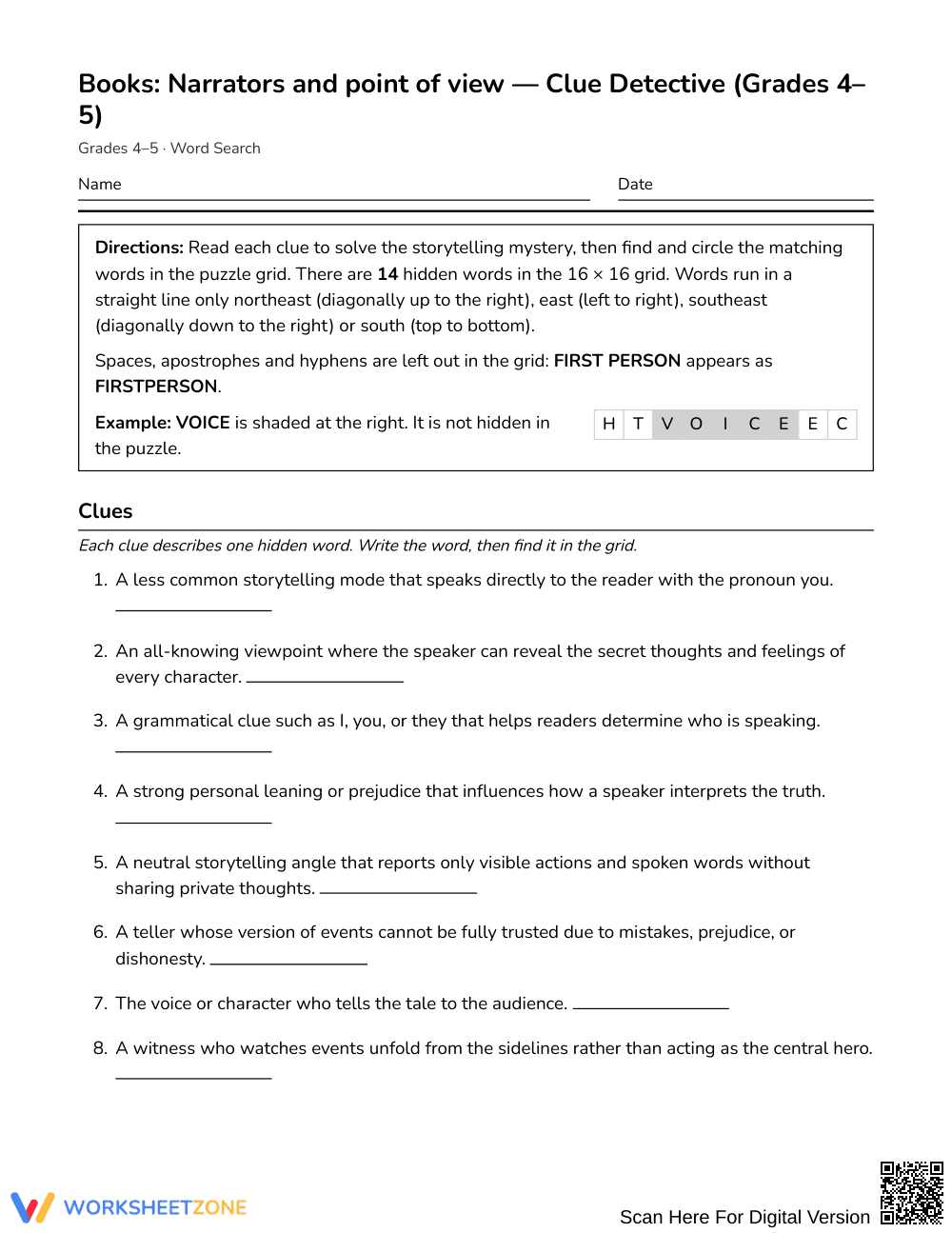
This Grades 4–5 point of view word search strengthens literary vocabulary by challenging learners to identify and locate 14 key narrative terms. Students read clue-based definitions to uncover core concepts like first-person narration, omniscient perspective, and dialogue, reinforcing critical reading terminology through an engaging, puzzle-based vocabulary detective format.
At a Glance
- Grade: Grades 4–5 · Subject: English Language Arts (ELA)
- Standard: Not standards-assessed — vocabulary enrichment
- Skill Focus: Narrators and narrative point of view literary terms
- Format: 3 pages · 14 words · Clue detective sheet · Answer key included · PDF
- Best For: Independent literacy stations and reading unit vocabulary review
- Time: 20–30 minutes of focused classroom work
What's Inside
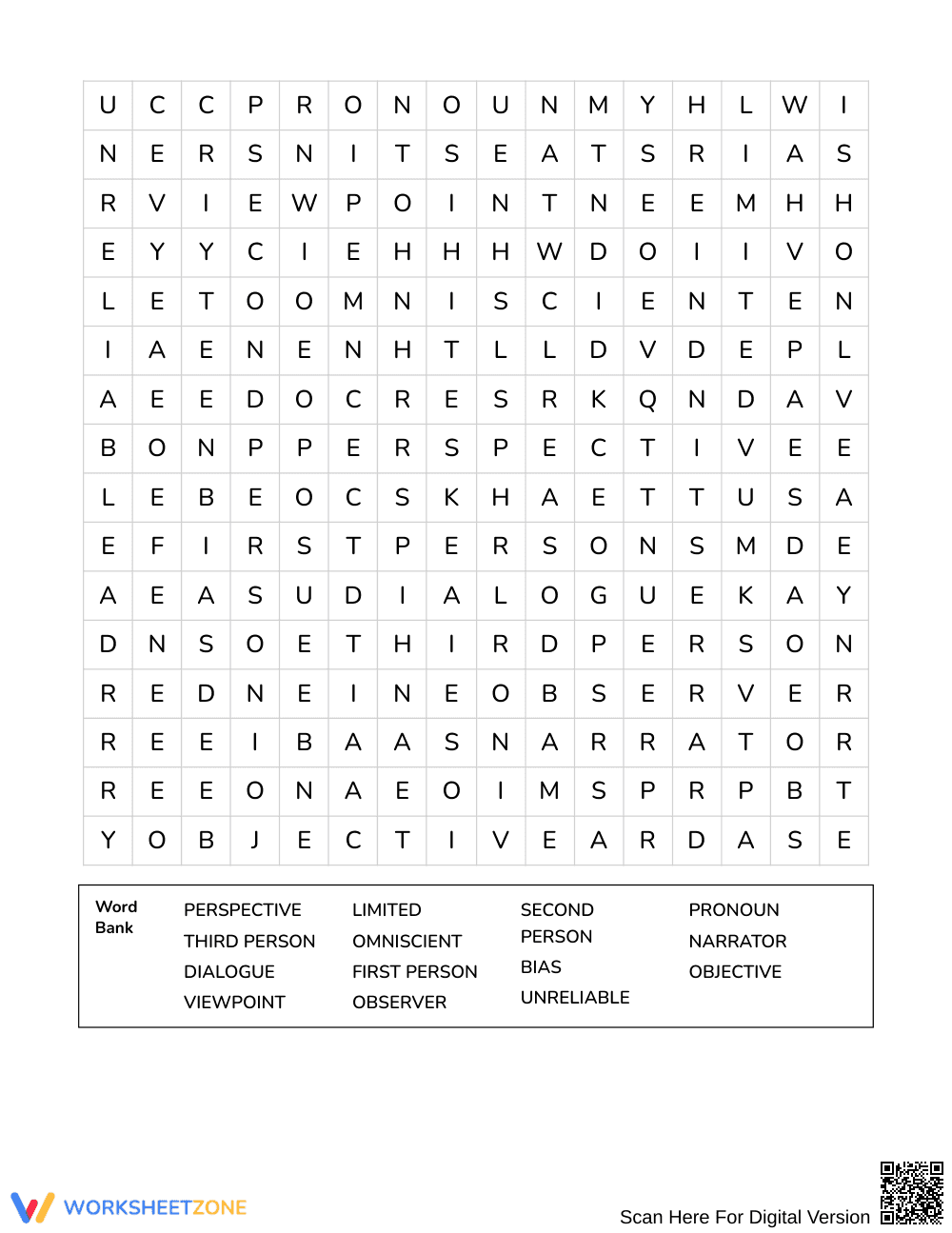
This 3-page printable activity features a "Clue Detective" word search that guides students through analyzing point of view concepts. Instead of a simple word list, students receive 14 definition-style clues defining key literary terms—including first person, third person, limited, objective, and unreliable narrator. A shuffled word bank provides reference support, while a complete 3-page answer key provides clear grid solutions for rapid verification.
How the Puzzle Works
The word search is built on a 16 x 16 letter grid containing 14 hidden literary terms. Words are placed in four specific search directions: northeast (NE), east (E), southeast (SE), and south (S). Students read each numbered definition clue to identify the target vocabulary word, cross-check their answer against the shuffled word bank, and locate the term within the grid.
Standards Alignment
This resource serves strictly as vocabulary enrichment and is not aligned to a specific academic standard. It provides supplementary practice to build familiarity with narrative terminology, helping students recognize how narrators shape literary texts without functioning as a formal, standards-assessed testing instrument.
How to Use It
Use this puzzle after direct instruction on narrative voice to consolidate student understanding, or assign it during independent literacy stations as a reinforcing vocabulary review. While students work through the 20 to 30 minute activity, observe whether they read the conceptual clues first or rely solely on scanning the word bank, noting which learners struggle to match definitions like limited versus omniscient narration.
Who It's For
This word search is designed for Grades 4–5 ELA students developing literary analysis skills. For learners needing additional support, teachers can highlight matching pronouns in the clues, while advanced readers can write original sentences applying each term. Pair this puzzle directly with a point of view anchor chart or a short fiction passage.
Vocabulary acquisition forms the cornerstone of reading comprehension and literary analysis across intermediate grade levels. According to research synthesized by Fisher & Frey (2014), intentional exposure to academic terminology through varied instructional modalities strengthens students' ability to comprehend complex texts and articulate analytical insights. This vocabulary enrichment activity reinforces 14 essential literary terms related to narrators and point of view, including first person, third person, omniscient, limited, and unreliable narration. By purposefully integrating definition-based clues with puzzle word search solving, the activity encourages active cognitive processing rather than passive memorization. Students examine how narrative perspective influences storytelling, equipping them with the academic language necessary to evaluate narrator reliability, identify speaker bias, and analyze character viewpoint across diverse literary genres. The self-contained format provides structured, print-ready reinforcement that supports foundational vocabulary mastery throughout upper elementary English language arts instruction.


