




























Views
Downloads



Printable Dramatic Irony & Suspense Worksheet | Grade 8 ELA

Paste this activity's link or code into your existing LMS (Google Classroom, Canvas, Teams, Schoology, Moodle, etc.).
Students can open and work on the activity right away, with no student login required.
You'll still be able to track student progress and results from your teacher account.
This printable Grade 8 ELA worksheet builds students' ability to explain how dramatic irony—the knowledge gap between reader and character—generates suspense, tension, or dark humor. Across 8 structured tasks, students analyze two original passages, evaluate competing interpretations, and defend qualified conclusions using textual evidence aligned to RL.8.6.
At a Glance
- Grade: 8 · Subject: ELA
- Standard:
RL.8.6— Analyze how point of view and author choices shape meaning and tone- Skill Focus: Explaining when reader knowledge increases suspense via dramatic irony
- Format: 5 pages · 8 problems · Answer key included · PDF
- Best For: Close reading during or after direct instruction
- Time: 35–50 minutes
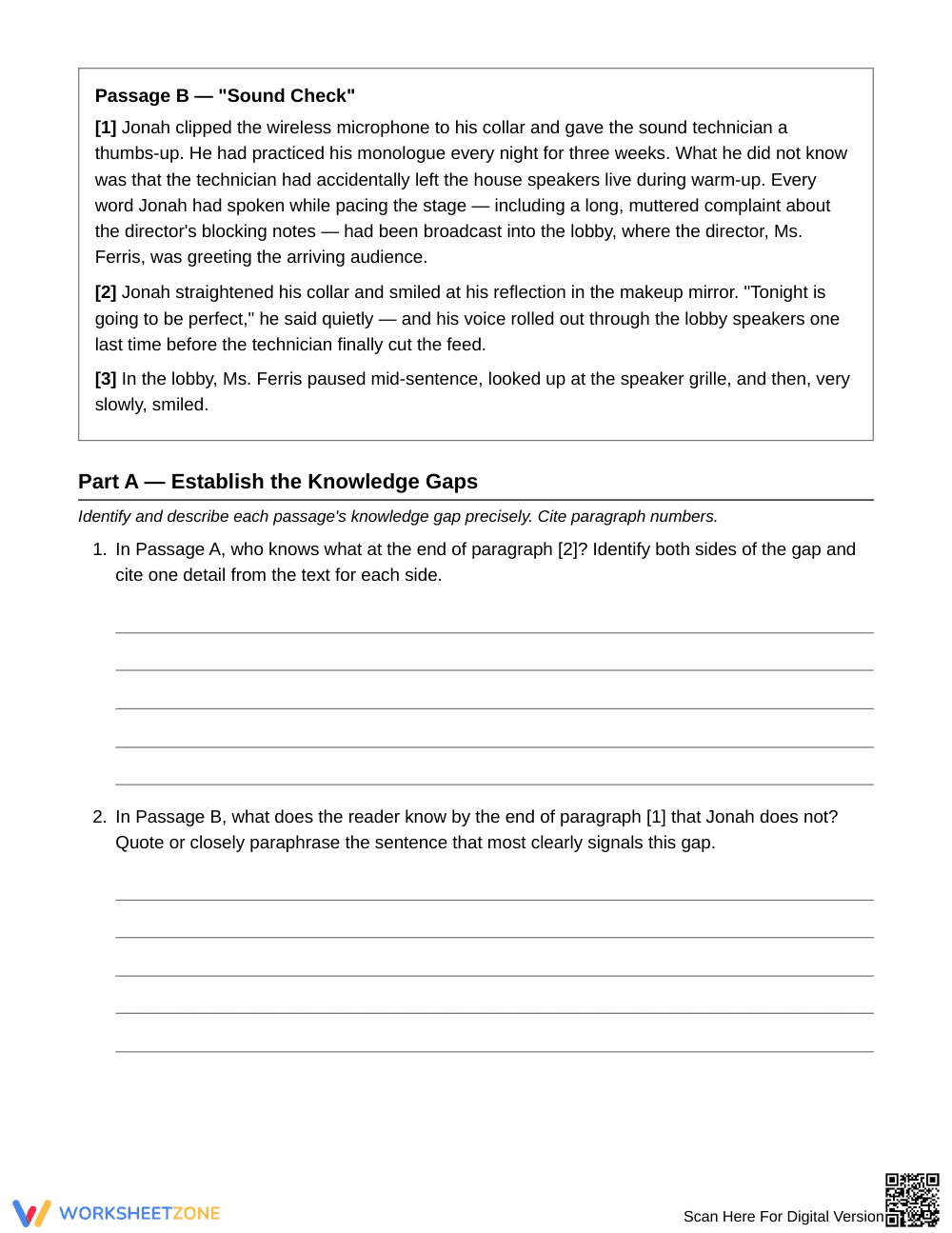
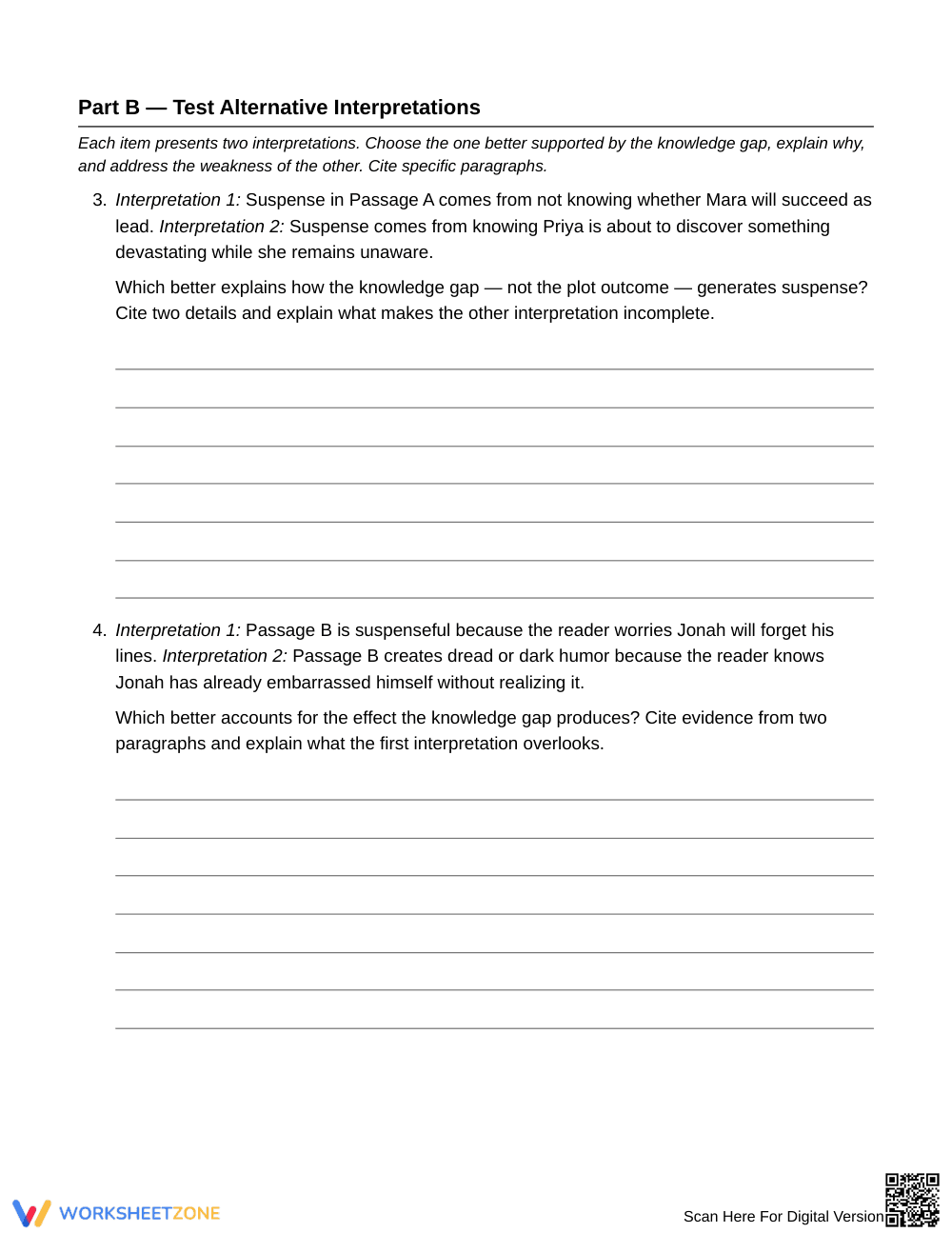
The 5-page worksheet includes two original short passages—"The Understudy" and "Sound Check"—followed by three focused sections. Part A guides students to identify specific knowledge gaps using paragraph citations. Part B presents four paired-interpretation items where students evaluate competing readings and explain analytical flaws. Part C concludes with two extended-response prompts requiring qualified, evidence-supported claims. A full answer key covers all 8 tasks.
Skill Progression
- Guided practice (Part A, 2 tasks): Students identify who holds key information, citing paragraph numbers and textual details to anchor their analysis.
- Supported practice (Part B, 4 tasks): Paired interpretations prompt students to critique weaker readings and explain why one interpretation holds stronger textual support.
- Independent practice (Part C, 2 tasks): Students construct qualified claims independently, applying gradual-release principles to analytical literary writing.
How to Use It
Assign Parts A and B during direct instruction for guided or partner practice, then use Part C for independent work or exit assessment. As students complete Part B, teachers can easily determine whether students focus on basic plot events rather than structural effects. Most eighth graders complete the 5 pages in 35–50 minutes.
This worksheet addresses RL.8.6, which requires eighth-grade students to analyze how differences in character and reader points of view create suspense, humor, or dramatic tension. Educational research consistently confirms that structured analytical frameworks support deep reading comprehension: Fisher and Frey (2014) demonstrated that gradual-release instructional sequences significantly strengthen students' ability to construct rigorous, evidence-based literary arguments. By moving learners systematically through identification, comparative analysis, and independent synthesis, this resource scaffolds complex point of view analysis into clear, manageable steps. The paired-interpretation items in Part B directly target common student misconceptions regarding how dramatic irony functions across a narrative text. Educators can use student responses from Part C as reliable formative assessment data for standards-based grading, IEP progress monitoring, or targeted small-group intervention planning throughout the academic year and standards alignment reviews.


