




























Views
Downloads

Printable Direct Sampling Limits Worksheet | Grade 8 Science

Paste this activity's link or code into your existing LMS (Google Classroom, Canvas, Teams, Schoology, Moodle, etc.).
Students can open and work on the activity right away, with no student login required.
You'll still be able to track student progress and results from your teacher account.
This Grade 8 Science worksheet teaches students to explain why scientists cannot directly sample Earth's deep interior. Students use borehole data, density comparisons, and seismic wave speeds, then argue from evidence about what indirect methods can and cannot show about the core and mantle.
At a Glance
- Grade: 8 · Subject: Science
- Standard: Earth's interior evidence — explain limits of drilling and use indirect data to describe layers
- Skill Focus: Explain why direct sampling is limited
- Format: 5 pages · 10 problems · Answer key included · PDF
- Best For: Earth's Layers evidence-based reasoning practice
- Time: 40–50 minutes
What's Inside
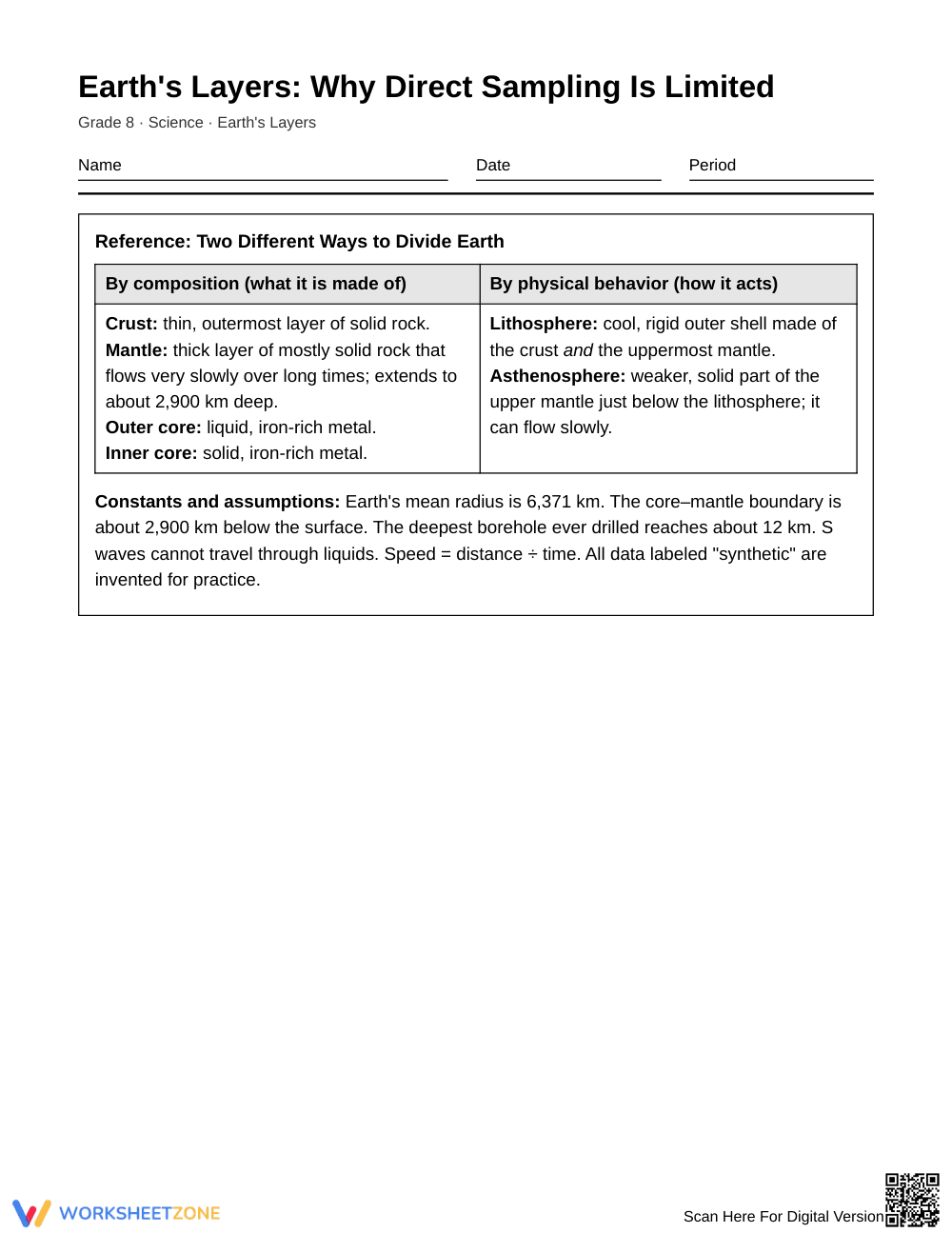
The 5-page PDF opens with a reference box comparing the composition-based and behavior-based ways of dividing Earth, plus a list of constants. Students then work through multiple-choice items, short explanations, calculations with units, and two claim-evaluation prompts. All data are labeled synthetic. A 2-page answer key shows worked solutions and sample responses.
Skill Progression
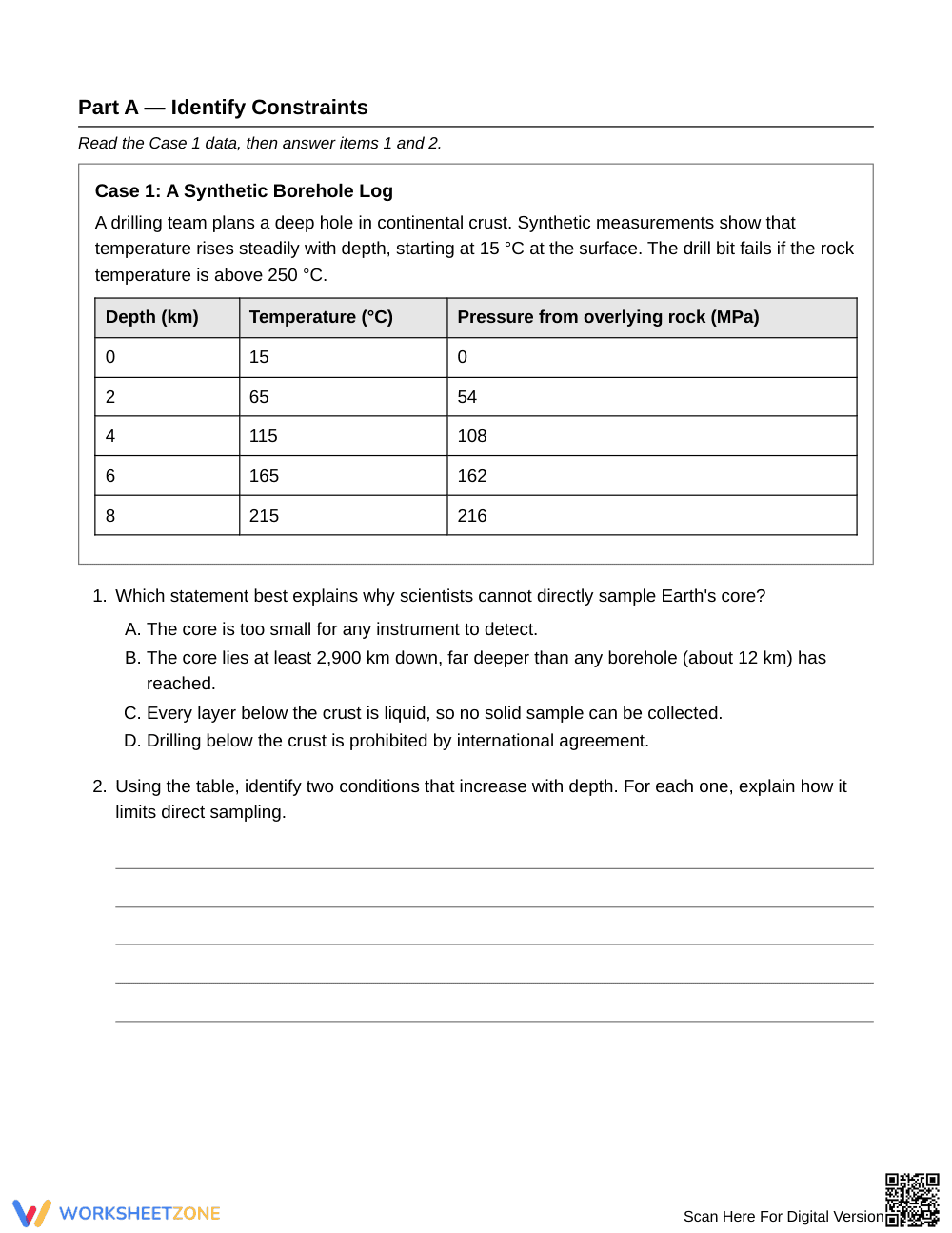
- Guided practice (Part A, 2 items): Students read a synthetic borehole log and identify constraints such as rising temperature and pressure. The data table and a multiple-choice item provide high support.
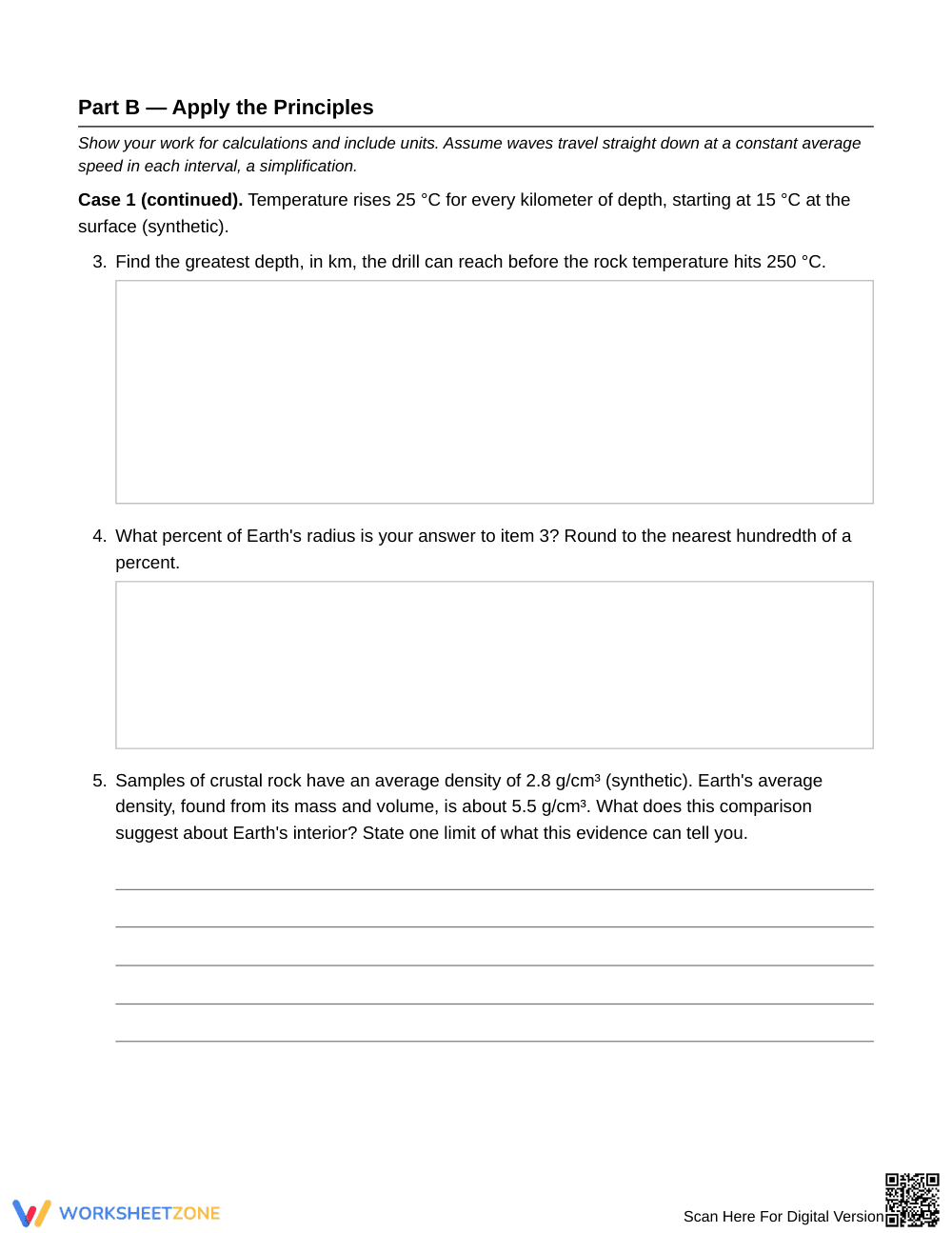
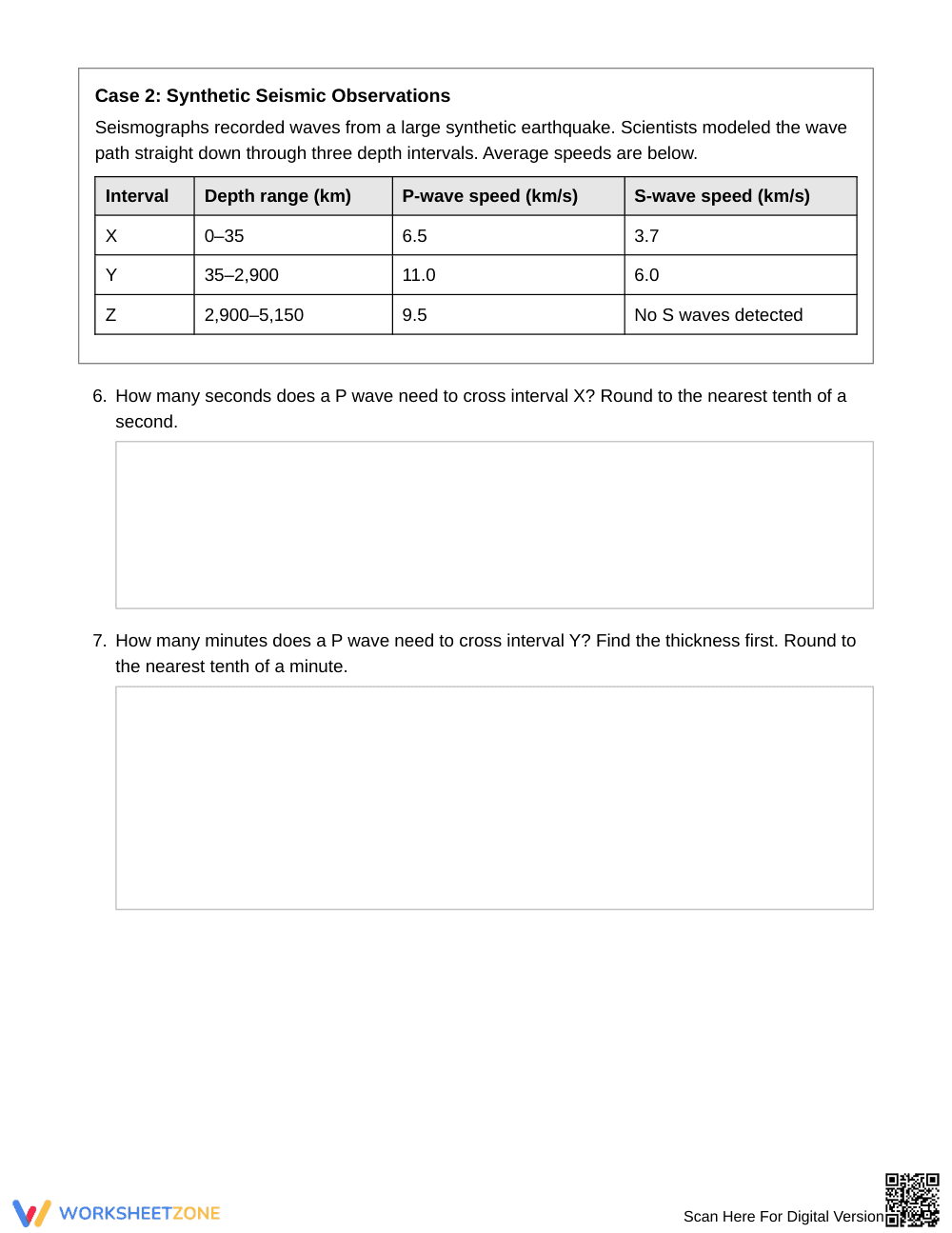
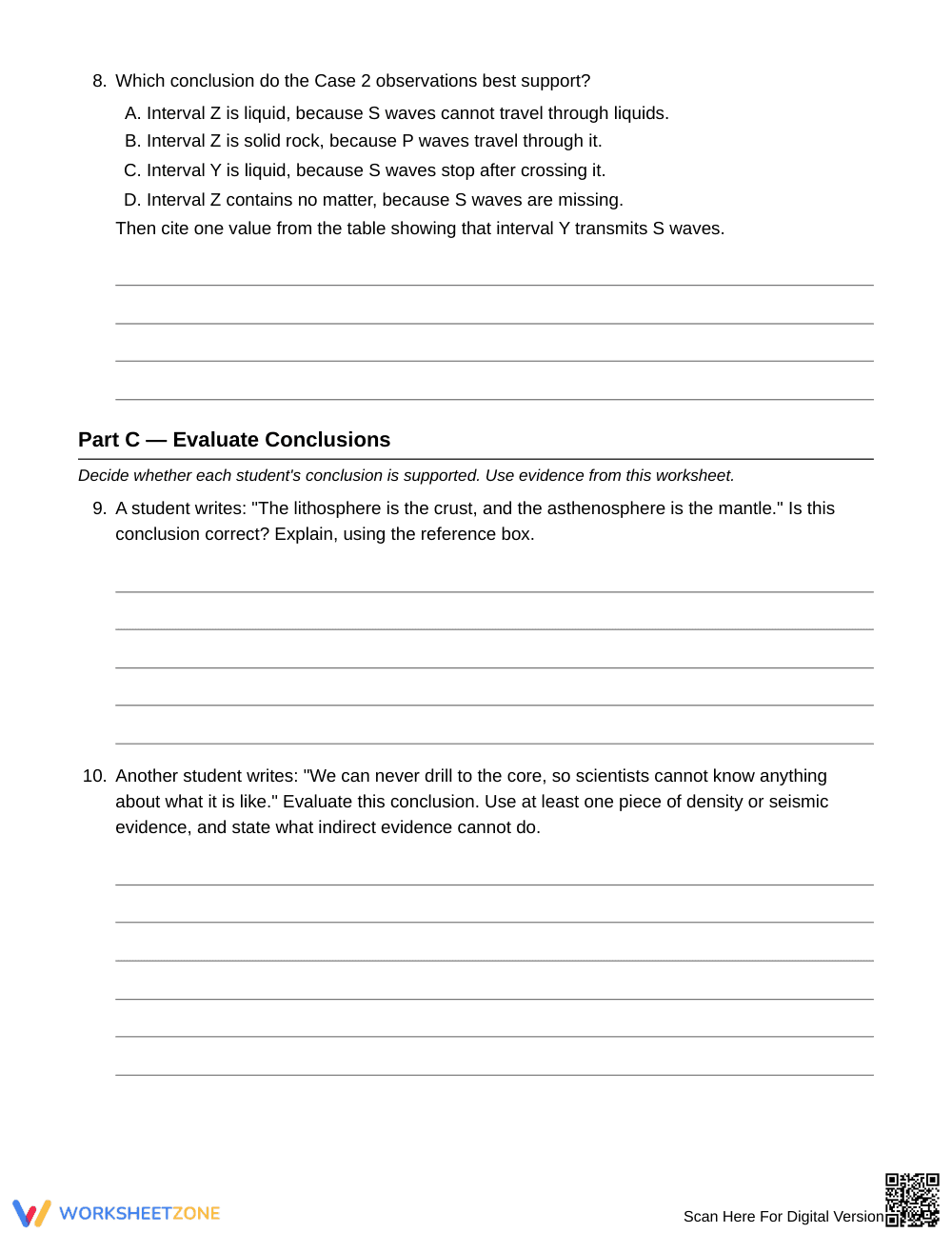
- Supported practice (Part B, 6 items): Students calculate maximum drilling depth, compare it with Earth's radius, compare densities, and compute P-wave travel times. They also interpret S-wave absence. The reference box and stated constants provide support.
- Independent practice (Part C, 2 items): Students judge two student conclusions and defend their judgments with evidence from the worksheet.
This sequence follows a gradual-release model: I Do, We Do, You Do.
Standards Alignment
No standard code was supplied for this resource, so none is listed. The tasks target middle school Earth science practice: using evidence to describe Earth's layers and recognizing the limits of direct observation. The two division schemes (crust, mantle, core versus lithosphere and asthenosphere) are reinforced in Part C. Add your state or district standard code when copying this into lesson plans, IEP goals, or district curriculum mapping tools.
How to Use It
- After direct instruction: Assign Parts A and B as independent or partner work once students have seen the layer models. Collect Part C as an exit check.
- Before a unit assessment: Use the full set as a review, then discuss Part C answers as a class.
Formative tip: while students work, watch whether they include units in Part B and whether their Part C responses name what indirect evidence cannot do. Expect 40–50 minutes.
Who It's For
This worksheet suits Grade 8 Science students who have met the basic layers of Earth and are ready to reason from data. Students who need support can lean on the reference box and constants, while stronger students can write fuller evidence-based arguments in Part C. It pairs well with a layered-Earth diagram or a short lesson on P and S waves.
Earth's Layers: Why Direct Sampling Is Limited is a Grade 8 Science worksheet that asks students to explain, with evidence, why scientists cannot collect rock from Earth's core. No standard code is attached to this resource, so its skill is described plainly: students use borehole temperature and pressure data, density comparisons, and P-wave and S-wave speeds to show that the deepest borehole reaches about 12 km while the core-mantle boundary lies about 2,900 km down. The 10 tasks follow a gradual-release sequence consistent with Fisher & Frey (2014), moving from identifying constraints to calculating with units to evaluating student claims. Students learn that indirect evidence supports models of Earth's interior but cannot replace a physical sample. The five-page PDF includes a two-page answer key and uses invented synthetic data for practice.


