































Printable Astronomy Tools Word Search | Grades 2–3 Science

Paste this activity's link or code into your existing LMS (Google Classroom, Canvas, Teams, Schoology, Moodle, etc.).
Students can open and work on the activity right away, with no student login required.
You'll still be able to track student progress and results from your teacher account.
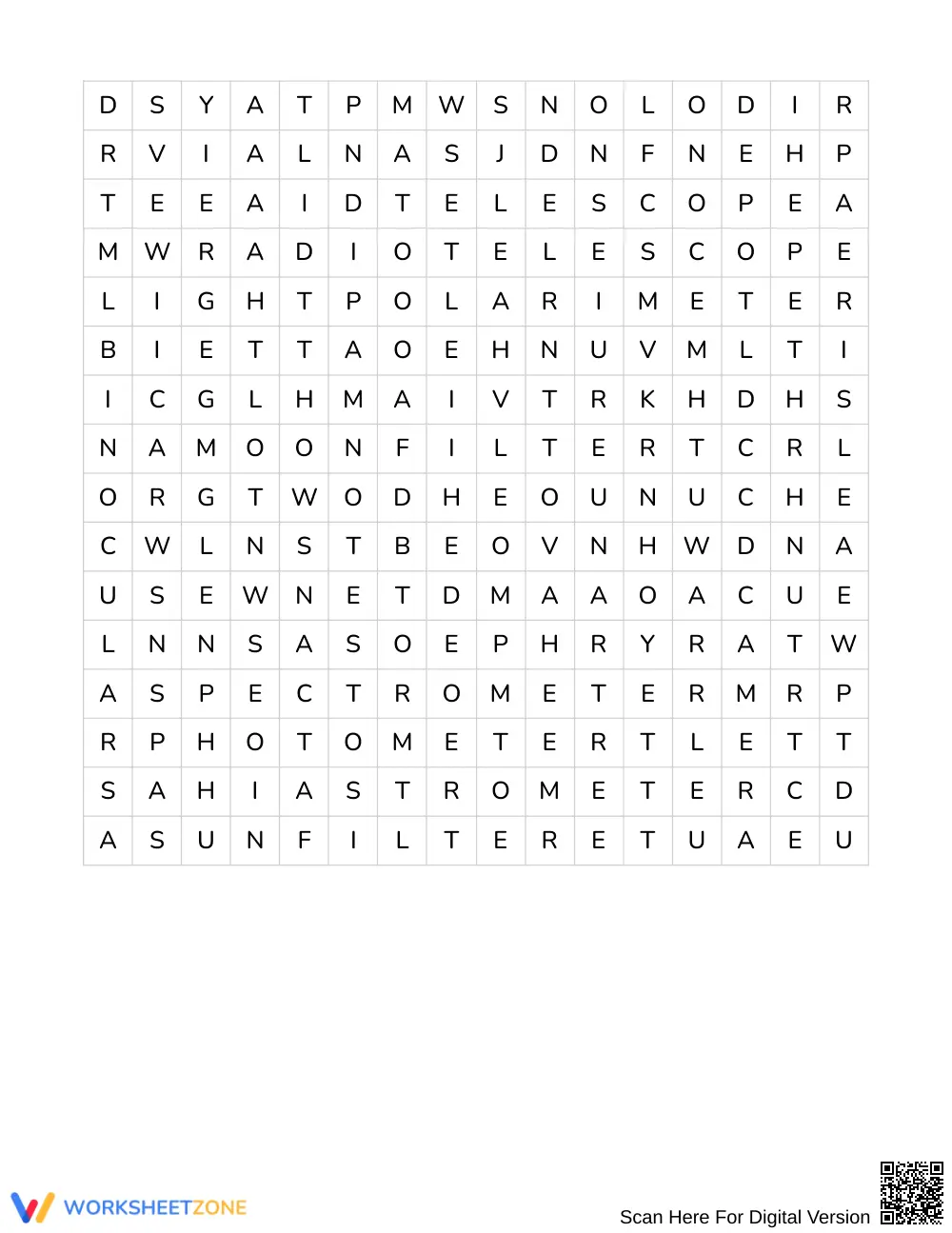
This astronomy observation tools word search introduces young learners to essential scientific instruments used to study outer space. Students locate ten key vocabulary terms across the puzzle grid, reinforcing word recognition, spelling, and familiarity with space observation equipment during early elementary astronomy units.
At a Glance
- Grade: Grades 2–3 · Subject: Elementary Science
- Standard: Not standards-assessed — vocabulary enrichment
- Skill Focus: Astronomy observation tools and space exploration instruments
- Format: 2 pages · 10 hidden words · Complete teacher answer key included · Printable PDF
- Best For: Science centers, vocabulary review, and early finishers
- Time: 15–25 focused learning minutes
What's Inside
This 2-page science resource presents an engaging vocabulary puzzle designed for Grades 2–3. The student worksheet contains a 16-by-16 letter grid alongside an alphabetical word bank listing 10 space observation tools. A matching 2-page answer key provides a highlighted grid showing word placements, supporting quick student self-checking or teacher grading.
Puzzle Structure and Mechanics
The activity is structured to provide accessible word-finding practice for early elementary learners:
- Grid Dimensions: A 16-by-16 letter grid offers clear visual spacing for younger readers while maintaining an engaging search field.
- Word Directions: Terms run only left-to-right (East) and top-to-bottom (South), avoiding backward or diagonal arrangements that frustrate developing readers.
- Alphabetical Word Bank: All 10 hidden terms appear alphabetically, reinforcing reference skills and helping students track their progress.
Standards Alignment
This word search serves strictly as vocabulary enrichment and is not aligned to a specific standard. It reinforces domain-specific terminology alongside any elementary astronomy curriculum, introducing students to technical instruments before formal scientific inquiry lessons.
How to Use It
Integrate this word search during an astronomy unit as an engaging vocabulary reinforcement activity. First, teachers can assign it during science centers following direct instruction on astronomical tools, letting students collaborate in pairs. Second, use it as a 15- to 25-minute independent review or sub plan. During completion, circulate to observe visual tracking and ensure students recognize complex instrument names like radiotelescopes and photometers.
Who It's For
This activity is designed for Grades 2–3 students learning how astronomers study outer space. For emerging readers who need extra support, teachers can highlight the first letter of each word in the grid. Advanced learners can sketch or describe each tool on the back. Pair this puzzle with an astronomy anchor chart displaying labeled photographs of real observational instruments.
Vocabulary enrichment resources support domain-specific literacy by exposing early elementary students to technical academic language in low-stakes practice formats. This Grades 2–3 astronomy observation tools word search targets the recognition of 10 essential instruments used to observe space, including telescopes, spectrometers, and cameras. Research by Fisher & Frey (2014) emphasizes that intentional exposure to specialized vocabulary through print-rich, structured tasks strengthens students' conceptual understanding prior to complex informational reading. While not tied to an individual standard code, this supplementary activity builds foundational orthographic familiarity and word-level automaticity. Students develop visual discrimination and spelling confidence as they identify scientific terminology embedded within a 16-by-16 grid. Teachers can utilize this focused word search as an engaging entry point to elementary astronomy units, ensuring that young learners connect spoken science concepts with accurate printed representations during foundational literacy and inquiry-based science instruction.


