


























0
Views
0
Downloads

0.0
0
Save
0 Likes
Share
Poetic Devices Bell Ringer Worksheet
0 Views
0 Downloads
Paste this activity's link or code into your existing LMS (Google Classroom, Canvas, Teams, Schoology, Moodle, etc.).
Students can open and work on the activity right away, with no student login required.
You'll still be able to track student progress and results from your teacher account.
Information
Description
What It Is:
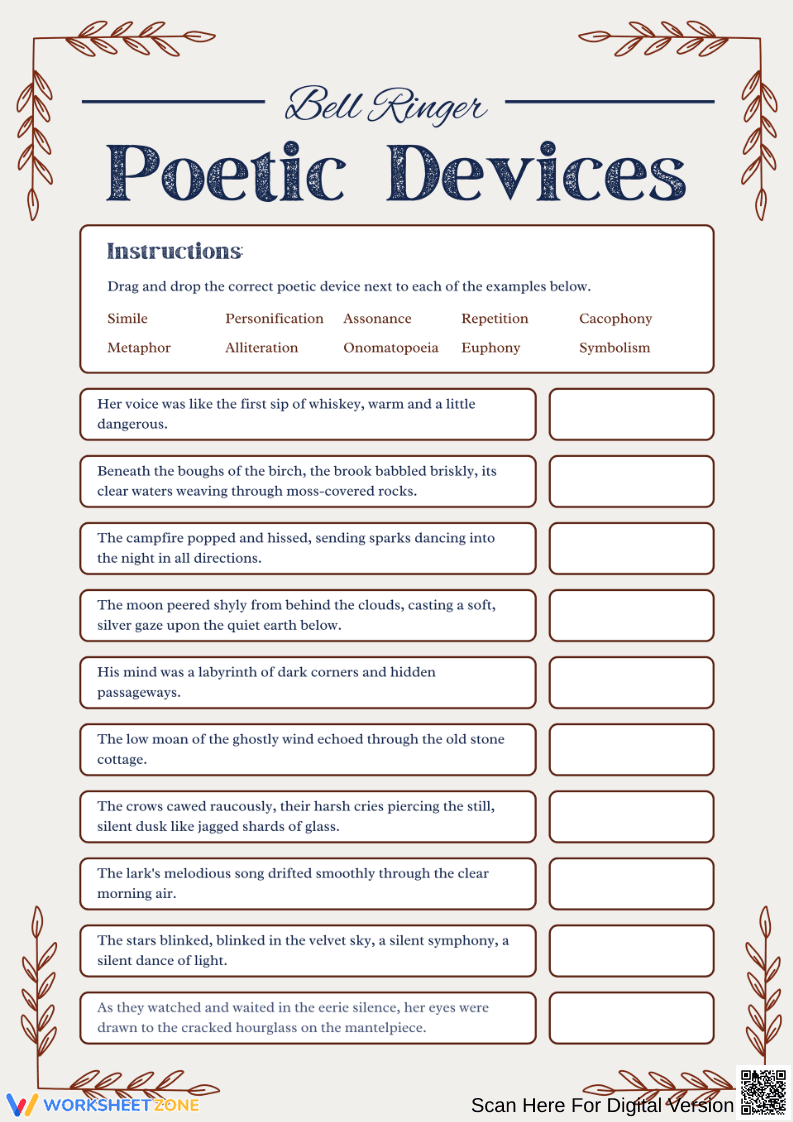
This bell ringer worksheet helps students practice identifying poetic devices such as simile, metaphor, alliteration, personification, assonance, onomatopoeia, symbolism, repetition, euphony, and cacophony through short, vivid examples.
Why Use It:
It strengthens students’ understanding of figurative language and sound devices, improves reading comprehension, and prepares learners for deeper poetry analysis. Each example provides clear context for recognizing how writers use language creatively.
How to Use It:
• Read each sentence carefully
• Drag or write the correct poetic device next to each example
• Encourage students to justify their choices or discuss as a warm-up activity
Grade Suitability:
Best suited for upper elementary, middle school, and early high school learners.
• Perfect for ELA bell ringers, poetry units, literacy centers, or quick review
• Great for classroom or homeschool practice
Target Users:
Teachers, parents, and students learning to identify poetic and literary devices.
This bell ringer worksheet helps students practice identifying poetic devices such as simile, metaphor, alliteration, personification, assonance, onomatopoeia, symbolism, repetition, euphony, and cacophony through short, vivid examples.
Why Use It:
It strengthens students’ understanding of figurative language and sound devices, improves reading comprehension, and prepares learners for deeper poetry analysis. Each example provides clear context for recognizing how writers use language creatively.
How to Use It:
• Read each sentence carefully
• Drag or write the correct poetic device next to each example
• Encourage students to justify their choices or discuss as a warm-up activity
Grade Suitability:
Best suited for upper elementary, middle school, and early high school learners.
• Perfect for ELA bell ringers, poetry units, literacy centers, or quick review
• Great for classroom or homeschool practice
Target Users:
Teachers, parents, and students learning to identify poetic and literary devices.


