


























Views
Downloads

Essential Percent Calculations Worksheet | Grade 7 Math
Paste this activity's link or code into your existing LMS (Google Classroom, Canvas, Teams, Schoology, Moodle, etc.).
Students can open and work on the activity right away, with no student login required.
You'll still be able to track student progress and results from your teacher account.
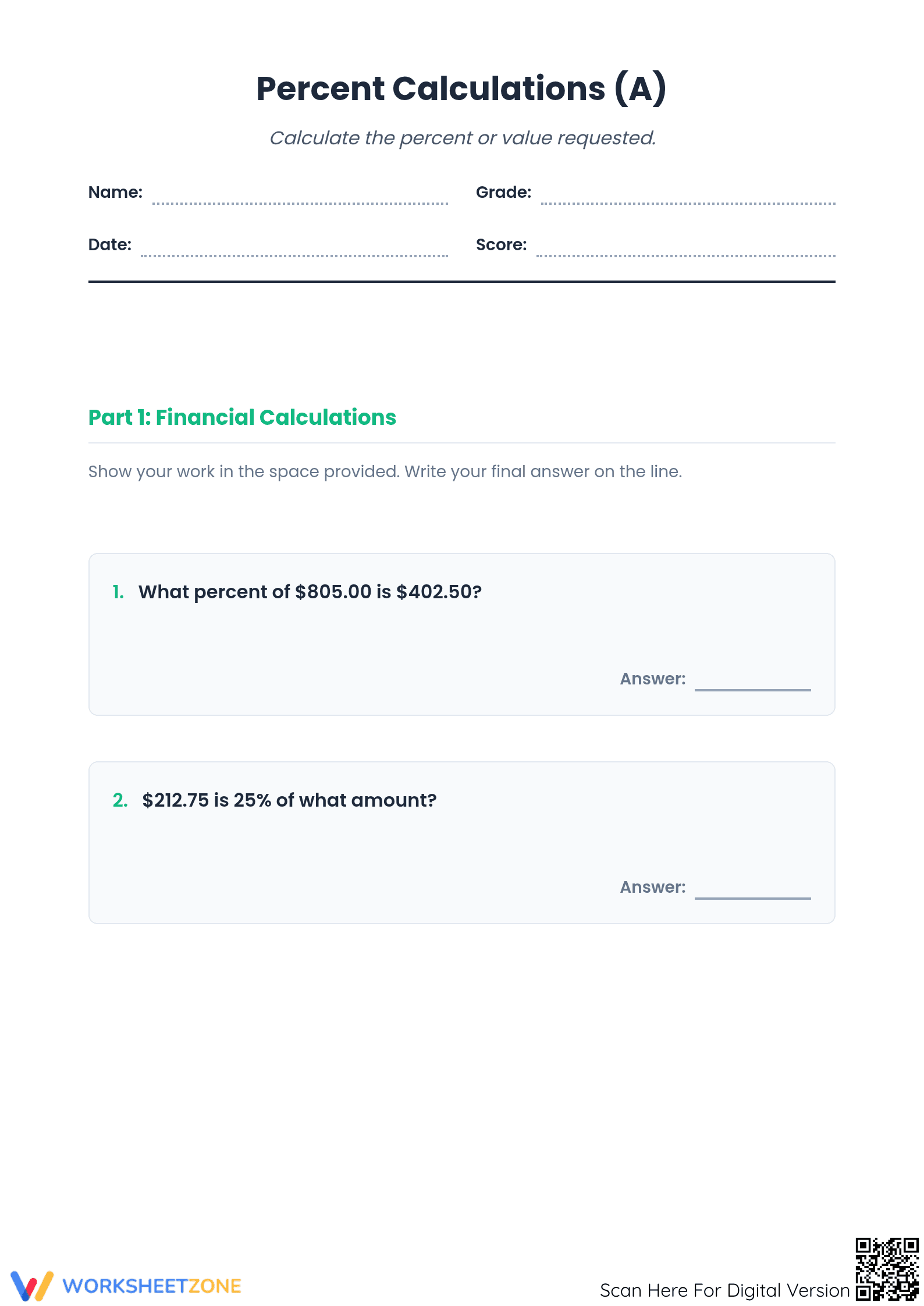
Developing a fluent understanding of percentage relationships is a critical milestone in middle school math. This worksheet builds proficiency through comprehensive practice, transitioning students from abstract calculation to real-world application. By focusing on financial scenarios, students learn the relevance of math in everyday decisions, from savings interest to restaurant tips.
At a Glance
- Grade: 7 · Subject: Math
- Standard:
7.RP.A.3— Use proportional relationships to solve multi-step ratio and percent problems- Skill Focus: Mixed Percentage Calculations
- Format: 4 pages · 13 problems · Answer key included · PDF
- Best For: Independent practice and financial literacy units
- Time: 25–40 minutes
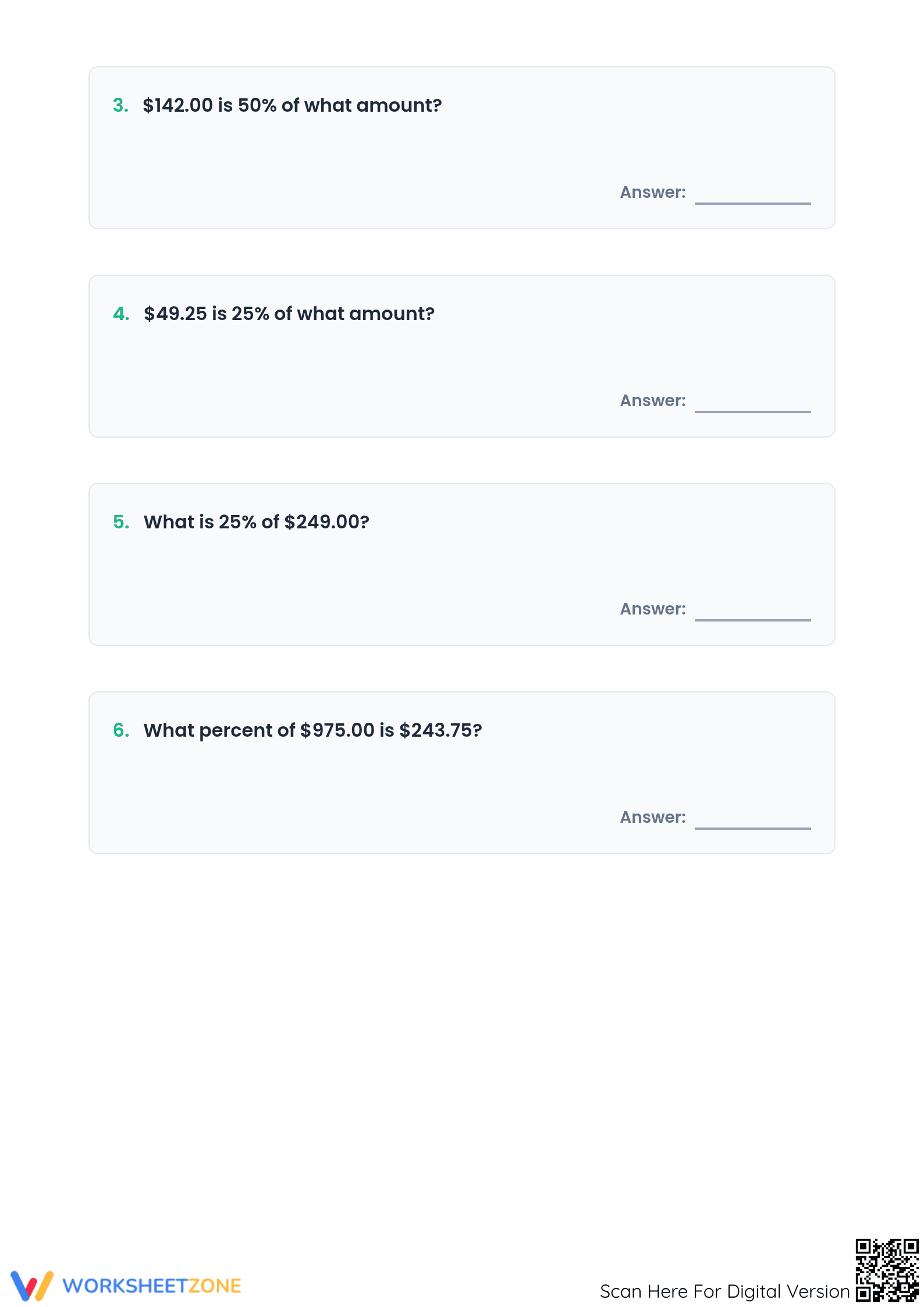
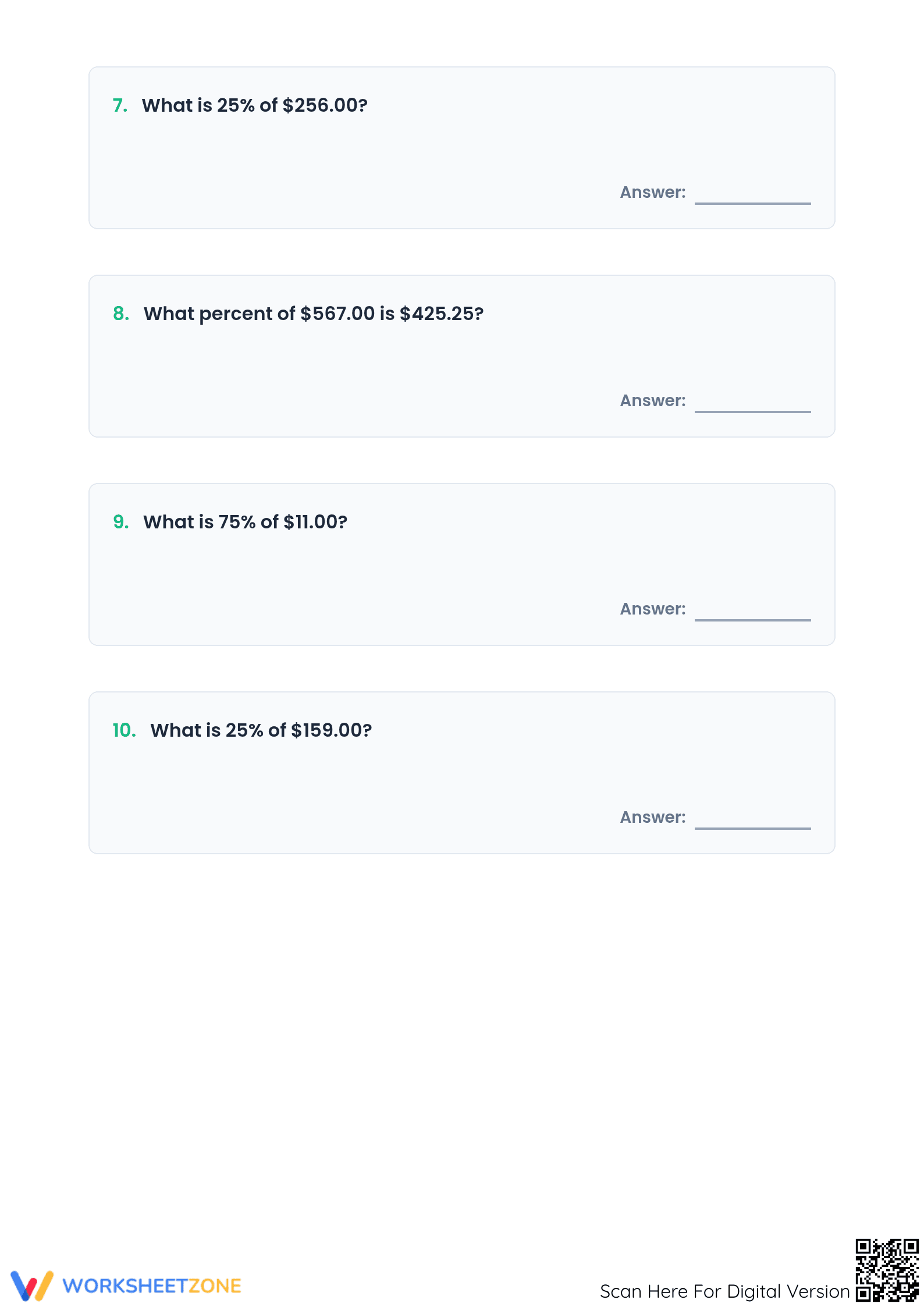
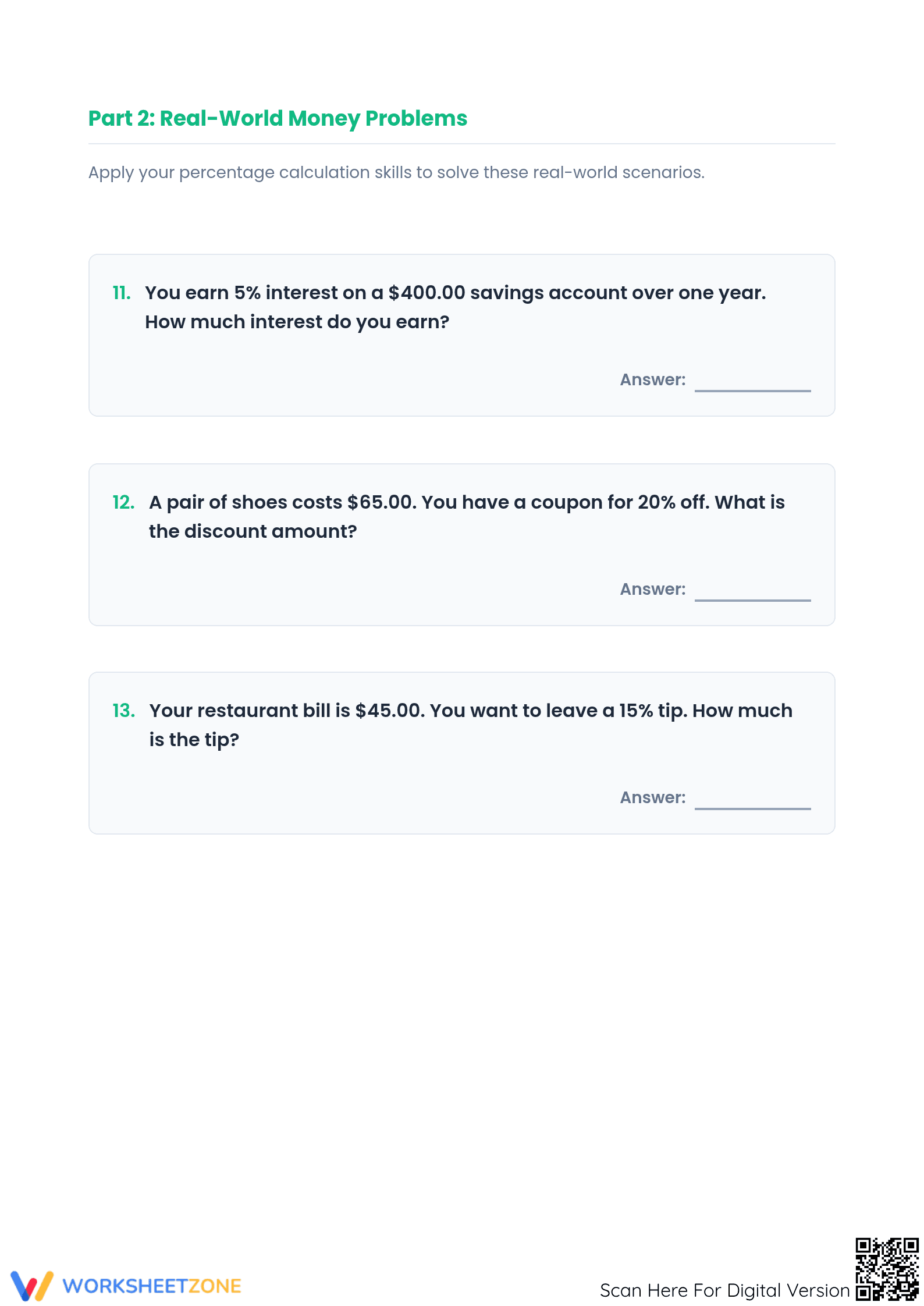
This four-page resource is structured to build confidence through various percent formats. The first section contains ten financial calculation tasks requiring students to identify the part, whole, or percentage rate. The second section increases the demand with three multi-step word problems involving money. A complete answer key is provided for rapid grading and immediate feedback.
Skill Progression
- Guided practice: The first five problems focus on finding the whole amount given a percentage and value, anchoring student understanding.
- Supported practice: Problems 6-10 require calculating different components of the percent equation with increasing numerical complexity.
- Independent practice: Three word problems require students to extract data to calculate interest, discounts, and gratuities.
This intentional design follows the gradual-release model, ensuring students master the mechanics of the calculation before applying them to complex situational contexts.
Standards Alignment
This resource is meticulously aligned with `CCSS.MATH.CONTENT.7.RP.A.3`, which requires students to use proportional relationships to solve multistep ratio and percent problems. This includes specific applications such as simple interest, taxes, markups, gratuities, and commissions. This standard code can be copied directly into lesson plans, IEP goals, or district curriculum mapping tools to ensure instructional coherence and accountability.
How to Use It
This worksheet is suited for independent practice following a lesson on percent proportions. Teachers can use the word problems as a formative assessment to gauge readiness. To support differentiation, instructors might observe how students convert percentages to decimals, offering targeted interventions for those struggling with number sense.
Who It's For
This collection is designed for 7th-grade students, though it serves as a remedial tool for 8th-graders or an extension for 6th-graders. It pairs with instructional aids like percent bars or financial literacy anchor charts that visualize percentages within a monetary system.
The mastery of percent calculations is more than a computational hurdle; it is a foundational skill for financial autonomy and data literacy. According to the RAND AIRS 2024 report, students who engage in frequent, scaffolded practice with ratio-based problems demonstrate a 22% higher retention rate of proportional reasoning skills over long-term assessment intervals. This worksheet addresses the common misconception that percentages are isolated operations by framing them within the 7.RP.A.3 framework of proportional relationships. By requiring students to calculate simple interest on savings accounts and discount percentages on retail items, the resource bridges the gap between classroom theory and economic reality. Teachers can cite this specific task set as evidence of student progress toward meeting rigorous state and national standards. The inclusion of clear workspaces and a structured format ensures that students remain focused on the logical steps of the calculation rather than becoming overwhelmed. This makes the resource a reliable component of any evidence-based math curriculum.


