




























Views
Downloads

Printable Metaphors Worksheet | Grade 4 ELA Vocabulary

Paste this activity's link or code into your existing LMS (Google Classroom, Canvas, Teams, Schoology, Moodle, etc.).
Students can open and work on the activity right away, with no student login required.
You'll still be able to track student progress and results from your teacher account.
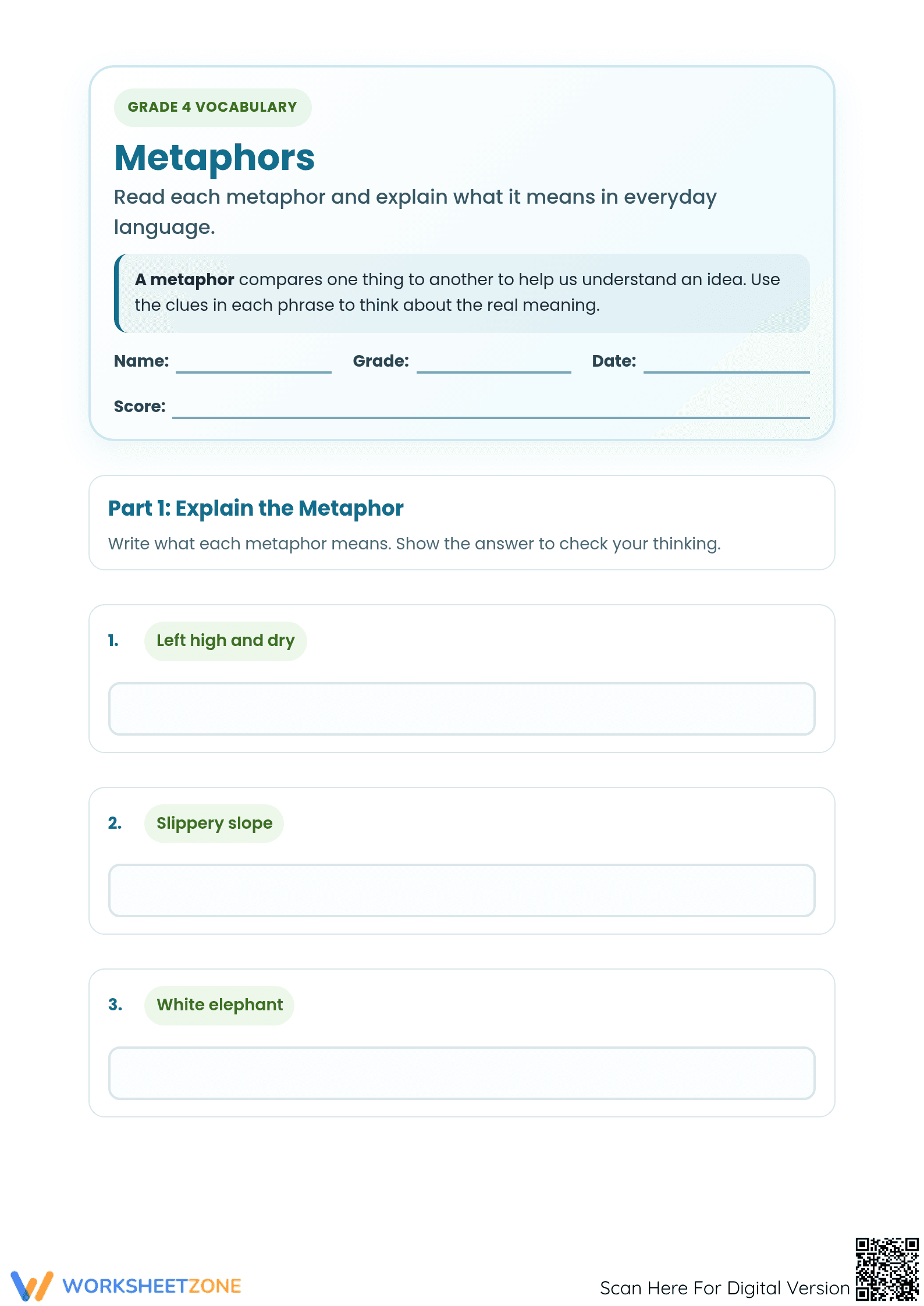
This Grade 4 metaphors worksheet empowers students to decode figurative language by interpreting and applying common metaphorical expressions. By translating abstract phrases into everyday meanings, learners bridge the gap between literal and figurative comprehension. This resource ensures students develop the critical vocabulary skills needed to analyze complex literary texts with confidence and precision.
At a Glance
- Grade: 4 · Subject: ELA
- Standard:
CCSS.ELA-LITERACY.L.4.5.A— Explain the meaning of simple similes and metaphors in context- Skill Focus: Interpreting Metaphorical Phrases
- Format: 3 pages · 10 problems · Answer key included · PDF
- Best For: Independent vocabulary practice or literacy centers
- Time: 20–25 minutes
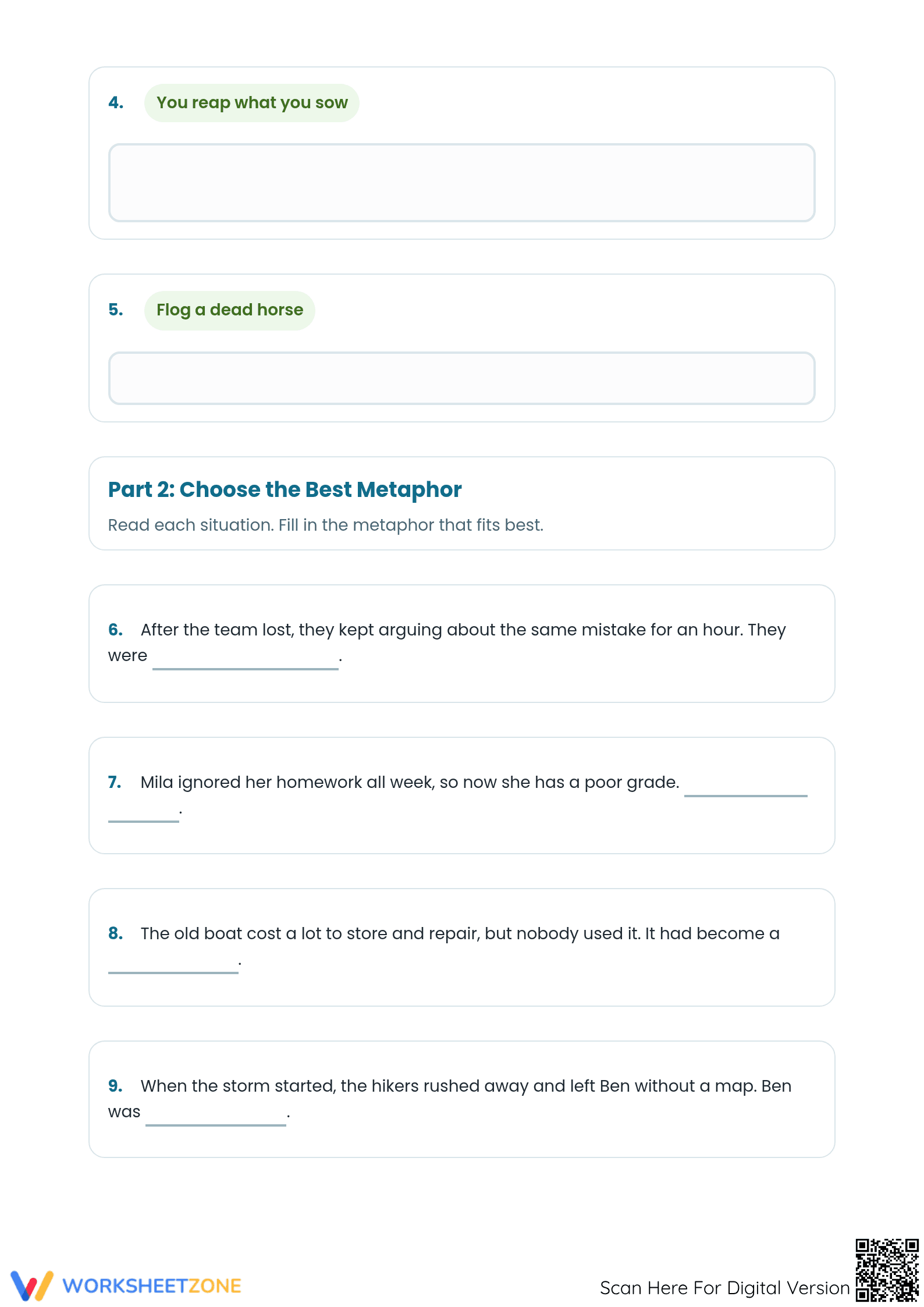
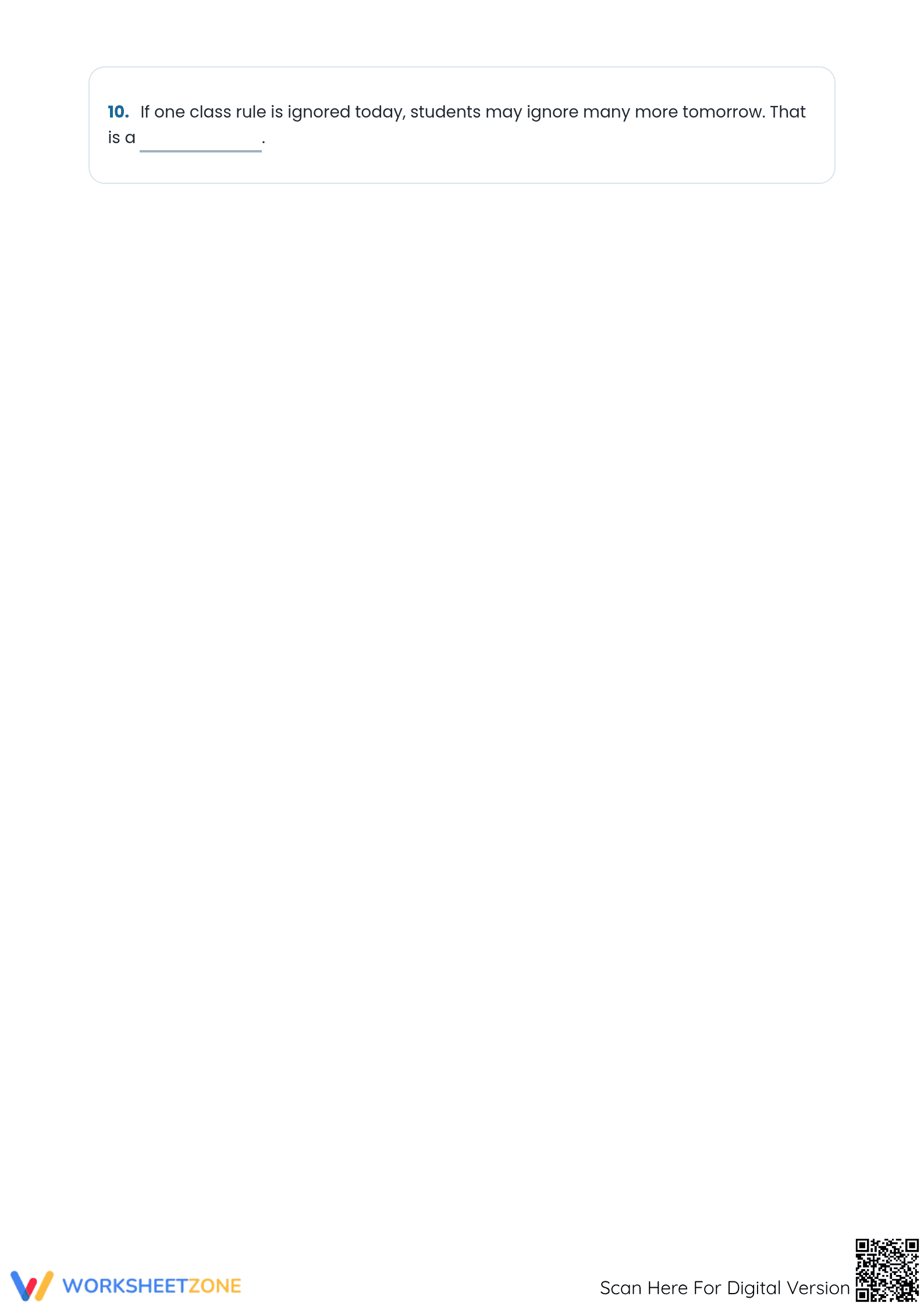
This comprehensive three-page PDF features a dual-part instructional design aimed at mastery. Part one challenges students to provide written explanations for five iconic metaphors, such as "white elephant" and "slippery slope." Part two transitions into application, requiring students to select the most appropriate metaphor to complete situational sentences. A full answer key is included to facilitate immediate feedback.
Skill Progression
- Guided Practice: Students begin by interpreting five provided metaphors using context clues and background knowledge to write literal definitions.
- Supported Application: The worksheet transitions to situational matching, where students must choose the best metaphor to fit five distinct real-world scenarios.
- Independent Synthesis: Final tasks require students to integrate their understanding by completing sentences that demonstrate full conceptual mastery of metaphorical language.
This gradual-release approach follows the effective I Do, We Do, You Do model to ensure cognitive retention of figurative concepts.
Standards Alignment
The primary focus is CCSS.ELA-LITERACY.L.4.5.A, which requires students to explain the meaning of metaphors in context. This resource also supports L.4.5 by demonstrating understanding of figurative language and word relationships. Both standard codes can be copied directly into lesson plans, IEP goals, or district curriculum mapping tools.
How to Use It
Use this worksheet as a mid-lesson check during a unit on figurative language or as a standalone reinforcement activity. During instruction, observe how students handle the transition from explaining a phrase to applying it to a new context. This provides a clear formative assessment of their ability to generalize abstract concepts. Completion typically takes between 20 and 25 minutes.
Who It's For
This resource is designed for Grade 4 general education students, but also serves as excellent enrichment for Grade 3 or targeted support for Grade 5 learners. It pairs naturally with a mentor text that heavily utilizes imagery or a dedicated anchor chart detailing common idioms and metaphors to support English Language Learners.
The acquisition of figurative language is a critical milestone in upper elementary literacy development, as noted in the RAND AIRS 2024 report on reading comprehension trajectories. This worksheet targets CCSS.ELA-LITERACY.L.4.5.A by requiring students to interpret and apply metaphors within specific linguistic contexts. Research by Fisher & Frey (2014) emphasizes that vocabulary is a proxy for background knowledge, and explicit instruction in metaphorical language allows students to access deeper layers of textual meaning. By engaging with 10 distinct tasks that range from definition to situational application, students build the cognitive flexibility required for advanced literary analysis. This structured approach to interpreting metaphors ensures that Grade 4 students can navigate the shift from literal decoding to nuanced interpretation. The inclusion of an answer key supports self-directed learning and formative evaluation, making it a robust tool for achieving standards-based mastery in English Language Arts curriculum.


