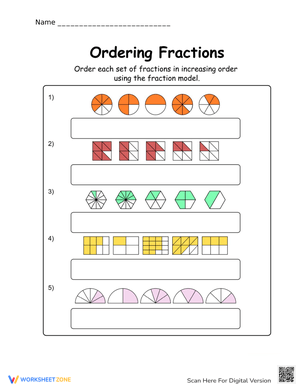
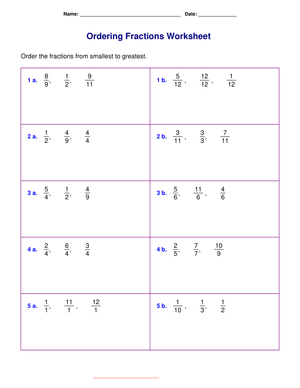
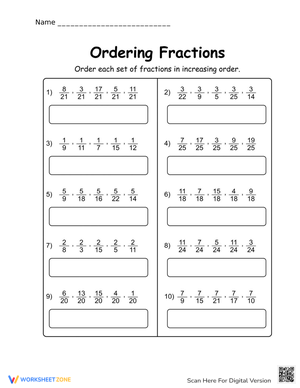
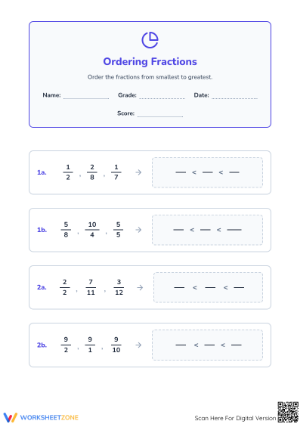
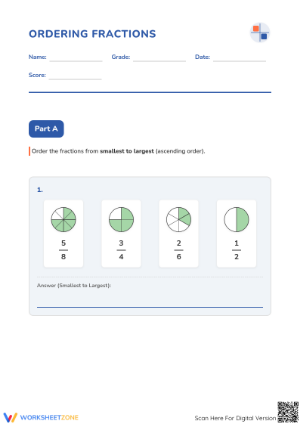
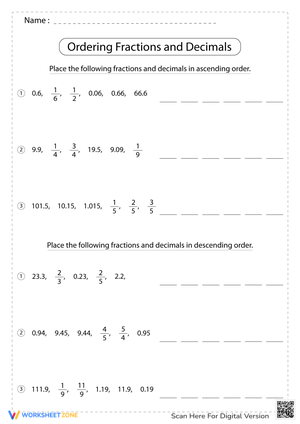
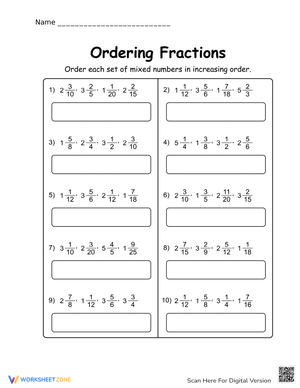
Ordering fractions asks students to hold two ideas at once: numerator size and denominator size move value in opposite directions. A larger denominator means smaller pieces, and that inverse relationship is genuinely counterintuitive for students who have spent years learning that bigger numbers mean bigger amounts. Worksheets that isolate this confusion early, before mixing in unlike denominators, give students a chance to internalize the concept instead of guessing.
The most reliable way to reduce this confusion is a deliberate worksheet sequence: start with same-denominator sets, move to same-numerator sets, then introduce unlike numerators and denominators together. Each stage should get its own dedicated practice set rather than blending skills too soon.
Stage One: Same-Denominator Ordering Worksheets
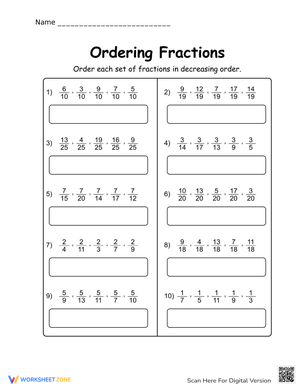
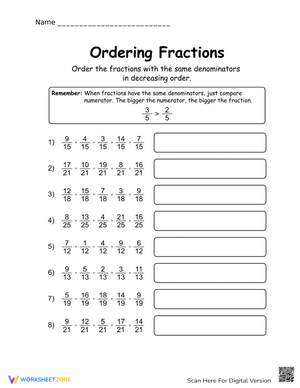
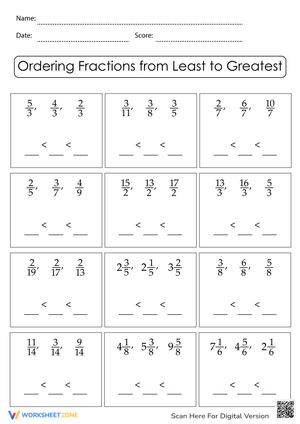
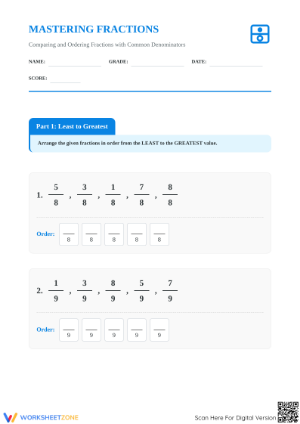
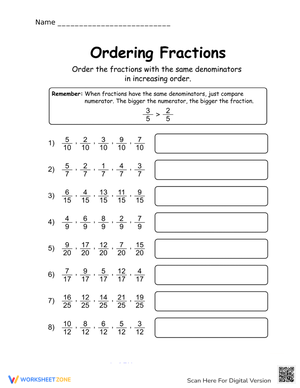
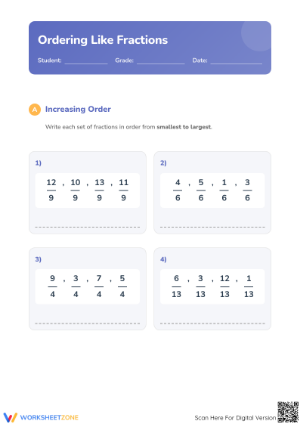
Begin with fractions that already share a denominator, such as 2/8, 5/8, and 1/8. At this stage, ordering is really just comparing numerators, which lets students build confidence before the harder cognitive load of finding common denominators. Worksheets at this level should include four to six fractions per set and ask students to arrange them both least to greatest and greatest to least, since flipping the direction of the task catches students who are pattern-matching rather than reasoning through value.
Stage Two: Benchmark Fraction Strategies
Once students are comfortable with same-denominator sets, introduce benchmark comparison as a mental-math shortcut. Comparing a fraction to 1/2 or to 1 lets students order fractions like 3/8 and 5/6 without ever finding a common denominator. Is 3/8 less than half? Yes. Is 5/6 more than half? Yes. So 5/6 is greater. This strategy is faster than the algorithm and it builds genuine number sense rather than rote procedure.
A worksheet sequence that introduces benchmark comparison before common denominators tends to produce fewer computational errors later, because students have already built an intuitive sense of where a fraction sits on the number line. When common denominator work is introduced without this foundation, students frequently multiply denominators correctly but still misplace the resulting fractions in order, because they never developed a mental image of relative size in the first place.
Stage Three: Common Denominator and LCM Practice
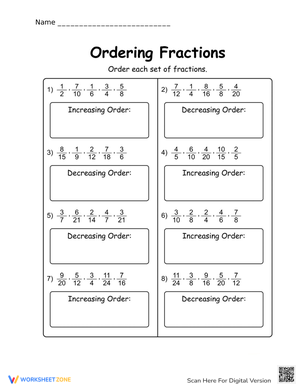
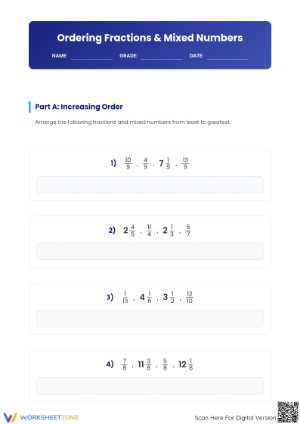
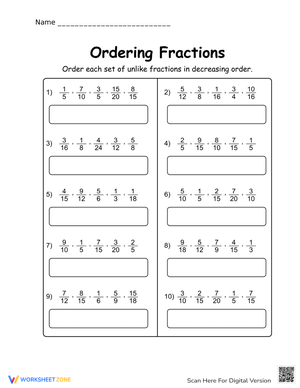
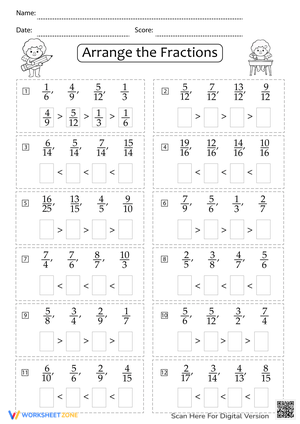
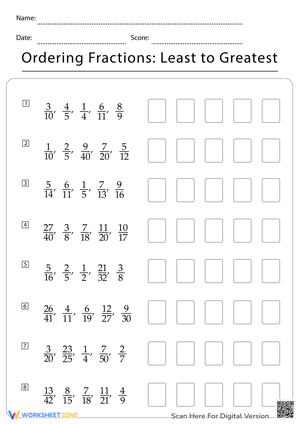
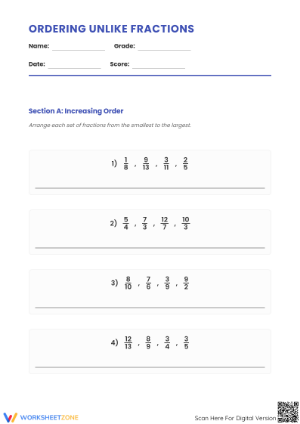
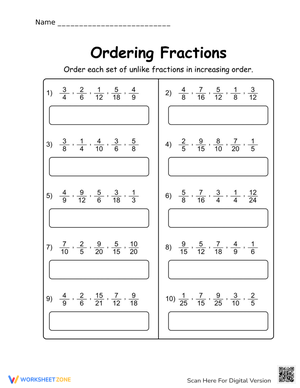
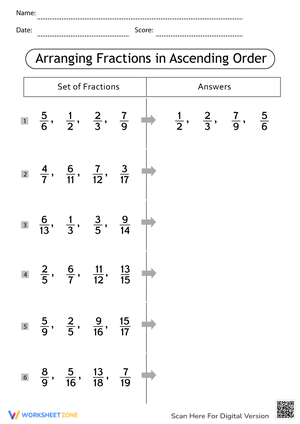
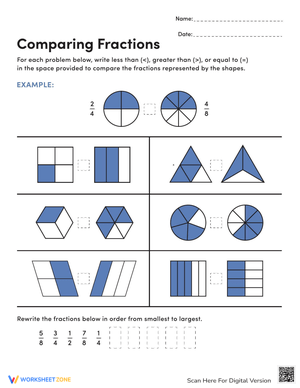
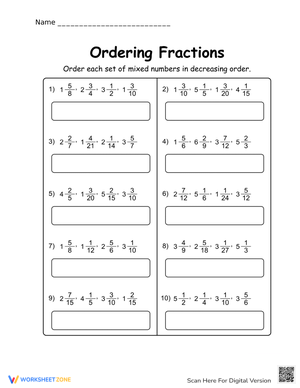
The next stage in the progression is ordering fractions with unlike numerators and denominators, which requires finding the least common multiple of the denominators involved. This is the stage most directly tested by CCSS 4.NF.A.2, which requires students to compare two fractions with different numerators and different denominators by creating common denominators or numerators, or by comparing to a benchmark fraction such as 1/2, and recording the result using greater than, less than, or equal to symbols. Worksheets here should limit denominators to the set explicitly named in grade 4 expectations: 2, 3, 4, 5, 6, 8, 10, 12, and 100.
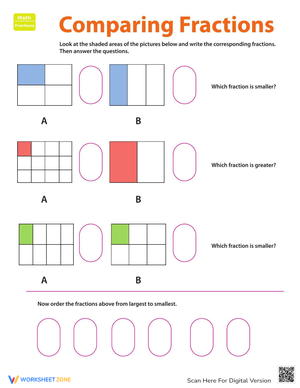
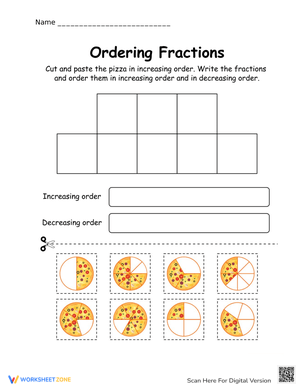
One instructional point worth restating on the worksheet itself, in the directions or as a sample problem: comparisons are only valid when the fractions being compared refer to the same whole. A worksheet that shows half of a small pizza next to a third of a large pizza and asks which slice is bigger is testing a different skill than pure fraction comparison, and mixing those tasks without clarifying the whole can confuse students who are otherwise ready for the math.
Using Number Lines to Build Visual Understanding
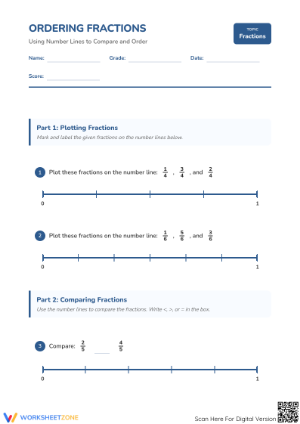
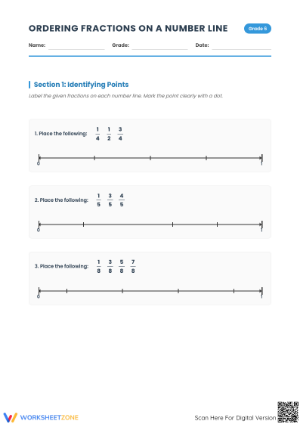
Number line worksheets are one of the most effective visual tools for teaching ordering fractions, because they turn an abstract comparison into a spatial one. When fractions are plotted on a shared number line, the fraction positioned further to the right is the greater value, full stop. This removes the need for mental gymnastics with numerators and denominators and replaces it with a rule students can see.
For worksheet design, look for versions that ask students to first plot a set of fractions on a blank number line and then write the ordered list underneath. This two-step format forces students to use the visual model rather than skip straight to guessing, and it gives you a clear formative assessment artifact: if a student plots correctly but orders incorrectly, the error is in reading the line, not in understanding fraction value.
Common Misconceptions and How Worksheets Can Target Them
A few misconceptions show up consistently in grade 4-6 classrooms, and worksheet design can address each one directly.
- Assuming a larger denominator always means a larger fraction. Worksheets that deliberately pair fractions like 1/3 and 1/8 force students to confront this directly.
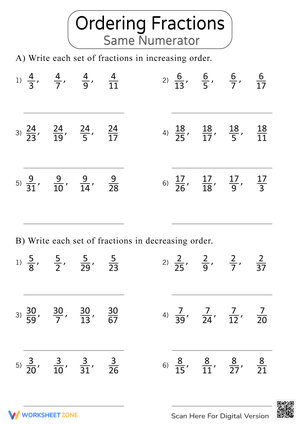
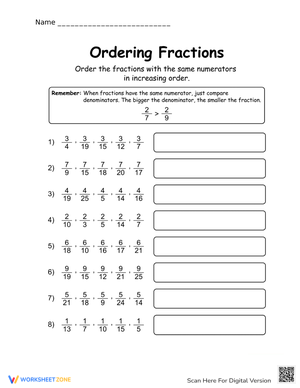
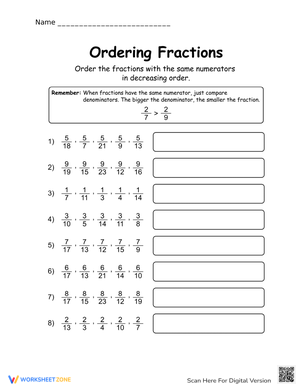
- Ordering by numerator alone when denominators differ. Mixed sets with matching numerators but different denominators, such as 2/3 and 2/7, target this misconception specifically.
- Ignoring the whole when fractions come from differently sized wholes in a word problem context. Include at least one worksheet item per set that explicitly states the whole is identical across fractions being compared.
- Rushing to convert every fraction to a common denominator even when a benchmark comparison would be faster. Worksheets that mix easy benchmark cases with harder LCM cases in the same set teach students to choose a strategy rather than default to one method.
Aligning Worksheets to CCSS 4.NF.A.2 for Lesson Planning
When documenting standards alignment, CCSS 4.NF.A.2 explicitly covers comparing two fractions with different numerators and denominators, using common denominators or numerators, or comparing to a benchmark such as 1/2, and recording the comparison with symbols. This standard sits within the broader Grade 4 Number and Operations - Fractions domain, so worksheets that build toward it should stay within the denominator set named for that grade band rather than introducing unusual denominators that fall outside grade-level expectations.
Documenting which worksheet stage maps to which part of the standard also makes it easier to justify differentiation to instructional coaches or during IEP planning meetings, since you can point to a specific sub-skill rather than a vague description of fraction ordering practice.
Frequently Asked Questions
1. What grade level typically learns to order fractions with different denominators?
Ordering fractions with unlike numerators and denominators is a grade 4 expectation under CCSS 4.NF.A.2, though many grade 5 and 6 teachers continue using ordering fractions worksheets for review, intervention, or as a bridge into more advanced fraction operations.
2. What is the best strategy for teaching students to order fractions quickly?
Benchmark fraction comparison, using 1/2 or 1 as a reference point, is generally the fastest mental strategy, since it lets students order fractions without always converting to common denominators. Worksheets that introduce this strategy before common denominator practice tend to build stronger number sense.
3. How do number lines help students understand fraction order?
Number lines turn an abstract comparison into a visual one: the fraction positioned further right on the line represents the greater value. Worksheets that require students to plot fractions before ordering them give a clear picture of whether a student understands magnitude or is guessing.
4. What Common Core standard covers ordering fractions?
CCSS 4.NF.A.2 covers comparing two fractions with different numerators and denominators, using common denominators or numerators, or benchmark comparison, and recording the result with greater than, less than, or equal to symbols, within the Grade 4 Number and Operations - Fractions domain.
5. How can teachers differentiate ordering fractions worksheets for mixed-ability classrooms?
Group worksheets by stage rather than by general ability: same-denominator sets for students building initial confidence, benchmark comparison sets for students ready for a mental-math shortcut, and common denominator or LCM sets for students ready for the full CCSS 4.NF.A.2 expectation. This lets you pull small groups based on the specific sub-skill each student needs.