


























Views
Downloads

Grade 6 Density Calculations — Printable No-Prep Worksheet
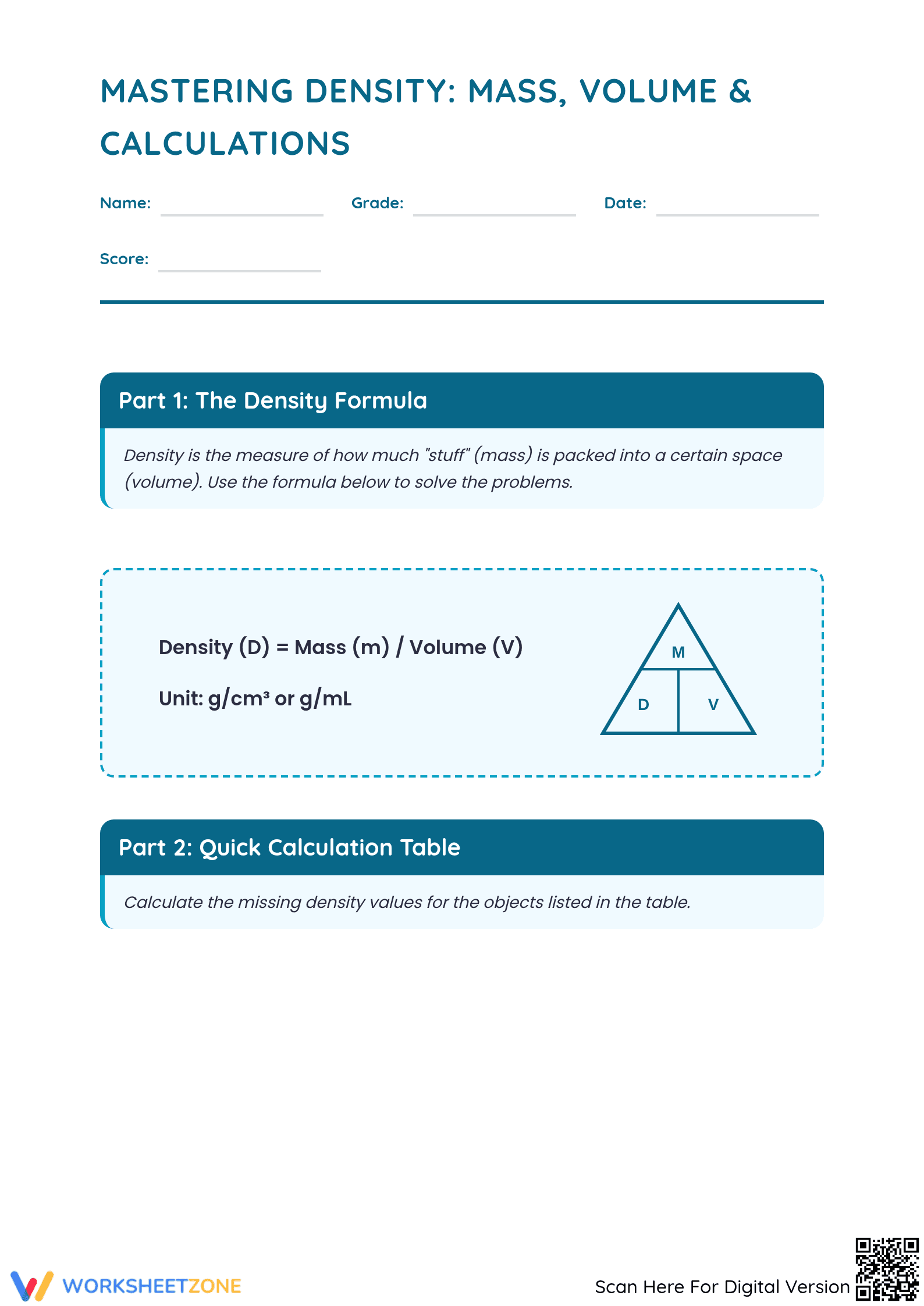
This comprehensive 5-page worksheet provides students with a rigorous path to mastering density calculations using mass and volume data. By moving from formula introduction to real-world challenges, learners develop a concrete understanding of how matter is packed into space. Students will calculate missing values in tables and solve word problems to achieve scientific fluency.
At a Glance
- Grade: 6 · Subject: Science
- Standard:
MS-PS1-2— Analyze and interpret data on the properties of substances to identify materials- Skill Focus: Density Formula Calculation (D=m/V)
- Format: 5 pages · 25 problems · Answer key included · PDF
- Best For: Middle school physical science units
- Time: 45–60 minutes
What's Inside
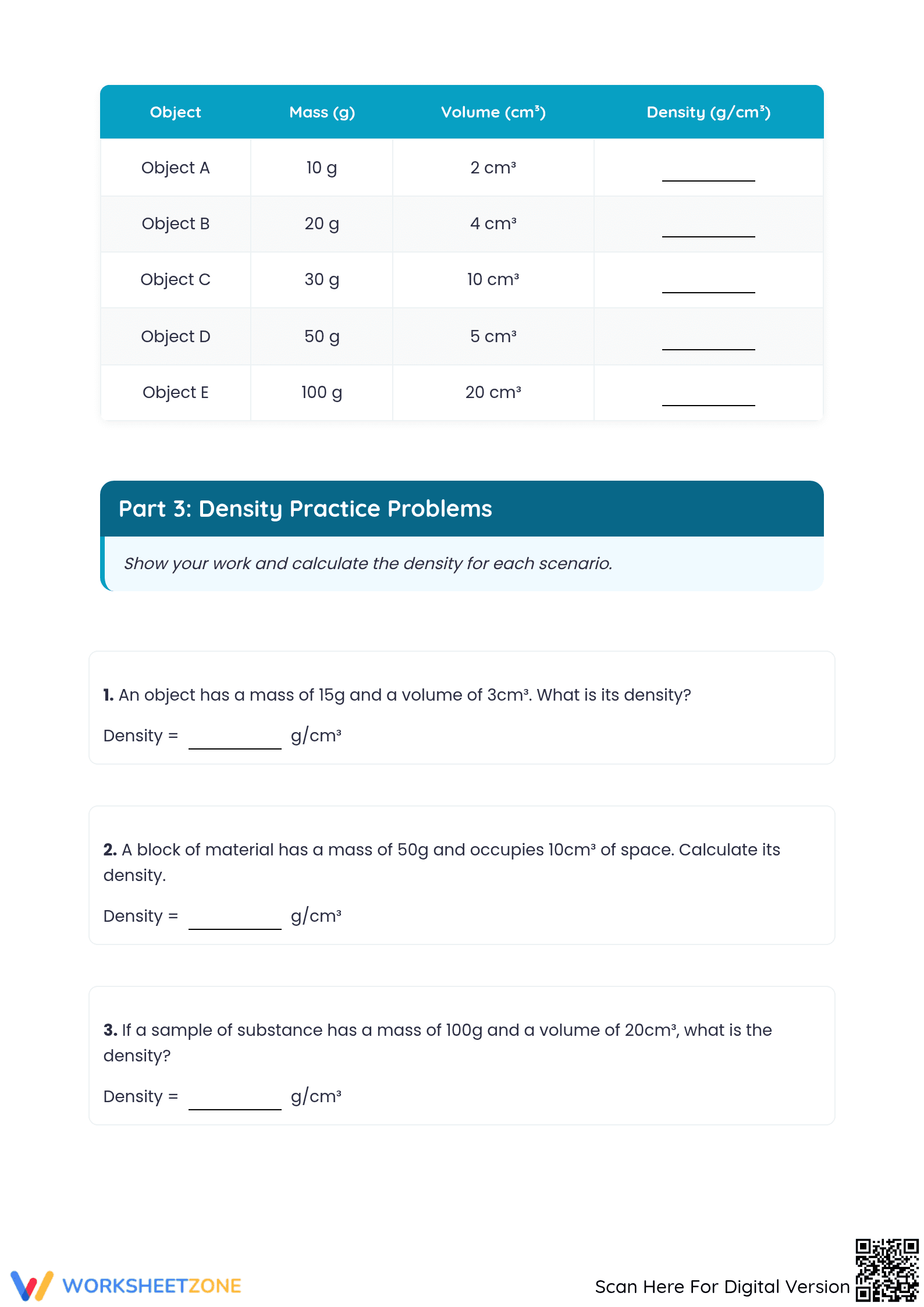
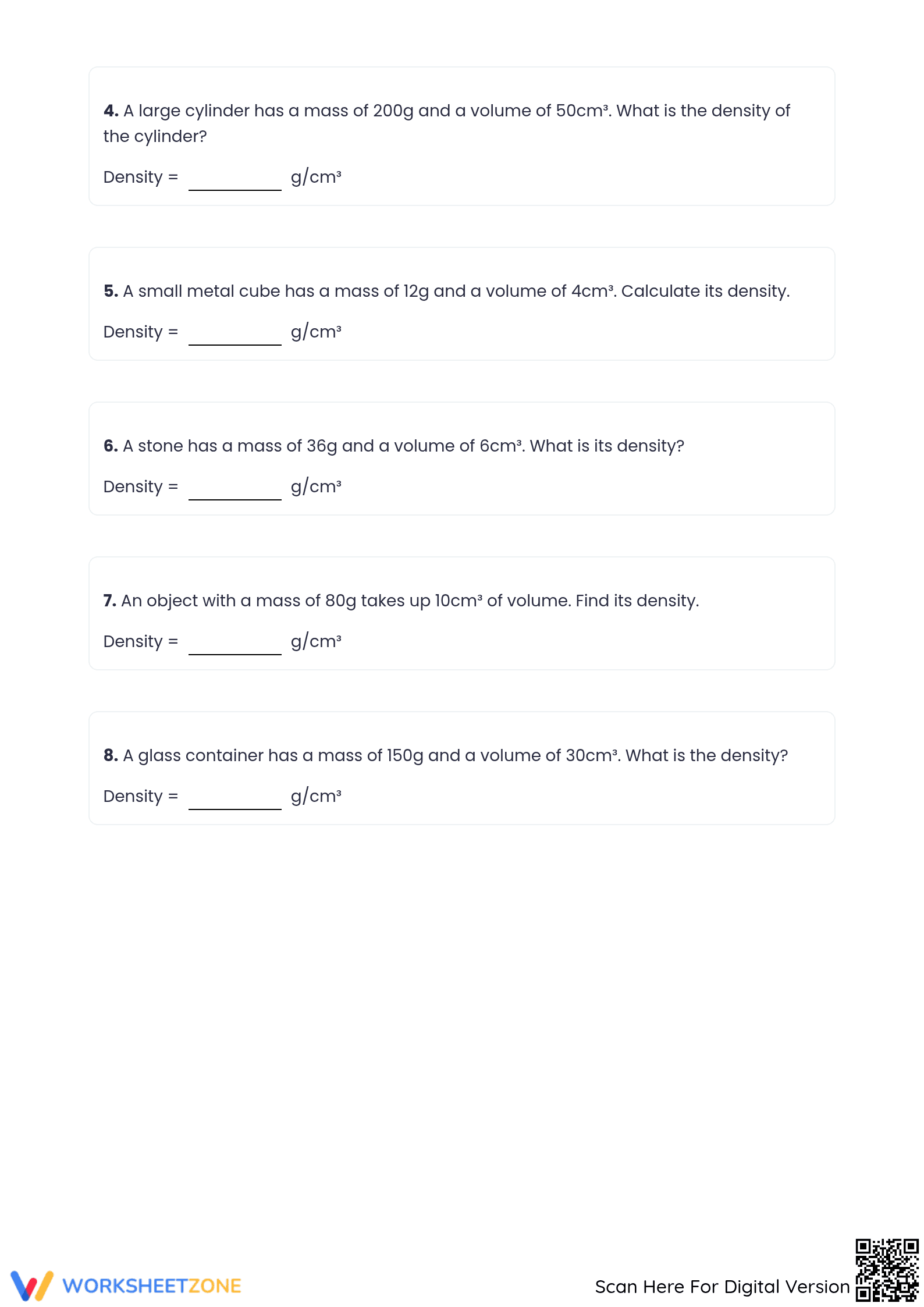
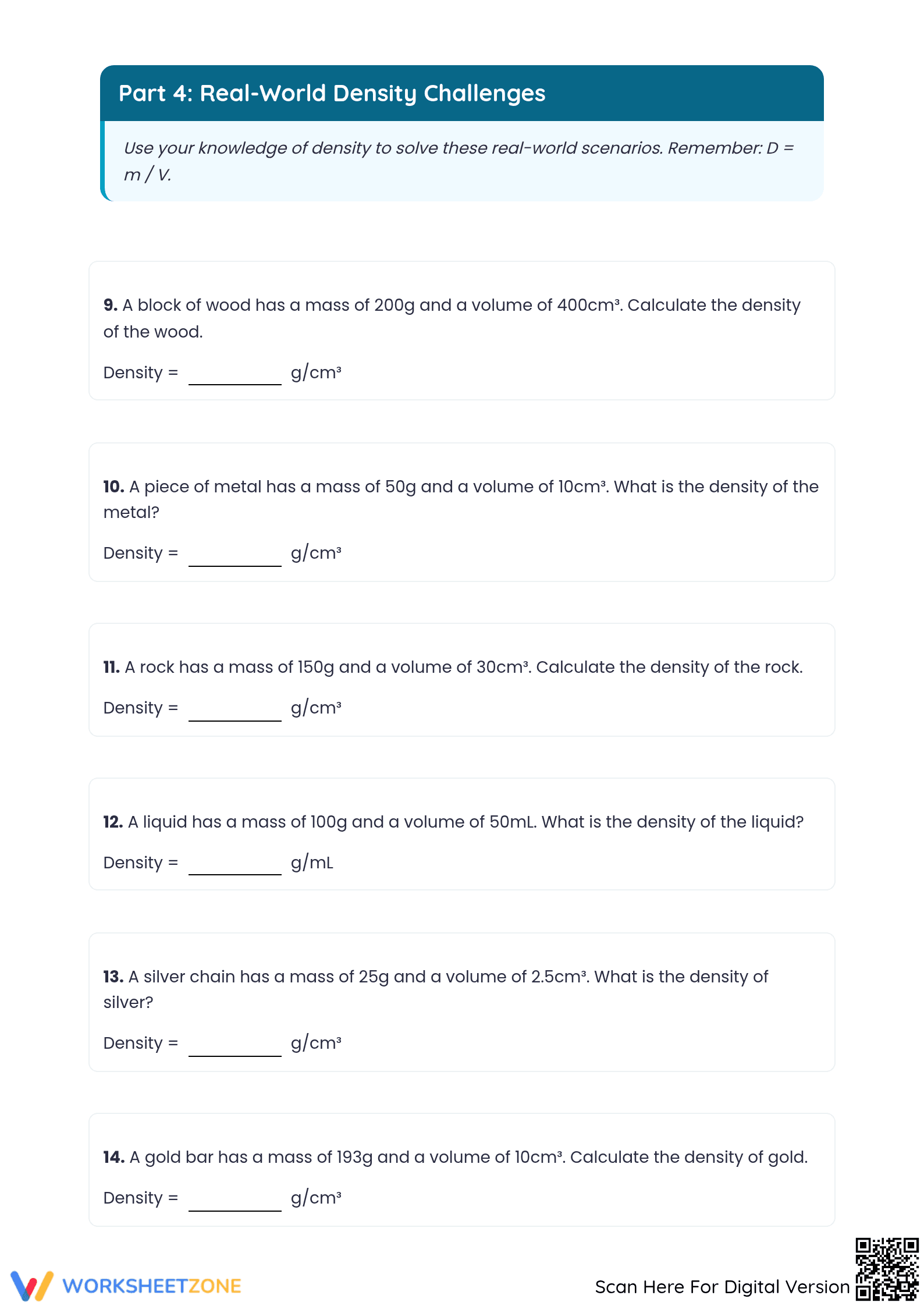
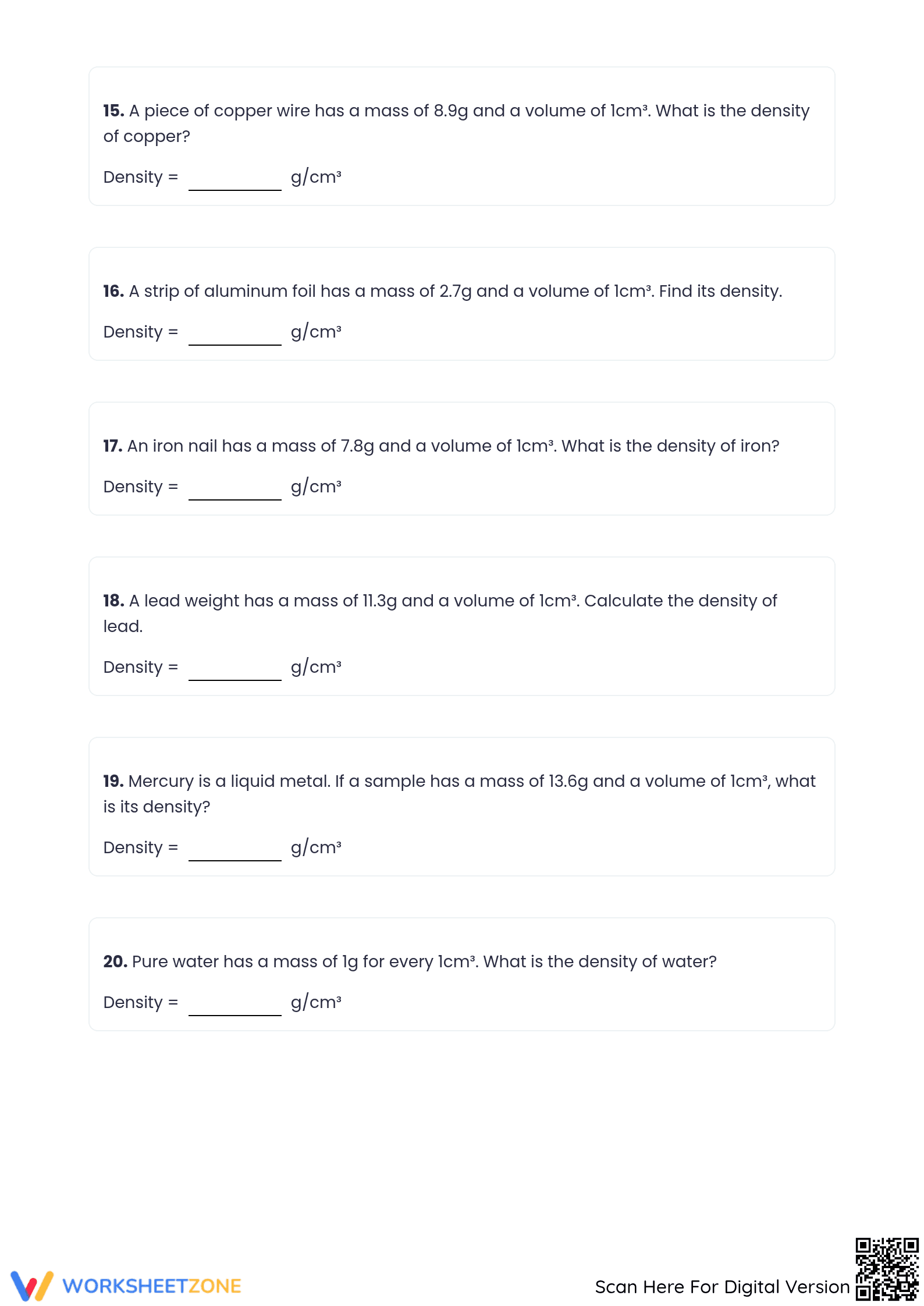
This packet contains five distinct sections designed to scaffold student learning. It begins with a clear visual representation of the density triangle and the D=m/V formula. Students move to a calculation table for five objects, followed by eight practice problems. The final pages present twelve real-world challenges involving metal cubes, liquids, and precious metals like silver and gold.
Zero-Prep Workflow
Teachers can implement this resource in three efficient steps. First, print the five-page packet for each student, which takes approximately one minute for a standard class set. Second, distribute the worksheets and provide a brief two-minute overview of the density triangle scaffold provided on the first page. Finally, use the included comprehensive answer key to review results in less than five minutes, making this an ideal sub plan or independent practice module.
Standards Alignment
The primary alignment is `MS-PS1-2`, which requires students to analyze and interpret data on the properties of substances. Density is a fundamental characteristic property used to identify unknown materials in laboratory settings. This worksheet also supports `5-PS1-3` by focusing on measurements to identify materials based on their properties. Both standard codes can be copied directly into lesson plans, IEP goals, or district curriculum mapping tools.
How to Use It
This resource is best utilized during the Elaborate phase of a 5E lesson cycle after students have been introduced to mass and volume concepts. Assign the first three pages as guided practice during class and the final two Real-World Challenges as a summative assessment or homework extension. Teachers should observe students during Part 2 to ensure they are correctly placing mass in the numerator of their calculations.
Who It's For
This worksheet is designed for Grade 6 science students but is appropriate for advanced Grade 5 learners or as a review for Grade 8 physical science. It includes scaffolded formulas for students requiring differentiation and complex word problems for those ready for extension. It pairs naturally with a hands-on Sink or Float lab or a density column demonstration.
Rigorous practice with mathematical modeling in science, such as the density calculations provided here, is essential for developing the analytical skills required by modern standards. According to the RAND AIRS 2024 report on STEM education, students who engage with multi-step problem-solving scenarios show a 22% higher retention rate of core scientific concepts compared to those who only view demonstrations. This 5-page packet targets MS-PS1-2 by requiring students to extract data from text-based scenarios and apply the D=m/V formula to identify material properties. By calculating density for various substances like lead, mercury, and aluminum, learners build a library of reference values that aid in substance identification. The inclusion of 25 unique tasks ensures that students move beyond rote memorization into active interpretation of how mass and volume interact. This alignment with research-based pedagogical strategies ensures that students are classroom-ready for higher-level chemistry and physics explorations.


