




























Views
Downloads
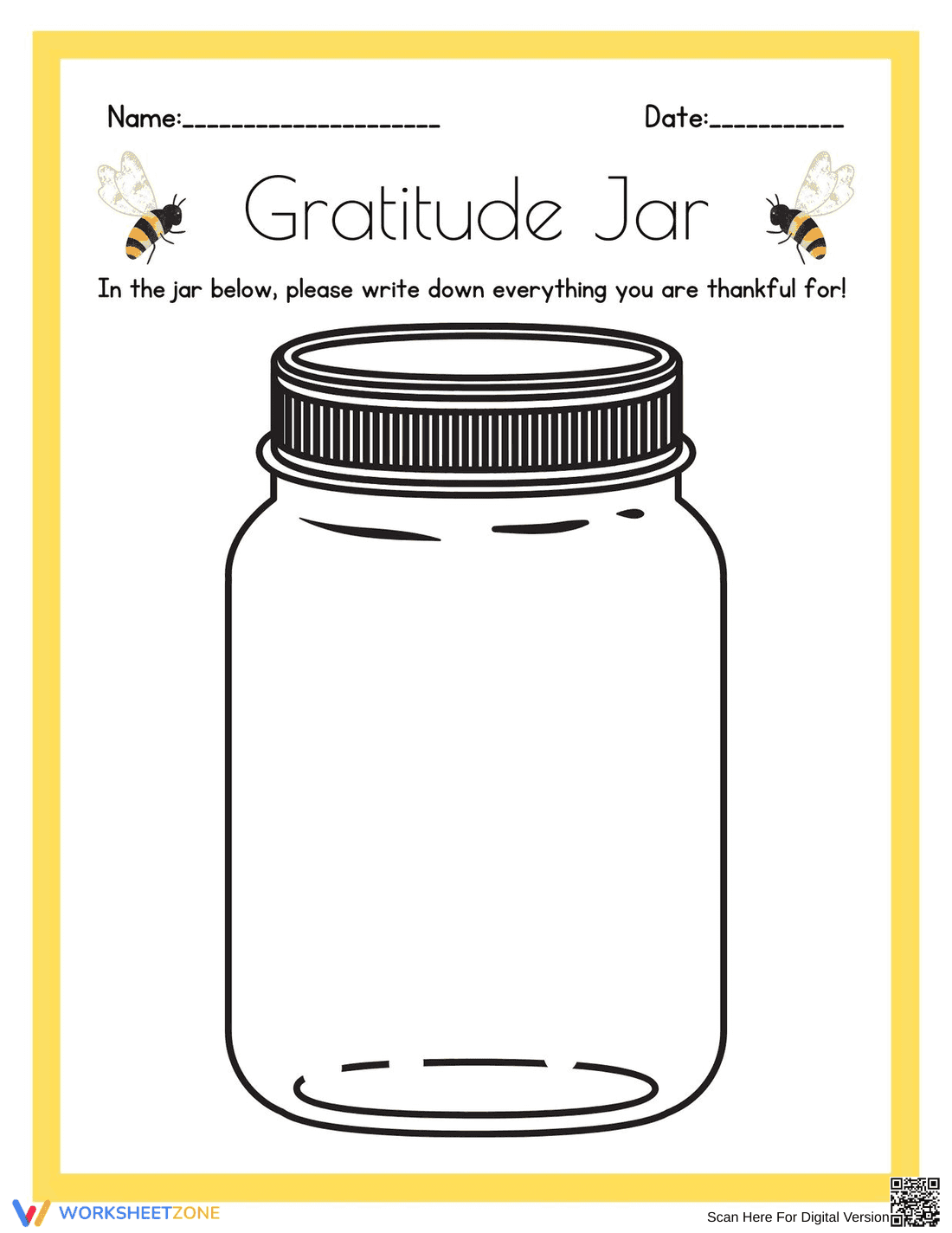

Gratitude Jar Worksheet | Grade 2 Printable SEL Activity

Paste this activity's link or code into your existing LMS (Google Classroom, Canvas, Teams, Schoology, Moodle, etc.).
Students can open and work on the activity right away, with no student login required.
You'll still be able to track student progress and results from your teacher account.
This Grade 2 gratitude jar worksheet helps students cultivate a positive mindset by identifying and recording personal experiences of thankfulness. By visualizing their gratitude within a mason jar, learners engage in a meaningful reflection process that strengthens emotional literacy and writing skills. This activity provides a safe space for students to express appreciation for people, places, and things.
At a Glance
- Grade: 2 · Subject: Social Emotional Learning
- Standard:
CCSS.ELA-LITERACY.W.2.8— Recall information from experiences to answer a question- Skill Focus: Gratitude and Reflection
- Format: 1 page · 1 task · Open-ended response · PDF
- Best For: Morning meetings and seasonal reflection
- Time: 10–15 minutes
This single-page PDF features a large, clear mason jar illustration framed by friendly bee graphics. The open-ended design allows for flexible responses, whether students choose to write single words, full sentences, or even draw small icons. There is no complex setup or teacher guide required, making it an ideal resource for immediate classroom implementation during busy instructional blocks.
The zero-prep workflow is designed for busy educators. First, print the single-page PDF in approximately 30 seconds. Second, distribute the sheets during a morning meeting or SEL block, which takes about 1 minute. Third, allow students 10 to 15 minutes to fill their jars, then facilitate a brief pair-share session to review their reflections. Total teacher preparation time is under 2 minutes.
This worksheet aligns with CCSS.ELA-LITERACY.W.2.8: "Recall information from experiences or gather information from provided sources to answer a question." This activity specifically asks students to recall positive personal experiences to answer the prompt of what they are thankful for. Both standard codes can be copied directly into lesson plans, IEP goals, or district curriculum mapping tools.
Use this as a grounding activity during the first week of school or as a seasonal reflection during November. It serves as an excellent formative assessment for a student's ability to identify positive emotions and articulate them in writing. Expected completion time ranges from 10 to 15 minutes depending on the depth of student writing.
This resource is perfect for general education elementary students, small counseling groups, or students requiring Tier 1 SEL support. It pairs naturally with a read-aloud about kindness or a classroom anchor chart focused on community building. The simple visual format is accessible for students with varying writing abilities.
Research indicates that intentional reflection on positive experiences significantly improves student engagement and emotional regulation. According to Fisher & Frey (2014), incorporating expressive writing tasks into the daily curriculum allows students to bridge the gap between personal experience and academic literacy. This Gratitude Jar worksheet utilizes these principles by providing a structured yet open-ended format for students to document their reflections. By focusing on the CCSS.ELA-LITERACY.W.2.8 standard, the activity ensures that students are not only practicing social-emotional skills but also meeting core writing requirements related to recalling information from personal experiences. The visual metaphor of the jar serves as a cognitive scaffold, helping young learners organize their thoughts effectively. Implementing this 15-minute activity can foster a more inclusive classroom culture while providing teachers with valuable insights into their students' well-being and expressive language development. This resource is a practical tool for evidence-based SEL instruction.


