


























Views
Downloads


Essential Long A Vowel Teams Worksheet | Grades 3-5
Paste this activity's link or code into your existing LMS (Google Classroom, Canvas, Teams, Schoology, Moodle, etc.).
Students can open and work on the activity right away, with no student login required.
You'll still be able to track student progress and results from your teacher account.
This Grade 3-5 phonics worksheet provides comprehensive practice with long A vowel teams, specifically focusing on "ai" and "ay" patterns. Students engage in sentence completion, suffix application, and word recognition to solidify their understanding of vowel team conventions. By completing these structured activities, learners improve their spelling accuracy and reading fluency in multisyllabic contexts.
At a Glance
- Grade: 3-5 · Subject: ELA Phonics
- Standard:
CCSS.ELA-LITERACY.RF.3.3— Know and apply grade-level phonics and word analysis skills in decoding words- Skill Focus: Long A Vowel Teams (ai, ay) & Suffixes
- Format: 3 pages · 32 problems · Answer key included · PDF
- Best For: Independent practice and phonics reinforcement
- Time: 20–30 minutes
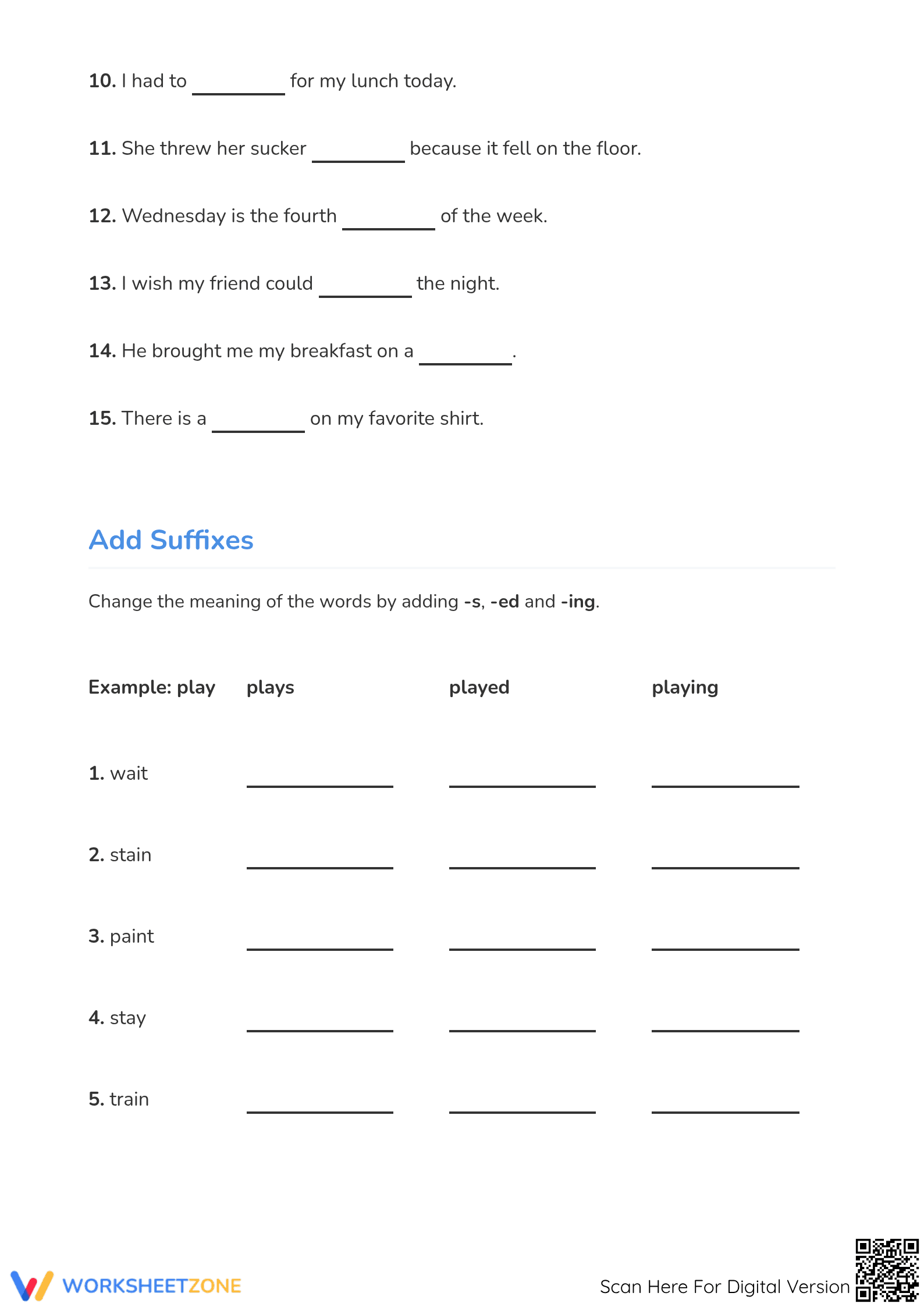
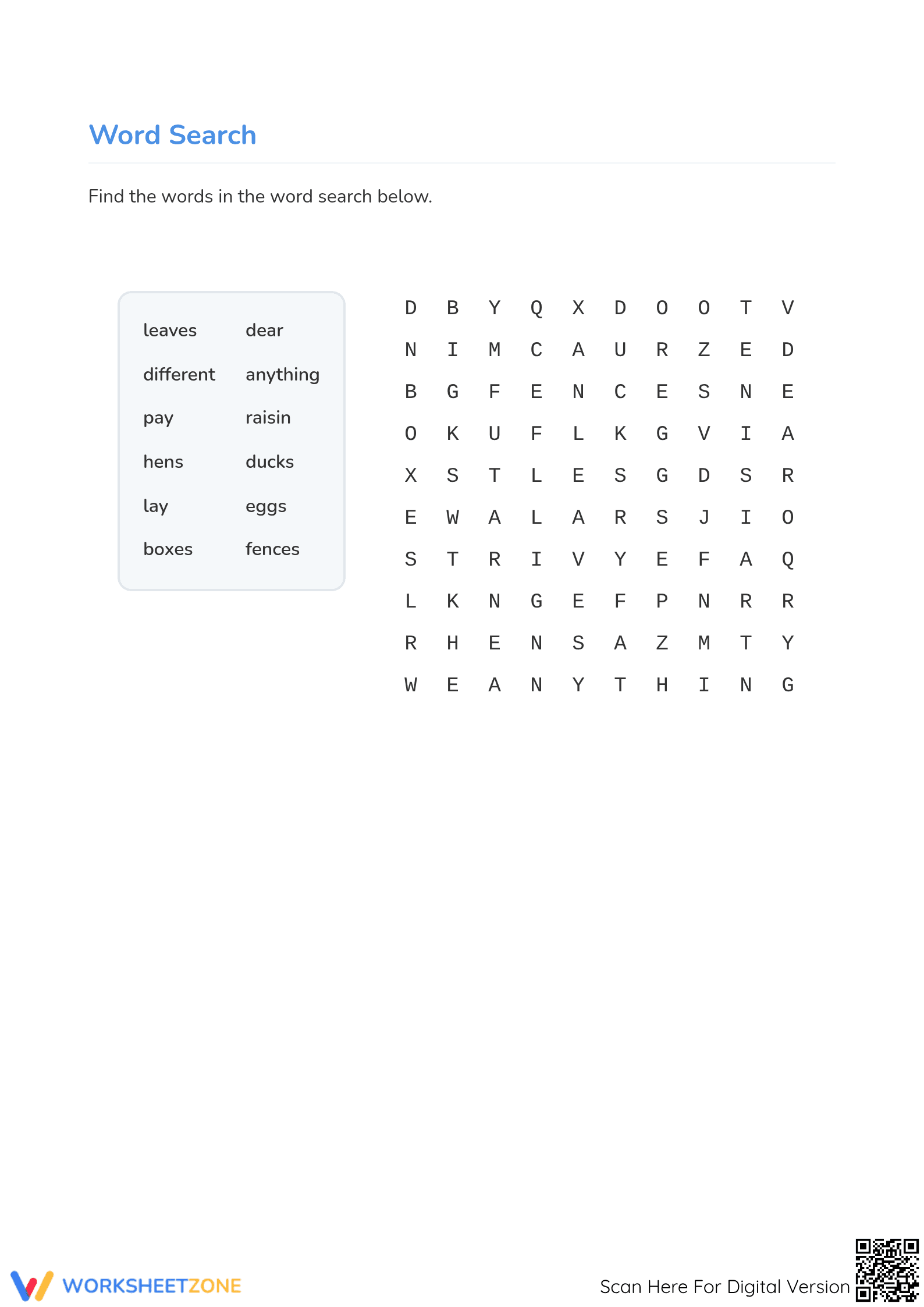
The resource contains three distinct activity pages. Page one features 15 sentence-level cloze exercises using a word bank of long A terms. Page two transitions to morphology, requiring students to add -s, -ed, and -ing suffixes to base words. The final page includes a 12-word thematic word search. A full three-page answer key is provided for immediate feedback and self-correction.
Skill Progression
- Guided practice: Students use a provided word bank to complete 15 context-rich sentences, identifying the correct long A spelling for each scenario.
- Supported practice: Learners apply morphological rules to 5 base words, generating 15 new word forms by adding common suffixes.
- Independent practice: A word search challenges students to recognize and locate 12 target words within a letter grid, reinforcing visual word patterns.
This sequence follows a gradual-release model, moving from high-support word selection to independent pattern recognition and morphological manipulation.
Standards Alignment
The primary focus is `CCSS.ELA-LITERACY.RF.3.3`, which requires students to know and apply grade-level phonics and word analysis skills in decoding words. Specifically, it addresses the identification of common vowel teams and the application of suffixes to base words. Both standard codes can be copied directly into lesson plans, IEP goals, or district curriculum mapping tools.
How to Use It
Use this worksheet during the independent practice phase of a phonics lesson after introducing "ai" and "ay" spelling rules. It serves as an excellent formative assessment to check for understanding of suffix rules and vowel team usage. Expect students to spend 20 to 30 minutes completing all three pages, depending on their familiarity with the vocabulary. It is also suitable for morning work or homework reinforcement.
Who It's For
This resource is designed for third through fifth-grade students who need targeted practice with vowel teams. It is particularly effective for English Language Learners (ELLs) and students receiving Tier 2 literacy interventions. Pair this with a long A anchor chart or a decodable passage for a complete instructional cycle that supports diverse learning needs.
Research from Fisher & Frey (2014) emphasizes that the gradual release of responsibility is vital for phonics mastery, moving students from word-level recognition to contextual application. This worksheet aligns with CCSS.ELA-LITERACY.RF.3.3 by providing 32 structured opportunities for students to decode and encode long A vowel teams. By integrating suffix work with vowel team practice, the resource addresses the complex morphological needs of upper elementary learners. According to the RAND AIRS 2024 report, high-quality instructional materials that provide explicit practice in word analysis skills significantly improve reading outcomes for students in the middle elementary grades. This printable PDF ensures that students engage with "ai" and "ay" patterns through multiple modalities, including sentence completion and visual word searches, which supports long-term orthographic mapping and spelling retention in diverse classroom settings.


